Mold Inspection in Timnath, Colorado | InspectandTest
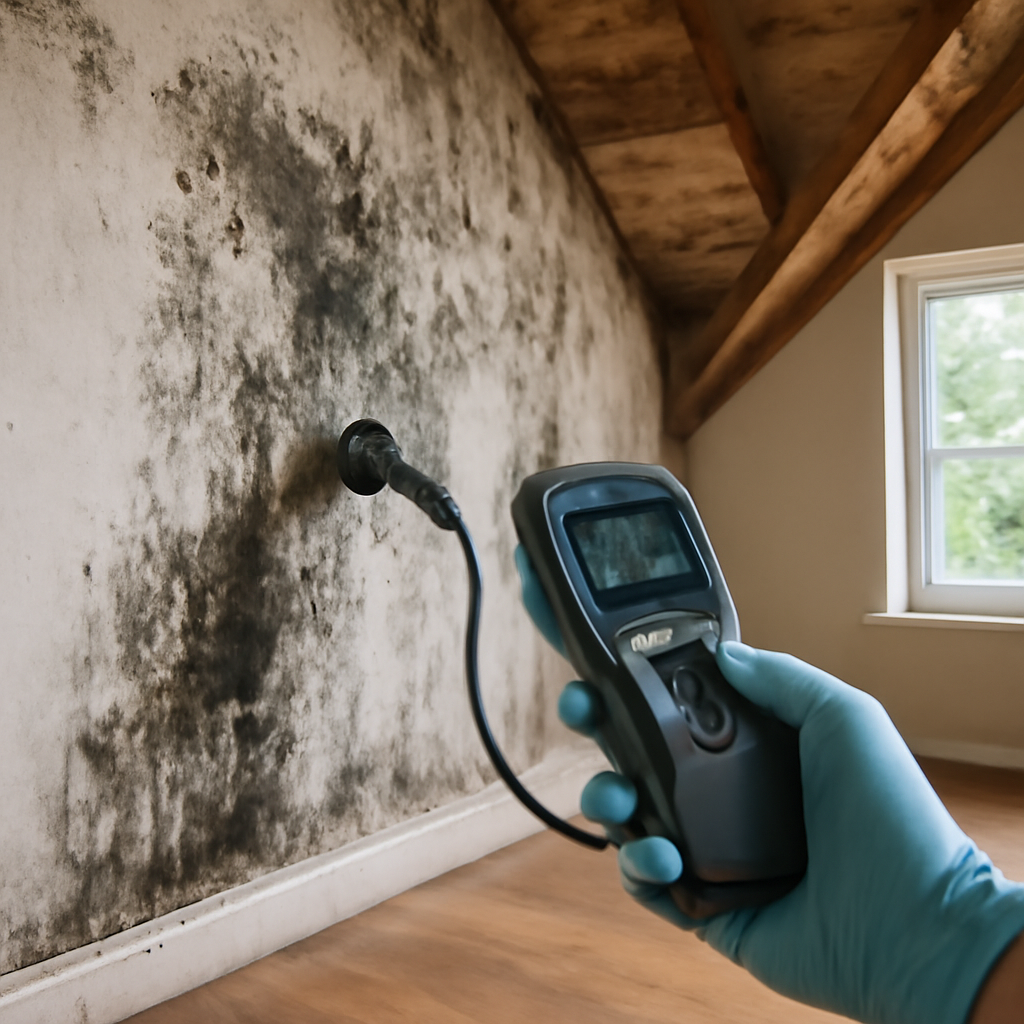
Timnath, one of northern Colorado’s fastest-growing towns just east of Fort Collins at the I-25 and Harmony interchange, is built largely of brand-new 2010s and 2020s master-planned subdivisions with finished basements. New homes are not immune to mold; tight construction traps moisture, finished basements collect humidity, and a single plumbing or grading defect can feed growth fast. This page explains how mold inspection timnath homeowners should approach the problem, why even new Larimer County homes warrant attention, and what a thorough inspection covers. This summary reflects EPA and CDC guidance current as of 2026; consult a certified professional for testing decisions and your physician for any health symptoms.
Is this mold, asbestos, or water damage? Get a free instant screen
Upload a clear photo of the suspect area. You'll get an instant AI screening opinion and what to do next. This is screening guidance, not a professional determination.
Screening guidance only. AI can be wrong. Confirm asbestos, mold type, or lead with lab testing or a licensed professional before acting.
Mold inspection in Timnath: what to know
A mold inspection is a structured visual and moisture investigation that finds active mold growth, the water source feeding it, and the conditions that let it spread. It differs from mold testing, which sends air or surface samples to a lab. Inspection comes first because identifying and correcting the moisture source matters more than naming the species. In a Timnath home, much of that work happens in the finished basement, around plumbing, and at the foundation and grading, where new-construction moisture problems concentrate.
The EPA’s guidance holds regardless of a home’s age: visible mold or a persistent musty odor signals a moisture problem that needs correcting, and sampling is optional. For homeowners weighing inspection against laboratory testing, our plain-language mold inspection and testing hub walks through both. A good inspector documents findings with photos, moisture-meter readings, and a written scope so the homeowner knows exactly what was found and where.
People assume a new Timnath home cannot have mold, but that assumption misses how mold actually starts. It needs only a water source and a few days, and new homes supply plenty of candidates: a slow supply-line leak, a tub or shower not sealed properly, condensation in a tightly built wall, or grading that sends snowmelt toward a young foundation. Because so much of Timnath’s housing is recent and finished from top to bottom, hidden moisture can grow mold behind fresh drywall before anyone notices. An inspection connects any visible sign or musty odor to its source.
Why Timnath homes need mold inspection
The construction era is the surprising driver. Timnath’s overwhelmingly 2010s-and-2020s subdivisions, Wildwing, Timnath Ranch, Harmony Club, Riverbend, are built tight for energy efficiency, which is excellent for heating bills but means moisture that gets inside has little path to escape. Finished basements, standard in these homes, put living space against the slab and collect humidity, and they are exactly where families add bedrooms, offices, and play areas. A tightly sealed home with a finished basement is a setup where any moisture lingers.
Water sources in new homes are real. Builder-grade plumbing connections can leak, a poorly sealed shower pan can wick water into a wall, and rapid subdivision construction sometimes leaves grading that channels snowmelt and irrigation toward foundations. The Poudre River and nearby reservoirs sit close to many Timnath neighborhoods, and high local water tables in riverbend areas can add foundation moisture. Evaporative coolers, common across the Front Range, add several gallons of water vapor to indoor air daily in summer, raising humidity in the lower levels where mold takes hold.
Colorado’s cold, sealed winters compound the problem by keeping homes closed for months, so any moisture that enters cannot dry out. The combination of tight new construction, finished basements, riverbend water tables, evaporative-cooler humidity, and long sealed winters is why even a five-year-old Timnath home can develop mold. An inspection catches hidden growth before it spreads through a finished lower level. Homeowners deciding whether to confirm a problem with sampling can read our guide to mold testing in Timnath.
What a Timnath mold inspection covers
A thorough inspection works from the water source outward, with special attention to the new-construction moisture points common in Timnath homes.
Visual assessment and moisture mapping
The inspector looks for staining, warped baseboards, peeling paint, and visible growth, then uses a moisture meter to find damp drywall and framing that looks dry on the surface. A thermal camera can reveal cool, wet areas behind finished basement walls. In a tightly built Timnath home, the inspector pays close attention to bathrooms, the basement perimeter, and any area where condensation or a slow leak could hide behind fresh finishes.
HVAC, coolers, and ventilation
Because tight homes depend on mechanical ventilation, the inspector checks bath and kitchen exhaust, HVAC condensate handling, and any evaporative cooler for proper drainage. Unvented moisture in a sealed home drives indoor humidity up to levels where mold thrives. The inspector also notes whether the basement has a working dehumidifier, one of the most effective controls for a finished lower level in a tightly built northern Colorado home.
Mold inspection cost in Timnath
A standalone visual mold inspection in the Timnath and Larimer County market typically runs about $300 to $500 for a single-family home, depending on size and basement finish. Adding laboratory air or surface samples raises the total by roughly $100 to $200 per sample with lab fees included. Bundled into a pre-purchase home inspection, a mold and moisture assessment usually costs less than commissioning it separately.
Price varies with the home. A large Timnath subdivision house with a fully finished basement takes longer to inspect than a smaller home, because the inspector must evaluate moisture behind more finished surfaces. Weigh the cost against the alternative: hidden moisture in a tightly built home can grow mold behind drywall and damage framing far beyond the price of an inspection, and remediating an advanced problem costs many times more than catching it early.
For most Timnath homeowners, the inspection is the inexpensive part. Its real value is the written scope that distinguishes a one-time leak from a chronic condensation or grading issue that needs a ventilation fix, better drainage, or a basement dehumidifier. Spending a few hundred dollars to learn which problem you have prevents thousands in misdirected repairs, even in a newer home.
Colorado regulations and disclosure
Colorado does not license mold inspectors or remediators, so credentials and protocol matter more than a state stamp. The Colorado Seller’s Property Disclosure asks sellers to report known mold, moisture intrusion, and prior water damage, which means an undisclosed wet basement, even in a newer home, can become a legal issue after closing. Buyers in Timnath should treat a musty finished basement or fresh paint over a foundation wall as a prompt to investigate.
Because the state sets no inspector standard, confirm the inspector follows recognized industry guidance such as the EPA’s mold remediation framework and uses calibrated moisture equipment. For a transaction, a documented inspection report protects both sides: the seller shows the home was evaluated, and the buyer gets a defensible basis for any repair request. In a fast-growing town where many homes are sold by their first owners, an inspection backs up disclosure with actual evidence rather than a guess about a basement the seller rarely entered.
Neighborhoods and areas served
Mold and moisture concerns appear across Timnath’s new subdivisions: Wildwing, Timnath Ranch, Harmony Club, and Riverbend, where finished basements and tight construction trap humidity, plus the tiny historic Old Town Timnath core with its older homes. Riverbend and other neighborhoods near the Poudre River and reservoirs can see higher water tables. Service typically extends to adjacent Fort Collins, Windsor, Severance, and Loveland, all sharing northern Colorado’s tight-construction and finished-basement patterns, and our Larimer County mold inspection guide sets the broader context.
Whether a home sits in a 2020s master-planned subdivision or Old Town Timnath, the moisture driver differs but the inspection logic holds. New homes show it through condensation and builder-grade leaks; the few older homes show it through aging-system moisture. Treating mold inspection as routine due diligence rather than a last resort reflects the reality that even brand-new, tightly built homes can hide moisture in a finished basement.
How to choose a Timnath mold inspection provider
Ask whether the inspector uses calibrated moisture meters and a thermal camera and whether they follow EPA mold guidance. A strong provider documents the water source, not just the visible growth, because correcting the moisture is what stops mold from returning. Be cautious of any company that pushes expensive remediation before identifying and fixing the leak or condensation source, since that order rarely solves a new-construction moisture problem.
For a home purchase, bundling the mold assessment with a full home inspection in Timnath gives you one coordinated report on the structure, the foundation, and the moisture risk. Ask for sample reports, confirm the inspector is independent from any remediation contractor, and make sure the written scope spells out findings, moisture readings, and recommended corrections. An inspector who explains the difference between harmless condensation and an active leak in plain language is the kind worth hiring.
Independence matters most where incentives conflict. A provider who both inspects and sells remediation has reason to find more work, while an independent inspector’s only product is an honest assessment. In a town of tightly built new homes where condensation and minor leaks are the usual culprits, that honesty keeps a small moisture fix from becoming an oversized remediation bill.
Warning signs in a newer Timnath home
Mold signs in a new home are often subtler than in an old one, which is exactly why they get missed. The earliest clue in a tightly built Timnath house is usually smell: a faint musty or earthy odor in the finished basement that comes and goes, often strongest when the HVAC kicks on and moves air through the lower level. Because the home is sealed and the basement is finished, that odor can precede any visible sign by weeks, with the source hidden behind fresh drywall or under new flooring.
Other early signals are easy to dismiss as cosmetic. A small bubble in basement paint, a faint discoloration at the base of a wall, a window or wall that feels damp or cool to the touch, or condensation forming on basement windows in winter all point to moisture that a finished surface is hiding. In a Riverbend or Timnath Ranch home near higher water tables, those signs deserve prompt attention, since a young foundation managing groundwater can let moisture in slowly without any dramatic event.
Humidity itself is a sign worth tracking. An inexpensive hygrometer that reads above roughly 50 to 60 percent relative humidity in a finished basement, especially when an evaporative cooler runs in summer, signals conditions where mold can establish. The EPA recommends keeping indoor humidity in a controlled range and addressing the moisture source rather than just treating visible growth. For a Timnath homeowner, any of these signals, odor, a stain, persistent high humidity, is reason to have the lower level inspected before a small hidden problem spreads through the finished space.
New-home buyers should pay particular attention during the first year. The builder warranty window is exactly when a slow plumbing connection, an unsealed shower pan, or grading that channels snowmelt toward the foundation tends to reveal itself, and catching the moisture early means the builder can correct both the leak and any resulting mold. A Timnath family that notices a musty finished basement in their first winter has every reason to act promptly, since the same defect documented now is far easier to resolve under warranty than after it has expired.
References
- Mold cleanup and moisture control guidance — U.S. Environmental Protection Agency
- Mold and your health — Centers for Disease Control and Prevention
- Colorado mold and moisture resources — Colorado Department of Public Health and Environment
Even a newer Timnath home can hide moisture in a finished basement, and catching it early is far cheaper than remediating an advanced problem. To connect with a vetted Timnath mold inspector before your purchase deadline or this season’s cooler runs, reach out through our contact page.