Lead Testing in Timnath, Colorado | InspectandTest
Timnath is overwhelmingly new construction, built of 2010s and 2020s subdivisions, but its tiny historic Old Town Timnath core and the older farmhouses on long-held parcels predate the 1978 ban on lead-based paint. In those older homes, lead paint may still be present, where deterioration and renovation dust create exposure, especially for young children. This page explains how lead testing timnath families should approach the process, where lead hides in older Larimer County homes, and what testing costs. This summary reflects EPA, CDC, and HUD guidance current as of 2026; consult a certified professional for testing and your physician for any health concerns.
Part of our Lead Paint & Lead Testing guide — start there for the full picture →
Asbestos or biohazard concern? Speak with a certified contractor.
📞 Call (877) 742-8496Lead testing in Timnath: what to know
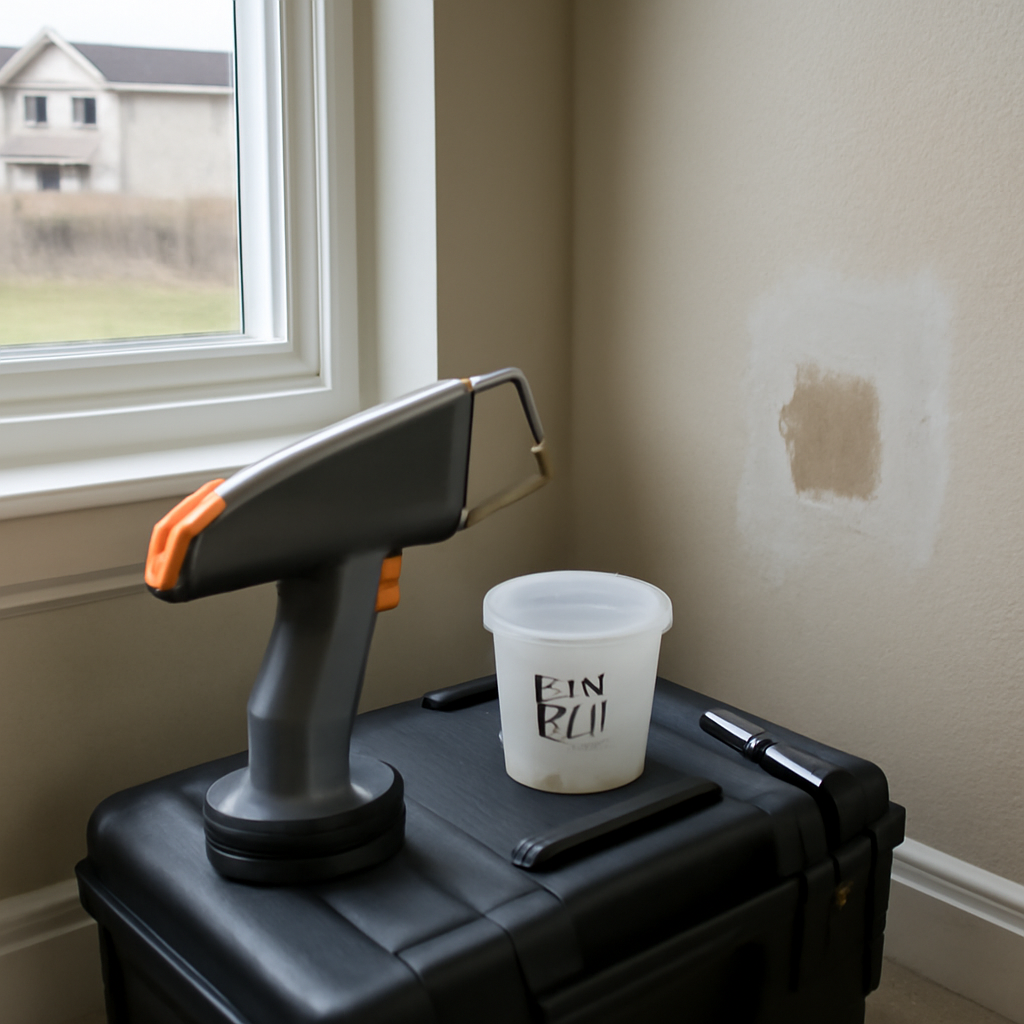
Lead testing determines whether lead is present in paint, dust, soil, or water so a household can manage the risk. For paint, a certified inspector uses an X-ray fluorescence (XRF) analyzer that reads lead content through layers without damaging surfaces, or collects samples for a lab. A risk assessment goes further, sampling settled dust and bare soil to find where lead is actually reaching people. The core principle is that intact lead paint is lower-risk, while chipping, peeling, or friction-worn paint, and the dust it creates, is where exposure happens.
Because of that, testing focuses on condition and location as much as presence. An Old Town Timnath home with intact original paint under newer coats may pose little risk until a window is opened and closed daily or a renovation sands old surfaces. For the broader context of why pre-1978 homes carry this hazard, our guide to lead and asbestos in older homes explains the history. Testing tells a family whether lead is present and, through a risk assessment, whether it is currently a hazard.
Lead is a particular concern for children under six and for pregnant women, because lead affects the developing nervous system and there is no known safe blood-lead level. A new Timnath subdivision home from 2019 is essentially lead-free, but an Old Town home from the early 1900s or an older farmhouse may carry lead paint. Families buying or renovating one of those older homes should test before young children move in or before any work disturbs old paint, so they can take simple steps that sharply reduce exposure.
Why some Timnath homes need lead testing
Housing age is the entire driver, and in Timnath it points to a focused subset of homes. The vast majority of the town’s housing is post-2000 and lead-free, so most Timnath families will never need lead testing. The exceptions matter, though: the historic Old Town Timnath core holds homes from the late 1800s and early 1900s, and long-held agricultural parcels carry mid-century farmhouses, both built well before the 1978 lead-paint ban. The HUD and EPA framework treats pre-1978 housing as presumed to contain lead unless testing shows otherwise.
In those older homes, lead concentrates in predictable places: window sills and jambs where friction grinds paint into dust, doors and door frames, porches and exterior trim that weather and chip, and stair rails and baseboards. An Old Town home with original windows and decades of repainting has high-risk friction surfaces. Bare soil near an older home’s foundation or under an old painted porch can also hold lead from weathered exterior paint, which is why a risk assessment samples soil as well as dust.
Renovation raises the stakes in those homes. As buyers remodel the older houses that remain in and around Timnath, every sanding or demolition project in a pre-1978 structure risks spreading lead dust. The EPA’s Renovation, Repair, and Painting Rule requires lead-safe work practices in pre-1978 housing for exactly this reason. Families updating an older home should pair lead testing with our guide to asbestos testing in Timnath, since both hazards live in the same era of materials.
What a Timnath lead test covers
Testing ranges from a quick paint check to a full risk assessment, matched to the household’s situation.
Paint inspection with XRF
A lead-based paint inspection uses an XRF analyzer to read lead content of painted surfaces throughout an older home, room by room, without damaging them. The inspector documents which surfaces are positive and which are clear, giving a renovating homeowner a map of where lead-safe practices are required. In an Old Town Timnath home with original windows and trim, the inspection typically flags those friction surfaces first.
Risk assessment: dust and soil
A risk assessment adds dust-wipe samples from floors and window sills and soil samples from bare areas near the home, sending them to an accredited lab. This identifies not just where lead exists but where it is actively reaching people. For a family with young children moving into an older home, the risk assessment is the more useful test because it pinpoints the dust and soil pathways that drive childhood exposure and produces a prioritized plan to control them.
Lead testing cost in Timnath
In the Timnath and Larimer County market, an XRF lead-based paint inspection typically runs about $300 to $500 for a single-family home, while a combined inspection and risk assessment generally costs $400 to $700 depending on home size and the number of dust and soil samples. Individual lab-analyzed paint or dust samples run roughly $50 to $100 each. The fee is small against the long-term cost of unmanaged childhood lead exposure.
Cost depends on scope. A buyer who only wants to know whether a planned window replacement in an Old Town home will disturb lead paint may need a focused inspection, while a family moving young children into an older farmhouse benefits from the full risk assessment with dust and soil sampling. Bundling testing into a pre-purchase inspection lowers the combined cost. For the town’s many new homes, lead testing is generally unnecessary, which is worth confirming before assuming a cost a 2020s build does not carry.
For families who qualify, public-health programs sometimes offer free or low-cost blood-lead screening for children and, in some cases, assistance with home assessment. A professional home test still has its place because it locates the source, which a blood test alone cannot. Spending a few hundred dollars to map the lead in an older Timnath home is the practical step before any renovation or before young children settle in.
Colorado regulations and disclosure
Federal law requires sellers and landlords of pre-1978 housing to disclose known lead-based paint and hazards and to provide the EPA’s lead pamphlet, and the Colorado Seller’s Property Disclosure reinforces this by asking about known lead. Contractors performing renovation in pre-1978 homes must be EPA Lead-Safe certified and follow the Renovation, Repair, and Painting Rule. These rules apply to Timnath’s Old Town homes and older farmhouses, not to its new subdivisions.
For buyers of an older Timnath home, the federal disclosure and a 10-day inspection window mean a family can test before committing, which is prudent in a pre-1978 home. Confirm any inspector is a certified lead risk assessor and that any abatement or renovation contractor is Lead-Safe certified. Because intact lead paint can often be managed rather than removed, testing followed by a risk assessment lets a family choose the least disruptive path that still controls exposure, rather than assuming full removal is necessary.
Neighborhoods and areas served
Lead testing demand in Timnath centers on the older housing: the historic Old Town Timnath core with its early-1900s homes, original windows, porches, and trim, and mid-century farmhouses on long-held parcels. The new neighborhoods, Wildwing, Timnath Ranch, Harmony Club, and Riverbend, are post-1978 and generally lead-free. Service typically extends to adjacent Fort Collins, Windsor, Severance, and Loveland, which hold more pre-1978 housing where lead testing is more often warranted, and our Larimer County lead testing guide covers the broader context.
The deciding factor is build date, not the neighborhood name. A family in an Old Town home or an older farmhouse faces a real likelihood of lead paint, while a family in a 2020 subdivision home almost certainly does not. Matching the decision to test to the specific home’s era, rather than assuming either extreme, reflects the reality of Timnath’s sharp old-versus-new housing split.
How to choose a Timnath lead testing provider
Ask whether the inspector is a Colorado-recognized certified lead inspector or risk assessor and whether they use a calibrated XRF analyzer plus lab-analyzed dust and soil samples for a full assessment. A strong provider explains the difference between presence and hazard, so a family understands which surfaces simply need monitoring and which need lead-safe work. Be cautious of any company that pushes full paint removal before assessing whether intact paint can be managed.
For a purchase of an older home, coordinating lead testing with a full home inspection in Timnath gives a family one report on the structure and the lead picture. Confirm certifications, ask to see a sample risk-assessment report, and make sure the scope covers paint, dust, and soil if young children are involved. A provider who tells you a new subdivision home does not need lead testing, rather than selling an unnecessary assessment, is demonstrating the honesty worth hiring.
Independence and certification together are the safeguard. A certified risk assessor with no stake in abatement gives a family an honest map of where lead is and how to control it, while a provider selling removal may overstate the need. In a town where only the older homes carry real risk, that honest assessment keeps testing matched to actual need and a manageable hazard from becoming an oversized project.
Managing lead safely in an older Timnath home
A positive lead result in an Old Town Timnath home or an older farmhouse rarely means a family must leave or gut the house. The EPA and HUD framework emphasizes controlling exposure, and intact lead paint that is not on a friction or chewable surface can often be managed in place through careful maintenance and monitoring. The practical priorities are the high-risk surfaces a risk assessment flags first: window sills and jambs, doors, porches, and any chipping or peeling areas a child could reach.
Interim controls reduce exposure quickly and affordably. Specialized wet-cleaning of floors and sills with attention to dust, covering bare lead-contaminated soil with mulch or sod, fixing the moisture and friction that cause paint to deteriorate, and using lead-safe work practices for any repair all lower the dust that drives childhood exposure. For families renovating an older Timnath home, hiring an EPA Lead-Safe certified contractor ensures that sanding and demolition do not turn a contained hazard into spread dust.
Permanent abatement is an option when warranted, such as replacing original lead-painted windows, which removes a major friction source and improves efficiency. The right path depends on the risk assessment, the household, and the budget, which is why testing comes first. For a Timnath family in one of the few older homes, a clear map of where lead is and which surfaces drive exposure turns an intimidating question into a prioritized plan, and pairs naturally with blood-lead screening for young children through a physician. Families in the town’s new subdivisions, by contrast, generally have no lead concern to manage at all.
References
- Lead in paint, dust, and soil — U.S. Environmental Protection Agency
- Childhood lead poisoning prevention — Centers for Disease Control and Prevention
- Lead-based paint requirements for housing — U.S. Department of Housing and Urban Development
Frequently asked questions
Which Timnath homes might have lead paint?
Only the older ones. The historic Old Town Timnath core and mid-century farmhouses on long-held parcels predate the 1978 lead-paint ban and may contain it. The town's many 2010s and 2020s subdivision homes are post-1978 and generally lead-free.
Where does lead hide in older Timnath homes?
Lead concentrates on friction and chewable surfaces: window sills and jambs, doors and frames, porches, exterior trim, stair rails, and baseboards. Bare soil near an old painted porch or foundation can also hold lead from weathered exterior paint.
How much does lead testing cost in Timnath?
An XRF paint inspection typically runs $300 to $500 for a single-family home, and a combined inspection and risk assessment generally costs $400 to $700 depending on size and samples. Individual lab samples run roughly $50 to $100 each.
Do new Timnath subdivision homes need lead testing?
Generally no. Homes built after 1978 are essentially lead-free, and Timnath's subdivisions date to the 2010s and 2020s. Lead testing in Timnath focuses on the older Old Town homes and mid-century farmhouses.
Why is lead testing important for families with young children?
Lead affects the developing nervous system and there is no known safe blood-lead level for children under six. In an older home, testing locates lead in paint, dust, and soil so a family can control exposure before a child is harmed, which a blood test alone cannot do.
Before young children move into an Old Town Timnath home or an older farmhouse, or before a renovation disturbs old paint, a lead inspection maps the hazard so you can manage it safely. To connect with a vetted certified local assessor, get in touch through our contact page.