Lead Testing in Broomfield, Colorado | InspectandTest
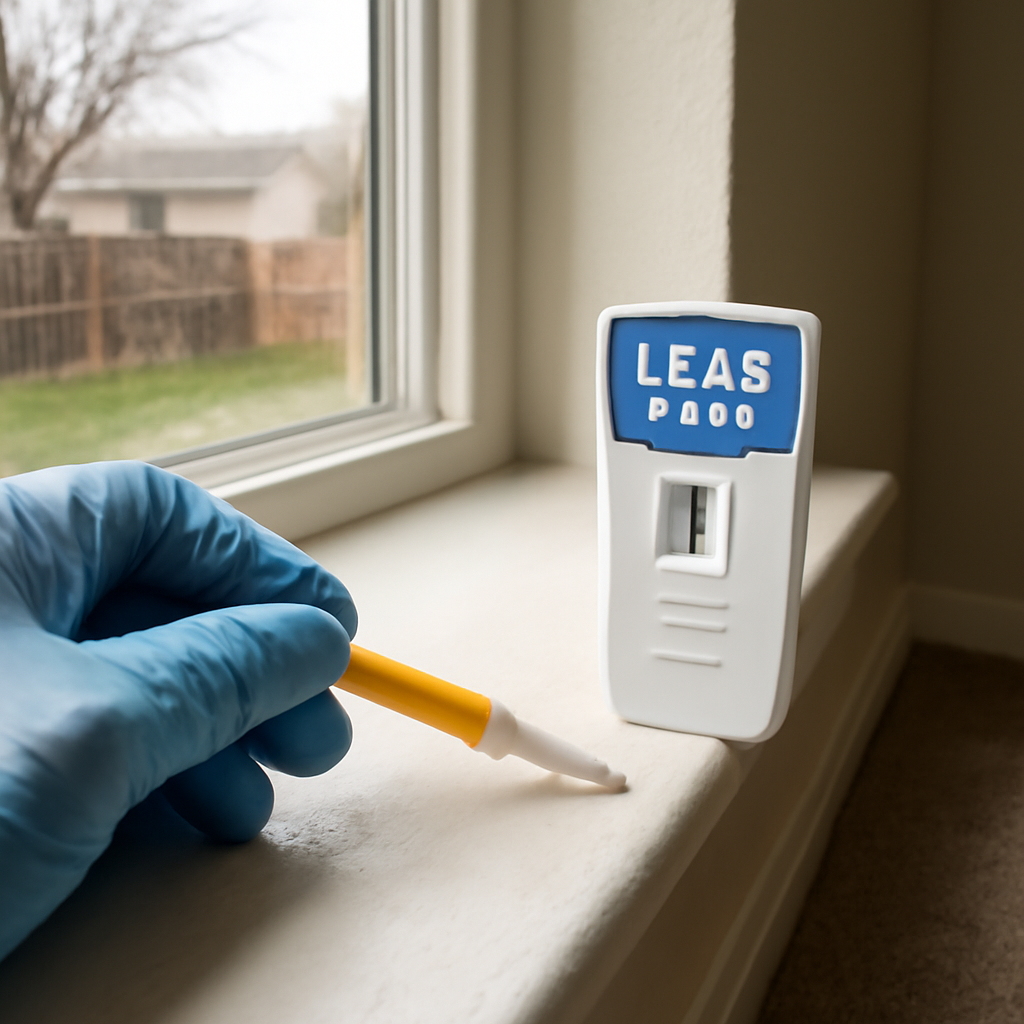
Broomfield is its own City and County of Broomfield, a planned community along the US-36 Denver-Boulder turnpike built largely of 1990s-to-2010s homes. Because the federal ban on lead-based paint in housing took effect in 1978, Broomfield’s predominantly newer stock carries far less lead risk than older Front Range cities. The risk concentrates in the minority of older properties and in anyone renovating one. Lead testing broomfield homeowners arrange identifies lead-based paint and lead hazards before a remodel or for the safety of young children, since lead cannot be seen and its health effects on children are serious and irreversible. This page explains where lead hides, why the local stock generally lowers risk, and what testing costs. This summary reflects EPA and CDC guidance current as of 2026; consult a certified professional and your physician for exposure concerns.
Asbestos or biohazard concern? Speak with a certified contractor.
📞 Call (877) 742-8496Lead testing in Broomfield: what to know
Lead testing determines whether lead-based paint or lead dust is present in a home. The two main methods are XRF analysis, which reads paint layers in place with a handheld instrument, and paint-chip or dust-wipe sampling sent to an accredited lab. The hazard is greatest in pre-1978 homes where original paint may contain lead, particularly on friction surfaces like windows and doors that grind paint into fine dust.
The 1978 line is the single most useful fact. Homes built after the lead-paint ban are very unlikely to contain lead-based paint, while homes built before carry real risk. Because the overwhelming majority of Broomfield’s housing postdates 1978, most local homes fall on the safe side of that line. For the full context on lead and asbestos in older housing, our guide to asbestos and lead in your home explains the pre-1978 hazard in depth.
Lead’s danger is concentrated in children. The CDC notes there is no safe blood lead level in children, and exposure can affect development and behavior. Lead-based paint that is intact and well-maintained poses less immediate risk than paint that is chipping, peeling, or being disturbed by a renovation, which is exactly when fine lead dust is released.
Why Broomfield homes need lead testing
The building era is the decisive local fact, and it favors homeowners. Broomfield’s dominant 1990s-to-2010s housing, the Anthem, McKay Landing, Broomfield Heights, Interlocken, and Broadlands neighborhoods, was built well after the 1978 lead-paint ban, so original lead-based paint is essentially absent in most of the city. A buyer of a typical newer Broomfield home has little reason to worry about lead paint.
The exceptions matter, though. A handful of older properties predate the city’s modern boom, and any home on the older end of the local range could contain lead-based paint under newer coats. Families with young children in an older home, or anyone renovating one, have a clear reason to test before sanding, scraping, or demolishing painted surfaces, because that is when lead dust spreads.
The Front Range climate plays a smaller role for lead than for moisture or radon, but weathering and friction still degrade old paint over time. An older Broomfield home with original windows that bind and grind in their frames can generate lead dust on the sill and floor below, which is why dust-wipe sampling near windows is a sensible step in any pre-1978 property where children spend time.
What Broomfield lead testing covers
A lead assessment targets where lead-based paint and dust are most likely, focusing on older painted components and on surfaces children touch.
Paint, dust, and surfaces
Testing concentrates on original painted woodwork, window sashes and sills, door frames, stair components, and porches, the friction and impact surfaces where lead paint chips and powders. Dust-wipe sampling of floors and windowsills measures whether lead dust has already settled where children might ingest it through hand-to-mouth contact.
XRF versus lab sampling
XRF analysis reads the lead content of paint layers in place without damaging the surface, which makes it efficient for surveying many components quickly. Paint-chip and dust-wipe samples go to an accredited lab for precise quantification. In an older home undergoing renovation, pairing lead testing with an asbestos check is efficient since both hazards share the pre-1978 era; our page on asbestos testing in Broomfield covers that side.
Inspection versus risk assessment
The two products answer different questions. A lead-based-paint inspection identifies where lead paint exists in the home, component by component, which is useful before a renovation that will disturb painted surfaces. A risk assessment goes further, evaluating whether the lead present is actually creating a hazard right now, through deteriorating paint, friction at windows and doors, or settled lead dust. For a Broomfield family with young children in an older home, the risk assessment is usually the more relevant choice because it focuses on real exposure rather than the mere presence of lead under intact, well-maintained paint.
Reducing lead exposure in an older Broomfield home
When testing confirms lead-based paint in an older home, the response depends on the paint’s condition. Intact, well-maintained lead paint that is not on a friction surface often poses limited immediate risk, and the practical step is to keep it sound: repaint over it with a durable coating, and watch for chipping or peeling that would expose the layers beneath. Disturbing intact lead paint unnecessarily can create the very dust hazard that testing was meant to prevent.
Friction and impact surfaces deserve priority. Windows that bind in their frames grind paint into dust on the sill and floor with every open and close, and doors, stair edges, and porch components take repeated impact. These are the components a risk assessment flags first, and addressing them, through repair, replacement, or lead-safe repainting, removes the most active exposure pathway in a typical older home.
Routine cleaning matters more than many owners expect. Lead dust settles low, where crawling infants and toddlers encounter it, so frequent wet-wiping of floors, windowsills, and window wells, rather than dry sweeping that scatters dust, measurably reduces what a child can ingest. Washing children’s hands and toys regularly closes another common exposure route. These habits do not replace addressing the paint itself, but they cut day-to-day exposure while a longer-term fix is planned.
For any renovation that will disturb lead paint, the work belongs to a contractor certified under the EPA’s Renovation, Repair and Painting rule, who contains the dust, cleans thoroughly, and verifies the area afterward. A homeowner sanding old painted woodwork without these precautions can contaminate a home far beyond the original problem, which is why lead-safe practices are the standard for pre-1978 work rather than an optional nicety.
Lead testing cost in Broomfield
Lead testing in the Broomfield market generally runs about $250 to $500 for a residential assessment, depending on home size and method. XRF surveys that cover many components in one visit sit toward the higher end because of the instrument and the operator’s certification, while a few targeted paint-chip or dust-wipe samples sent to a lab can cost less.
Because most Broomfield homes are newer and unlikely to contain lead-based paint, many homeowners need only limited testing, often dust-wipe sampling near windows in an older property or a focused check of a specific painted surface a renovation will disturb. A full lead-based-paint inspection or risk assessment of an older home costs more but gives a complete picture.
Set the cost against the stakes for children. A few hundred dollars in testing is small next to the lifelong consequences of childhood lead exposure, which the CDC describes as preventable but irreversible. For a family with young children moving into an older Broomfield home, testing first is inexpensive protection.
Cost can also be reduced by testing smartly rather than exhaustively. A family worried mainly about a toddler’s exposure does not necessarily need a whole-home XRF survey; targeted dust-wipe samples on the floors and windowsills of the rooms where the child spends time can confirm whether settled lead dust is actually present, which is the most direct measure of risk. Starting narrow and expanding only if a sample comes back high keeps testing both affordable and focused on real exposure.
Colorado regulations and disclosure
Federal rules require disclosure of known lead-based paint in pre-1978 housing during a sale or lease, and contractors working on pre-1978 homes must follow the EPA’s Renovation, Repair and Painting (RRP) rule using lead-safe work practices. For Broomfield’s newer homes these rules rarely apply, but for the older minority they do.
Colorado’s Seller’s Property Disclosure asks sellers to report known lead. A documented test protects both sides: a seller of an older home can show a clean result or disclose a known hazard, and a buyer can make an informed decision. Anyone hiring a contractor to renovate an older Broomfield home should confirm the contractor is RRP-certified and follows lead-safe practices, regardless of whether the home has been formally tested.
Neighborhoods and areas served
Lead testing requests in Broomfield concentrate in older properties and renovation projects rather than the newer subdivisions: an older home near the original Broomfield Heights core, a remodel disturbing original painted woodwork, or a family with young children moving into an older house. The newer Anthem, McKay Landing, and Broadlands homes generally fall on the safe side of the 1978 line.
Service typically extends to the adjacent communities Broomfield borders, including Westminster, Superior, Louisville, and Northglenn. A homeowner can compare a nearby live market for reference; our page on lead testing in Westminster covers a neighboring city with a similar housing-era mix. The age of the specific home, not the neighborhood, drives whether testing is worthwhile.
How to choose a Broomfield lead testing provider
Ask whether the provider is certified for lead inspection or risk assessment and whether they use XRF, accredited lab sampling, or both. A good assessor focuses on the friction and impact surfaces and the dust where children are exposed, and tells a newer-home owner honestly when testing is unlikely to find anything.
Confirm the provider explains the difference between an inspection, which finds lead-based paint, and a risk assessment, which identifies actual hazards like deteriorating paint and lead dust. For an older home with children, the risk assessment is usually the more useful product. Pairing the visit with asbestos sampling saves a trip in any pre-1978 renovation.
Water is worth a separate thought in any older home. While paint is the dominant lead concern in pre-1978 housing, older service lines and plumbing fixtures can also contribute lead to drinking water in some homes, and a family concerned about a child’s total exposure may choose to test tap water alongside paint and dust. The EPA and CDC treat water as a distinct pathway with its own testing, so an assessor focused on paint may recommend a separate water test where the home’s plumbing age warrants it.
For a family in an older Broomfield home, the practical path is a risk assessment focused on windows, doors, and floors where children spend time, followed by lead-safe practices for any repainting or renovation. For most newer-home owners, no testing is needed unless a specific older feature or an unusual circumstance raises the question.
References
- Lead-based paint and the RRP rule — U.S. Environmental Protection Agency
- Childhood lead poisoning prevention — Centers for Disease Control and Prevention
- Lead-based paint disclosure and safety — U.S. Department of Housing and Urban Development
If you have young children in an older Broomfield home or plan to renovate one, testing for lead before disturbing paint is inexpensive protection. To connect with a vetted local assessor who focuses on real hazards, not just paint, reach out through our contact page.