Thermal Imaging Inspection in Pueblo County, CO
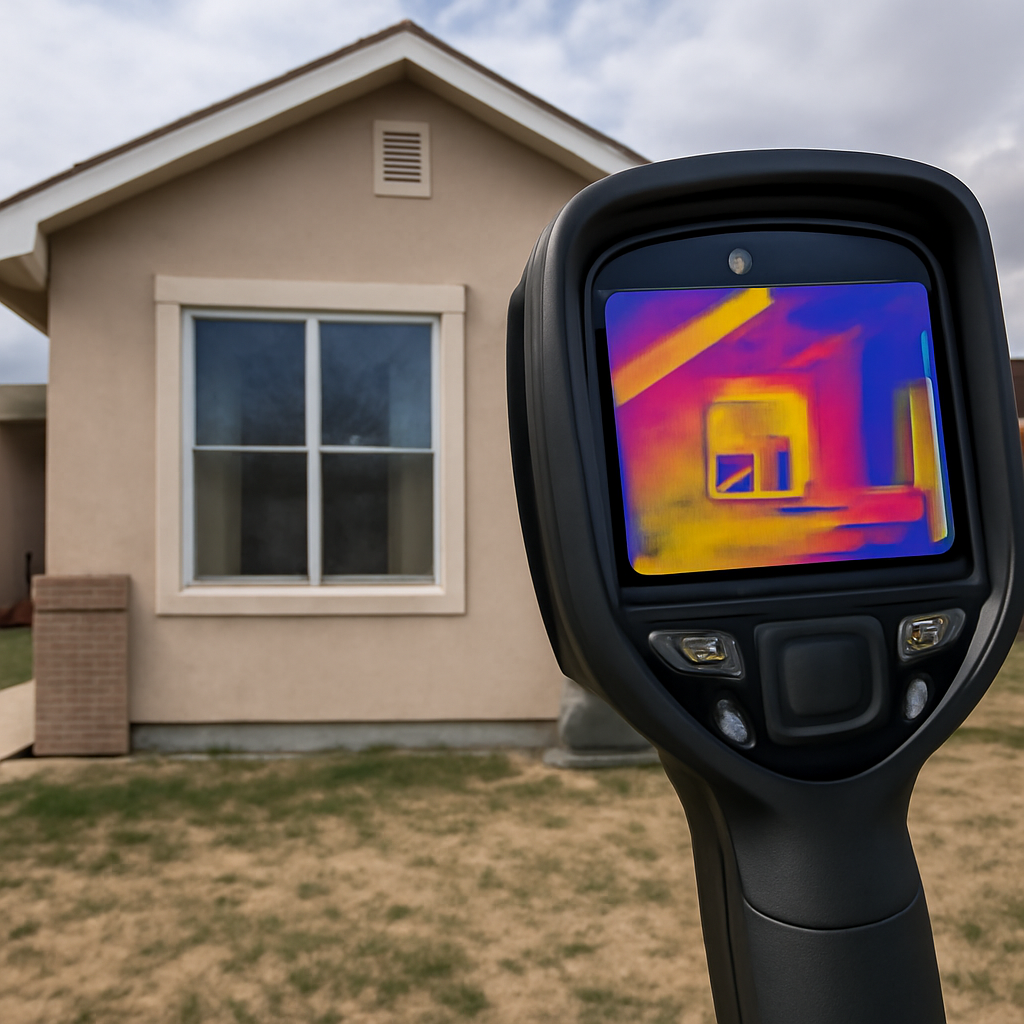
A thermal imaging inspection pueblo county homeowners add to a standard inspection is the tool that finds what the eye cannot — hidden moisture, missing insulation, and electrical hot spots — behind the finishes of a home. Pueblo County is Southern Colorado’s largest, centered on the historic steel city of Pueblo and reaching west to Pueblo West and out to Colorado City, Rye, Boone, Avondale, and Beulah. Its older housing, near-universal basements, and big seasonal temperature swings make infrared especially useful here. This page is a county-level hub: it covers what thermal imaging detects, why it helps in this county, local costs, and links to our city pages. Thermal imaging is a non-invasive diagnostic add-on to a visual inspection, not a stand-alone substitute for testing.
Part of our Thermal Imaging for Homes guide — start there for the full picture →
Thermal imaging inspection in Pueblo County: what to know
A thermal imaging inspection uses an infrared camera to read surface-temperature differences across walls, ceilings, and floors. Because moisture, air leakage, missing insulation, and overloaded electrical connections all change how a surface holds heat, the camera reveals patterns invisible to the naked eye. It is a diagnostic add-on to a standard home inspection, pointing the inspector to areas that then warrant a moisture meter, a closer look, or further testing.
Pueblo County’s climate makes the camera work well. Thermal imaging depends on a temperature difference between inside and outside, and the county’s hot, dry summers and cold winters at roughly 4,700 feet create exactly the contrast infrared needs. A winter scan of a Bessemer home shows heat pouring through a missing-insulation gap; a summer scan of a Pueblo West basement reveals a cool, damp patch where water is wicking into a finished wall.
For how diagnostic tools fit a home inspection, our guide to hiring a home inspector covers the role of add-on services. This page focuses on the county. For city-level detail, see our thermal imaging inspection in Pueblo page.
Why Pueblo County homes benefit from thermal imaging
Hidden moisture is the headline use. Almost every Pueblo County home has a basement, and basements are where moisture intrusion hides behind drywall, paneling, and carpet. An infrared scan reveals the cool, evaporative signature of a damp area before a stain appears, catching a foundation seep in a Mesa Junction cellar or a swamp-cooler overflow in a Pueblo West basement while it is still a small problem.
Older homes hide insulation and air-leakage gaps. Pueblo County’s pre-1978 housing was built to the standards of its era and modified piecemeal since, so insulation is often uneven or missing in walls and attics. A thermal scan maps exactly where heat escapes in winter — around rim joists, behind knee walls, at poorly sealed windows — giving an owner of an older Bessemer or East Side home a targeted weatherization list instead of a guess.
Electrical and HVAC issues show up as heat. Overloaded circuits, loose connections, and failing breakers run hot, and infrared can flag them at the panel before they become a fire risk, a real concern in older homes with modified or aging electrical. The camera also reveals uneven heating and cooling distribution, including problems with the evaporative coolers common across the county, so an owner can see where conditioned air is and is not reaching.
What a Pueblo County thermal imaging inspection covers
The scan is systematic, and the camera’s findings are always confirmed with a second method.
Moisture and the building envelope
The inspector scans ceilings, exterior walls, and especially the basement for the temperature anomalies that signal moisture or missing insulation. A suspected wet area is confirmed with a moisture meter, since infrared shows a temperature difference, not water itself. In a Pueblo County basement, this pairing is the most valuable part of the scan.
Electrical and mechanical scanning
The inspector images the electrical panel and major connections for hot spots, and scans HVAC registers and ducting to see how conditioned air moves through the home. In a county where evaporative coolers and aging furnaces are common, these scans reveal distribution and connection problems that a visual check would miss.
Thermal imaging inspection cost in Pueblo County
Thermal imaging is most often priced as an add-on to a home inspection in the Pueblo County market, typically adding about $100 to $250 to the base inspection fee, depending on home size and scope. A stand-alone infrared scan — for a specific moisture concern or an energy assessment — generally runs about $200 to $400. Larger Pueblo West homes and older Pueblo homes with extensive finished basements sit toward the higher end.
Bundled with a standard or pre-purchase inspection, thermal imaging adds little to the visit while substantially increasing what the inspection can detect. For the modest add-on fee, an owner gains the ability to find hidden moisture and energy loss that would otherwise stay invisible until it caused damage or drove up utility bills.
Pueblo County regulations and disclosure
Colorado does not license home inspectors or thermal imaging operators, so the value of an infrared scan depends entirely on the operator’s training. Reading thermal images correctly takes skill — distinguishing a harmless temperature gradient from a genuine moisture or electrical anomaly — so a buyer should confirm the inspector has specific thermography training, not just a camera.
For transactions, anything the scan reveals feeds into the standard inspection report and the buyer’s response under Colorado’s inspection-objection deadline. A documented thermal finding — a confirmed moisture area or a missing-insulation map — strengthens a Pueblo County buyer’s position, and a seller’s disclosure of known issues works alongside, not instead of, the buyer’s own infrared-assisted inspection.
Communities and areas served across Pueblo County
Thermal imaging earns its place differently across the county. In the city of Pueblo, older Bessemer, East Side, and Mesa Junction homes benefit most from insulation and air-leakage mapping plus basement-moisture scanning; our thermal imaging inspection in Pueblo page has the city detail. Pueblo West’s newer finished basements are prime candidates for moisture scanning behind the finishes.
Coverage extends to Colorado City, Rye, Boone, Avondale, the St. Charles Mesa, and Beulah, where larger and rural homes have more envelope to scan and more to gain from an energy-loss map. Across the county, infrared pairs naturally with a full inspection; see our home inspection in Pueblo County hub, and where a scan flags moisture, our mold inspection in Pueblo County page is the natural next step.
What infrared can and cannot do in Pueblo County
Setting expectations keeps a thermal scan useful rather than overhyped. Infrared does not see through walls or detect moisture, mold, or radon directly; it reads surface temperature. A damp area reads cool because evaporation pulls heat from the surface, and missing insulation reads as a temperature gap, but the camera infers these conditions from heat patterns rather than imaging the water or the insulation itself. That is why every flagged area is confirmed with a moisture meter or a direct look.
Conditions have to cooperate for a scan to work. The camera needs a temperature difference across the surface, so a scan during Pueblo County’s mild shoulder seasons, when indoor and outdoor temperatures are close, reveals less than one during a cold winter or hot summer. A good inspector notes the conditions and may recommend timing a scan for a season that maximizes contrast, which matters for an energy-loss assessment in particular.
Used within those limits, infrared is a powerful pointer. It tells the inspector where to investigate — the cool patch at the base of a finished basement wall, the warm spot at an electrical connection, the heat plume at an under-insulated attic hatch — turning a broad inspection into a targeted one. In a Pueblo County home full of hidden basements and older construction, that targeting is exactly what surfaces problems before they become expensive.
How to choose a Pueblo County thermal imaging provider
Choose an inspector with documented thermography training who treats infrared as a diagnostic pointer confirmed by other tools, not as a magic moisture detector. Ask how they interpret anomalies and whether they verify suspected moisture with a meter. A provider who explains that the camera reads temperature, not water, and who times the scan for good thermal contrast, understands how to make infrared useful in this climate.
For a purchase, bundling thermal imaging with a standard or pre-purchase inspection gives the most value, putting the infrared findings alongside the full home report under your contract deadline. An operator familiar with Pueblo County’s older homes and near-universal basements will know where to scan most carefully, which is what turns the add-on into real protection for the buyer.
Infrared and the swamp-cooler home in Pueblo County
Evaporative coolers are so common across Pueblo County that thermal imaging finds a specific, local use around them. A swamp cooler brings water and a duct penetration into the building, usually through the roof, and when its mount, supply line, or float valve leaks, water can track into the attic, the upper wall, or down a chase before any stain appears at the ceiling. An infrared scan reveals the cool, evaporative signature of that hidden moisture along the cooler’s duct path, catching a developing leak while it is still a minor repair rather than a mold-and-drywall project.
The camera also reads how well the cooler conditions the home. Because evaporative cooling delivers air through dedicated ducting, a scan of the registers and the rooms they serve shows whether cool air is reaching the far bedrooms or stalling near the unit, which helps a homeowner understand uneven comfort that a thermostat reading alone cannot explain. In an older Pueblo home where the cooling system has been modified over the years, this distribution map is genuinely useful information.
Winterization shows up thermally too. A cooler left full of water through a hard Pueblo County freeze can split lines, and the resulting spring leak often appears first as a temperature anomaly along the duct or wall before water becomes visible. Scanning these areas after winter, at the start of cooling season, is a practical way to catch freeze damage early in a county where the swamp cooler is the primary summer cooling system for so many homes.
Reading older plaster and masonry with infrared in Pueblo County
Pueblo County’s older housing gives thermal imaging another distinct role, because plaster-and-lath walls and masonry foundations behave differently under infrared than modern drywall. A moisture problem behind plaster can be hard to confirm without opening the wall, but infrared reveals the cool patch where dampness is wicking through, letting the inspector confirm the suspicion with a moisture meter rather than cutting into a century-old finish. In a Bessemer or Mesa Junction home, that non-destructive read is exactly what a homeowner wants before committing to repairs.
Masonry and stone cellar foundations, common in older Pueblo homes, also show their moisture and air-leakage patterns thermally. The camera maps where a stone foundation is seeping, where cold air pours in through an unsealed rim joist, and where missing insulation in an old wall lets winter heat escape. For an owner weatherizing an older home, this produces a targeted improvement list — seal here, insulate there — that is far more efficient than guessing, and that respects the original construction by pinpointing only the surfaces that actually need work.
References
- ENERGY STAR: Seal and Insulate — U.S. Environmental Protection Agency (ENERGY STAR)
- Residential standards of practice — International Association of Certified Home Inspectors
- Colorado moisture and mold guidance — Colorado Department of Public Health and Environment
Frequently asked questions
What does thermal imaging detect in a Pueblo County home?
Hidden moisture behind finishes, missing or uneven insulation, air leakage, and electrical or HVAC hot spots. It reads surface temperature differences, so findings are confirmed with a moisture meter or a direct look.
Why is infrared useful in Pueblo County specifically?
Almost every home has a basement where moisture hides, much of the housing is older with uneven insulation, and the county's hot summers and cold winters create the temperature contrast infrared needs to work.
How much does thermal imaging cost in Pueblo County?
As an add-on to a home inspection it typically adds $100 to $250; a stand-alone scan runs about $200 to $400. Larger and finished-basement homes sit toward the higher end.
Can thermal imaging find mold or radon?
Not directly. It can reveal the hidden moisture that feeds mold, prompting a mold inspection, but it does not image mold or detect radon, which requires separate testing.
A thermal scan finds the hidden moisture and energy loss a Pueblo County home hides behind its finishes. To add infrared to your inspection or schedule a stand-alone scan, get in touch through our contact page.
Thermal imaging cameras
Infrared cameras reveal hidden moisture, missing insulation, and air leaks. Phone-attachment models are the budget entry point; standalone units have higher resolution.
| Product | Why | Buy |
|---|---|---|
 FLIR ONE Pro (phone) FLIR ONE Pro (phone) | Plugs into iPhone/Android; inspector favorite. | Amazon — $349.00 |
 Topdon TC001 Topdon TC001 | High-res phone module at a low price. | Amazon — $199.99 |
 FLIR C5 Compact FLIR C5 Compact | Standalone pocket camera with Wi-Fi. | Amazon — $611.50 |