Mold Inspection in Pueblo County, Colorado
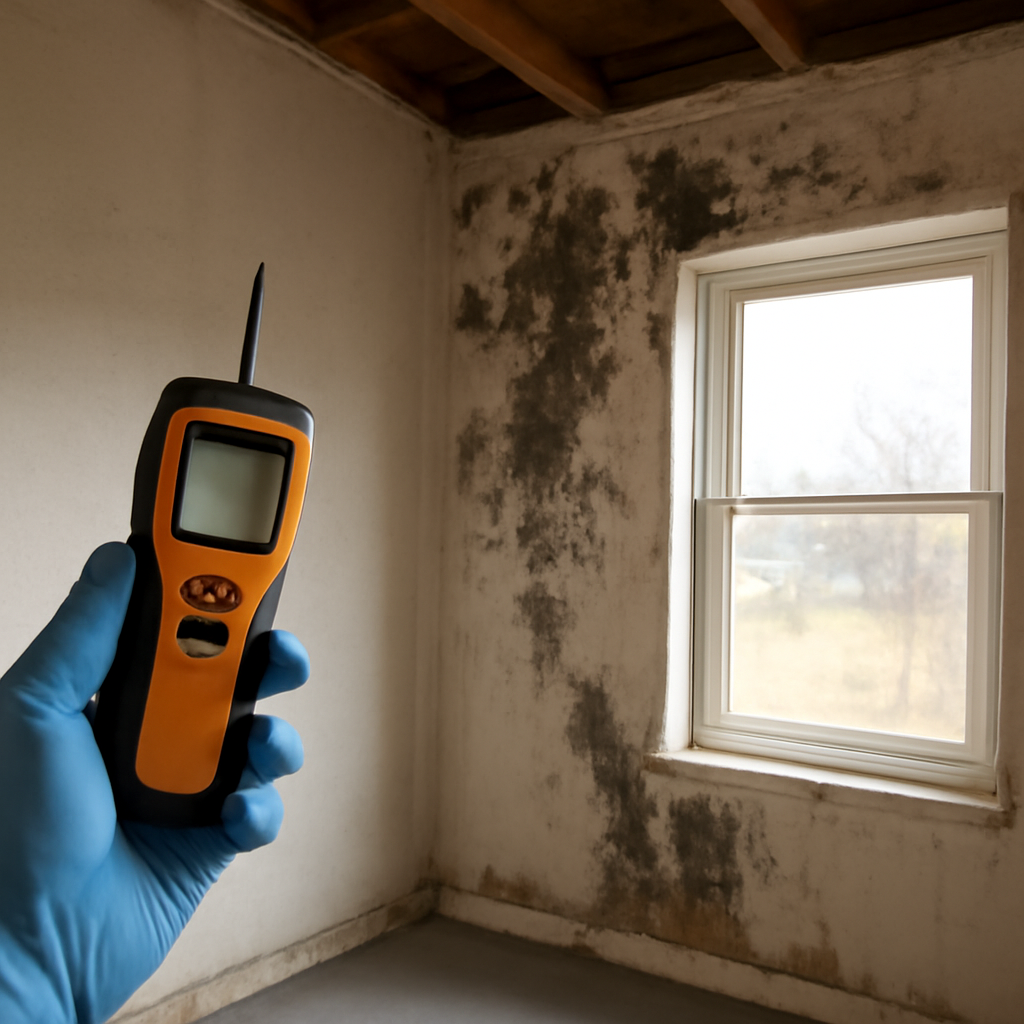
Mold inspection pueblo county homeowners search for usually starts with a damp basement in an older Bessemer bungalow or a musty smell after the Arkansas River runs high. Pueblo County is Southern Colorado’s largest county, centered on the historic steel-mill city of Pueblo, with growth spreading west into Pueblo West and out to Colorado City, Rye, Boone, Avondale, and Beulah. Its housing runs older and more affordable than the north metro, with a large share of pre-1978 homes that change how moisture and mold behave indoors. This page is a county-level hub: it covers where mold shows up across these communities, what an inspection looks at, local costs, and links to our city-specific pages. This summary reflects EPA and CDC guidance current as of 2026; consult a certified professional for testing decisions and your physician for any health symptoms.
Part of our Mold Testing & Inspection guide — start there for the full picture →
Is this mold, asbestos, or water damage? Get a free instant screen
Upload a clear photo of the suspect area. You'll get an instant AI screening opinion and what to do next. This is screening guidance, not a professional determination.
Screening guidance only. AI can be wrong. Confirm asbestos, mold type, or lead with lab testing or a licensed professional before acting.
Mold inspection in Pueblo County: what to know
A mold inspection is a visual and moisture-based assessment of a home to find active growth, the water source feeding it, and the conditions that let it spread. It is not the same as mold testing, which collects air or surface samples for a lab. Across Pueblo County, the inspection is the right place to start because most local mold traces back to a fixable moisture problem rather than to outdoor humidity, which stays low in this semi-arid, high-plains climate at roughly 4,700 feet.
The county’s older housing stock makes the inspection different from a newer north-metro home. In the historic Mesa Junction, Bessemer, and Union Avenue districts, plaster walls, cellar foundations, and decades-old plumbing create moisture pathways that simply do not exist in a 2010s tract house. An inspector working in Pueblo County reads those older details, because a slow seep in a century-old basement can feed mold behind plaster long before anyone smells it.
For the science of how mold grows and what spore counts mean, our plain-language mold inspection and testing hub walks through the fundamentals. This page stays focused on the county picture and how to act on it locally. For Pueblo proper, our mold inspection in Pueblo city page covers the neighborhood-level detail.
Why Pueblo County homes need mold inspection
Housing era is the main driver. Unlike the post-1980 north metro, much of Pueblo County’s stock predates 1978, particularly in the older Pueblo neighborhoods of Bessemer, the East Side, and Mesa Junction. Older homes mean cellar-style basements, original plaster, and aging supply and drain lines, all of which give water more ways to enter and more organic material to feed once it does. A small leak in an old plaster wall can spread mold for months before a stain appears.
Climate concentrates moisture in specific places. Pueblo County’s semi-arid air rarely grows mold on its own, but the evaporative (swamp) coolers common across the county add real indoor humidity through the summer, and basement living spaces trap that moisture below grade. When a cooler runs hard in July against a finished or semi-finished basement in Pueblo West, condensation and elevated humidity can feed surface mold on cool below-grade walls.
Water events are the seasonal trigger. The Arkansas River and Fountain Creek corridors run through the county, and spring runoff plus the occasional heavy thunderstorm raise the water table around foundations in low-lying areas like Avondale and the St. Charles Mesa. An inspection timed after a wet spell often finds the intrusion that will otherwise feed mold through the warm months.
What a Pueblo County mold inspection covers
A thorough inspection starts outside and works in. The inspector checks grading, downspout discharge, and how water moves around the foundation, all common entry points in the county’s older homes where original drainage was never designed for today’s storms. Inside, the focus moves to the basement or cellar, the most likely problem area in a Pueblo County house.
Moisture mapping and the building envelope
Using a moisture meter and often a thermal camera, the inspector maps damp plaster, wet framing, and cold spots behind walls where condensation forms. Behind the plaster of an older Bessemer home, a slow foundation seep can soak lath and framing for months with no visible stain. Mapping moisture finds it before a wall is opened.
The water source, not just the stain
Finding mold is only half the job; the inspection has to identify why it is there. A stain in a Mesa Junction basement might trace to a cracked clay drain line, an evaporative cooler’s overflow, or a settling-crack seep. Documenting the source is what lets a remediation actually fix the problem rather than treat the symptom and watch it return the next wet season.
Mold inspection cost in Pueblo County
A visual mold inspection in the Pueblo County market typically runs about $250 to $450 for a standard single-family home, depending on size and how much basement or cellar square footage is involved. Adding lab-analyzed air sampling usually brings the total to roughly $450 to $700. Larger Pueblo West properties and multi-level historic homes near Union Avenue sit at the higher end because there is simply more area, and more older detail, to assess.
Bundling a mold inspection with a pre-purchase home inspection often reduces the trip charge, so buyers across the county frequently combine the two. Against the cost of replacing mold-damaged plaster, framing, and flooring in an older basement, the inspection fee is modest and usually pays for itself by catching the moisture source early.
Pueblo County regulations and disclosure
Colorado does not license mold inspectors or remediators, and the state sets no mandatory remediation standard for residential mold. That makes credentials and method the buyer’s responsibility. For real-estate transactions, Colorado’s Seller’s Property Disclosure asks sellers to report known mold and water-damage history, so a documented inspection protects both sides of a Pueblo County sale, which matters in a market with many older homes that have changed hands several times.
Because there is no state license, look for nationally recognized training and a written report that documents moisture readings, the suspected source, and photographs rather than a verbal pass or fail. A defensible report carries weight in a negotiation when an older-basement issue surfaces during the contingency period on a Bessemer or East Side property.
Communities and areas served across Pueblo County
Mold concerns turn up county-wide, and the pattern shifts with each community. In the city of Pueblo, the county seat, older Bessemer, Mesa Junction, and East Side homes with cellar basements dominate the picture; our mold inspection in Pueblo page covers the city-level detail. Pueblo West, the county’s fast-growing suburb, follows a newer profile where finished basements and swamp-cooler humidity drive the risk instead.
Coverage extends to Colorado City and Rye in the southern part of the county, the farming communities of Avondale and Boone along the Arkansas River, the St. Charles Mesa agricultural area, and the mountain foothills around Beulah. Across all of these, the county’s EPA Radon Zone 1 status means a basement inspection often pairs naturally with a radon test, since both concerns live in the same below-grade space.
Seasonal mold patterns across Pueblo County
Mold in Pueblo County is seasonal in a way that surprises homeowners used to thinking of mold as a humid-climate problem. The dry high-plains air means ambient humidity rarely feeds growth on its own; instead, the calendar of liquid-water and cooling events drives the risk. Spring is one peak window, when snowmelt and the first heavy thunderstorms raise the water table along the Arkansas River and Fountain Creek and push moisture against foundations in lower-lying neighborhoods.
Summer brings the swamp-cooler mechanism. Evaporative coolers, common and economical across Pueblo County, deliberately add humidity to the indoor air, and in a basement or a tightly closed-up older home that moisture can collect on cool below-grade surfaces. Inspectors look closely at cooler ducting, drain pans, and the basement walls near them during the cooling season, because this humidity-driven pattern is distinct from a leak.
Winter is the diagnostic season. Once the coolers are off and the air is at its driest, a basement that still smells musty points to a standing moisture source, a plumbing drip, a chronic foundation seep, or a failed drain line, rather than seasonal humidity. That makes a winter inspection useful for isolating a persistent problem from a one-time event, which matters because the fix for a recurring source is very different from drying out a single intrusion.
How older housing changes the inspection
The defining feature of much of Pueblo County’s stock is its age, and that changes a mold inspection in concrete ways. In a newer home, drywall and modern drains behave predictably; in an older Bessemer or Mesa Junction house, plaster-and-lath walls, stone or block cellar foundations, and decades-old clay drain lines all carry and hide moisture differently. The inspection relies more heavily on moisture meters and thermal imaging to read what is happening behind plaster that cannot simply be cut open.
This is why a Pueblo County inspection of an older home spends extra time at the base of walls, around cellar windows, and in the mechanical area where the water heater, any sump, and the evaporative cooler’s water supply live. A reading of elevated moisture low on a plaster wall, with no visible stain, is one of the most common and important findings, because it signals water wicking up from an old foundation before any occupant would notice.
The county’s steel-industry and railroad legacy adds context too. Many homes near the historic CF&I and Evraz works and along the old rail lines date to the early twentieth century, and their long histories of repairs, additions, and converted basements mean an inspector has to read each home on its own terms rather than assume a standard layout. A converted cellar bedroom in one of these homes is often both the most water-prone and the most occupied space, which raises the weight of any growth found there.
How to choose a Pueblo County mold inspection provider
Ask whether the inspector uses a moisture meter and thermal imaging, and whether the report will document the suspected water source rather than just confirming mold is present. A provider who explains that older basements and swamp-cooler humidity are the county’s main risk drivers, and who inspects accordingly, understands the local housing stock. Avoid anyone who pushes remediation before identifying where the water is coming from.
For a home purchase, coordinating the mold inspection with a full structural inspection gives one report covering both the moisture risk and the older-foundation conditions that often cause it. That coordinated approach fits the pre-1978, basement-heavy reality of many Pueblo County homes and gives buyers a clearer picture before a deadline.
Mold and the Arkansas River corridor across Pueblo County
Geography gives Pueblo County a moisture pattern that more uniform counties do not share. The Arkansas River runs west to east through the heart of the county, joined by Fountain Creek near downtown Pueblo, and the low-lying ground along these corridors behaves differently from the higher mesas and the Pueblo West bench. Homes in Avondale, Boone, and the St. Charles Mesa sit on or near the floodplain and alluvial soils, where the seasonal water table rises closer to foundations and basements during spring runoff and after summer thunderstorms.
That elevated water table is a quiet, recurring source of basement moisture in the river-corridor communities. A home that stays dry for most of the year can take on a foundation seep for a few weeks each spring as the river runs high, and that brief annual intrusion is enough to feed mold behind a finished or semi-finished basement wall. An inspector working these areas reads the home in the context of its position relative to the river, asking whether the lot drains away from the foundation and whether past high-water years left their mark on the lower level.
The contrast with higher-ground Pueblo County is instructive. Homes up on the Pueblo West bench, in Colorado City, or in the foothills around Beulah sit well above the river and rarely face a rising water table; their moisture risks come instead from snowmelt, plumbing, and swamp-cooler humidity. Understanding which of these two patterns applies to a given home is part of what makes a county-level inspection more useful than a generic one, because the right preventive advice for a floodplain home in Avondale differs sharply from the right advice for a hillside home in Beulah.
References
- Mold cleanup and moisture control — U.S. Environmental Protection Agency
- Mold and your health — Centers for Disease Control and Prevention
- Colorado mold guidance for residents — Colorado Department of Public Health and Environment
Frequently asked questions
Does Pueblo County's dry climate mean mold isn't a problem?
No. The dry air rarely grows mold on its own, but liquid water and swamp-cooler humidity do. Foundation seeps, plumbing leaks, river-corridor runoff, and evaporative coolers feed mold in basements across the county.
Which Pueblo County communities does mold inspection cover?
Coverage spans the city of Pueblo, Pueblo West, Colorado City, Rye, Boone, Avondale, Beulah, and the St. Charles Mesa. Pueblo proper has a city-level page, and older basements are the common risk.
How much does a mold inspection cost in Pueblo County?
A visual inspection typically runs $250 to $450, and adding lab air sampling brings it to roughly $450 to $700. Larger and older multi-level homes cost more to assess.
Should I test for radon at the same time?
Often yes. Pueblo County is EPA Radon Zone 1, and both radon and mold concerns concentrate in the same below-grade space, so many homeowners assess them together.
A musty Pueblo County basement rarely fixes itself, and the moisture source only spreads through the older framing around it. To connect with a vetted local mold inspector before a purchase deadline or this wet season, get in touch through our contact page.