Mold Inspection in Elbert County, Colorado
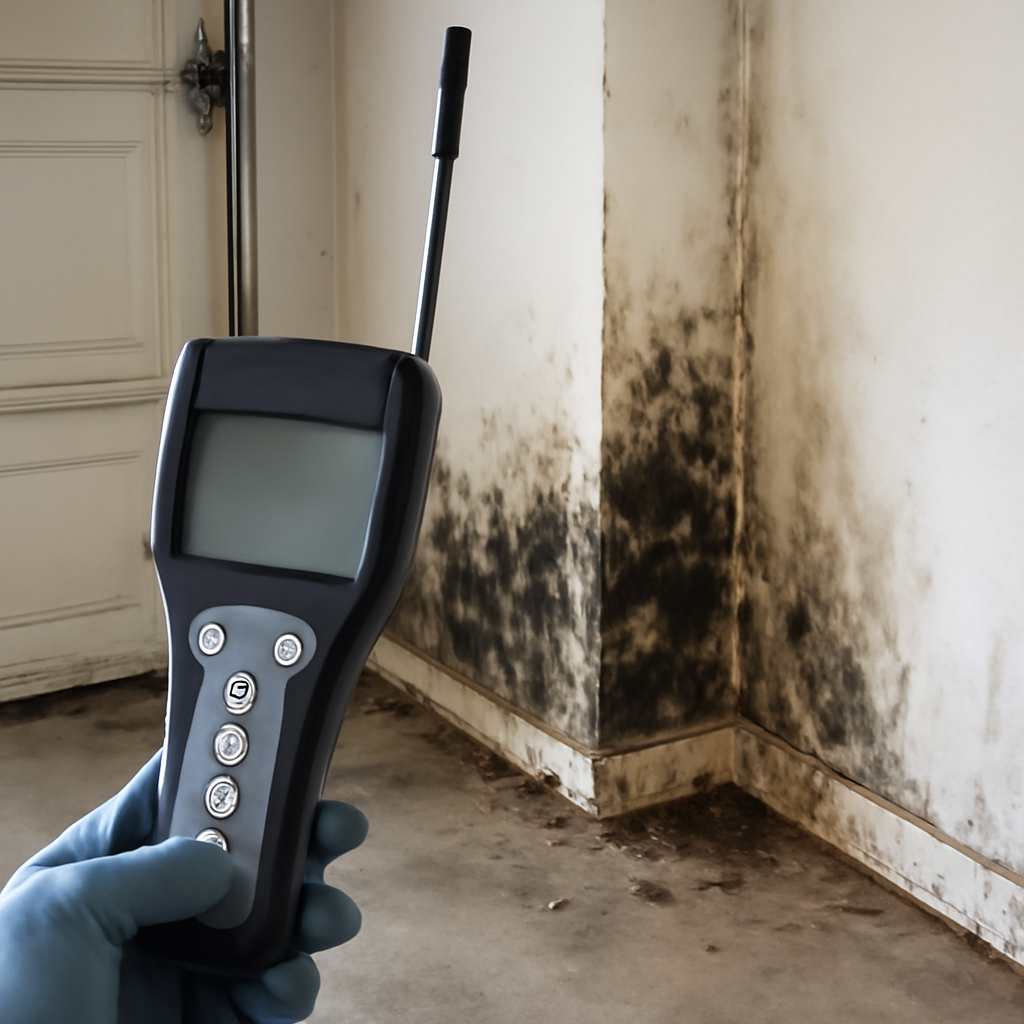
Mold inspection elbert county homeowners search for usually starts with a finished basement that smells damp or a crawlspace stain found while servicing a well pump. Elbert County sits on the Palmer Divide high prairie southeast of Denver, stretching from Kiowa, the county seat, through Elizabeth, the most populous town, out to Simla, Agate, Elbert, and Ramah on the eastern plains. Most homes here are large-acreage rural properties, ranchettes, and custom builds on well and septic at roughly 6,000 to 7,000 feet, which shapes how moisture behaves indoors. This page is a county-level hub: it covers where mold appears across these communities, what an inspection examines, local costs, and links to our related Elbert County service pages. This summary reflects EPA and CDC guidance current as of 2026; consult a certified professional for testing decisions and your physician for any health symptoms.
Part of our Mold Testing & Inspection guide — start there for the full picture →
Is this mold, asbestos, or water damage? Get a free instant screen
Upload a clear photo of the suspect area. You'll get an instant AI screening opinion and what to do next. This is screening guidance, not a professional determination.
Screening guidance only. AI can be wrong. Confirm asbestos, mold type, or lead with lab testing or a licensed professional before acting.
Mold inspection in Elbert County: what to know
A mold inspection is a visual and moisture-based assessment that locates active growth, the water source feeding it, and the conditions that let it spread. It differs from mold testing, which collects air or surface samples for laboratory analysis. Across Elbert County, the inspection is the right first step because most local mold traces back to a fixable water problem rather than to humid outdoor air.
The Palmer Divide climate is high, dry, and seasonally extreme. At these elevations, with long sealed winters and low ambient humidity, Elbert County homes rarely grow mold from the air alone. Instead, mold follows liquid water: a foundation seep in an Elizabeth ranchette basement, a failed sump in a Kiowa custom home, a crawlspace humidity problem under a rural property, or a slow plumbing drip behind a wall in Simla. The inspector’s job is to find that water and explain why it is there.
For the underlying science of how mold grows and what spore counts mean, our plain-language mold inspection and testing hub walks through the fundamentals. This page stays focused on the Elbert County picture and how to act on it locally. Because so many properties here run on private wells and septic systems, a mold inspection often surfaces moisture issues tied to plumbing and grading that a typical metro home would not face.
Why Elbert County homes need mold inspection
The county’s rural housing mix is the main driver. Elbert County is a fast-growing exurban county built largely of newer custom homes, manufactured housing, and ranchettes on large lots, alongside some older agricultural stock around Kiowa, Elbert, and Agate. Newer custom homes often have tightly sealed envelopes and finished basements, so when water enters, it has limited room to escape and a small leak can become a hidden colony before anyone notices a smell.
Well and septic systems add a moisture dimension that metro homes rarely deal with. A pressure tank, pump, and pressure switch in a basement mechanical room or crawlspace can weep or sweat, and a marginal septic field can keep soil saturated near a foundation. Inspectors in this county pay close attention to the well equipment area and any below-grade space where well plumbing lives, because a slow leak there feeds mold quietly for months.
Soil and climate stress the building envelope. Expansive clay soils across the Palmer Divide swell and shrink with moisture, opening foundation cracks that admit water around Elizabeth and Kiowa. Spring snowmelt and the occasional heavy prairie thunderstorm raise the water table against foundations, and evaporative (swamp) coolers common in this dry climate add interior humidity in summer. A mold inspection ties these local drivers together, mapping where water is most likely to enter a specific home.
What an Elbert County mold inspection covers
A thorough inspection starts outside and works inward. The inspector checks site grading, downspout discharge, window-well drainage, and how far a rural lot sheds water away from the foundation. On acreage properties, drainage patterns matter more than in a tight subdivision, since a poorly graded pad can channel snowmelt straight toward a basement wall.
Moisture mapping and the building envelope
Using a moisture meter and often a thermal camera, the inspector maps damp drywall, wet carpet pad, and cold spots behind finished walls where condensation forms. In an Elizabeth ranchette basement, a slow foundation seep can soak framing for months with no visible stain. Mapping moisture finds it before a wall is opened, and thermal imaging highlights temperature anomalies that point to hidden dampness.
The water source, not just the stain
Finding mold is only half the work; the inspection must identify why it is there. A stain in a Kiowa mechanical room might trace to a well pressure tank, a water heater, or a settling-crack seep. Documenting the source is what lets a remediation actually fix the problem instead of treating the symptom and watching it return after the next snowmelt.
Mold inspection cost in Elbert County
A visual mold inspection in the Elbert County market typically runs about $250 to $450 for a standard single-family home, depending on size and how much finished basement or crawlspace area is involved. Adding lab-analyzed air sampling usually brings the total to roughly $450 to $700. Larger custom homes on acreage around Elizabeth and Kiowa sit at the higher end because there is more square footage and often a crawlspace plus a finished basement to assess.
Rural travel can add a modest trip charge for the more remote eastern communities like Agate and Ramah, since drive time is longer than in a compact metro county. Bundling a mold inspection with a pre-purchase home inspection often offsets that charge, so buyers across the county frequently combine the two. Against the cost of replacing mold-damaged drywall and flooring in a finished basement, the inspection fee is modest and usually pays for itself by catching the moisture source early.
Colorado regulations and disclosure
Colorado does not license mold inspectors or remediators, and the state sets no mandatory remediation standard for residential mold. That places the burden of vetting credentials and method on the buyer. For real-estate transactions, Colorado’s Seller’s Property Disclosure asks sellers to report known mold and water-damage history, so a documented inspection protects both sides of an Elbert County sale.
Because there is no state license, look for nationally recognized training and a written report that documents moisture readings, the suspected water source, and photographs rather than a verbal pass or fail. On well-and-septic properties, that report often pairs naturally with a separate well-flow and septic evaluation, since the same below-grade systems that supply water can also be the source of a moisture problem. A defensible report carries weight when an issue surfaces during the contingency period.
Communities and areas served across Elbert County
Mold concerns turn up county-wide, and the pattern shifts with each community. In Kiowa, the county seat, a mix of older agricultural homes and newer custom builds means inspections range from crawlspace moisture in vintage stock to finished-basement seeps in recent construction. Elizabeth, the most populous town, has the largest concentration of ranchette and subdivision homes, where basement and mechanical-room moisture are the usual culprits. The eastern plains communities of Simla, Agate, Elbert, and Ramah add more agricultural and manufactured housing, where crawlspaces and skirting moisture come into play.
Coverage extends west toward the Douglas County line, where Elbert’s exurban growth blends into the Parker and Castle Rock commuter belt. Across all of these, the county’s EPA Radon Zone 1 status means a basement inspection often pairs naturally with a radon test, since both concerns live in the same below-grade space. Homeowners weighing both can review our companion page on radon testing in Elbert County to plan a single visit. For nearby live coverage to the west, our mold inspection in Castle Rock page details the adjacent Douglas County market.
Seasonal mold patterns across Elbert County
Mold here is seasonal in a way that surprises homeowners used to thinking of mold as a humid-climate issue. The dry high-prairie air rarely feeds growth on its own; instead, the calendar of liquid-water events drives the risk. Late winter and early spring are the peak window, when accumulated snow melts against foundations and the expansive clay soils shift and crack. An inspection timed for March through May often catches intrusion at its most active, before the drier summer masks the moisture that will still feed growth behind walls.
Winter brings a different mechanism. As Elizabeth and Kiowa homes seal up against the long Palmer Divide cold, indoor humidity from cooking, showering, and finished-basement occupancy has nowhere to escape in a tight envelope. Condensation forms on cold rim joists, below-grade walls, and around poorly insulated windows, feeding surface mold even without an outright leak. Summer adds the evaporative-cooler factor, since swamp coolers raise indoor humidity to keep homes comfortable, and an undersized or over-run cooler can push moisture high enough to support growth in a closed-up room.
Summer is also the diagnostic season for liquid water. Once snowmelt ends, a basement or crawlspace that still smells musty points to a standing source, a well-plumbing drip, a chronic foundation seep, or a sump that is not draining, rather than seasonal infiltration. That distinction matters because the fix for a recurring source differs sharply from drying out a one-time intrusion, and an inspection timed in the dry season helps isolate the two.
How rural properties change the inspection
The defining feature of Elbert County housing is acreage and rural systems, and that changes a mold inspection in concrete ways. On a typical metro lot, the inspector can rely on municipal water and a compact footprint; on an Elbert ranchette, the inspection has to account for a well, a pressure tank, a septic field, and often a crawlspace or partial basement. Each of those is a potential moisture source, so the inspector spends extra time in the mechanical room and any below-grade well-equipment space.
Crawlspaces deserve special attention here. Many rural and manufactured homes across Simla, Agate, and the eastern plains sit over vented crawlspaces where ground moisture, missing vapor barriers, and poor drainage can keep wood framing damp. An inspector checks the vapor barrier, looks for standing water or efflorescence on piers, and reads moisture levels in the joists overhead, since a damp crawlspace is one of the most common and overlooked mold sources in rural Elbert County homes.
Drainage on acreage is the third differentiator. A large lot gives water more room to move, but it also means grading, culverts, and the pad around the home determine whether snowmelt sheds away or pools against the foundation. The inspector evaluates how the site directs water, because on a custom home set into a Palmer Divide hillside, a single low spot can channel runoff toward a finished basement year after year.
How to choose an Elbert County mold inspection provider
Ask whether the inspector uses a moisture meter and thermal imaging, and whether the report will document the suspected water source rather than just confirming mold is present. A provider who understands well-and-septic properties, crawlspace moisture, and the expansive-clay foundation issues common on the Palmer Divide is reading the local housing stock correctly. Avoid anyone who pushes remediation before identifying where the water is coming from.
For a home purchase, coordinating the mold inspection with a full structural inspection gives one report covering the moisture risk and the foundation conditions that often cause it. That coordinated approach fits the rural, well-served reality of most Elbert County homes and gives buyers a clearer picture before a contract deadline.
References
- Mold cleanup and moisture control — U.S. Environmental Protection Agency
- Mold and your health — Centers for Disease Control and Prevention
- Colorado mold guidance for residents — Colorado Department of Public Health and Environment
Frequently asked questions
Does Elbert County's dry climate mean mold isn't a problem?
No. The dry prairie air rarely grows mold on its own, but liquid water does. Foundation seeps in expansive clay, well-plumbing leaks, crawlspace humidity, and evaporative coolers feed mold in homes from Kiowa to Elizabeth.
Which Elbert County communities does mold inspection cover?
Coverage spans Kiowa, Elizabeth, Simla, Agate, Elbert, and Ramah, plus the exurban western edge near Parker and Castle Rock. The rural well-and-septic risk pattern is consistent across the county.
How much does a mold inspection cost in Elbert County?
A visual inspection typically runs $250 to $450, and adding lab air sampling brings it to roughly $450 to $700. Larger acreage homes with a crawlspace plus finished basement, and remote eastern properties, sit at the higher end.
Should I test for radon at the same time?
Often yes. Elbert County is EPA Radon Zone 1, and both radon and mold concerns concentrate in the same below-grade space, so many homeowners assess them together in one visit.
A musty Elbert County basement or crawlspace rarely fixes itself, and the moisture source only spreads. To connect with a vetted local mold inspector before a purchase deadline or this snowmelt season, get in touch through our contact page.