Radon Testing in Elbert County, Colorado
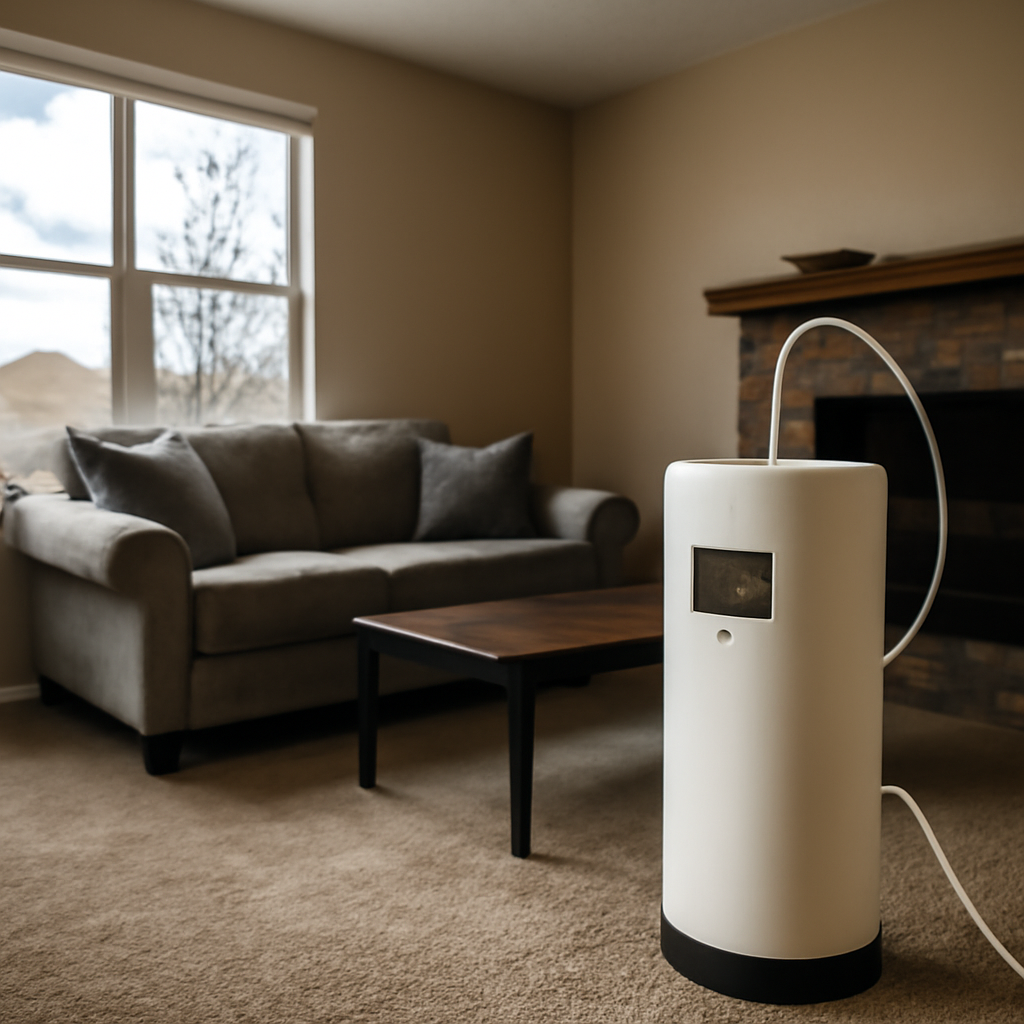
Radon testing elbert county homeowners search for matters because the entire county sits in EPA Radon Zone 1, the highest-risk designation, where the predicted average indoor level exceeds the 4 pCi/L action threshold. Elbert County spreads across the Palmer Divide high prairie southeast of Denver, from Kiowa, the county seat, through Elizabeth, the most populous town, out to Simla, Agate, Elbert, and Ramah on the eastern plains. With most homes on private wells and built into uranium-bearing plains soils at 6,000 to 7,000 feet, both soil-gas radon and radon-in-water are local concerns. This page is a county-level hub: it covers why radon is elevated here, how testing works, local costs, and links to our related Elbert County service pages. This summary reflects EPA and CDPHE guidance current as of 2026; consult a certified professional for testing and your physician for health questions.
Part of our Radon Levels guide — start there for the full picture →
Radon testing in Elbert County: what to know
Radon is a colorless, odorless radioactive gas produced by the natural decay of uranium in soil and rock. It enters homes through foundation cracks, slab penetrations, sump pits, and crawlspace floors, then accumulates in the lowest occupied level. The EPA identifies radon as the second-leading cause of lung cancer in the United States and the leading cause among people who have never smoked, which is why testing is the only way to know a home’s level.
Elbert County’s Zone 1 status reflects the uranium content of its Palmer Divide and plains soils. A test is the single reliable way to measure radon, because the gas cannot be seen or smelled and levels vary house to house even on the same road. Two neighboring ranchettes near Elizabeth can read very differently depending on foundation type, soil contact, and how tightly the home seals through winter.
For the full picture of how radon behaves in Colorado homes and what the readings mean, our plain-language Front Range radon guide covers the fundamentals. This page focuses on the Elbert County picture, including the rural well-water dimension that distinguishes this county from a typical metro location served by municipal water.
Why Elbert County homes have elevated radon
Geology is the foundation of the risk. The uranium-bearing soils of the Palmer Divide and the eastern plains continuously generate radon gas, which migrates upward and seeps into homes through any path to the soil. Across Kiowa, Elizabeth, and the rural eastern communities, that soil-gas pathway makes Zone 1 readings common regardless of a home’s age.
Housing and climate concentrate the gas. Elbert County’s newer custom homes and ranchettes often have finished basements and tight envelopes, and the long sealed winters of this high-prairie county keep homes closed up for months. That reduces air exchange and lets radon build to higher concentrations in the lowest level, exactly where finished basements put bedrooms and living space.
Private wells add a second pathway unique to rural counties. Most Elbert County properties draw water from a well, and groundwater moving through uranium-bearing rock can carry dissolved radon into the home. When that water is used for showering, washing, and cooking, agitation releases radon into the indoor air, and ingestion carries its own smaller risk. Because municipal systems typically aerate radon out of water before delivery, this radon-in-water concern is specific to the well-served homes that dominate Kiowa, Elizabeth, and the plains communities, and it is worth a separate water test alongside the standard air measurement.
What an Elbert County radon test covers
Testing measures the radon concentration in the lowest livable level of the home over a defined period. Short-term tests run two to seven days and give a quick snapshot, while long-term tests run more than 90 days and capture seasonal variation. For real-estate timelines, a short-term test placed in the lowest lived-in space is the standard.
Short-term and continuous monitor testing
A continuous radon monitor records hourly levels and produces an average plus a tamper record, which is valuable in a transaction. Placed in a finished Elizabeth basement with windows kept closed under standard conditions, the monitor captures how the home actually behaves through a typical few days, including any spikes tied to weather or how tightly the house is sealed.
Radon-in-water testing for well homes
On a well-served Elbert County property, a separate water sample sent to a laboratory measures dissolved radon. This matters because air testing alone misses the water pathway entirely. A high water-radon result points toward an aeration or GAC treatment system as part of the overall fix, which a home on municipal water would never need.
Radon testing cost in Elbert County
A professional short-term radon air test in the Elbert County market typically runs about $150 to $250 when performed on its own, and is often discounted to roughly $100 to $150 when bundled with a pre-purchase home inspection. A continuous-monitor test with a same-visit report sits at the higher end of that range because of the equipment involved.
Radon-in-water testing adds a separate laboratory fee, generally $75 to $150 per sample, and is worth including on any well-served property given how common private wells are here. Rural travel can add a modest trip charge for the more remote eastern communities like Agate and Ramah. Against the cost of a mitigation system and the long-term health stakes, a test is an inexpensive first step that tells a homeowner exactly where they stand.
Colorado regulations and disclosure
Colorado has moved to formalize radon practice, and the state now requires radon professionals who perform measurement and mitigation to be certified, which raises the bar for who should place a test in a transaction. For real-estate deals, Colorado law requires sellers to provide a radon disclosure and the state’s radon brochure to buyers, so a documented test result fits directly into the disclosure process for an Elbert County sale.
Because Elbert County is Zone 1, a radon test is effectively expected during a purchase here, and a result above 4 pCi/L typically prompts a mitigation request during the contingency period. A defensible report from a certified professional, with the test conditions documented, carries the most weight when a buyer and seller negotiate over a mitigation system.
Communities and areas served across Elbert County
Radon turns up county-wide, and the rural well dimension shifts the testing approach with each community. In Kiowa, the county seat, older agricultural homes and newer custom builds alike warrant both air and water testing given the prevalence of wells. Elizabeth, the most populous town, has the largest concentration of ranchette and subdivision homes with finished basements where soil-gas radon accumulates. The eastern plains communities of Simla, Agate, Elbert, and Ramah add agricultural and manufactured housing where crawlspace and slab pathways drive the readings.
Coverage extends west toward the Douglas County line, where Elbert’s exurban growth blends into the Parker and Castle Rock commuter belt. Because the below-grade space is the shared concern for both radon and moisture, many homeowners pair a radon test with a mold assessment; our companion page on radon mitigation in Elbert County explains what happens when a test comes back high. For nearby live coverage to the west, our radon testing in Castle Rock page details the adjacent Douglas County market.
Seasonal radon patterns across Elbert County
Radon levels swing with the seasons on the Palmer Divide, and winter is the peak. As Kiowa and Elizabeth homes seal tightly against the long high-prairie cold, air exchange drops and the stack effect draws soil gas upward into the closed-up living space. A winter test often reads higher than a summer one, which is why short-term tests are placed under closed-house conditions to capture the home’s worst-case behavior.
Summer can mask the problem. With windows open and evaporative coolers moving large volumes of air through the home, radon can be diluted to a deceptively low reading even in a house that runs high in winter. A homeowner who tests only in summer with the windows open may get a falsely reassuring number, so a closed-house short-term test or a long-term test that spans seasons gives a truer measurement.
Snowpack and frozen ground add a Palmer Divide twist. When the soil around a foundation freezes or is covered in snow, the gas has fewer paths to escape at the surface and is more likely to follow the warm, low-pressure route into the home. That combination of frozen ground and a sealed, heated house is why late-winter readings in Elbert County frequently come in at their highest, and why the season of the test should always be noted in the report.
How well water changes radon planning
The defining feature of Elbert County radon work is the prevalence of private wells, which adds the water pathway that municipal-served counties do not have. A complete picture on a well property means testing both the indoor air and the well water, since a home can have acceptable air radon but an elevated water level that releases gas during showering and laundry. The two results together determine what a mitigation plan must address.
Water treatment for radon differs from soil-gas mitigation. Where a high air reading is solved with a sub-slab depressurization system that vents soil gas above the roofline, a high water reading calls for either aeration, which strips radon from the water before it enters the home, or a granular activated carbon system. An Elbert County homeowner with elevated readings on both pathways may need both a sub-slab system and a water treatment unit, which is a planning reality rural buyers should anticipate.
Crawlspaces and slab variety across the county shape the air side. Manufactured and rural homes near Simla and Agate may sit over crawlspaces or slabs that change how soil gas enters, so the test placement and any later mitigation design account for the specific foundation. Reading the air result alongside the foundation type and the well-water result gives the full rural radon picture that an air number alone would miss.
Interpreting radon results on the Palmer Divide
A radon test result is a single number with a great deal of context behind it, and understanding that context helps an Elbert County homeowner act sensibly. The EPA’s 4 pCi/L action level is the threshold at which mitigation is recommended, but the agency is clear that no level is risk-free and that reductions below 4 still lower exposure. A reading of 3.8 in an Elizabeth basement is not a clean bill of health so much as a number close enough to the threshold that a long-term confirmation test or future retesting is worthwhile, especially given the home’s Zone 1 location.
Test conditions shape how a result should be read. A short-term test run under proper closed-house conditions captures a worst-case snapshot, while the same home tested with windows open in summer might read far lower, which is why the report should always state the conditions and duration. On the Palmer Divide, where homes seal tightly through long winters, a borderline summer result deserves a closed-house or long-term follow-up before a homeowner concludes the home is fine, since the winter reality may be higher.
The well-water result adds a parallel number to interpret. Radon-in-water is measured in picocuries per liter of water, a different scale from the air reading, and a high water number contributes to indoor air radon when the water is agitated during showering and laundry. An Elbert County homeowner reading both results together gets the full exposure picture, since a home could pass on air alone yet still warrant water treatment, a nuance that only the combined results reveal.
How to choose an Elbert County radon testing provider
Look for a certified radon measurement professional who places the device under proper closed-house conditions and documents the test period and the home’s foundation type. On a well-served property, ask whether radon-in-water testing is offered, since a provider who overlooks the water pathway is missing a concern specific to rural Elbert County. A clear report that states the average, the conditions, and any recommended next step is what a buyer needs in a transaction.
For a home purchase, coordinating the radon test with a full inspection puts the radon result alongside the foundation and moisture findings in one report. That fits the rural, well-served reality of most Elbert County homes and gives buyers a complete basis for a mitigation request before a deadline.
References
- Radon health risk and testing guidance — U.S. Environmental Protection Agency
- Colorado radon program and testing information — Colorado Department of Public Health and Environment
- Radon and lung cancer risk — Centers for Disease Control and Prevention
Frequently asked questions
Is all of Elbert County in a high radon zone?
Yes. Elbert County is designated EPA Radon Zone 1, the highest-risk category, where the predicted average indoor level exceeds the 4 pCi/L action threshold. Testing is the only way to know a specific home's level.
Should I test my well water for radon in Elbert County?
Often yes. Most county homes use private wells, and groundwater moving through uranium-bearing rock can carry dissolved radon that releases into the air during showering and laundry. A separate water sample measures that pathway.
How much does radon testing cost in Elbert County?
A short-term air test typically runs $150 to $250 alone, or $100 to $150 bundled with a home inspection. Radon-in-water testing adds roughly $75 to $150 per lab sample, and remote eastern properties may carry a trip charge.
When is the best time to test for radon here?
Winter readings are usually highest, since sealed, heated homes and frozen ground drive soil gas indoors. A closed-house short-term test or a long-term test that spans seasons gives the truest measurement on the Palmer Divide.
With all of Elbert County in Radon Zone 1 and most homes on private wells, testing both air and water is the only way to know where your home stands. To connect with a vetted local radon professional before a purchase deadline, reach out through our contact page.
Test your home for radon
Radon is invisible and odorless, so a test is the only way to know your level. A short-term kit gives a first reading in days; a digital monitor tracks it over time.
| Product | Why | Buy |
|---|---|---|
 AirChek Charcoal Radon Test Kit AirChek Charcoal Radon Test Kit | Lab fee usually included; EPA short-term protocol. | Amazon — $21.95 |
 First Alert RD1 Radon Test Kit First Alert RD1 Radon Test Kit | Widely stocked; 48-hour charcoal test. | Amazon — $17.95 |
 Airthings Corentium Home Airthings Corentium Home | Digital monitor with a long-term average. | Amazon — $142.49 |