Lead Testing in Elbert County, Colorado
Lead testing elbert county homeowners need most often arises before a renovation in an older home, when a young child or pregnant family member is in the household, or during the purchase of a pre-1978 property. Elbert County stretches across the Palmer Divide high prairie southeast of Denver, from Kiowa, the county seat, through Elizabeth, the most populous town, out to Simla, Agate, Elbert, and Ramah on the eastern plains. Although newer custom homes dominate, the older agricultural and small-town stock around Kiowa, Elbert, and Agate predates the 1978 ban on lead-based paint, making lead a real concern there. This page is a county-level hub: it covers where lead is found, how testing works, local costs, and links to our related Elbert County service pages. This summary reflects EPA and CDC guidance current as of 2026; consult a certified professional and your physician about exposure concerns.
Asbestos or biohazard concern? Speak with a certified contractor.
📞 Call (877) 742-8496Lead testing in Elbert County: what to know
Lead is a toxic metal that was common in house paint until the federal ban on lead-based residential paint took effect in 1978. In older homes it persists on walls, trim, windows, and doors, and it becomes a hazard when paint deteriorates into chips and dust or is disturbed during renovation. Lead exposure is especially harmful to young children and pregnant women, affecting brain and nervous-system development, which is why testing older homes is a public-health priority.
Across Elbert County, lead testing matters most for the pre-1978 housing in the historic cores of Kiowa, Elbert, Agate, and Simla. A vintage farmhouse or older small-town home is likely to have lead-based paint in some layer, particularly on high-friction surfaces like window sashes and door frames where dust is generated. Newer custom homes built after 1978 are very unlikely to contain lead paint, but any home of uncertain age warrants testing before a remodel.
For the broader background on lead and asbestos in older housing, our pre-1978 housing hazard guide explains how these materials were used and why disturbance creates the risk. This page focuses on the Elbert County picture, including the well-water dimension that gives lead testing here a second pathway beyond paint, one that municipal-served counties handle differently.
Why Elbert County homes need lead testing
Housing era is the leading driver. While Elbert County has grown with newer construction, its pre-1978 farmhouses and small-town homes around Kiowa, Elbert, Agate, and Simla can carry lead-based paint on original trim, windows, and exterior surfaces. Those surfaces become a hazard when paint chalks, peels, or is sanded during a renovation, releasing lead dust that settles into the home and the surrounding soil.
Renovation and family circumstances raise the stakes. As buyers update older rural properties, disturbing painted surfaces without testing first can spread lead dust through a home. For households with young children or expecting parents, testing both paint and dust before and after any work is the way to confirm a home is safe, since children are the most vulnerable to even low-level exposure.
Well water adds a pathway specific to rural counties. Most Elbert County homes draw water from a private well, and lead can enter drinking water from older plumbing, lead solder, or brass fixtures rather than from the source water itself. Because private wells are not subject to the routine corrosion-control treatment that public utilities apply, a well-served home with older plumbing benefits from a water lead test alongside the paint assessment. This dual-pathway concern is part of what sets lead testing on a rural Elbert County property apart from a home on a municipal system.
What an Elbert County lead test covers
A lead assessment can address paint, dust, soil, and water, depending on the home and the reason for testing. A risk assessment focuses on identifying hazards, while an inspection identifies lead-based paint surfaces; many homeowners want both, plus a water sample on a well property.
Paint, dust, and soil testing
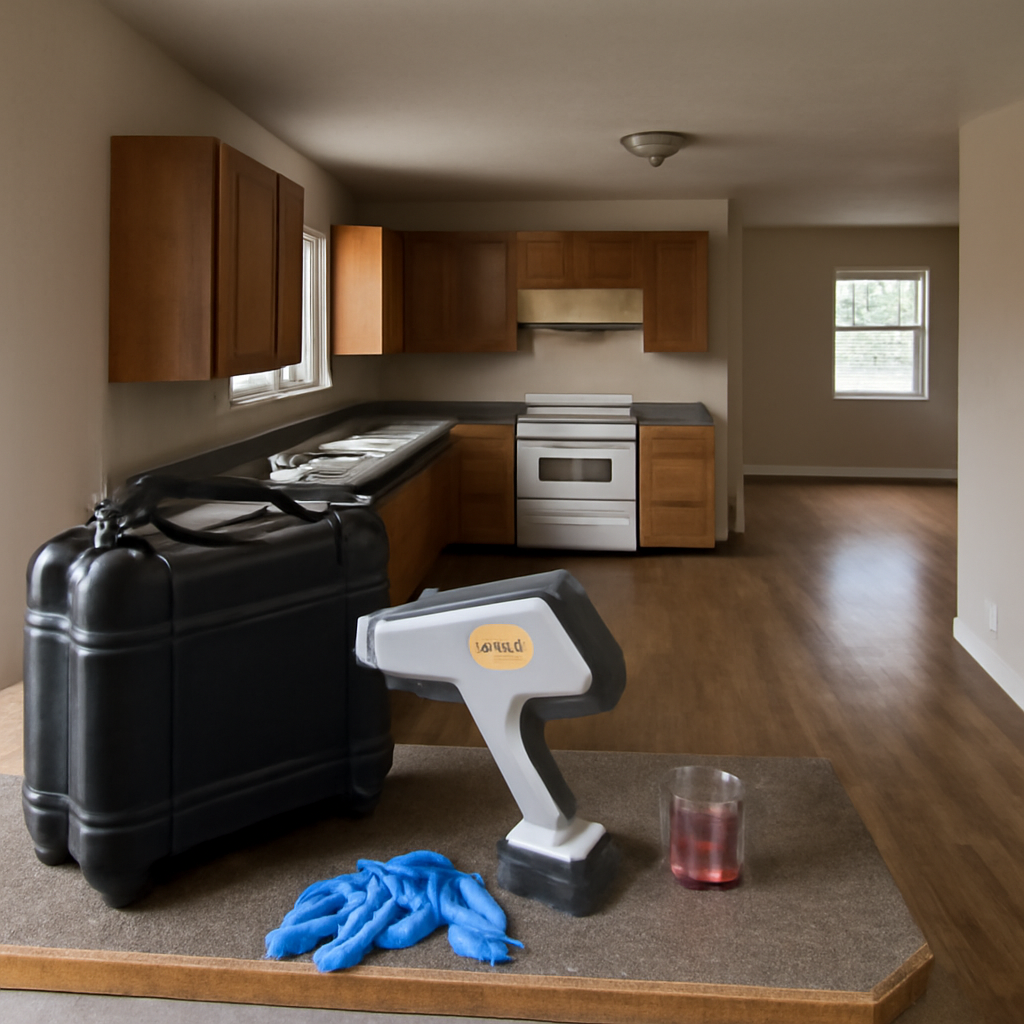
Lead-based paint is identified either by an XRF analyzer that reads surfaces in place or by laboratory analysis of paint chip samples. Dust-wipe sampling on floors and windowsills measures the settled lead dust that is the main exposure route for children, and a soil sample near the foundation or an old painted exterior captures lead that has weathered off siding in an older Kiowa or Elbert home.
Water testing on well properties
On a well-served Elbert County home, a first-draw water sample sent to an accredited laboratory measures lead that has leached from plumbing during overnight standing. This is important because paint testing alone misses the water pathway, and older homes with original plumbing or lead solder can deliver lead at the tap even when the well source is clean.
Lead testing cost in Elbert County
Lead testing in the Elbert County market varies by scope. A paint inspection or risk assessment for a typical older home generally runs about $300 to $600, depending on size and the number of surfaces or samples involved. Individual dust-wipe or soil samples add laboratory fees, and a water lead test on a well property is a separate accredited-lab analysis, commonly $40 to $100 per sample.
Rural travel can add a modest trip charge for the remote eastern communities like Agate and Ramah. Many homeowners bundle lead testing with asbestos testing, since both concerns live in the same pre-1978 materials and a single visit can sample for both. Against the lifelong health consequences of childhood lead exposure, testing an older home before a renovation or before young children move in is an inexpensive and important safeguard.
Colorado regulations and disclosure
Federal law governs much of lead practice. The EPA’s Renovation, Repair and Painting Rule requires that contractors working on pre-1978 housing be certified and follow lead-safe work practices, which applies directly to renovating Elbert County’s older homes. For any pre-1978 home sale or lease, the federal disclosure rule requires sellers and landlords to disclose known lead-based paint and provide the EPA lead-hazard pamphlet.
For real-estate transactions, Colorado’s Seller’s Property Disclosure also covers known lead, so a documented test result informs both sides of a sale involving an older property. Because Elbert County’s pre-1978 farmhouses and small-town homes are the stock most likely to contain lead, a buyer planning a remodel benefits from testing during the inspection period so any hazard control can be scoped and budgeted before closing.
Communities and areas served across Elbert County
Lead concerns concentrate in the older housing, and the pattern shifts with each community. In Kiowa, the county seat, the historic core holds pre-1978 homes where original window sashes, door trim, and exterior paint are the usual concerns. The small communities of Elbert, Agate, and Simla on the eastern plains include vintage farmhouses where weathered exterior paint and older plumbing add to the testing list. Elizabeth, the most populous town, mixes newer construction with some older stock, so the testing need depends on a specific home’s age.
Coverage extends west toward the Douglas County line, where Elbert’s exurban growth blends into the Parker and Castle Rock commuter belt. Because asbestos is a parallel concern in the same pre-1978 homes, many homeowners pair lead testing with asbestos testing; our companion page on asbestos testing in Elbert County covers that side. For nearby live coverage to the west, our lead testing in Palmer Lake page details a comparable older-stock market just over the divide.
How lead exposure happens in older homes
Understanding the exposure routes guides where to test in an Elbert County home. Intact, well-maintained lead paint under newer layers poses little immediate risk, but the moment that paint deteriorates, the hazard becomes real. The most common route is lead dust, generated as painted windows and doors rub at their friction points and as old paint chalks and peels. That fine dust settles on floors and windowsills, where crawling children pick it up on hands and toys, which is why dust-wipe sampling is central to a lead risk assessment.
Renovation is the acute risk multiplier. Sanding, scraping, or demolishing lead-painted surfaces in a Kiowa farmhouse releases a burst of lead dust that can contaminate an entire home if the work is done without lead-safe containment. This is exactly why the federal renovation rule requires certified, lead-safe practices on pre-1978 housing, and why testing before a project tells a homeowner which surfaces demand that careful handling.
Soil and water complete the picture on a rural property. Decades of weathering can deposit lead from exterior paint into the soil around an older farmhouse, where it becomes a concern for gardens and play areas, so a soil sample near the foundation is worthwhile. On the water side, lead can leach from older plumbing and solder into well water during overnight standing, making a first-draw tap sample a useful check on a vintage Elbert County home with original pipes.
Protecting children in an older Elbert County home
Children under six are the population most vulnerable to lead, and protecting them in an older Elbert County home starts with knowing where the hazards are. Young children absorb lead more readily than adults and are most affected during the years their brains are developing, and their hand-to-mouth behavior means lead dust on floors and windowsills is the primary route of exposure. A lead risk assessment that includes dust-wipe sampling in the rooms where a child spends time gives a family the information to act before exposure occurs.
Interim controls can reduce risk while bigger work waits. In a pre-1978 farmhouse near Kiowa or Elbert, repainting deteriorated surfaces with proper preparation, installing window-well inserts to catch sash dust, and frequent wet-cleaning of floors and sills all lower the dust burden between a child and the lead paint. These are not a substitute for proper hazard control during a renovation, but they help manage exposure in a home where full abatement is not immediately planned.
Blood-lead testing is the health-side complement. A family concerned about exposure in an older home can ask their pediatrician about blood-lead screening for young children, which measures whether exposure has actually occurred. Pairing a home lead assessment with a conversation with the child’s doctor connects the property findings to the family’s health, which is the framing that matters most when young children live in an older Elbert County home. Decisions about a child’s health should always be made with a physician.
How to choose an Elbert County lead testing provider
Look for a certified lead inspector or risk assessor who can test paint, dust, soil, and, on a well property, water, and who documents findings clearly enough to guide a renovation or a purchase decision. A provider who understands pre-1978 farmhouse construction and the older-plumbing water pathway common on Elbert County wells is reading the local risk correctly. For any renovation, confirm that contractors will follow the EPA’s lead-safe work practices.
For a home purchase, coordinating lead testing with the broader inspection puts the results alongside the project scope and the household’s circumstances, so hazard control can be planned before closing. That fits the older agricultural reality of Elbert County’s pre-1978 stock and protects the family members most vulnerable to lead.
References
- Protect your family from lead in your home — U.S. Environmental Protection Agency
- Childhood lead poisoning prevention — Centers for Disease Control and Prevention
- Lead-based paint disclosure and safety — U.S. Department of Housing and Urban Development
In Elbert County’s older farmhouses and small-town homes, lead can hide in both paint and well-water plumbing. To protect young children and plan a renovation safely, connect with a vetted local lead professional by reaching out through our contact page.