Lead Testing in Boulder County, Colorado
Boulder County’s older housing makes lead paint a real concern for families with young children, from the pre-1900 brick of central Boulder to Old Town Longmont and the coal-town cores of Lafayette and Louisville. Lead-based paint was banned for residential use in 1978, so homes built before that year, which describes a large share of the county’s historic stock, are the most likely to contain it. Lead is a health-adjacent topic: the CDC is clear that no safe blood-lead level has been identified in children, and lead exposure can permanently affect a child’s brain and nervous-system development. This county hub explains how lead testing works here, why local housing raises the risk, and which city pages to read next. The guidance below reflects EPA, HUD, and CDC sources current as of 2026 and is informational, not a medical directive.
Asbestos or biohazard concern? Speak with a certified contractor.
📞 Call (877) 742-8496Lead testing in Boulder County: what to know
Lead testing covers two distinct questions: whether painted surfaces contain lead, and whether lead has spread into dust or soil where children can ingest it. A paint inspection uses an XRF analyzer or paint-chip lab samples to identify lead in coatings, while a risk assessment adds dust-wipe and soil sampling to find where deteriorating paint has created an actual exposure hazard. The distinction matters, because intact lead paint behind newer coatings is lower-risk than peeling paint on a windowsill a toddler can reach. For the full pre-1978 picture, our guide to asbestos and lead hazards in older homes sets out the context.
Boulder County’s housing makes this especially relevant. The coal-town neighborhoods of Lafayette and Louisville, Old Town Longmont, and central Boulder’s pre-1900 and pre-1978 homes carry decades of layered paint on window troughs, door frames, porches, and trim, the friction and chewable surfaces where lead-paint hazards concentrate. A family buying or renovating one of these homes should know what is behind the paint before a child moves in or a sander comes out.
An important nuance is that the danger is rarely the paint itself sitting intact on a wall, but the dust and chips it produces as it ages and as surfaces rub together. Every time a old double-hung window is raised and lowered, the painted sash grinds against the jamb and sheds a little lead dust onto the sill and floor below, where a crawling child’s hands find it. The same happens at doors that bind and on porch floors that see foot traffic. This is why a risk assessment focuses on dust-wipe sampling at those locations rather than simply cataloguing which walls test positive: the question that protects a child is not whether the home contains lead, which in pre-1978 Boulder County stock is likely, but whether lead has migrated into the dust and soil where a young child actually encounters it.
Why Boulder County homes warrant testing
Age is the driver. The 1978 ban means any Boulder County home built before that year may contain lead-based paint, and the county’s notably old and varied stock, central Boulder Victorians, Old Town Longmont, and the Lafayette and Louisville coal-town cores, puts a large fraction of homes in that category. The older the home, the more likely the paint is high-lead and the more layers there are to deteriorate.
Children are why it matters most. The CDC identifies deteriorating lead paint and the dust it sheds as the leading source of childhood lead exposure, and young children ingest it through normal hand-to-mouth behavior near window troughs, porches, and painted trim. Renovation multiplies the risk: sanding, scraping, or demolishing old painted surfaces, common in a county where owners restore historic homes, can blanket a house in lead dust unless lead-safe work practices are followed.
Soil and climate add a pathway. Decades of exterior paint chalking and chipping off old siding and porches can leave lead in the soil near foundations and along drip lines, and Boulder County’s freeze-thaw cycle keeps accelerating exterior-paint deterioration. A child playing in that soil, or tracking it indoors, has another route to exposure that only soil sampling reveals. The flood corridor adds a further wrinkle, since 2013 cleanup and rebuilding disturbed old painted materials in many Longmont, Lyons, and Boulder basements.
What a Boulder County lead test covers
A complete evaluation matches the home and the family. A buyer with a toddler moving into an old Lafayette house benefits from a full risk assessment, while an owner planning to repaint trim may only need targeted paint testing of the surfaces they will disturb.
Paint inspection
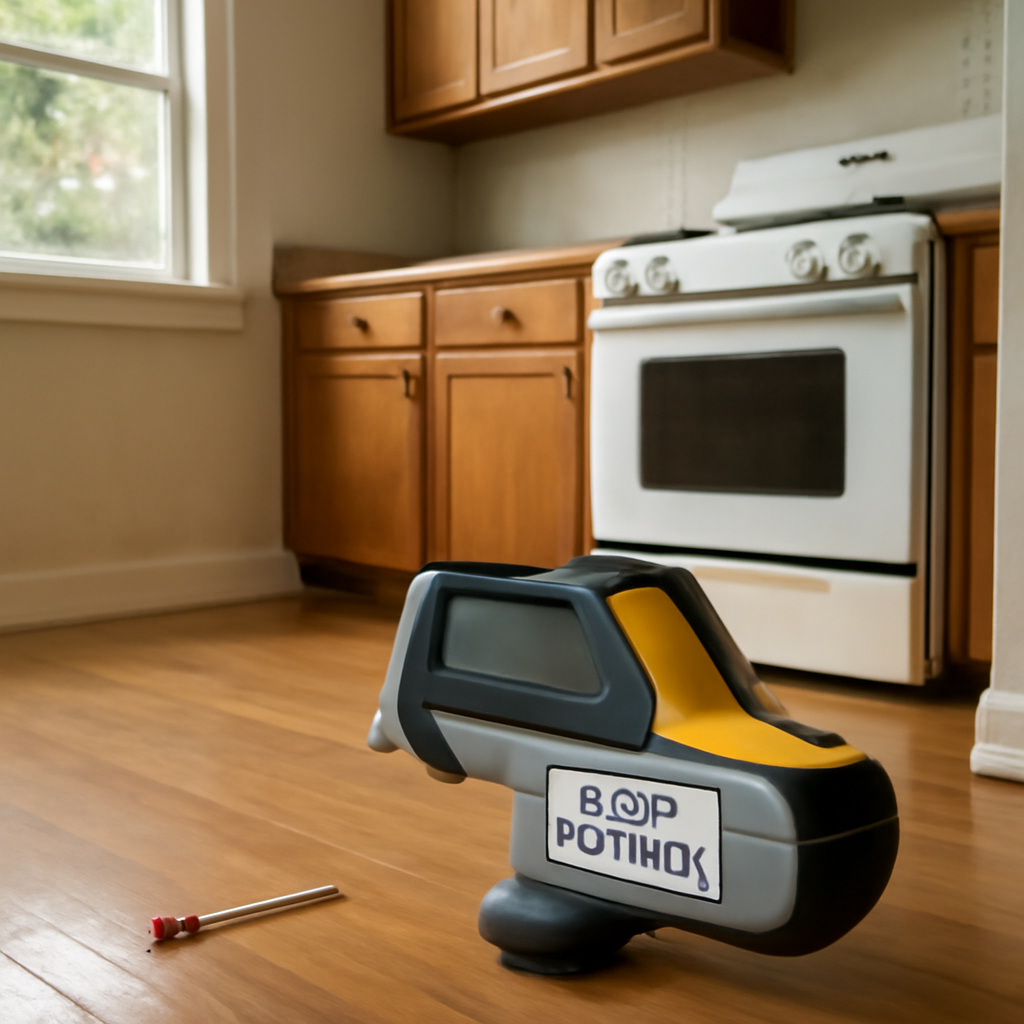
An XRF analyzer reads lead content directly through layers of paint without damaging the surface, and the inspector focuses on the friction and impact surfaces, windows, doors, stair rails, porches, where lead paint deteriorates and sheds dust. Where XRF is inconclusive, paint-chip samples go to an accredited lab for confirmation.
Dust and soil sampling
Dust-wipe samples from floors, window sills, and troughs measure whether lead has actually settled where children touch and play, and soil samples near the foundation and along drip lines check the exterior pathway. This is the part of testing that turns “the home has lead paint” into “here is where the actual hazard is,” which is what guides safe repairs and a family’s decisions.
Lead testing by Boulder County community
The county’s older neighborhoods concentrate lead-paint risk. In central Boulder, pre-1900 and pre-1978 homes carry decades of layered paint on windows, porches, and trim, and the university-adjacent rental stock means many young families and student households live with painted surfaces that turnover renovations regularly disturb. In Longmont, Old Town’s older core holds similar friction and impact surfaces where lead dust gathers, and where exterior paint has shed into foundation and drip-line soil over the years.
In Lafayette and Louisville, the coal-town cores are dense with pre-1978 homes whose original windows, doors, and porches are prime lead-paint locations, while Erie, Superior, Niwot, and the foothills toward Nederland and Lyons mix newer builds, generally lead-free, with older farmhouses that warrant testing. A family reviewing this hub should read the city page matching the property, because the home’s build year, more than its town, determines whether a lead risk assessment is a precaution or a priority for a household with young children.
Lead testing cost in Boulder County
Lead testing in the Boulder County market varies with scope. A targeted XRF paint inspection generally runs about $300 to $500, while a more complete risk assessment that adds dust-wipe and soil sampling typically runs about $400 to $800 depending on the number of samples and lab fees. DIY swab kits cost only a few dollars but are far less reliable than professional XRF or lab analysis and do not measure dust or soil exposure.
The cost is small against the stakes. Childhood lead exposure can cause irreversible developmental harm, and a risk assessment that pinpoints a peeling windowsill or contaminated soil lets a family fix the specific hazard, often inexpensively, before a child is affected. For a renovation, knowing which surfaces hold lead lets the homeowner follow lead-safe work practices and avoid contaminating the whole house with lead dust.
It helps to know where lead hazards concentrate in an old home, because that focuses both testing and any fix. Friction and impact surfaces, double-hung window sashes and the troughs they ride in, door edges and jambs, stair rails, and porch floors, are where layered paint wears, chips, and grinds into dust, so they are the priority targets for both an XRF reading and a dust-wipe sample. Exterior surfaces matter too: paint shedding off old siding, soffits, and porch rails over decades leaves lead in the soil along drip lines and foundations, exactly where a child plays. A risk assessment that maps these specific locations turns the abstract fact that a home predates 1978 into a concrete, room-by-room and yard-by-yard picture of where a Boulder County family’s actual exposure risk lives, which is what makes the testing worth doing.
Colorado regulations and disclosure
Federal law requires sellers and landlords of pre-1978 housing to disclose known lead-based paint and provide the EPA’s lead-hazard pamphlet, and renovation firms working on pre-1978 homes must follow the EPA Renovation, Repair and Painting (RRP) Rule using lead-safe practices and certified renovators. Colorado follows these federal frameworks. The Seller’s Property Disclosure asks about known lead paint, but disclosure only covers what the seller knows, which is why a family with young children in an old Boulder County home benefits from independent testing rather than relying on the disclosure form alone.
Communities and areas served
This hub links the city-level lead pages across Boulder County and the in-batch asbestos page. From the county seat of Boulder out to Longmont, Lafayette, Louisville, Superior, Niwot, Nederland, Lyons, and the Boulder-county side of Erie, the testing rationale tracks housing age, dense pre-1978 and coal-town stock in central Boulder, Old Town Longmont, Lafayette, and Louisville. For city-specific detail, see our pages on lead testing in Boulder and lead testing in Longmont.
Because lead paint and asbestos are the paired pre-1978 hazards, a county home being renovated often warrants testing for both; our companion page on asbestos testing in Boulder County covers the asbestos side.
How to choose a Boulder County lead testing provider
Choose an EPA- or state-certified lead inspector or risk assessor who uses XRF and accredited-lab analysis, not just swab kits, and who can perform dust-wipe and soil sampling if you have young children. Confirm they are independent of any abatement contractor, and ask whether they hold the certifications required for a formal lead risk assessment.
For an old central-Boulder or coal-town home with a young child, ask for a full risk assessment that locates the actual dust and soil hazards, not just a list of which surfaces contain lead. For a renovation, ask the provider to test the specific surfaces you plan to disturb so your contractor can follow RRP lead-safe practices. A good assessor explains that intact, well-maintained lead paint can often be managed in place, and reserves abatement for genuine, deteriorated hazards.
Knowing how to act on results turns testing into protection. Where the assessment finds intact lead paint, the usual path is to maintain it carefully, repaint over a sound surface, and watch friction points like windows and doors for new wear, rather than aggressive removal that can spread dust. Where it finds deteriorated paint, contaminated dust on a sill a toddler touches, or lead in play-area soil, the response is targeted: stabilize or replace the failing component, clean with lead-specific methods, and limit a child’s contact with affected soil. For families with young children, pairing the home assessment with a pediatric blood-lead test, which the CDC recommends for at-risk children, completes the picture by showing whether any exposure has already occurred. A Boulder County assessor worth hiring frames the findings as a clear action plan, not just a list of positive surfaces.
References
- Lead in paint, dust, and soil — U.S. Environmental Protection Agency
- Childhood lead poisoning prevention — Centers for Disease Control and Prevention
- Lead-based paint requirements — U.S. Department of Housing and Urban Development
If you have young children or plan to renovate an old home in Boulder, Longmont, Lafayette, or Louisville, knowing where lead actually is protects your family. To connect with a vetted Front Range lead testing provider, reach out through our contact page.