Lead Testing in Morgan County, Colorado
Lead testing morgan county residents ask about most often traces back to two things: an older Fort Morgan or Brush home with original paint, or a rural farmhouse on a private well east along the South Platte River. Morgan County is a far-eastern-plains agricultural county at roughly 4,300 feet, anchored by Fort Morgan, the county seat, and built around farming, cattle feedlots, and food processing. This page is a county-level hub covering where lead shows up across communities like Fort Morgan, Brush, Wiggins, Log Lane Village, Snyder, Weldona, and Orchard, what a lead assessment looks at, local costs, and how to act. This summary reflects EPA, HUD, and CDC guidance current as of 2026; consult a certified professional for testing decisions and your physician for any health concerns.
Asbestos or biohazard concern? Speak with a certified contractor.
📞 Call (877) 742-8496Lead testing in Morgan County: what to know
Lead testing identifies lead in the places it most threatens a household: paint and the dust it sheds, soil around the foundation and drip line, and drinking water from plumbing or fittings. The single biggest predictor of risk is age. Homes built before 1978, when the federal government banned lead in residential paint, carry the highest likelihood of lead-based paint, and Morgan County’s older downtown blocks and century-old farmhouses fall squarely in that window.
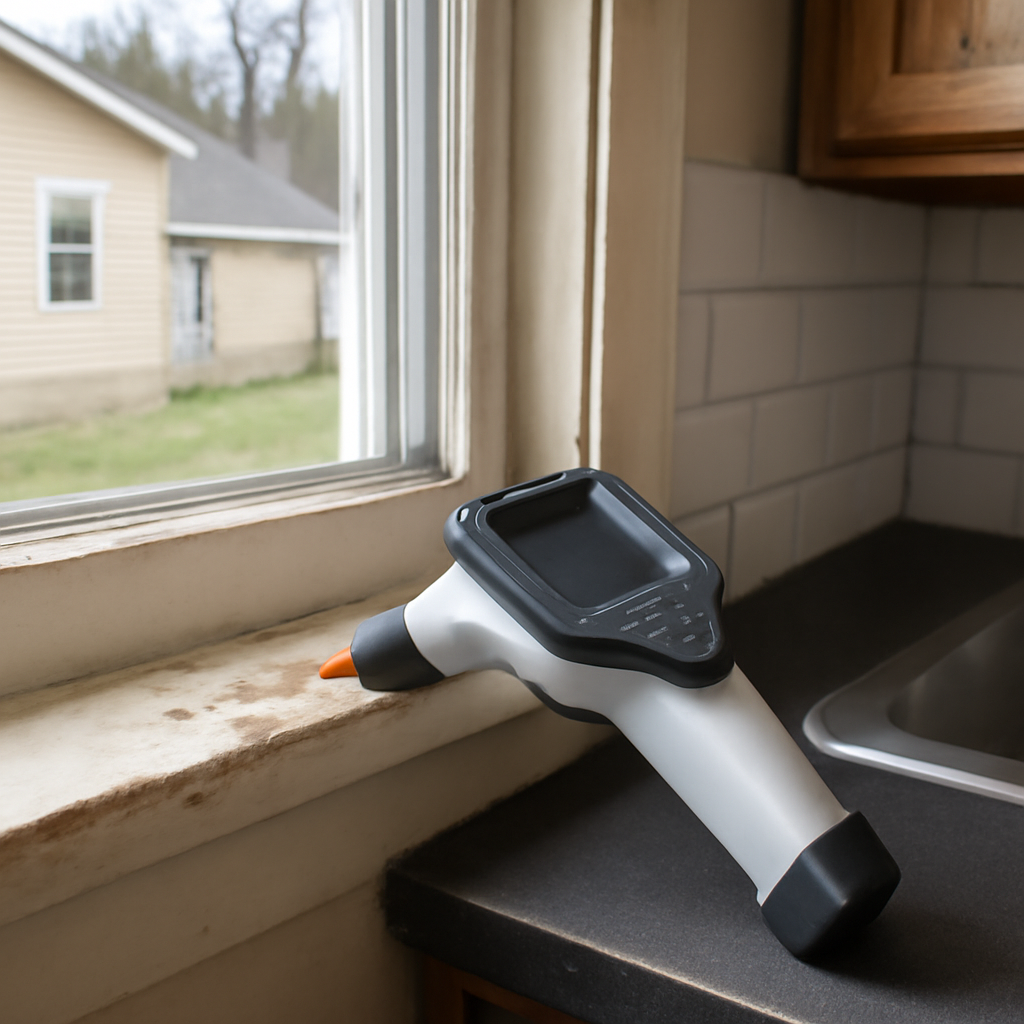
For paint and dust, a certified risk assessor uses an XRF analyzer that reads lead content through layers without damaging the surface, plus dust-wipe samples sent to a lab. For water, a first-draw sample captures what has been sitting in the pipes overnight. These methods follow EPA and HUD protocols, so the result holds up whether it informs a renovation, a home sale, or a worry about a young child. For the broader picture of how lead and asbestos hide in older housing, our pre-1978 housing hazard guide walks through the fundamentals.
Lead is not a problem you can see or smell. Intact paint on a well-maintained Fort Morgan home may pose little immediate risk, while the same paint on a friction surface like a window jamb sheds fine dust every time the sash moves. Testing tells you which surfaces are actually a hazard, rather than leaving you to guess from the home’s age alone.
Why Morgan County homes need lead testing
Housing era is the main driver. The downtowns of Fort Morgan and Brush grew during the railroad and sugar-beet era, leaving a meaningful share of pre-1978 brick and frame homes where original layers of lead paint still sit under newer coats. When those layers are disturbed by a remodel, a window replacement, or simple wear on a door frame, they release lead dust that settles on floors and sills where children crawl and play.
The rural housing pattern adds its own exposure. Across Snyder, Weldona, Orchard, and the South Platte and Riverside corridor, older farmhouses have been added onto and re-sided over generations, layering newer surfaces over original lead paint. Outbuildings, porches, and fences painted decades ago also weather and shed lead into the surrounding soil, which matters on properties where children play in the yard and gardens sit near the house.
Water is the third path, and it looks different on the plains than in a city. Many Morgan County farm properties draw from private wells, and lead in drinking water rarely comes from the source itself; it comes from older household plumbing, lead solder used before 1986, and brass fittings that leach lead. Because private wells are not covered by the routine testing that serves municipal systems, the homeowner is the only line of defense, which makes a first-draw water test worth doing on any older rural home.
The high water table near the South Platte and irrigation canals keeps many basements and crawlspaces damp, and damp conditions accelerate paint failure on lower walls and trim. Peeling, chalking, or chipping paint in a humid basement is exactly the kind of deteriorated lead surface that an assessment is built to catch.
What a Morgan County lead assessment covers
A thorough assessment starts with the home’s age and history, then moves to the surfaces most likely to be hazardous. The assessor prioritizes friction and impact surfaces, the windows, doors, stair rails, and porch components that wear and shed dust, because those are where intact-looking paint most often fails.
Paint, dust, and soil
An XRF analyzer reads paint lead content on walls, trim, and exterior siding without scraping. Dust-wipe samples from floors and window sills measure what has already settled, the form of lead most readily ingested by a crawling child. On rural parcels, soil samples near the foundation and along painted outbuildings check whether weathered exterior paint has contaminated the yard.
Drinking water on wells and town supply
A first-draw water sample, collected after water has sat in the pipes overnight, captures the worst-case lead level from plumbing and fittings. This matters most for the county’s many private-well farmhouses, where no utility tests the tap, but it applies to older Fort Morgan and Brush homes on town water too, since the lead comes from the home’s own pipes rather than the supply.
Lead testing cost in Morgan County
A focused lead paint test on a few suspect surfaces in the Morgan County market typically runs about $250 to $450, while a full lead risk assessment covering paint, dust wipes, and soil generally falls between $400 and $700 depending on home size and the number of samples. A standalone first-draw water lead test adds roughly $50 to $150 in lab fees.
Rural farmhouses with many added-on rooms, outbuildings, and a private well sit at the higher end because there is simply more to sample. Against the cost of a child’s elevated blood-lead level or a renovation that spreads contaminated dust through a home, the assessment fee is modest, and it tells you exactly which surfaces need attention rather than forcing a costly whole-house abatement on guesswork.
Colorado regulations and disclosure
Federal law drives most lead rules. Under the EPA Renovation, Repair and Painting (RRP) Rule, contractors disturbing painted surfaces in pre-1978 homes must be certified and follow lead-safe work practices, which is worth confirming before any remodel on an older Fort Morgan or Brush house. The federal Lead Disclosure Rule requires sellers and landlords of pre-1978 housing to disclose known lead-based paint and provide the EPA’s lead pamphlet.
Colorado’s Seller’s Property Disclosure also asks sellers to report known lead and environmental hazards, so a documented assessment protects both sides of a Morgan County sale. Because the state does not separately license lead inspectors, look for EPA or HUD recognized certification and a written report with XRF readings, lab results, and photographs rather than a verbal opinion.
Communities and areas served across Morgan County
Lead concerns turn up county-wide, and the pattern shifts with each community. Fort Morgan, the county seat, has the largest stock of older downtown homes where pre-1978 paint and aging plumbing both come into play. Brush carries a similar profile of established neighborhoods with century-old housing near its historic core. Wiggins and Log Lane Village mix older homes with newer modest growth, so testing is best decided by the specific home’s build year rather than the town.
Out along the South Platte and Riverside corridor, the rural communities of Snyder, Weldona, and Orchard are dominated by farmhouses on private wells, where both deteriorated exterior paint and well-plumbing lead deserve attention. For neighboring service work, our pages on asbestos testing in Morgan County and home inspection in Morgan County cover the related hazards that often surface in the same older homes. Coverage commonly extends west toward adjacent lead testing in Platteville and the Weld County plains, which share Morgan County’s agricultural housing pattern.
Lead and children’s health on the plains
The reason lead testing carries such weight is the health stakes for young children. Lead is a neurotoxin, and the CDC is clear that no safe blood-lead level in children has been identified. Even low-level exposure is associated with learning and behavioral effects, and because children absorb lead more readily than adults and spend time on floors where dust settles, an older home with deteriorating paint is a real and preventable risk to the youngest residents.
On a Morgan County farm, the exposure paths stack up in ways that are easy to overlook. A toddler crawling on a porch with weathered paint, playing in soil near a painted outbuilding, or drinking water drawn from a well through old plumbing can encounter lead from several directions at once. An assessment that maps each of these paths gives a family a clear plan, whether that means a lead-safe window replacement, a soil barrier in a play area, or a simple plumbing fix, rather than worrying about a hazard they cannot see.
Renovation, agriculture, and the local lead picture
Morgan County’s pattern of older homes and steady upgrading is what makes lead testing timely rather than abstract. As families modernize a Fort Morgan bungalow or winterize a Brush farmhouse, they replace windows, strip and repaint trim, and open up walls, and each of those tasks can disturb decades-old paint layers that include lead. The dust that results is fine enough to settle invisibly on floors and sills, which is exactly where a crawling child encounters it. Testing before that work tells a family which surfaces are lead-bearing so a contractor can use lead-safe methods on those and proceed normally elsewhere.
The agricultural setting adds exposure routes a suburban home does not have. On a working farm property, older painted outbuildings, barns, fences, and equipment sheds weather and shed lead into the soil over decades, and that soil can drift toward the house and into garden and play areas. Children who spend time outdoors on a plains farm may contact weathered paint and contaminated soil that no indoor test would capture, which is why a complete Morgan County assessment looks at soil near painted exterior structures, not just the walls inside the home.
Water ties the picture together on rural parcels. A South Platte corridor farmhouse on a private well draws its drinking water through whatever plumbing the home has accumulated, and older galvanized lines, pre-1986 solder joints, and brass fittings can each contribute lead at the tap. Because no utility monitors a private well, a first-draw water test is the only way a family learns whether their morning glass of water carries lead, and it is an inexpensive addition to a paint-and-soil assessment that closes the last gap in the exposure map.
How to choose a Morgan County lead testing provider
Ask whether the provider is EPA or HUD certified for lead risk assessment and whether they use an XRF analyzer plus lab-analyzed dust and water samples rather than relying on consumer swab kits, which can miss lead under upper layers. A provider who understands that the county’s risk concentrates in pre-1978 downtown homes and rural well-fed farmhouses, and who tests accordingly, knows the local housing.
For a purchase, bundling the lead assessment with a full inspection gives one coordinated report on the home’s hazards. A defensible written report, with XRF readings, dust-wipe and water lab results, and photographs, carries weight in a negotiation and gives the family a clear remediation roadmap rather than a vague warning.
References
- Protect your family from lead — U.S. Environmental Protection Agency
- Childhood lead poisoning prevention — Centers for Disease Control and Prevention
- Lead-safe housing and disclosure — U.S. Department of Housing and Urban Development
A pre-1978 Morgan County home, whether a Fort Morgan downtown house or a farmhouse on a well, deserves a clear answer on lead before a renovation or a young child moves in. To connect with a vetted local lead assessor, get in touch through our contact page.