Signs of High Radon in Home: What Homeowners Need to Know

Looking for signs of high radon in home is a common search, and the most accurate answer is also the least satisfying: radon has no visible, audible, or olfactory signs at any concentration ever encountered indoors. The “signs” homeowners can actually evaluate are not signs of radon itself but indicators of elevated risk — geographic location, foundation type, soil conditions, age of the home, and ventilation patterns. The only reliable way to know whether radon is high in a specific home is to run a test. This guide summarizes EPA, CDC, and CDPHE guidance current as of 2026 — it is informational, not medical advice. Consult a physician for any health concerns and a certified radon professional for testing decisions in your specific home. The aim here is to help homeowners assess risk and make a sound testing decision.
Part of our Radon Levels guide — start there for the full picture →
Are there visible signs of high radon in a home?
No. Radon is a noble gas that produces no physical artifact at any indoor concentration. It does not smell, stain, condense, or produce dust. Homeowners cannot see, smell, or feel radon at 4 pCi/L, at 40 pCi/L, or at any level realistic in a home. The only way to know is to test. EPA, CDC, and CDPHE all explicitly state this in their public guidance.
Some online sources suggest that mold growth, persistent musty smells, condensation on basement walls, or visible cracks in the foundation indicate radon. They do not. Those conditions point to moisture problems, structural issues, or both. They can coexist with elevated radon — many basements have multiple issues — but their presence does not predict radon, and their absence does not rule it out.
The only reliable indicator of high radon is a radon test result. The EPA action level is 4.0 pCi/L; concentrations above that level warrant mitigation. Concentrations between 2 and 4 pCi/L warrant consideration of mitigation, particularly when smokers or former smokers live in the home. The parent guide to radon testing for Colorado Front Range homeowners covers test types and which one fits which use case.
Risk factors that make high radon more likely
Although there are no signs of radon itself, several risk factors raise the probability that a home will test high. The strongest is geography. The EPA’s radon zone map classifies most of Colorado’s Front Range as Zone 1, the highest predicted indoor radon zone, with predicted levels above 4.0 pCi/L. CDPHE estimates that roughly half of Colorado homes test above the action level in many counties.
Geology drives the geographic risk. Uranium-bearing rock and soil release radon as uranium decays. Granite, certain shales, and sedimentary formations common in Colorado’s Front Range produce more radon than soils in low-uranium regions. The cluster article on EPA radon zones explained covers how the zone map relates to actual indoor levels in specific homes.
Foundation type is a secondary factor. Crawlspaces with bare soil floors are typically the highest risk because there is no slab between the soil and the home interior. Basements with unsealed sump pits, slab cracks, or poorly sealed plumbing penetrations have more entry points for soil gas. Slab-on-grade homes can also test high if the slab has unsealed penetrations. Even tightly built newer homes test high in Zone 1 areas if passive radon-resistant construction features are not active.
Health symptoms that suggest long-term exposure
Long-term radon exposure does not cause acute symptoms. There are no immediate effects from breathing radon-laden air. The health risk is long-term lung cancer development, which can take decades to manifest. EPA and CDC classify radon as a Group A human carcinogen and identify it as the second leading cause of lung cancer in the U.S. after smoking.
The risk is multiplicative for smokers. The CDC publishes risk tables that show lung cancer rates per 1,000 people exposed at various radon levels for smokers and non-smokers. At 4 pCi/L lifetime exposure, never-smokers face roughly a 7 in 1,000 lung cancer risk; smokers face roughly 62 in 1,000. The combination of radon and smoking produces substantially higher rates than either factor alone.
Symptoms of lung cancer (persistent cough, blood in sputum, chest pain, shortness of breath, unexplained weight loss) can result from many causes and are not specific to radon. Anyone with these symptoms should see a physician immediately for evaluation. The cluster article on radon health risks and what the evidence actually says covers the lung cancer evidence in depth.
Why short-term test results sometimes seem inconsistent
Indoor radon levels fluctuate dramatically with weather, season, and HVAC operation. A 48-hour winter test in a closed home with the heat running can produce a reading two or three times higher than a 48-hour summer test in the same home with windows open. Neither reading is wrong; they capture different conditions.
EPA-recommended closed-house conditions during testing — windows and exterior doors kept closed except for normal entry, starting 12 hours before the test begins — produce conservative (higher) readings that approximate winter exposure. The intent is to capture the worst case rather than the actual annual average. Long-term tests (90 days to one year) produce the most representative average because they integrate across seasons.
Storms during a test can also affect results. Low barometric pressure pulls more soil gas into homes during the low-pressure period. Continuous radon monitors show this hour-by-hour, which helps interpret unusual readings. The cluster article on DIY radon test accuracy covers how short-term tests compare to long-term measurement and when each is appropriate.
What to do when results suggest high radon
For homes that test above 4.0 pCi/L, mitigation is the standard response. Active sub-slab depressurization systems typically cost $1,200 to $2,500 in Colorado for standard installations on slab-on-grade or basement homes. Crawlspaces with sub-membrane work cost $2,500 to $5,000. Mountain markets, complex foundations, and homes with multiple suction points can cross $3,500.
Mitigation contractors should be certified through one of the recognized radon professional programs and, in Colorado, listed by CDPHE. The contractor performs a diagnostic test, designs the system, installs the suction point and pipe, sets up the fan, and verifies operation. The system is permanent and runs continuously. Operating cost is roughly $5 to $15 per month in electricity for a typical inline fan.
Post-mitigation testing within 30 to 60 days confirms the system reduced indoor radon below the action level. Most well-designed systems bring readings to 1 pCi/L or below. The cluster article on radon mitigation cost in 2026 covers detailed installation pricing and what to expect during installation.
Testing strategy for the Colorado Front Range
For Colorado homeowners who have never tested, a short-term DIY canister test ($15 to $30) is the practical first step. Place the canister in the lowest livable level of the home, follow the instructions for closed-house conditions, and mail it to the included lab after 2 to 4 days. Results arrive within 5 to 10 days from start.
For real estate transactions, professional continuous radon monitor placements ($125 to $200 bundled with a general home inspection) are the standard. The 48-hour test produces hourly data and immediate digital results, fitting within standard inspection contingency windows. Buyers receiving elevated results typically negotiate either a credit or seller-installed mitigation as part of closing.
For ongoing monitoring, consumer-grade plug-in continuous radon monitors ($150 to $300) provide unlimited testing without lab fees. They are particularly valuable for homes with installed mitigation systems, where periodic confirmation that the system is still working matters. EPA recommends retesting every two years generally, and within 30 to 60 days of any structural change or mitigation system modification.
References
- EPA radon testing and mitigation guidance — U.S. Environmental Protection Agency
- CDC radon health information and risk tables — Centers for Disease Control and Prevention
- CDPHE Colorado radon program and certified contractor list — Colorado Department of Public Health and Environment
- American Lung Association radon information — American Lung Association
Frequently asked questions
What are the signs of high radon in a home?
There are no physical or sensory signs of high radon. The gas is colorless, odorless, and tasteless at any indoor concentration. The only reliable indicator is a radon test result. EPA and CDC both recommend testing every home regardless of zone.
Can I smell radon in the house?
No. Radon has no smell at any indoor concentration. Musty smells indicate moisture or mold problems, not radon. The two issues can coexist in basements but are unrelated. A test is the only way to determine radon levels.
What level is considered high radon?
The EPA action level is 4.0 pCi/L. Levels above 4.0 pCi/L warrant mitigation. Levels between 2.0 and 4.0 pCi/L warrant consideration of mitigation, particularly for households with smokers or former smokers. The lower the indoor level, the lower the long-term lung cancer risk.
How do I check for high radon?
Test it. DIY short-term canister kits cost $15 to $30 with lab analysis included. Professional continuous radon monitor placements cost $125 to $200 bundled with home inspections. Long-term alpha-track tests cost $25 to $50 and produce the most representative annual average.
Front Range homeowners who want to test for radon or arrange mitigation after an elevated reading can connect with a vetted Colorado inspector through our contact page for a referral to a certified radon professional.
Test your home for radon
Radon is invisible and odorless, so a test is the only way to know your level. A short-term kit gives a first reading in days; a digital monitor tracks it over time.
| Product | Why | Buy |
|---|---|---|
 AirChek Charcoal Radon Test Kit | Lab fee usually included; EPA short-term protocol. | Amazon — $21.95 |
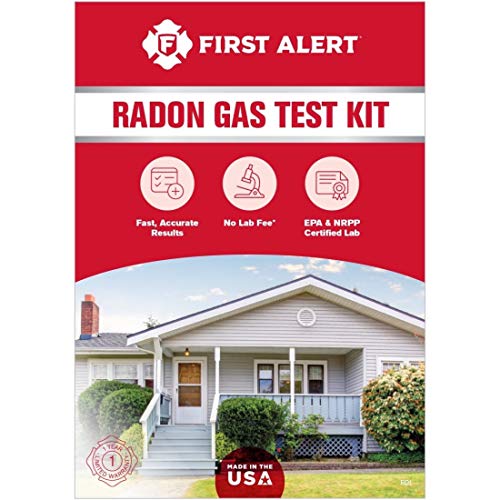 First Alert RD1 Radon Test Kit | Widely stocked; 48-hour charcoal test. | Amazon — $16.98 |
 Airthings Corentium Home | Digital monitor with a long-term average. | Amazon — $142.99 |