Radon Health Risks: What the Evidence Actually Says About Lung Cancer
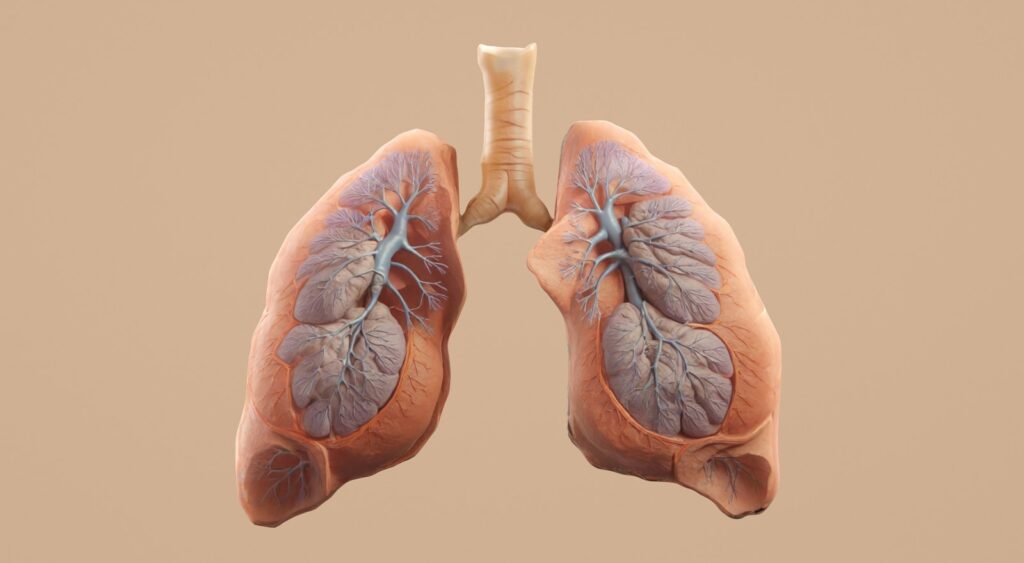
Radon is the second leading cause of lung cancer in the United States behind smoking, and the leading cause among non-smokers. The EPA estimates approximately 21,000 lung cancer deaths per year in the U.S. are attributable to radon exposure. Behind these aggregate numbers is a well-characterized biological mechanism, a measurable dose-response relationship, and a clear pattern of who is most at risk. This guide walks through what the evidence actually supports about radon and lung cancer, the EPA action level math, and how to think about risk without sliding into either panic or dismissal.
Part of our Radon Levels guide — start there for the full picture →
InspectandTest is an independent editorial team. We are not medical professionals or radiation health physicists. This guide synthesizes EPA, WHO, NCI (National Cancer Institute), and ATSDR documentation. For specific medical questions about radon exposure history, consult a clinician with environmental medicine experience.
The biological mechanism
Radon-222 is a noble gas – chemically inert and non-reactive. The gas itself does not cause cancer through direct chemical interaction with biological tissue. The cancer-causing agents are the radioactive solid decay products that radon produces:
- Radon-222 atom decays by alpha emission (half-life 3.8 days) into polonium-218.
- Polonium-218 decays by alpha emission (half-life 3.1 minutes) into lead-214.
- Lead-214 decays by beta emission (half-life 26.8 minutes) into bismuth-214.
- Bismuth-214 decays by beta emission (half-life 19.9 minutes) into polonium-214.
- Polonium-214 decays by alpha emission (half-life 0.16 milliseconds) into lead-210.
- Lead-210 has a much longer half-life (22 years) and is no longer dynamically relevant for inhalation cancer risk.
The first four decay products are short-lived radioactive solids that exist as charged particles attaching to ambient dust, aerosols, and water vapor in indoor air. When inhaled, the contaminated dust deposits in lung tissue, particularly in the bronchial epithelium where airway branching slows airflow.
Once deposited, the polonium-218 and polonium-214 emit alpha particles. Alpha particles have low penetration distance (roughly 50 microns in tissue) but very high biological damage per particle. Each alpha hit on a cell can cause double-strand DNA breaks, chromosomal damage, and the kind of cellular damage that, accumulated over years, increases the probability of cancerous transformation.
The cancer that results is lung cancer – specifically squamous cell carcinoma and small cell carcinoma of the bronchial epithelium. Adenocarcinoma is less commonly attributed to radon. Lung cancers from radon exposure are histologically indistinguishable from lung cancers from smoking; the attribution is statistical rather than diagnostic.
The dose-response relationship
Decades of epidemiological research, primarily from underground miners and large residential cohort studies, have established a dose-response relationship between cumulative radon exposure and lung cancer incidence. The relationship is approximately linear (no threshold) within the range of measured residential exposures. There is no demonstrated safe exposure level; risk increases continuously with cumulative dose.
EPA risk estimates per 1,000 people exposed over a lifetime (approximately 70 years):
| Radon level (pCi/L) | Non-smokers (deaths per 1,000) | Smokers (deaths per 1,000) |
|---|---|---|
| 20 | 36 | 260 |
| 10 | 18 | 150 |
| 8 | 15 | 120 |
| 4 (EPA action level) | 7 | 62 |
| 2 | 4 | 32 |
| 1.3 (U.S. indoor average) | 2 | 20 |
| 0.4 (outdoor average) | 0.8 | 6 |
For comparison, the lifetime cancer risk from a CT scan is approximately 1 in 1,000 to 1 in 10,000. Radon at the EPA action level represents a substantially higher cumulative risk over a lifetime.
The smoking interaction
The interaction between smoking and radon exposure is multiplicative rather than additive. The biological reasons include:
- Impaired mucociliary clearance. Smoking damages the lung’s natural ability to clear inhaled particles. Radon progeny that would be cleared from a healthy lung remain longer in a smoker’s lung, increasing radiation exposure.
- Pre-existing DNA damage. Smoking causes its own DNA damage to bronchial epithelial cells. Radon-induced damage on top of smoking-damaged tissue produces synergistic effects rather than independent additive effects.
- Increased cell turnover. Damaged smoker lung tissue has higher cell division rates, which is when DNA damage becomes carcinogenic mutations.
The practical implication for households: if anyone in the home is a current or recent smoker, the radon mitigation threshold should drop. The 4.0 pCi/L EPA action level is calibrated for a general population including the smoking interaction, but the smoker’s individual risk at 4.0 pCi/L is high enough that mitigation at lower levels (2.0 pCi/L or below) is reasonable.
Who is at higher individual risk
Several populations warrant aggressive response to elevated radon at lower thresholds:
- Smokers and recent ex-smokers. Multiplicative risk interaction.
- Children. More breathing per body weight, more sensitive developing tissue, more lifetime years for cumulative damage.
- People with chronic lung conditions. COPD, emphysema, severe asthma all share underlying lung tissue compromise.
- Long-term residents of the same home. Cumulative dose is duration times concentration; 30+ years in the same elevated-radon home is significantly higher cumulative dose than 5 years.
- Basement office and bedroom users. Radon concentrations are highest at the lowest occupied levels; people who spend 8+ hours per day in basements are at higher exposure than people who spend most of their time on upper floors.
Symptoms and screening
Radon-induced lung cancer has no specific symptoms that distinguish it from other lung cancers. The symptoms are general lung cancer symptoms: persistent cough, blood in sputum, shortness of breath, chest pain, recurrent respiratory infections, unexplained weight loss. By the time symptoms appear, cancer is typically at an advanced stage.
The CDC and the American Cancer Society do not currently recommend lung cancer screening based on radon exposure history alone. The current screening criteria (low-dose CT for adults aged 50-80 with significant smoking history) do not specifically include non-smoking radon-exposed populations. The right preventive action is: test for radon, mitigate if elevated, and incorporate radon exposure history into your overall risk profile when discussing screening with a primary care physician.
The pragmatic homeowner conclusion
The radon-lung-cancer connection is well-established science with decades of supporting epidemiology. The mechanism is biological and the dose-response is measurable. None of this is controversial in mainstream medicine.
The pragmatic action items:
- Test your home. If you have not, do it now. Our radon detector buyer’s guide walks through testing options.
- Mitigate elevated levels. If your test is above 4.0 pCi/L (or above 2.0 pCi/L if you have smokers or children in the home), schedule mitigation. Mitigation typically costs $1,200 to $2,500.
- Re-test annually after mitigation. Mitigation systems can degrade or fail. Annual confirmation that the system is working is the maintenance standard.
- Inform new occupants. Real estate transactions in most states require disclosure of known radon test results. New buyers and renters need the information to make informed decisions.
Frequently asked questions
How does radon cause lung cancer?
Radon-222 decays into a series of short-lived radioactive solids called radon progeny (or radon daughters): polonium-218, lead-214, bismuth-214, polonium-214. The progeny attach to airborne dust particles, are inhaled, and lodge in lung tissue. There they continue emitting alpha radiation, which damages the DNA of nearby cells. Cumulative damage over years of exposure increases the probability that a damaged cell becomes cancerous. The risk is dose-dependent and time-dependent; brief exposures at low concentrations are not the issue, but chronic exposure to elevated levels accumulates over decades.
How much radon exposure causes lung cancer?
There is no specific safe threshold; risk increases continuously with exposure. The EPA estimates that lifetime exposure at 4.0 pCi/L (the action level) corresponds to approximately 7 lung cancer deaths per 1,000 non-smokers and 62 deaths per 1,000 smokers. At 20 pCi/L, the risk is roughly 5x higher. The dramatic interaction with smoking is the key public health point: smokers exposed to radon have roughly 10x the risk of non-smokers exposed to the same levels.
Is short-term radon exposure dangerous?
No. Radon causes cancer through cumulative DNA damage over decades; brief exposures (a vacation rental for a week, a few days in a high-radon home before mitigation) do not meaningfully increase lifetime cancer risk. The pragmatic implication: do not panic about a single elevated test result while you arrange mitigation. The risk is statistical and accumulates over years, not in days. Move expeditiously toward mitigation but do not lose sleep over a 2-week mitigation timeline.
Are children more at risk from radon than adults?
Likely yes, though the data is less robust than adult lung-cancer data. Children breathe more air per kilogram of body weight than adults, have developing lung tissue more sensitive to radiation damage, and have more lifetime years for cumulative damage to manifest. Most epidemiological studies focus on adult occupational and residential exposure; childhood exposure data is correlational and the dose-response curve is less precisely characterized. The practical conclusion: if you have children, take radon seriously and do not delay mitigation when levels are elevated.
What is the smoking interaction with radon?
Smoking and radon interact multiplicatively, not just additively. A smoker exposed to elevated radon has significantly higher cancer risk than the sum of smoking-only risk plus radon-only risk. The biological mechanism is partly damaged lung clearance (smoking impairs the lungs ability to clear inhaled particles) and partly synergistic DNA damage. For households with smokers or recent ex-smokers, mitigation at lower thresholds (2.0 pCi/L or below) is reasonable rather than waiting for the 4.0 pCi/L EPA action level.
References
Test your home for radon
Radon is invisible and odorless, so a test is the only way to know your level. A short-term kit gives a first reading in days; a digital monitor tracks it over time.
| Product | Why | Buy |
|---|---|---|
 AirChek Charcoal Radon Test Kit AirChek Charcoal Radon Test Kit | Lab fee usually included; EPA short-term protocol. | Amazon — $21.95 |
 First Alert RD1 Radon Test Kit First Alert RD1 Radon Test Kit | Widely stocked; 48-hour charcoal test. | Amazon — $16.98 |
 Airthings Corentium Home Airthings Corentium Home | Digital monitor with a long-term average. | Amazon — $143.65 |