Radon and Lung Cancer: What Homeowners Should Know
Radon is invisible, odorless, and one of the most studied indoor health hazards in the United States. The connection between radon and lung cancer is the reason public-health agencies push homeowners to test, even in regions where the gas is easy to ignore. This guide explains that link in plain language and summarizes EPA and CDC guidance current as of 2026. It is general information, not a medical diagnosis. If you have respiratory symptoms or concerns about your personal risk, consult your physician, and use a certified professional for testing and mitigation decisions. Radon health figures throughout are anchored to the EPA action level of 4 pCi/L.
Part of our Radon Levels guide — start there for the full picture →
How Is Radon Linked to Lung Cancer?
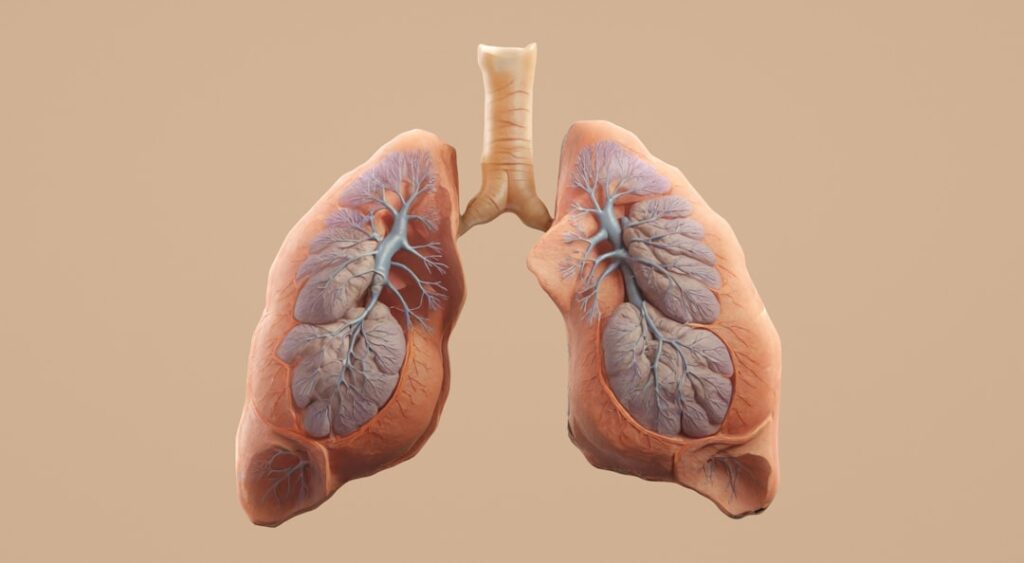
Radon is a naturally occurring radioactive gas formed by the breakdown of uranium in soil and rock. It seeps up from the ground and can accumulate inside buildings, particularly in lower levels and basements. When radon and its radioactive decay products are inhaled, they can lodge in the lining of the lungs and emit small bursts of radiation that damage lung tissue over time. Repeated damage of this kind can lead to the cellular changes that cause cancer.
According to the EPA, radon is the second leading cause of lung cancer in the United States after smoking, and the leading cause among people who have never smoked. The CDC and the U.S. Surgeon General have echoed this assessment. The EPA estimates that radon contributes to roughly 21,000 lung cancer deaths in the country each year. These are population-level estimates drawn from decades of research, including studies of underground miners and residential exposure.
The risk is cumulative and probabilistic. Exposure to radon does not guarantee cancer, and many factors influence individual risk. But higher exposure over more years raises the odds, which is why reducing indoor levels is framed as risk reduction rather than absolute prevention.
What the 4 pCi/L Action Level Means
Radon is measured in picocuries per liter of air, abbreviated pCi/L. The EPA has set an action level of 4 pCi/L: at or above that concentration, the agency recommends taking steps to reduce radon in the home. The action level is a practical threshold for decision-making, not a sharp line between safe and dangerous.
No level of radon is considered completely risk-free. The EPA notes that levels below 4 pCi/L still carry some risk and suggests homeowners consider mitigation for readings between 2 and 4 pCi/L. The higher the reading and the longer the exposure, the greater the estimated lung-cancer risk. Bringing levels down — ideally as low as reasonably achievable — lowers that risk.
Because radon cannot be sensed, the only way to know a home’s level is to test. A short-term test gives a quick snapshot, while a long-term test, lasting more than 90 days, better reflects year-round average exposure. Homeowners can review our overview of radon exposure to understand how testing duration affects the picture.
Smoking Multiplies the Risk
The interaction between radon and tobacco smoke is one of the most important findings in this area. The two together produce a combined risk far greater than the sum of each alone — a synergistic effect. The EPA estimates that the lung-cancer risk from radon exposure is substantially higher for smokers and former smokers than for people who have never smoked at the same radon level.
This does not let non-smokers off the hook. Radon remains the top cause of lung cancer among people who never smoked, and a household with elevated radon exposes everyone in it, including children. For smokers, reducing radon is one more reason to address indoor air, alongside the well-established benefits of quitting smoking. The lung-health community treats both as modifiable risks worth acting on.
Who Is at Risk and Why It Matters Everywhere
Any home in any state can have elevated radon, regardless of age, construction, or whether it has a basement. The gas enters through cracks in floors and walls, gaps around pipes and sump pits, construction joints, and porous block walls. Homes that test low can have neighbors that test high, because soil composition and the home’s specific entry points vary block by block.
Time spent in the home matters. People who spend many hours in a lower-level living space, home office, or finished basement accumulate more exposure. Long-term residents face more cumulative risk than short-term occupants. Because the damage builds over years, the EPA and CDC frame radon testing as a routine part of maintaining a healthy home rather than a one-time concern.
The Colorado Front Range Picture
Colorado has high radon potential statewide, and many Front Range counties — including Denver, Jefferson, Douglas, Arapahoe, Boulder, and El Paso — fall into the EPA’s highest-risk mapping zones. The Colorado Department of Public Health and Environment reports that a large share of homes tested in the state come back at or above 4 pCi/L. Cold winters can worsen the problem: tightly sealed homes and the stack effect that draws soil gas upward through a heated house can elevate readings during the heating season. Front Range homeowners are strongly encouraged to test rather than assume their home is fine.
Reducing the Risk: Testing and Mitigation
The path from concern to protection is straightforward. First, test. Inexpensive short-term kits are widely available, and professional testing offers tamper-resistant, calibrated measurement that is preferable during real estate transactions. If a short-term test reads at or above 4 pCi/L, confirm with a follow-up test before committing to a full mitigation system.
If confirmed elevated, a mitigation system — most commonly active sub-slab depressurization — vents radon from beneath the foundation to above the roofline, where it disperses. Properly designed systems routinely bring levels well below 4 pCi/L. The EPA recommends retesting after installation to verify the result and periodically afterward, since radon entry can shift over time. Homeowners exploring options can read our guide to radon mitigation systems for how the components work.
How Radon Causes Cellular Damage
Understanding the mechanism makes the risk less abstract. Radon itself is a gas, but its danger comes largely from its radioactive decay products, sometimes called radon progeny. As radon breaks down, it forms tiny solid particles that can attach to dust and be inhaled, lodging in the airways and lung tissue. These particles emit alpha radiation — a short-range but high-energy form of radiation.
Alpha particles cannot travel far, but when they are released right against the cells lining the lungs, they deposit energy directly into that tissue. Over many such events, the radiation can damage the DNA inside lung cells. Most damaged cells either repair themselves or die, but occasionally a cell survives with mutations that disrupt normal growth control. Accumulate enough of those genetic insults over years, and the result can be cancer. This is why the risk is cumulative and dose-dependent: more radon and more years of exposure mean more chances for the damaging events to add up. It is also why there is no perfectly safe threshold, only levels of relatively higher and lower risk.
How Researchers Established the Link
The connection between radon and lung cancer is not a recent or speculative claim. It rests on decades of converging evidence. Some of the earliest signals came from studies of underground miners, who were exposed to high radon concentrations and showed markedly elevated lung-cancer rates that climbed with their cumulative exposure. Those occupational studies established the basic dose-response relationship.
Later, large residential studies and pooled analyses across multiple countries examined ordinary homes at the lower exposure levels typical of houses. These confirmed that the risk extends to residential settings and supports the action level the EPA uses. National and international health bodies — including the EPA, the CDC, the U.S. Surgeon General, the World Health Organization, and major cancer research agencies — have reviewed this body of evidence and classify radon as a known human carcinogen. The estimate of roughly 21,000 radon-related lung cancer deaths a year in the United States comes from that research base, applied to national exposure patterns. Homeowners can read our broader guide to radon testing for Front Range homeowners for the practical steps that follow from this research.
Reducing Risk When You Cannot Eliminate It
Because no radon level is entirely risk-free, the practical goal is to drive exposure as low as reasonably achievable rather than chase an impossible zero. Testing is the foundation; a home cannot be protected from a hazard no one has measured. For homes at or above 4 pCi/L, mitigation typically reduces levels dramatically, often well below the action level, sharply lowering the long-term risk for everyone in the household.
Other steps complement mitigation. For smokers, the combined radon-and-tobacco risk makes quitting smoking one of the most effective single actions, addressing both hazards at once. Spending less time in an untested, high-radon basement space reduces cumulative exposure in the interim before mitigation. And periodic retesting confirms that a mitigation system keeps working over the years, since radon entry can shift with soil and seasonal conditions. These measures do not guarantee any individual will avoid disease, but at the population level they meaningfully reduce the burden of radon-related lung cancer.
When to Call a Professional
Testing is something homeowners can begin on their own with a quality kit. Interpretation of borderline results, real estate transactions, and any mitigation work are jobs for a certified radon professional. Call one when a test confirms levels at or above 4 pCi/L, when results are inconsistent, or when buying or selling a home. For health questions — symptoms, personal risk, or the implications of long-term exposure — talk to your physician, who can place radon risk in the context of your overall health and smoking history. A physician is also the right person to discuss any persistent respiratory symptoms; radon causes no acute symptoms of its own, so health concerns should be evaluated medically rather than attributed to radon without examination. Because radon risk is cumulative, addressing an elevated level sooner rather than later reduces total lifetime exposure, which is the variable most within a household’s control. For families on the Front Range, where high radon potential is the regional norm rather than the exception, building a radon test into the routine of homeownership is a small step that pays a meaningful long-term dividend in reduced risk.
Symptoms, Screening, and the Limits of Both
One of the most important things to understand about radon is what it does not do in the short term. Radon exposure produces no immediate symptoms — no smell, no irritation, no acute illness that would alert a household to a problem. The harm accumulates silently over years, which is exactly why testing rather than symptom-watching is the only reliable form of detection. A home can have dangerous levels while everyone in it feels perfectly well.
Lung cancer itself, when it develops, may not produce symptoms until it is advanced. Signs such as a persistent cough, chest discomfort, shortness of breath, or coughing up blood can have many causes and are not specific to radon-related disease. Anyone with such symptoms should see a physician promptly rather than attempting to self-diagnose. For people at elevated risk — long-term smokers in particular — physicians may discuss lung-cancer screening, and that conversation belongs in a medical office, informed by a person’s full history. This article is general information and not a diagnosis.
The practical takeaway pairs two actions. On the home side, test for radon and mitigate if levels reach the action level, because that is the part of the risk a homeowner can directly control. On the health side, address modifiable risks like smoking and bring any concerning symptoms to a doctor. Together these steps cover both the environmental and the personal dimensions of a risk that, while serious, is largely manageable through measurement and timely action.
References
- Health Risk of Radon — U.S. Environmental Protection Agency
- About Radon — Centers for Disease Control and Prevention
- Radon and Lung Health — American Lung Association
- Radon in Colorado — Colorado Department of Public Health and Environment
Frequently asked questions
Does radon always cause lung cancer?
No. Radon exposure raises the statistical risk of lung cancer over time, but it does not guarantee it. Risk depends on the level, how many years of exposure, and other factors such as smoking. Reducing indoor radon lowers risk; it is risk reduction, not absolute prevention. Discuss personal risk with your physician.
What radon level is dangerous?
The EPA recommends taking action at or above 4 pCi/L and suggests considering mitigation between 2 and 4 pCi/L. No level is entirely risk-free, and higher readings over longer periods carry more risk. The only way to know your home's level is to test, since radon is odorless and invisible.
Is radon risk worse for smokers?
Yes. Radon and tobacco smoke together produce a combined lung-cancer risk far greater than either alone. The EPA estimates the risk at a given radon level is substantially higher for smokers and former smokers than for people who have never smoked. Reducing radon benefits everyone in the home.
Front Range residents who want a confirmed radon reading or a connection to a certified mitigation professional can reach out through our contact page.
Test your home for radon
Radon is invisible and odorless, so a test is the only way to know your level. A short-term kit gives a first reading in days; a digital monitor tracks it over time.
| Product | Why | Buy |
|---|---|---|
 AirChek Charcoal Radon Test Kit AirChek Charcoal Radon Test Kit | Lab fee usually included; EPA short-term protocol. | Amazon — $21.95 |
 First Alert RD1 Radon Test Kit First Alert RD1 Radon Test Kit | Widely stocked; 48-hour charcoal test. | Amazon — $16.98 |
 Airthings Corentium Home Airthings Corentium Home | Digital monitor with a long-term average. | Amazon — $143.65 |