Fungus in Lungs: What Homeowners Should Know
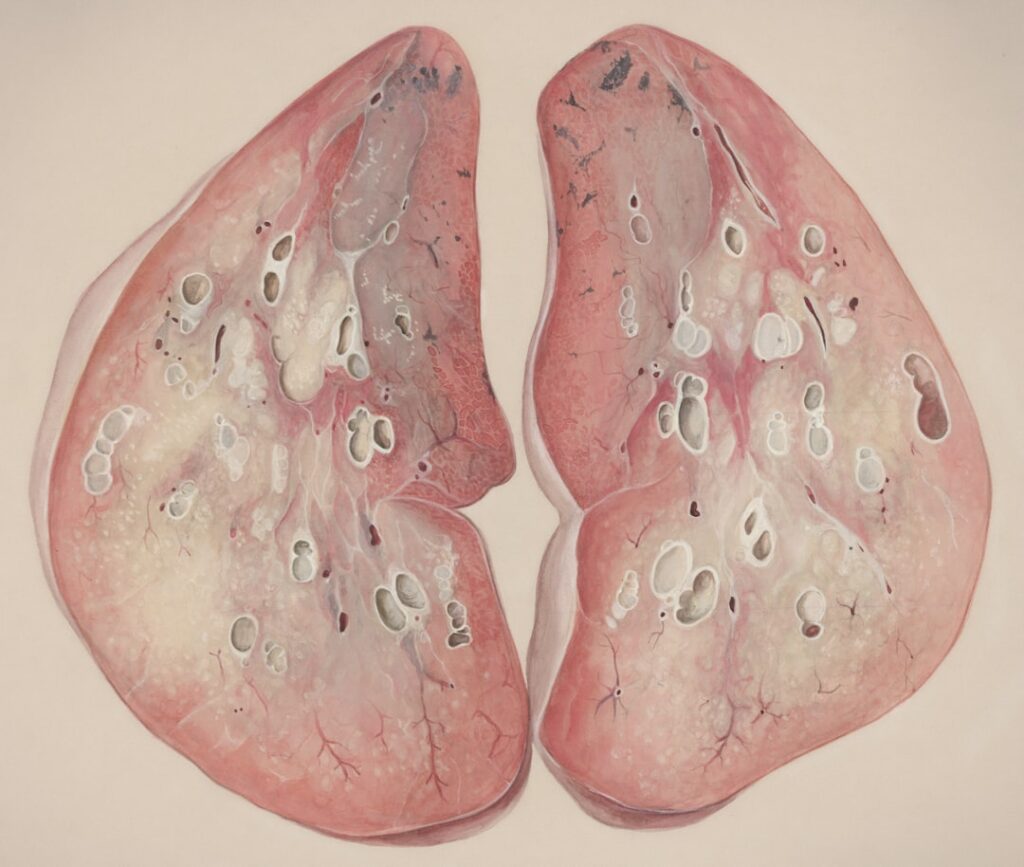
The phrase “fungus in lungs” worries people for understandable reasons, and it often comes up after someone reads about household mold and wonders whether breathing it could lead to an infection. Fungal lung conditions are a real area of medicine, but they are also frequently misunderstood, and the relationship between everyday home mold and serious lung infection is more nuanced than alarming headlines suggest. This article summarizes general public-health information from the CDC, the American Lung Association, and the National Institutes of Health current as of 2026. It is educational only. It does not diagnose, treat, or replace a physician, and anyone with respiratory symptoms or a health concern should speak with a qualified medical provider.
Part of our Black Mold & Your Health guide — start there for the full picture →
Dealing with mold or water damage? Talk to a remediation pro now.
📞 Call (833) 723-1134What “Fungus in Lungs” Generally Refers To
In medical terms, a fungal lung infection occurs when fungal spores are inhaled and grow or trigger a reaction in the respiratory tract. The CDC describes several categories of fungal disease that can affect the lungs, including aspergillosis, which is caused by Aspergillus, a common mold found both outdoors and indoors. Other fungal lung conditions are tied to specific environmental fungi found in soil and certain regions of the country.
An important point from public-health sources is that most people breathe in fungal spores every day without becoming ill, because a healthy immune system clears them. The CDC notes that serious fungal lung infections occur far more often in people whose immune systems are weakened, such as those undergoing certain cancer treatments, organ transplant recipients, or people with advanced lung disease. For the general population, casual exposure to common environmental fungi rarely leads to a serious lung infection, though this is a matter for a physician to evaluate in any individual case.
How Household Mold Relates to Lung Health
Household mold and clinical fungal lung infection are connected but not identical topics, and conflating them causes a lot of unnecessary worry. The CDC’s general guidance is that indoor mold exposure can cause symptoms such as nasal stuffiness, throat irritation, coughing or wheezing, and eye or skin irritation in some people, and that those with mold allergies or asthma may react more strongly. These are largely allergic and irritant responses rather than infections.
Infection is a different mechanism, and the medical literature reflected by NIH sources indicates it is much more likely in people with significantly compromised immune defenses. The American Lung Association similarly emphasizes that while damp, moldy indoor environments are linked to respiratory symptoms and can worsen asthma, the leap from a moldy bathroom to a fungal lung infection in an otherwise healthy person is not a typical outcome. The prudent takeaway is twofold: reducing indoor mold and dampness is good for respiratory comfort generally, and any actual symptom or infection concern belongs with a doctor, not a home cleaning guide.
It also helps to recognize that fungal exposure is not limited to the home. Aspergillus and similar molds live in soil, compost, decaying leaves, and outdoor air, so gardening and yard work involve fungal exposure too. This is part of why public-health guidance frames the issue around individual susceptibility rather than around any single indoor source. For most people the body manages these everyday encounters without incident. For those in higher-risk groups, the relevant conversation is with a care team about reasonable precautions, not a blanket avoidance of all fungi, which would be impractical.
Who May Be More Susceptible
Public-health sources consistently identify groups who may face higher risk from fungal exposure, including people with weakened immune systems, those with chronic lung conditions such as COPD, and individuals recovering from severe respiratory illness. People in these groups have their own reasons to discuss environmental exposures with their care team. This is general information, not a personalized risk assessment, and only a physician can evaluate an individual’s circumstances.
Symptoms That Warrant a Doctor’s Attention
Because this is a medical matter, the most useful guidance is about when to seek care rather than how to self-treat. General health sources describe respiratory symptoms that should prompt a conversation with a physician, including a persistent cough, shortness of breath, wheezing, chest discomfort, coughing up blood, unexplained fever, or fatigue that does not resolve. These symptoms have many possible causes, the vast majority unrelated to fungal infection, which is exactly why a professional evaluation matters rather than guesswork.
No home article can or should attempt to distinguish a fungal lung infection from far more common conditions like a viral infection, bronchitis, or an asthma flare. Diagnosis relies on a clinical exam, imaging, and laboratory testing that only a healthcare provider can order and interpret. If symptoms are severe, such as serious difficulty breathing or coughing up blood, that calls for prompt medical attention. The role of this guide is simply to point toward the right resource, which is a qualified physician.
Reducing Indoor Mold as a General Practice
While treatment is strictly medical, the home side of the equation is something homeowners can act on, and reducing dampness and mold is sensible for general respiratory comfort regardless of infection risk. The EPA’s core recommendation is moisture control: keep indoor relative humidity below 60 percent, ideally between 30 and 50 percent, fix leaks promptly, ventilate bathrooms and kitchens, and dry any water-damaged materials within a day or two.
When visible mold appears, the EPA considers small areas under about ten square feet a reasonable cleanup for homeowners, while larger growth warrants professional remediation. People who are more sensitive, including those with allergies or asthma, may prefer to have others handle even small cleanups. For homeowners weighing whether an assessment is worthwhile, our hub on mold inspection and testing explains what an evaluation covers, and our guide on the humidity levels that allow mold to grow covers prevention. These steps support a healthier indoor environment, but they are not a treatment for any lung condition.
Why Testing the Air Is Not a Health Test
A common misunderstanding is that air or surface mold testing reveals whether someone has a fungal infection. It does not. The CDC notes that sampling for mold is generally unnecessary for cleanup decisions, and it is certainly not a medical diagnostic. Establishing whether a person has a fungal lung infection requires clinical testing performed by a physician. Home environmental tests describe the building, not the body.
Common Misconceptions Worth Clearing Up
Several myths circulate about fungus and the lungs, and correcting them reduces unnecessary alarm. One is that any exposure to household mold leads to a lung infection. Public-health sources indicate that healthy immune systems clear inhaled spores routinely, and infection is far more associated with significantly weakened immunity. A second myth is that “black mold” uniquely causes lung infections. The CDC emphasizes that mold color does not reliably indicate danger, and the species commonly tied to lung infection, such as Aspergillus, are everyday environmental molds rather than an exotic black variety.
A third misconception is that mold symptoms and a fungal infection are the same thing. Allergic and irritant reactions to indoor mold, such as a stuffy nose or itchy eyes, are common and generally not infections. An infection is a distinct medical event that a physician diagnoses with clinical testing. Blurring these together leads people either to panic over harmless allergy symptoms or to dismiss genuine respiratory illness as “just mold.” Keeping the categories separate, and leaving the medical determination to a doctor, is the level-headed approach.
What the Public-Health Sources Actually Say About Risk
The most useful framing from the CDC and the American Lung Association is about populations and probability rather than certainty for any individual. They identify groups at elevated risk, such as people undergoing chemotherapy, transplant recipients, and those with advanced lung disease, and they describe damp indoor environments as linked to respiratory symptoms and worsened asthma. What they do not do is suggest that ordinary exposure reliably causes serious lung infection in healthy people. This population-level information is general by design; it cannot tell a specific reader what their personal risk is, which is precisely why a physician’s individualized assessment is the appropriate next step for anyone genuinely concerned.
The Limits of This and Any General Article
It bears repeating that no general article can substitute for medical care, and this one does not attempt to. The purpose here is to reduce confusion, explain how the home environment relates to respiratory health in broad terms, and point firmly toward a physician for anything involving symptoms, diagnosis, or treatment. The home side of the equation, controlling dampness and removing visible mold, is something a homeowner can act on, and it supports a healthier indoor environment. The body side belongs entirely to a qualified medical provider.
When to See a Physician
The single most important message here is to bring any genuine concern about fungus in lungs to a healthcare provider rather than the internet. Talk to a doctor if you have persistent or worsening respiratory symptoms, if you have a weakened immune system or chronic lung disease and worry about environmental exposure, or if a known exposure to heavy mold is paired with feeling unwell. A physician can evaluate symptoms, order appropriate testing, and provide diagnosis and treatment, none of which can or should be attempted at home. Controlling indoor moisture and mold is a reasonable environmental step, but it sits alongside professional medical care, not in place of it.
If there is one message to carry away, it is that worry about fungus in the lungs is best converted into two separate, manageable actions rather than left as anxiety. The first action is environmental and within your control: reduce dampness, fix leaks, and remove visible mold using the standard precautions, which improves indoor air for everyone in the home. The second action is medical and belongs to a professional: bring any genuine symptom or risk concern to a physician who can assess it properly. Splitting the concern into those two clear tracks replaces vague fear with concrete steps, and it ensures the home gets cared for by a homeowner while the body gets cared for by a doctor, each in the right hands.
The Home Environment’s Supporting Role
While medical questions belong with a physician, the home is where a household can take constructive action, and doing so supports general respiratory comfort. Damp indoor environments are linked in public-health sources to respiratory symptoms and worsened asthma, so reducing dampness is a reasonable goal regardless of any infection concern. The practical levers are the same ones the EPA emphasizes for mold control: keep relative humidity in a moderate range, repair leaks quickly, dry water-damaged materials within a day or two, and ventilate the moist rooms of the house.
For households that include someone in a higher-risk group, these environmental steps take on added meaning, and that person’s care team is the right source for guidance on what precautions make sense for their situation. Some may be advised to avoid disturbing visible mold themselves or to take particular care during activities that stir up fungal spores, such as gardening or attic work. This is individualized advice that only a clinician can give, and it sits alongside, not in place of, the general home measures any household can adopt.
The broader principle is a clean division of labor. The home side, controlling moisture and removing visible mold, is squarely within a homeowner’s control and worth doing for comfort and indoor air quality. The body side, anything involving symptoms, risk assessment, diagnosis, or treatment, belongs entirely to a qualified medical provider. Keeping those two domains distinct prevents both the false reassurance of treating a health worry with a cleaning project and the needless alarm of mistaking ordinary indoor mold for a medical emergency. A homeowner does the environmental part; a physician does the rest.
References
- Aspergillosis — Centers for Disease Control and Prevention
- Mold and Dampness — American Lung Association
- Health Information — National Institutes of Health
Frequently asked questions
Can household mold cause a fungal lung infection?
Most people breathe in fungal spores daily without becoming ill because a healthy immune system clears them. Serious fungal lung infections occur far more often in people with weakened immune systems. Any concern about infection should be evaluated by a physician, not self-assessed.
What symptoms should prompt a doctor visit?
A persistent cough, shortness of breath, wheezing, chest discomfort, coughing up blood, unexplained fever, or lasting fatigue all warrant a physician's attention. These symptoms have many common causes unrelated to fungus, which is why professional evaluation matters rather than guessing at home.
Does mold testing show if I have a lung infection?
No. Home air and surface mold testing describes the building environment, not a person's health. Diagnosing a fungal lung infection requires clinical exams, imaging, and lab tests that only a healthcare provider can order and interpret.
Front Range homeowners concerned about dampness and indoor mold can connect with a vetted local inspector through our contact page, while any health symptoms should be discussed with a physician.