Mold vs Fungus: What’s the Difference for Homeowners?
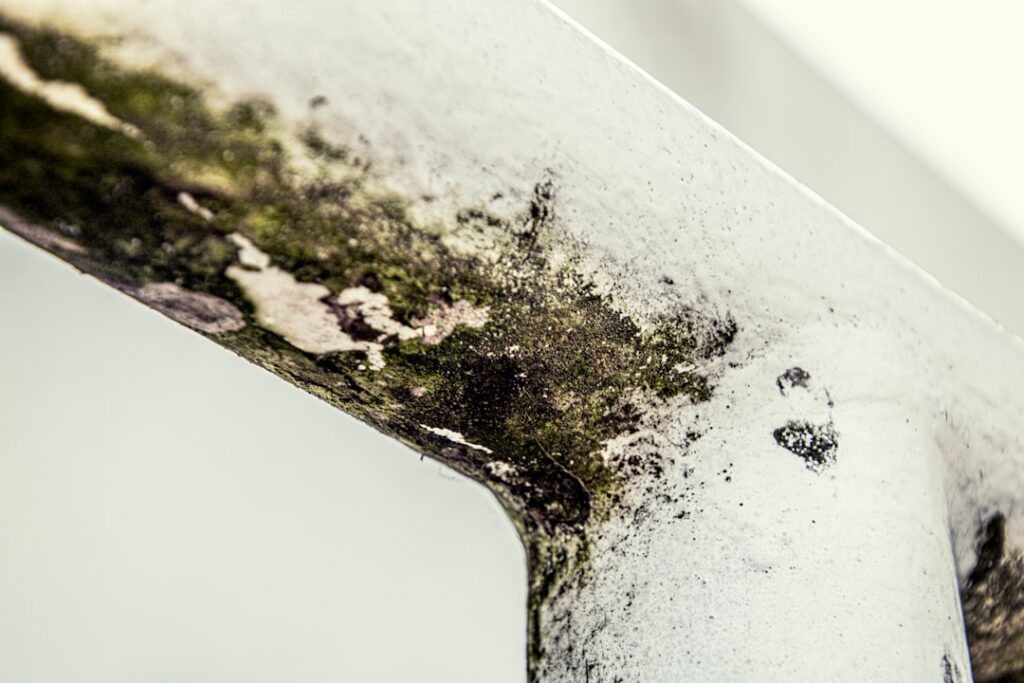
Search for a damp-spot identification and you will see the words mold and fungus used as if they mean the same thing — and sometimes as if they are opposites. Both ideas are wrong in different ways. The mold vs fungus question matters because the answer shapes how you test, how you clean, and when you call a professional. This guide untangles the terms in plain language, explains where mildew, yeast, and mushrooms fit, and shows what actually changes for a homeowner. It summarizes EPA and CDC guidance current as of 2026 and is educational only — consult a certified professional for testing or remediation decisions.
Part of our Types of Mold guide — start there for the full picture →
Is this mold, asbestos, or water damage? Get a free instant screen
Upload a clear photo of the suspect area. You'll get an instant AI screening opinion and what to do next. This is screening guidance, not a professional determination.
Screening guidance only. AI can be wrong. Confirm asbestos, mold type, or lead with lab testing or a licensed professional before acting.
Mold vs fungus: are they the same thing?
Mold is a type of fungus. That is the short answer, and it resolves most of the confusion. Fungus is the broad biological kingdom — Fungi — that includes mushrooms, yeasts, rusts, mildews, and molds. Mold refers specifically to the fuzzy, multicellular fungi that grow as a network of thread-like filaments and reproduce by releasing spores into the air. So the comparison is not mold against fungus the way you would compare a cat against a dog. It is more like comparing a poodle against dogs. Every mold is a fungus, but not every fungus is a mold.
When people ask about mold vs fungus in their home, they are usually pointing at one of a few specific things: the green or black fuzz on a bathroom wall, the powdery white film on a basement joist, or a shelf-like growth pushing out of wet wood. Those are all fungi, and the first two are typically molds. Sorting out which is which guides the response.
What is a fungus?
Fungi are their own kingdom of life, separate from plants and animals. They do not photosynthesize. Instead they feed by secreting enzymes that break down organic material — wood, paper, food, fabric, soil — and absorbing the nutrients. That feeding behavior is exactly why fungi matter inside a house: drywall paper, framing lumber, and the dust on surfaces are all food.
The kingdom includes single-celled yeasts, the molds that grow as filament mats, the large fruiting bodies we call mushrooms, and plant pathogens like rusts and smuts. Some fungi are beneficial — bread, beer, cheese, and many antibiotics depend on them. The fungi homeowners worry about are the ones that colonize wet building materials and release spores indoors.
What is mold, specifically?
Mold is a filamentous fungus. Its body is a tangle of microscopic threads called hyphae, and the whole network is a mycelium. When mold matures, it produces spores that float through the air and settle on new surfaces, ready to germinate wherever there is enough moisture. That airborne-spore behavior is what makes mold an indoor-air concern rather than just a surface stain.
Common indoor molds include species of Cladosporium, Penicillium, Aspergillus, Alternaria, and Stachybotrys (often called black mold). They differ in color and texture, but they share the same basic needs: moisture, a food source, and time. Identifying the genus usually requires a lab, which is why a color and texture mold identification chart is a starting point rather than a final answer.
Where mildew, yeast, and mushrooms fit
Mildew
Mildew is a loosely used word. In everyday home use, mildew usually means an early-stage, flat, powdery mold growth — the gray or white film on a shower grout line or a damp wall. Botanically, true mildews are plant pathogens, but homeowners rarely mean that. For practical purposes, treating shower and wall mildew as surface-stage mold is the safe approach.
Yeast
Yeasts are single-celled fungi that reproduce by budding rather than spreading filaments. They are common in food and on skin but are not the typical cause of a fuzzy wall stain. If you see fuzz or a spreading mat, you are looking at mold, not yeast.
Mushrooms and wood-rot fungi
A shelf-like or stalked growth coming out of wet framing or a floor is a fruiting body of a wood-decay fungus. These are a louder warning than surface mold because they signal sustained saturation and active structural decay. House fungus on structural wood is a building-integrity issue, and our guide on identifying house fungus on wood covers what those growths mean.
Does the difference change how you test?
For air-quality concerns, mold is what testing measures. Air and surface sampling count and identify mold spores; labs report genera such as Aspergillus/Penicillium or Stachybotrys. Testing for a “fungus” in general is not how home assessment works — the lab is identifying molds and, where relevant, wood-decay organisms.
So when a homeowner debates mold vs fungus before ordering a test, the practical answer is: you are testing for mold. If a wood-decay fungus (a mushroom or visible rot) is present, that is assessed differently — often by an inspector evaluating moisture intrusion and structural damage rather than by an air spore count. The two findings frequently appear together, because the same chronic moisture that grows surface mold also feeds wood rot.
Does the difference change how you remove it?
Removal logic is similar but the scope differs. For surface mold on non-porous materials, EPA guidance is to clean with water and detergent and dry thoroughly; porous materials like soaked drywall or carpet often need replacement. The non-negotiable step in every case is fixing the moisture source — without that, any fungus returns.
Wood-decay fungus changes the stakes. By the time a fruiting body appears, the wood may have lost strength, and remediation can involve removing and replacing structural members, not just cleaning. That is a contractor-and-inspector job, not a spray-bottle job. Identifying which category you are dealing with — surface mold versus wood-rot fungus — is the single most useful outcome of getting the mold vs fungus question right.
Why the terms get confused in marketing
Part of the mold vs fungus confusion is deliberate. Cleaning products and service companies use the words loosely because they evoke different reactions. “Mold” triggers worry about health and air quality; “fungus” can sound either more clinical or more benign depending on the audience. A product marketed as a “mold and mildew remover” and one marketed as an “antifungal cleaner” may contain similar active ingredients while targeting different fears. Homeowners benefit from looking past the label and asking the practical questions: what is actually growing, what is feeding it, and what does the response require.
The same loose usage shows up in inspection and remediation. A report that says “fungal growth present” is describing what is almost always mold, plus possibly wood-decay organisms. Asking the inspector to specify — surface mold, wood rot, or both — turns a vague label into actionable information. The vocabulary matters less than the underlying findings: location, extent, moisture source, and whether structural materials are involved.
What a lab actually reports
When a sample goes to a lab, the analysis does not return a verdict of “fungus” versus “mold.” It identifies and counts mold spores, typically by genus, and reports them against an outdoor reference where one was collected. Common entries include Cladosporium, the Penicillium/Aspergillus group (reported together because their spores look alike), Alternaria, and Stachybotrys. The lab may note whether spores were elevated indoors relative to outdoors, which is the signal that points to an indoor source.
What the lab does not do is rank danger by name. The EPA’s guidance is that species identification rarely changes the cleanup, which is the same regardless of genus: remove the growth and fix the moisture. So a lab report sharpens the picture for documentation, health evaluation, or a dispute, but it does not transform the basic mold vs fungus question into a different answer. You are testing for mold; the lab tells you which molds and at what relative level.
Comparing the response side by side
Surface mold
For surface mold on hard, non-porous materials, the response is cleaning with detergent and water and drying thoroughly, plus fixing the moisture. Porous materials that are soaked — drywall, carpet, ceiling tile — usually get removed and replaced. Small areas are a homeowner job; large or hidden areas call for containment and a professional.
Wood-decay fungus
For a wood-rot fungus, the response escalates. Decayed structural wood may need to be cut out and replaced, the moisture source corrected, and the surrounding framing evaluated for hidden damage. This is contractor-and-inspector territory because it touches the building’s integrity, not just its surfaces.
What both share
Both responses hinge on the same non-negotiable step: stopping the water. Neither surface mold nor wood-decay fungus returns once the material is dry and stays dry. That shared root cause is why distinguishing the two matters for scope and cost, while the underlying fix — moisture control — is identical.
Health considerations for both
The CDC notes that exposure to damp and moldy environments can cause symptoms in some people — nasal congestion, wheezing, eye or skin irritation — and more serious reactions in people with allergies, asthma, or weakened immune systems. The relevant exposure indoors comes from mold spores and fragments, not from mushrooms growing on a deck. If anyone in the household has unexplained respiratory symptoms that improve away from home, that is a reason to consult a physician and consider an assessment of indoor moisture.
This guidance is general. Individual sensitivity varies widely, and only a doctor can connect specific symptoms to a specific cause. Health questions about mold belong with a medical professional, while building questions belong with a qualified inspector.
Beneficial fungi versus problem fungi
It is worth remembering that the fungus kingdom is not the enemy. Yeasts leaven bread and ferment beer and wine. Penicillium gave the world penicillin and ripens blue cheeses. Mycorrhizal fungi partner with plant roots in healthy soil. The fungi that matter as a home problem are a narrow slice: the molds that colonize wet building materials and release spores indoors, and the wood-decay fungi that consume structural lumber. Framing the mold vs fungus question this way keeps it in proportion — the issue is not fungi as a category but specific organisms exploiting a specific condition, which is unwanted moisture inside a building.
This perspective also explains why eliminating fungi entirely is neither possible nor the goal. Spores are a permanent part of indoor and outdoor air. The practical objective is denying them the moisture they need to grow on your walls, framing, and furnishings, not sterilizing the environment.
Common scenarios homeowners ask about
A few recurring situations show how the distinction plays out. Black spots on bathroom grout are surface mold driven by shower humidity, handled with cleaning and better ventilation. A musty basement with no visible growth usually means hidden mold tied to below-grade moisture, worth investigating with a moisture meter. A white, web-like growth spreading across a damp crawl-space joist may be the mycelium of a wood-decay fungus, a structural concern rather than a cleaning task. A mushroom pushing out of a wet baseboard is an unmistakable wood-rot signal that warrants prompt professional attention.
In each case, naming the organism precisely matters less than reading the cue correctly: is this surface mold on a finish material, or a decay fungus eating into structure? That single judgment determines whether the homeowner reaches for a spray bottle or the phone. When the answer is unclear — or the affected area is large, hidden, or tied to flooding — the safe move is professional assessment, since the cost of guessing wrong on a structural fungus is far higher than the cost of an inspection.
How to tell what you are looking at
A few practical cues help homeowners sort it out without a lab. Fuzzy, spreading green, black, or gray patches on walls, ceilings, or grout are almost always mold. A powdery white or gray film in a damp area is early-stage mold (what many call mildew). A firm, shelf-like, or stalked growth on wet wood is a wood-decay fungus and a more serious signal. Slimy or wet-looking colonies on consistently saturated wood also point to advanced decay.
Color alone is unreliable for identifying species or hazard. Black does not automatically mean toxic, and light-colored growth is not automatically harmless. When the source of moisture is not obvious, or the affected area is large, the safest move is to read the broader guidance in our plain-language mold inspection hub and bring in a professional.
Prevention applies to both
Whether the concern is surface mold or a wood-decay fungus, prevention rests on the same foundation: deny moisture. Keeping indoor relative humidity in the 30 to 50 percent range, fixing leaks within a day or two, ventilating bathrooms and kitchens, and managing basement and crawl-space dampness removes the conditions both organisms need. Exterior measures — grading soil away from the foundation, extending downspouts, and maintaining gutters — keep water out of the spaces where fungi take hold. On the Front Range, attention to snowmelt drainage and crawl-space ground moisture addresses the most common local triggers.
This shared prevention is the practical resolution to the mold vs fungus question. The vocabulary distinction guides how you assess and scope a problem, but the way you stop both from appearing in the first place is identical. A home kept dry rarely grows either surface mold or structural decay, which is why moisture control is the single most valuable habit a homeowner can build against any fungal growth indoors.
When to call a professional
Homeowners can handle small surface-mold spots on hard materials. Call a professional when growth covers more than about ten square feet, when you find a wood-decay fungus or visible rot, when there has been sewage or flooding, when a musty smell persists with no visible source, or when household members have ongoing health symptoms. An inspector can determine moisture sources, distinguish surface mold from structural decay, and recommend the right path. On the Front Range, chronic basement and crawl-space dampness is the usual driver behind both mold and wood-rot fungus.
Choosing products and services with clarity
Because the mold vs fungus vocabulary is used so loosely in the marketplace, a little clarity helps homeowners spend wisely. A “mold and mildew” cleaner and an “antifungal” cleaner often address the same surface-stage growth; the right question is whether the product is meant for non-porous surface cleaning or for something more. For services, the meaningful distinction is not whether a company says “mold” or “fungus” but whether it investigates and corrects the moisture source, uses proper containment for larger jobs, and keeps assessment independent from remediation where possible.
The same clarity applies to inspection reports and lab results. A report noting “fungal growth” is describing mold and, where relevant, wood-decay organisms; asking the inspector to specify surface mold versus structural decay turns a vague term into a clear scope. Focusing on the underlying findings — location, extent, moisture source, and whether structure is involved — cuts through the terminology and leads to the right decisions, whether the label on the page reads mold or fungus.
References
- Mold Basics and Cleanup — U.S. Environmental Protection Agency
- Basic Facts About Mold and Dampness — Centers for Disease Control and Prevention
- Mold: Health Effects and Research — National Institute of Environmental Health Sciences
Front Range homeowners who are not sure whether they are dealing with surface mold or something growing into the structure can get matched with a vetted local inspector — reach out through our contact page to talk it through.