Sewer Line Repair Cost: Spot Repair, Lining and Trenchless
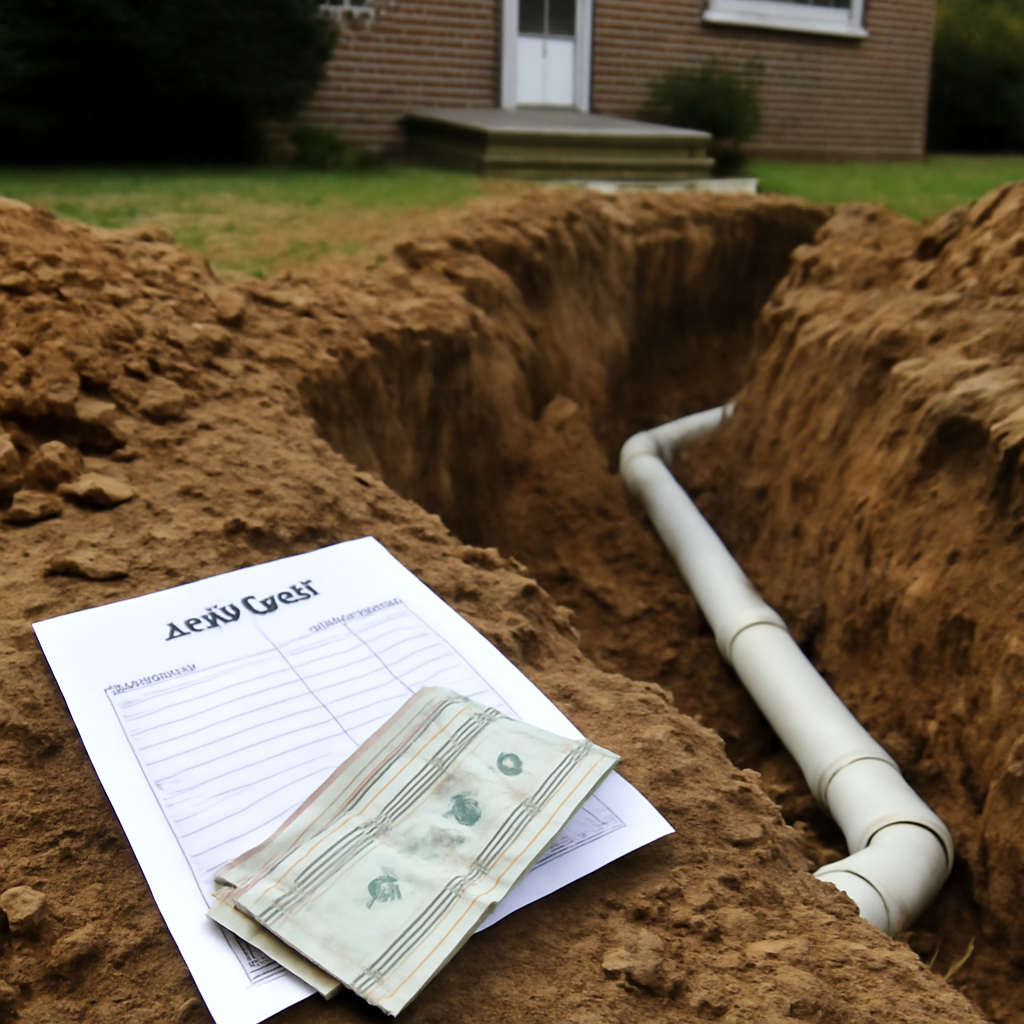
A typical sewer line repair cost for a single, localized problem (one cracked joint, one root intrusion point, one offset section) usually lands somewhere around $1,000 to $5,000 nationally in 2026, with deeper digs, concrete removal and work near the street pushing past that. Trenchless spot liners often price in a similar band, while lining the entire lateral or replacing it moves into a different budget entirely. This guide focuses on repairs: what a fair quote for a spot fix or sectional liner looks like, what drives the price up or down, when a repair is a sensible spend versus money poured into a pipe that is near the end of its life, and how to read a plumber’s proposal line by line. If the camera shows the whole line is failing, our companion guide to full sewer line replacement cost covers open-trench and pipe-bursting replacement in detail. All dollar figures here are typical national ranges, not quotes, and Front Range prices vary by city, soil and season.
Part of our Plumbing & Water guide — start there for the full picture →
Plumbing problem? Talk to a local plumber now.
📞 Call (877) 637-1527Typical Sewer Line Repair Costs at a Glance
Sewer work is quoted in a few different ways. Spot repairs are usually priced per repair (a lump sum for one dig or one liner), while longer lining or trench work is often priced per linear foot. The table below groups the jobs homeowners most commonly see on a quote after a camera inspection.
| Job (typical national range, 2026 — get local quotes) | How it is usually quoted | Typical range |
|---|---|---|
| Sewer camera inspection with recording | Per visit | About $150–$500 |
| Mechanical root cutting or cabling (temporary relief) | Per visit | About $150–$600 |
| Hydro jetting before a repair or liner | Per visit | About $350–$1,000 |
| Open-cut spot repair, one section, shallow yard dig | Lump sum | About $1,000–$4,000 |
| Open-cut spot repair, deep line or under concrete | Lump sum | About $3,000–$7,500+ |
| Trenchless sectional (point) liner, one defect | Per liner | About $1,500–$4,500 |
| Belly (sag) correction by digging and re-bedding | Lump sum | About $2,000–$6,000 |
| New exterior two-way cleanout added during repair | Lump sum | About $600–$2,500 |
| Full-length cured-in-place lining of the lateral | Per foot | About $80–$250 per foot |
| Repair at or under the street, sidewalk or city tap | Lump sum | Often $4,000–$12,000+ |
Two points keep these numbers honest. First, a single defect rarely travels alone; a camera that shows one cracked hub on a 60-year-old clay line often shows several more within a few feet, and each extra repair changes the math. Second, the cheapest line on the list, root cutting, is maintenance rather than repair. It reopens the pipe but leaves the crack or open joint that let the roots in.
Spot Repair, Lining or Trenchless: What Each Fix Actually Is
Most residential sewer laterals run from the house to the municipal main under the yard, and sometimes under a driveway, sidewalk or street. A repair addresses one part of that run. Three broad approaches show up on quotes.
Open-cut (dig-and-replace) spot repair
The crew excavates down to the damaged section, cuts out the broken pipe and splices in new pipe, typically PVC, with shielded couplings at each end. This is the most familiar repair and the most adaptable. It can fix a collapsed section, a crushed pipe, an offset joint, or a short belly, because the crew can physically regrade the bedding under the pipe. The trade-off is disruption: the hole has to be dug, shored if it is deep enough, backfilled, compacted and restored. Depth matters a great deal. A shallow lateral under lawn is a modest job; a line ten feet down under a concrete patio is not.
Trenchless sectional (point) liner
A sectional liner is a short sleeve, often a few feet long, of resin-saturated fabric that is pulled or pushed through the existing pipe from a cleanout, positioned over the defect with the help of a camera, inflated against the pipe wall and cured in place. The result is a short pipe-within-a-pipe that seals cracks and open joints where roots enter. Point liners work well when the pipe is round and roughly on grade, and the damage is limited to a few spots. They cannot fix a collapsed pipe, a severe offset that the liner cannot pass, or a belly where water sits, because the liner follows the existing pipe’s shape and slope.
Full-length lining and trenchless replacement
When the camera shows defects scattered along the run, contractors may propose cured-in-place lining of the whole lateral or pipe bursting. These are effectively replacement-grade work. They often save landscaping and hardscape, but they are priced like replacement, and they belong in the replacement budget. The decision logic for those methods is covered in the replacement guide linked above; this page sticks to the smaller fixes.
Trenchless versus dig: a quick comparison
| Factor | Open-cut spot repair | Sectional (point) liner |
|---|---|---|
| Fixes collapsed or crushed pipe | Yes | No |
| Fixes a belly or poor slope | Yes, if short | No |
| Seals cracks and root entry joints | Yes, by replacing the section | Yes |
| Disturbance to yard or concrete | Excavation and restoration | Usually minimal if a cleanout exists |
| Needs a clean, round pipe to work | No | Yes, usually jetted first |
| Slightly reduces pipe diameter | No | Yes, modestly |
Best Plumbing Snakes: our top 3 picks
| Product | Best for | Key features | Price | Buy |
|---|---|---|---|---|
| Ginbel Direct HKHT0184 | Best overall hand drum auger |
| $22.99as of Oct 19, 2026 8:55 pm GMT+0000 | Buy now →Check current price |
| BACEYIOU SG-DS2056 | Hand or drill-powered drum |
| $31.97as of Oct 19, 2026 8:57 pm GMT+0000 | Buy now →Check current price |
| POPULO CADL-2004 20V | Cordless auto-feed with runtime |
| $89.59as of Oct 19, 2026 8:57 pm GMT+0000 | Buy now →Check current price |


Prices are Amazon’s listed prices as of the time shown and change often; check Amazon for today’s price. As an Amazon Associate we earn from qualifying purchases.
What Drives a Sewer Repair Quote Up or Down
Two repairs that look identical on a camera report can be priced thousands of dollars apart. These are the factors that usually explain the gap.
- Depth of the line. Depth is one of the biggest single drivers for any dig. Deeper excavations take longer, generate more spoil, and above a certain depth require protective systems. OSHA’s trenching guidance describes trench collapses, or cave-ins, as the greatest risk to workers’ lives in this kind of work and directs crews to slope, shore or shield trench walls. That protection costs money, and a quote that skips it on a deep hole is a warning sign rather than a bargain.
- What sits on top. Lawn is the cheapest surface to dig through. Concrete driveways, patios, retaining walls, mature trees and finished basement floors each add removal and restoration cost.
- Location along the run. A defect near the house is usually easier. A defect at the city connection or under a public sidewalk or street may need a right-of-way permit, traffic control and city inspection, and in some municipalities that portion is the city’s responsibility rather than the owner’s. Check with the local utility before paying for street work.
- Access for trenchless tools. A sectional liner needs a way in. If the home has no usable cleanout, the quote may include installing one first. Our guide to the sewer cleanout explains where these usually sit and why adding one is often worth it even when it is not strictly required.
- Pipe material and condition. Clay, cast iron, Orangeburg (bituminous fiber) and PVC fail differently. Our page on clay sewer pipe covers why vitrified clay joints are so prone to root intrusion, while Orangeburg tends to deform and is usually a replace-not-repair material.
- Number of defects. Each additional liner or dig adds to the total, though contractors sometimes discount additional liners mobilized on the same visit.
- Permits and inspections. Many cities require a permit for sewer lateral repairs, especially when the line is exposed or when work touches the right-of-way. Fees and rules vary; check with your city or county building department.
- Emergency timing. A backup on a holiday weekend, with sewage in the basement, typically carries after-hours rates. If the line can be cleared temporarily, scheduling the permanent repair on a normal weekday usually costs less and leaves time to gather competing quotes.
- Cleanup inside the home. If sewage has already backed up, restoration is a separate line item. EPA’s mold guidance notes that water-damaged areas and items should be dried within 24 to 48 hours to prevent mold growth, so cleanup cannot always wait for the repair.
Repair or Replace: A Practical Decision Framework
The hardest question on most sewer quotes is whether the repair is worth doing at all. A spot repair on a fundamentally sound pipe is good value. The same repair on a pipe that is failing everywhere is money spent on one leak in a sieve. A few rules of thumb help frame the decision; treat them as starting points for a conversation with the contractor, not hard thresholds.
Rule of thumb 1: count the defects on the video
One or two isolated defects on an otherwise round, on-grade pipe usually favor a repair. Three or more defects spread along the run, or a defect at nearly every joint of a clay line, usually favor lining or replacing the whole lateral. Ask the contractor to mark each defect with its distance from the cleanout on the video so the count is clear.
Rule of thumb 2: compare repair cost to replacement cost
Many contractors and homeowners use a rough threshold: if the repairs needed now add up to more than about a third to a half of a full replacement or full-length lining quote, the long-term value often tilts toward doing the whole line. The reasoning is simple. Old pipe that has failed in two places tends to fail in a third, and every new dig carries its own mobilization and restoration cost.
Rule of thumb 3: weigh age and material
Material sets the outlook. A PVC line with one root-damaged joint at a fitting is a strong repair candidate. An Orangeburg line that has started to ovalize is a weak one, because the remaining pipe is likely to deform the same way. Cast iron with heavy interior scaling may be a lining candidate rather than a spot-repair candidate. Clay lines vary: a clay pipe with good joints and one cracked bell is a reasonable repair, while one with roots at every joint is not.
Rule of thumb 4: think about how long the owner will stay
A buyer planning to stay ten or more years generally benefits from addressing the whole line once. A seller negotiating a repair before closing may reasonably choose the smallest code-compliant fix. Both are legitimate choices, as long as everyone understands what the remaining pipe looks like.
When repeated root cutting stops making sense
Annual or semi-annual root cutting is a common holding pattern. It can be reasonable for a year or two while a homeowner budgets for a permanent fix. But if roots return quickly and the camera shows the same joint opening wider, the cost of repeated visits plus the risk of a backup usually justifies a liner or dig. Our guide to tree roots in sewer lines explains how roots find and widen joints and what long-term options look like.
How to Read a Sewer Repair Quote
A good quote is specific. It ties the price to a defect that the homeowner can see on video, describes the method, and lists what is and is not included. Expect at least these items on a written proposal.
- The defect location. Distance from the cleanout or house wall, approximate depth, and a description (crack, offset joint, root intrusion, belly, collapse).
- The method. Open-cut spot repair, sectional liner, or a combination, with the length of pipe being replaced or lined.
- Materials. Pipe type and couplings for a dig; liner type, length and resin for a sectional liner.
- Preparation. Cleaning or jetting before lining, and any root removal.
- Excavation and restoration scope. Who removes and replaces concrete, sod or landscaping, and to what standard. “Backfill only” and “restore to original condition” are very different promises.
- Permits and inspection. Whether the permit is included and who schedules any required inspection.
- Utility locates. Confirmation that underground utilities will be located before digging.
- Post-repair camera video. A recording that shows the finished repair, which is useful for warranty claims and for the next buyer.
- Warranty. What is covered, for how long, and whether it covers only the repaired section or the whole line.
Red flags worth slowing down for
- A quote for full replacement with no video, or with a refusal to share the recording.
- A camera inspection offered free that ends in a same-day, high-pressure push to sign for a large job.
- “Whole-line” packages proposed for a single defect on a newer PVC lateral, without an explanation of why the rest of the pipe is suspect.
- No permit mentioned for work that clearly requires excavation in the right-of-way.
- No mention of shoring or trench protection on a deep dig.
- A sectional liner proposed for a section the video shows as collapsed or bellied.
- Large upfront deposits demanded before any work is scheduled.
Questions to ask every contractor
- How many defects did the camera show, and where exactly is each one?
- Why this method instead of the other one?
- If this repair is done, what is the expected condition of the rest of the line?
- Is the city responsible for any part of this run?
- What does the warranty cover, and will a post-repair video be provided?
Getting two or three written quotes is the single best defense against both overpaying and under-repairing. Sharing the same camera video with each contractor keeps the comparison fair, since everyone is pricing the same defects.
Signs a Sewer Line Needs Repair
Most sewer problems announce themselves gradually. Common warning signs include:
- Several fixtures draining slowly at once, especially the lowest fixtures in the house
- Gurgling from toilets or floor drains when other fixtures drain
- Sewage odor in the basement or yard
- Water or sewage coming up through a basement floor drain
- Unusually lush or soggy strips of lawn along the sewer route
- Recurring clogs that return within weeks of being cleared
One slow sink usually points to a local clog. Multiple fixtures behaving badly together point to the main line. If wastewater has already backed up into the home, our guide to sewer backup covers immediate steps, safety and cleanup. EPA notes that sanitary sewer overflows, which it attributes to causes including blockages, line breaks and sewer defects, can back up into homes, causing property damage and threatening public health. The same is true of a failing private lateral.
Front Range Factors That Affect Sewer Repairs
A few regional conditions shape both the failure patterns and the repair cost along the Colorado Front Range.
- Expansive clay soils. Many neighborhoods from Douglas County north through the Denver metro sit on soils that swell when wet and shrink when dry. That movement can shift pipe joints and create offsets or bellies over time, which favors open-cut repairs that can regrade the bedding.
- Mature trees in older neighborhoods. Older parts of Denver, Aurora, Lakewood and Colorado Springs often have clay laterals and large street trees. Root intrusion at clay joints is one of the most common findings on sewer scopes in these areas.
- Frost depth and winter work. Laterals are generally buried below frost depth, and digging through frozen ground in winter is slower. Non-emergency open-cut repairs are sometimes cheaper and easier to schedule outside the coldest months.
- Local responsibility rules. Cities and sanitation districts differ on who owns the tap and the segment under the street. Check with your local utility or city building department before authorizing work beyond the property line.
How a Home Inspection Flags Sewer Problems
A standard home inspection does not include the buried sewer lateral. The ASHI Standard of Practice directs the inspector to inspect interior drain, waste and vent systems, including fixtures, and to describe the drain, waste and vent piping materials, but the buried line to the street is outside that scope. During a normal inspection the inspector may still notice clues: slow drainage when fixtures are run, staining around floor drains, a cleanout cap that has been removed repeatedly, or an older clay or cast iron stub visible in the basement.
That is why a separate sewer scope is so commonly recommended for buyers of older homes, homes with large trees near the sewer route, or homes that have been vacant. A camera is run from a cleanout to the main and the recording shows the condition, material and any defects. Our guide to the sewer camera inspection explains what the video shows and how to interpret common findings. A scope before closing turns an unknown liability into a defect with a location, a method and a price, which is exactly what a buyer needs to negotiate a credit or repair.
When the scope finds a problem, the next call is a licensed plumber or sewer contractor for a quote. A home inspector does not price or perform repairs. Our plumbing and water hub collects related guides on drains, water heaters and other plumbing systems a buyer may want evaluated.
Getting a Fair Price on a Sewer Repair
Pulling it together, a fair sewer line repair is one that matches the method to the defect, prices the work transparently and leaves the homeowner with video proof of the result. Start with a recorded camera inspection. Count the defects. Get two or three written quotes that reference the same video. Ask why each contractor chose a dig or a liner, confirm the permit and restoration scope, and compare the repair total against a full-line quote before signing. For buyers, the best time to learn all of this is before closing, while there is still room to negotiate.
If you are buying a home on the Front Range and want the sewer line scoped before your contingency period ends, reach out through our contact page to arrange an inspection.
References
- Sanitary Sewer Overflows (SSOs) — U.S. Environmental Protection Agency
- Trenching and Excavation — Occupational Safety and Health Administration
- A Brief Guide to Mold, Moisture and Your Home — U.S. Environmental Protection Agency
- ASHI Standard of Practice for Home Inspection — American Society of Home Inspectors
Frequently asked questions
How much does a sewer line spot repair cost?
A single open-cut spot repair on a shallow line under lawn typically runs about $1,000 to $4,000 nationally, while deep lines or repairs under concrete can exceed $7,500. Get local written quotes that reference a camera video.
Is a trenchless sewer repair cheaper than digging?
Not always. A sectional liner often costs about the same as a shallow dig, but it avoids excavation and restoration. It becomes the better value when the defect sits under concrete, landscaping or a deep section of yard.
Can a sectional liner fix a sagging sewer line?
No. A liner follows the existing pipe, so it cannot correct a belly or poor slope where water pools. Bellies are usually fixed by digging up the section and re-bedding the pipe at the correct grade.
When should a sewer line be replaced instead of repaired?
As a rule of thumb, consider full lining or replacement when the camera shows defects scattered along the run, when the pipe is Orangeburg or badly deformed, or when the needed repairs approach a third to half of a full replacement quote.
Does a home inspection check the sewer line?
A standard home inspection covers interior drain, waste and vent piping but not the buried lateral to the street. A separate sewer camera inspection is the usual way to check the line before buying.