Radon Mitigation Services Near Me: A Guide
When a radon test comes back above the EPA action level of 4 picocuries per liter, the natural next search is radon mitigation services near me, and choosing the right contractor matters as much as the system itself. A well-installed system reliably protects a household for years; a poor one can underperform or create new problems. This guide summarizes EPA and Colorado Department of Public Health and Environment guidance current as of 2026. It is educational only and does not diagnose any condition; testing and mitigation decisions belong with a certified radon professional.
Part of our Radon Mitigation Systems guide — start there for the full picture →
How do you find good radon mitigation services near you?
The best radon mitigation services share a few clear markers: certification, experience, transparent pricing, a written guarantee of results, and proper licensing or registration where required. Start by looking for contractors certified through a recognized national radon program, then confirm they carry insurance, provide written quotes, and guarantee that the finished system will bring radon below 4 pCi/L. In Colorado, the state health department maintains guidance and resources that help homeowners identify qualified professionals before committing to a contract.
Proximity matters for practical reasons, since a local contractor can respond to service calls and warranty issues quickly and knows the region’s soil and housing. But proximity should never outweigh competence. A nearby contractor with weak credentials is a worse choice than a slightly more distant one with strong certification and a track record. The fundamentals of vetting radon work mirror the broader principles in the Colorado radon testing guide, which frames mitigation within the full testing-and-reduction process.
What certifications should you look for?
Radon mitigation is a specialized trade, and certification is the clearest signal of competence. Two national certification programs are widely recognized in the field: the National Radon Proficiency Program and the National Radon Safety Board. A contractor certified through one of these has completed training in radon measurement and mitigation and agrees to follow established technical standards. Asking for proof of current certification is a reasonable and expected first step in vetting any candidate.
Why certification matters
Designing an effective system requires understanding soil conditions, foundation types, fan sizing, and proper venting above the roofline. An uncertified handyman may install a system that looks correct but fails to lower radon below the action level, or that vents soil gas improperly back toward windows. Certification does not guarantee perfection, but it sharply raises the odds of competent, code-aware work. Colorado does not have the same statewide licensing for radon contractors that some trades require, which makes national certification an even more important signal for Front Range homeowners.
What should a fair quote include?
A trustworthy radon contractor provides a written quote that itemizes the work involved, not just a single bottom-line number. The quote should specify the proposed system type, such as sub-slab depressurization, the fan model, the vent-pipe routing, electrical work, sealing of foundation openings, and the post-installation retest. It should also state a guarantee, typically a commitment to bring the home below 4 pCi/L or remediate further at no extra charge.
Most complete residential systems on the Front Range fall in a price range from roughly $800 to $2,500, with the fan being a small part of that total. A quote far below the range may signal cut corners, while one far above warrants questions about what justifies the premium. The components that make up the cost are broken down in the guide on the cost of a radon mitigation system, which separates the fan, piping, labor, and sealing into their respective shares of the total.
Getting multiple quotes
Collecting two or three quotes is sound practice. Comparing them reveals the local market rate and exposes outliers on either end. More importantly, the conversations themselves reveal which contractors explain their approach clearly, answer questions patiently, and stand behind their work with a written guarantee. The contractor who walks you through the proposed design, the fan choice, and the post-install retest is usually the safer choice, because that willingness to explain reflects the competence you are paying for.
What does the mitigation process look like?
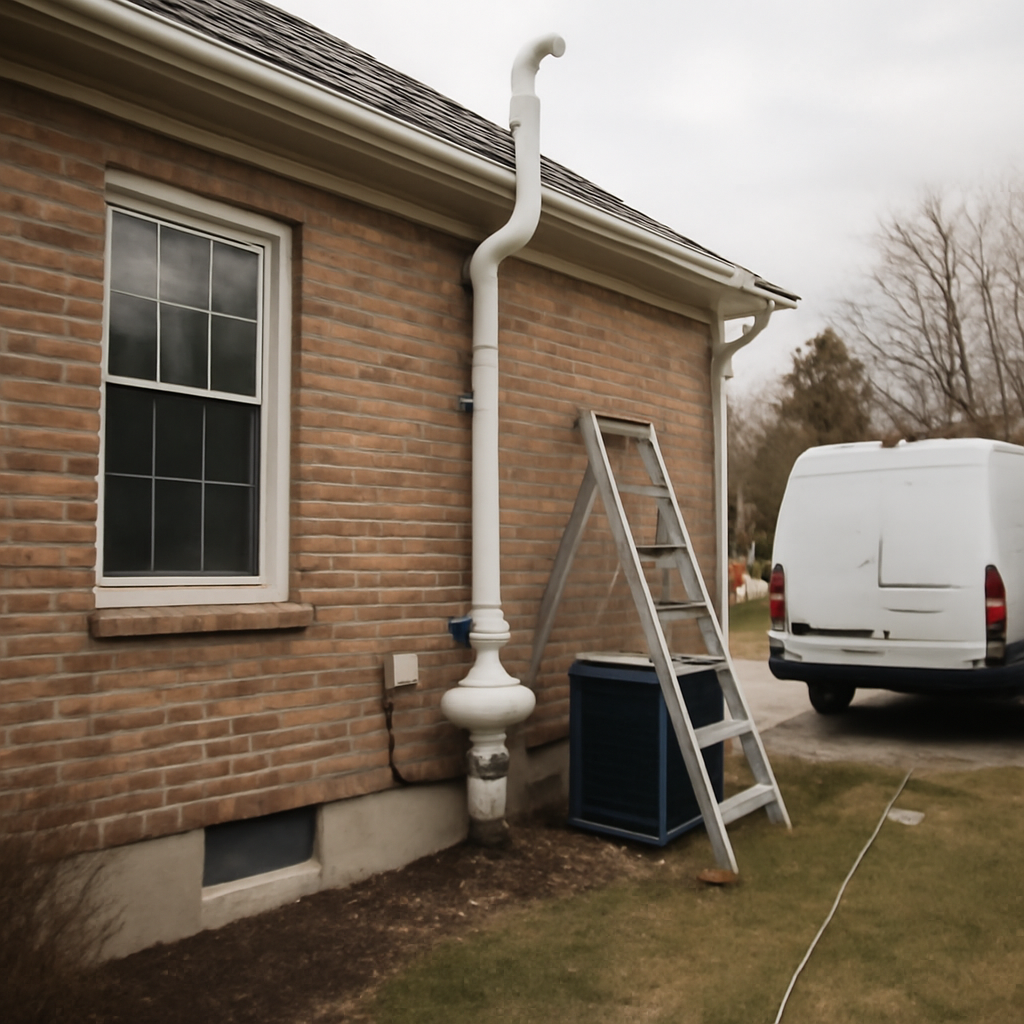
A typical installation takes most of a single day. The contractor identifies a suction point, usually drilling through the basement slab or tying into a sump pit, then runs vent pipe up through the home or along an exterior wall to discharge above the roofline. The inline fan is installed outside occupied space, wired to a dedicated circuit, and a monitoring manometer is mounted on the pipe so the homeowner can confirm at a glance that the system is running. Foundation cracks and openings are sealed to help the system draw efficiently and to prevent it from pulling conditioned air out of the living space.
After installation, the contractor should perform or arrange a post-mitigation radon test to confirm the level has dropped below the EPA action level of 4 pCi/L. This retest is the definitive proof that the system works, and a reputable contractor includes it as a standard part of the job rather than an extra. A finished system is quiet and unobtrusive, mostly a length of PVC pipe, a fan tucked out of sight, and a small gauge. What the completed installation looks like is described in the guide on what radon mitigation looks like.
What questions should you ask before hiring?
A short list of questions separates strong contractors from weak ones. Ask whether they are certified through a recognized national radon program and request proof. Ask what system type they recommend for your foundation and why. Ask whether the quote includes a post-installation retest and a written guarantee to reach below 4 pCi/L. Ask about the fan’s warranty and expected service life. And ask for references or examples of recent local installations.
The way a contractor answers is as telling as the answers themselves. A professional who explains the reasoning behind the system design, the fan choice, and the venting path demonstrates the competence you are paying for. Vague answers, reluctance to put a guarantee in writing, or pressure to sign immediately are warning signs. These vetting principles parallel the broader approach to evaluating any home-service professional: check credentials, get the work scope and guarantee in writing, and judge the quality of the explanation as much as the price.
What about service and warranties?
A radon mitigation system runs continuously for years, so service and warranty terms matter. Quality fans carry manufacturer warranties, often several years, and reputable contractors back their installation work as well. Ask what happens if the system underperforms after installation or if the fan fails within the warranty period. A clear answer protects you from surprise costs down the road.
Long term, the system needs minimal attention, but the fan eventually wears out and needs replacement. A local contractor who installed the system is well positioned to service it, which is one practical advantage of choosing nearby radon mitigation services. The manometer makes it easy to monitor system health, and homeowners should glance at it periodically and call for service if the pressure reading changes. Periodic retesting, every few years, confirms the system is still holding radon below the action level.
What red flags should you avoid?
Just as certain signs mark a strong contractor, others should give a homeowner pause. Recognizing them protects against paying for a system that underperforms or against being pressured into a poor decision.
No certification or proof
A contractor who cannot or will not provide proof of certification through a recognized national radon program is a clear warning sign. Radon mitigation is specialized work, and a contractor unwilling to demonstrate their credentials may lack the training to design an effective system for the home’s foundation and soil conditions.
No written guarantee
Reluctance to commit in writing to bringing the home below the EPA action level of 4 picocuries per liter is another red flag. A confident, competent contractor stands behind the result with a guarantee. A vague verbal assurance, or refusal to put the target in writing, suggests the contractor is not certain the system will perform.
High-pressure tactics
Pressure to sign immediately, sharply discounted prices that expire within hours, or discouragement of getting a second quote all point to a contractor more interested in closing a sale than in solving the radon problem. A trustworthy professional welcomes comparison and gives the homeowner time to decide. Pushy sales behavior rarely accompanies quality work.
Unusually low quotes deserve particular skepticism. A price far below the local market may signal cut corners, an inexperienced installer, or an incomplete system that omits proper sealing or a post-installation retest. The cheapest option can end up the most expensive if it fails to lower radon and the work must be redone. Weighing the quote against the certification, guarantee, and scope, rather than on price alone, leads to a sounder choice.
How does the warranty and follow-up work?
A radon system runs continuously for years, so what happens after installation matters as much as the install itself. Quality fans carry manufacturer warranties, often spanning several years, and reputable contractors back their installation work with their own guarantee. Before hiring, a homeowner should ask exactly what is covered if the system underperforms or the fan fails within the warranty period.
The post-installation radon test is the proof that the work succeeded, and it should be part of the package. A contractor who performs or arranges that retest, and shares the result, demonstrates confidence in the system. If the reading is not below the action level, a guarantee obligates the contractor to make adjustments at no additional charge until the target is met. That accountability is exactly what the guarantee exists to provide.
Long-term, a local contractor who installed the system is well positioned to service it when the fan eventually wears out or the manometer signals a problem. This is a practical advantage of choosing nearby radon mitigation services: response is faster, and the contractor already knows the system’s configuration. Periodic retesting every few years confirms the system still holds radon down, and the homeowner can call the original installer for any service the system needs over its life.
Why this matters in Colorado
Colorado’s geology makes elevated radon widespread, and most Front Range counties fall into the EPA’s highest-potential zone. That backdrop means radon mitigation services are in steady demand across Denver, Jefferson, Douglas, Boulder, Arapahoe, Adams, and El Paso counties, and a robust market of certified contractors serves the region. Homeowners have real choice, which makes vetting all the more worthwhile.
Radon is identified by public-health agencies as the leading cause of lung cancer among nonsmokers, so the stakes justify careful contractor selection. A certified professional, a written guarantee to reach below 4 pCi/L, and a confirming post-installation test together ensure the money spent actually buys protection. The search for radon mitigation services near you should end with a contractor who can prove the system works, not merely one who shows up first in a listing.
The strong local demand also means homeowners can afford to be selective. With many qualified contractors serving the Front Range, there is no need to settle for one who dodges questions about certification or refuses a written guarantee. Taking the time to gather two or three quotes, compare both approach and price, and choose a certified professional who stands behind the result is well worth the effort for a system meant to protect the household for years. The combination of a competitive market and high local radon makes thoughtful selection both possible and important.
References
- Finding a Radon Mitigation Professional — U.S. Environmental Protection Agency
- Radon Mitigation Resources for Colorado — Colorado Department of Public Health and Environment
- Radon Health Effects — Centers for Disease Control and Prevention
Frequently asked questions
How do I choose a radon mitigation contractor?
Look for certification through a recognized national radon program, proof of insurance, a written itemized quote, and a guarantee to bring radon below 4 pCi/L. Get two or three quotes and compare both price and approach.
What certifications matter for radon contractors?
The National Radon Proficiency Program and the National Radon Safety Board are the widely recognized programs. Certification through one indicates training in radon measurement and mitigation and adherence to technical standards.
How much do radon mitigation services cost?
Most complete residential systems on the Front Range run roughly $800 to $2,500. Quotes far below the range may mean cut corners, while high ones warrant questions about what justifies the premium.
Should the contractor retest after installation?
Yes. A reputable contractor performs or arranges a post-installation radon test to confirm the level dropped below the EPA action level of 4 pCi/L. This retest is the proof the system works.
Homeowners across the Front Range can get in touch through our contact page to be connected with a vetted, certified radon mitigation professional in their area.
Test your home for radon
Radon is invisible and odorless, so a test is the only way to know your level. A short-term kit gives a first reading in days; a digital monitor tracks it over time.
| Product | Why | Buy |
|---|---|---|
 AirChek Charcoal Radon Test Kit AirChek Charcoal Radon Test Kit | Lab fee usually included; EPA short-term protocol. | Amazon — $21.95 |
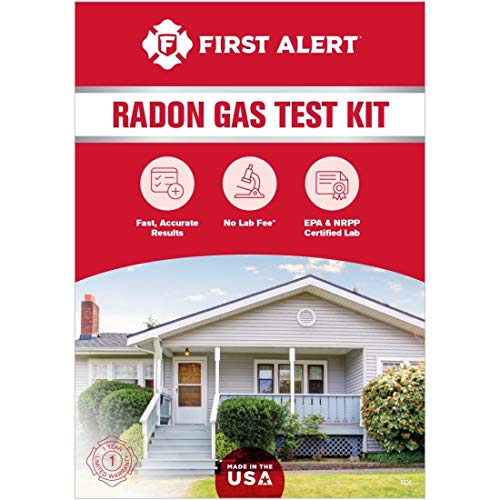 First Alert RD1 Radon Test Kit First Alert RD1 Radon Test Kit | Widely stocked; 48-hour charcoal test. | Amazon — $16.98 |
 Airthings Corentium Home Airthings Corentium Home | Digital monitor with a long-term average. | Amazon — $142.99 |