Powder Post Beetles: Signs, Damage and Treatment Options
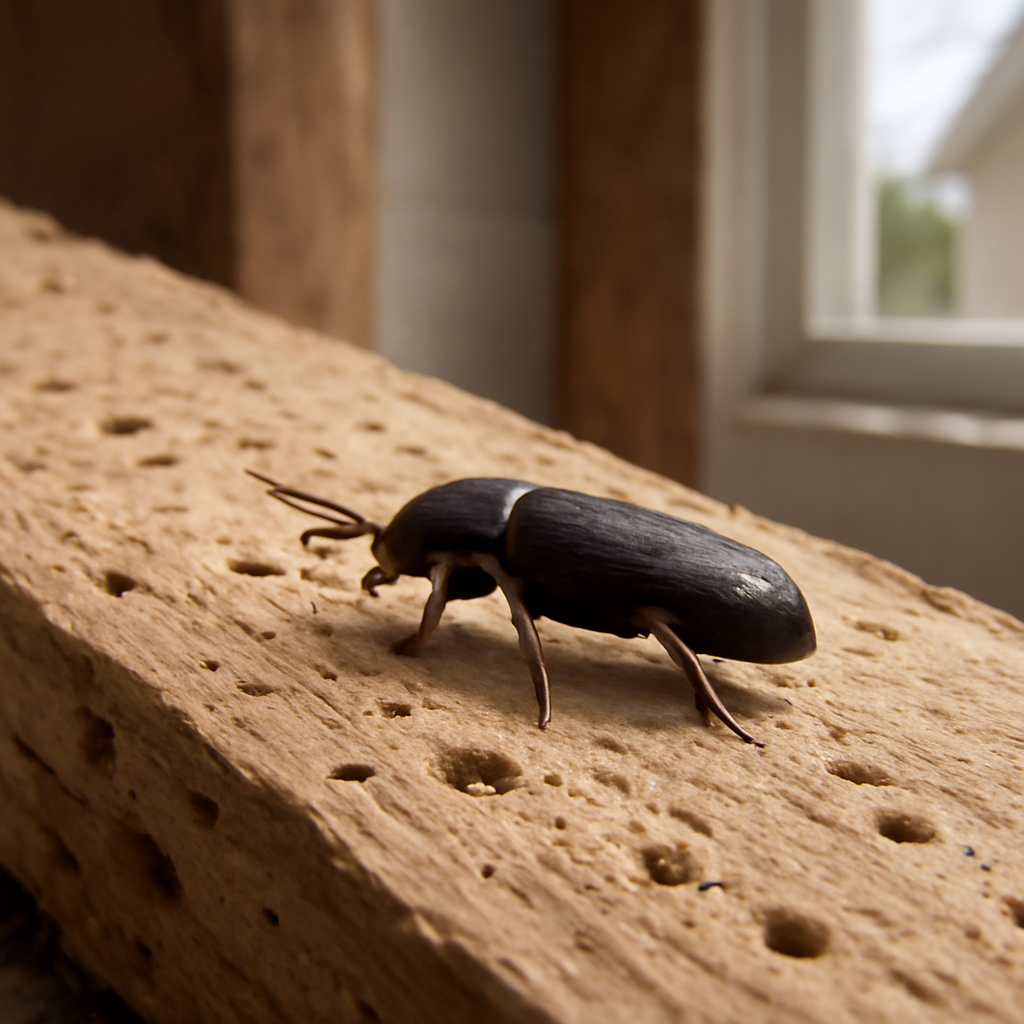
A scatter of pinhole-sized openings in an old oak floor or a pile of talc-fine dust under a beam can be easy to dismiss. Sometimes the damage is decades old and the insects are long gone. Sometimes it means a powder post beetle population is still working through the wood, one generation after another. The difference matters for buyers, sellers and anyone who owns a log home, antique furniture or an unfinished basement full of exposed framing. This guide explains what these beetles are, how to read the evidence they leave behind, which woods they prefer, how they compare with termites and carpenter ants, what treatment typically involves and roughly what it costs, and how a home inspection or wood-destroying insect inspection fits into the picture. Cost figures are general ranges rather than quotes, and a licensed pest professional should confirm any identification before treatment decisions are made.
Part of our Specialty Home Inspections guide — start there for the full picture →
What Is a Powder Post Beetle?
“Powder post beetle” is a common name for several groups of small wood-boring beetles whose larvae tunnel through wood and reduce it to a fine, powdery material. Entomologists generally place them in three families. Lyctid beetles are often called true powderpost beetles and tend to attack the sapwood of hardwoods such as oak, ash, hickory and walnut. Anobiid beetles, sometimes called deathwatch or furniture beetles, can attack both hardwoods and softwoods and are more often linked to damp crawl spaces and older structures. Bostrichid beetles, sometimes called false powderpost beetles, usually arrive in freshly cut or imported wood and are less likely to keep reinfesting a finished house.
The adults are small, usually somewhere around an eighth to a quarter of an inch long, reddish brown to black, and rarely seen. The damage happens out of sight. Females lay eggs in pores, cracks or exposed end grain of unfinished wood. The larvae hatch and spend months to several years tunneling inside, feeding on starch and other nutrients. When they mature, they pupate near the surface and the new adults chew their way out, leaving the round exit holes most people notice first. Some species can then lay eggs in the same piece of wood, which is why an infestation can slowly intensify over years.
The short answer for homeowners: a powder post beetle problem is usually slow-moving, it is rarely an emergency, and the main questions are whether the infestation is active, whether moisture is feeding it, and whether any structural members have been weakened.
Signs of a Powder Post Beetle Infestation
The evidence is distinctive once you know what to look for. Most identifications start with three clues: the holes, the dust and the location.
Exit Holes
Exit holes are small and round, often about the size of a pinhead to a pencil-lead, depending on the family. Lyctid holes tend to be the smallest. Anobiid holes are usually a bit larger. Clusters of holes on one board or one area of flooring are more telling than a single hole, which could have many causes. Termites, by contrast, do not leave neat round exit holes in the wood surface.
Frass
Frass is the wood dust and excrement pushed out of the holes. Lyctid frass is very fine and feels like flour or talc between the fingers. Anobiid frass is a bit grittier and may contain tiny pellets. Small piles beneath a board, on top of a horizontal surface, or sifting out of cracks are a strong indicator. Wiping the area clean and checking again weeks later is one of the simplest ways to tell whether activity is ongoing.
Active vs. Old Infestations
Many older homes show beetle damage that stopped long ago. Signs that suggest an active infestation include:
- Fresh, light-colored frass that looks clean and fluffy rather than gray, packed or dusty
- Exit holes with sharp edges and bright, light-colored interiors, rather than holes darkened by age, dirt or finish
- New holes appearing after an area has been marked or photographed
- Small piles of dust that reappear after cleaning
- Adults found near windows or lights, typically in spring and early summer
Holes that have been painted or varnished over, dark interiors and old compacted frass point toward historic damage. Because the life cycle can take a year or more, a single clean inspection does not prove the problem is over. Many professionals recommend monitoring for at least one emergence season before deciding.
Where to Look
Check hardwood flooring, stair treads, exposed joists and sill plates, unfinished basement and crawl space framing, wood paneling, cabinet backs, antique furniture, and firewood stored indoors. In log homes, check the lower courses and any logs near grade, where moisture tends to be higher.
Which Woods Do Powder Post Beetles Attack?
Different families have different preferences, which helps narrow down which beetle is involved.
Hardwood flooring and trim. Lyctid beetles need starch-rich sapwood with large pores, so oak, ash, walnut and similar hardwoods are common targets. They often arrive in lumber, flooring or furniture that was infested before installation, and damage may surface a year or more after the wood went in.
Furniture and antiques. Older unfinished furniture, especially items stored in barns, sheds or damp basements, can harbor both lyctid and anobiid beetles. Moving an infested piece into a house can introduce beetles to other wood.
Untreated structural framing. Anobiid beetles can attack softwood framing such as pine and fir, particularly in crawl spaces, basements and outbuildings where humidity stays elevated.
Log homes and timber frames. Large exposed logs with unfinished or weathered surfaces can attract several species. Log homes in the Colorado foothills are worth checking carefully, particularly where logs sit close to the ground or where finishes have worn away.
Why Moisture Content Matters
Wood moisture content is one of the biggest factors in whether an infestation persists. Anobiid beetles in particular tend to favor wood that stays above roughly 13 to 15 percent moisture, and activity often slows or stalls in wood kept drier than that. Lyctid beetles can tolerate drier wood but still depend on starch content. Along the Front Range, the dry climate works in a homeowner’s favor in heated living spaces, but crawl spaces, basements with water problems and outbuildings can stay damp enough to sustain activity. A pin or pinless moisture meter is an inexpensive way to check whether framing is in a range that favors beetles, and the site’s guide to crawl space moisture control covers the common fixes.
Powder Post Beetles vs. Termites vs. Carpenter Ants
All three can damage wood, but the evidence and the urgency differ. Correct identification matters because treatments are not interchangeable.
| Feature | Powder post beetles | Subterranean termites | Carpenter ants |
|---|---|---|---|
| What they leave | Small round exit holes, flour-like frass | Mud tubes, mud-packed galleries, discarded wings | Coarse sawdust-like shavings with insect parts |
| Do they eat wood? | Larvae digest wood starch | Yes, they digest cellulose | No, they excavate wood for nesting |
| Gallery appearance | Packed with fine powder | Follow the grain, with soil and debris | Smooth, clean, almost sanded |
| Typical pace | Slow, often over years | Can be faster and hidden behind finishes | Moderate, tied to moisture-damaged wood |
Subterranean termites are present in parts of Colorado, and they leave very different evidence: mud tubes on foundation walls, damage concealed behind intact surfaces, and swarmer wings near windows in spring. The termite inspection guide explains how a professional checks for them. Carpenter ants push out coarse shavings rather than fine powder and are often a sign of a moisture problem elsewhere; see the carpenter ants guide for how they nest and spread.
A practical rule of thumb: neat round holes plus fine powder point toward beetles, mud tubes point toward termites, and piles of shavings with ant fragments point toward carpenter ants. When the clues are mixed or unclear, a licensed pest professional should make the call.
Treatment Options and Typical Costs
Treatment depends on whether the infestation is active, how widespread it is, which family is involved, and whether the affected wood is finished or unfinished. The EPA’s guidance on safer pest control encourages integrated pest management, which starts with understanding the pest and addressing the conditions that support it before reaching for chemicals. That approach fits these beetles well.
Moisture Reduction
For anobiid infestations in crawl spaces and basements, drying the wood is often the foundation of any plan. That can mean fixing drainage, repairing plumbing leaks, adding or repairing a vapor barrier, improving ventilation or conditioning the space, and running a dehumidifier. Costs vary from a few hundred dollars for a dehumidifier and minor repairs to several thousand for crawl space encapsulation. Drying the wood alone may not kill existing larvae quickly, but it can make the environment far less hospitable over time.
Borate Treatments on Unfinished Wood
Borate-based wood treatments are commonly used on bare, unfinished wood such as exposed joists, sill plates and log surfaces. The solution soaks into the surface and can affect larvae as they feed or emerge. Borates do not penetrate paint, varnish, stain or sealers, so finished floors and furniture usually need a different approach. Professional borate application on accessible framing in a crawl space or basement often falls somewhere in the range of several hundred to a couple thousand dollars, depending on square footage and access. Any product must be applied according to its label.
Removal and Replacement
Small, localized infestations in a few boards, a piece of trim or a single furniture item are sometimes handled by removing and replacing the affected wood. This also addresses any strength loss. Costs depend entirely on what is being replaced: a few trim pieces may cost little, while replacing sections of hardwood flooring or structural members can run from hundreds to thousands of dollars, especially if a structural repair needs engineering input.
Surface Insecticides
Some residual insecticides are labeled for wood-boring beetles and are applied to unfinished surfaces to target emerging adults and egg-laying females. These are typically part of a professional treatment plan rather than a stand-alone fix, and they carry the same label restrictions as any pesticide product.
Fumigation for Severe Cases
Whole-structure fumigation is generally reserved for severe, widespread infestations where wood cannot be reached or treated otherwise, such as heavily infested log homes or finished interiors with activity throughout. It requires a licensed fumigator, vacating the home, and careful preparation. Costs commonly run into the thousands of dollars and can be higher for large or complex structures. Fumigation kills active insects but does not prevent reinfestation, so moisture control and monitoring still matter afterward.
For a sense of how wood-destroying insect treatment costs compare more broadly, the termite treatment cost guide outlines pricing factors for a related category of work.
Furniture and Small Items
Infested furniture is often treated separately, sometimes by specialized conservators or pest firms using controlled heat, freezing or chamber fumigation. It is worth isolating suspect pieces until they have been assessed.
Is Powder Post Beetle Damage Structural?
In most homes, damage is cosmetic or limited to surface layers. Because larvae tend to work in sapwood, the outer portion of a beam or joist may be heavily damaged while the heartwood remains largely intact. That said, a long-running anobiid infestation in damp framing can weaken sill plates, joists and log courses enough to matter. Signs that warrant a closer look include wood that crumbles when probed with a screwdriver, sagging floors above infested framing, and damage concentrated at bearing points.
If structural members show significant loss, a structural engineer or qualified contractor should evaluate whether sistering, reinforcement or replacement is needed. Pest treatment and structural repair are separate questions, and both may need answers before closing on a purchase.
Will a Home Inspection Find Powder Post Beetles?
A general home inspection is a visual, non-invasive look at accessible areas. Under widely used standards such as the ASHI Standards of Practice, inspectors report on observed conditions in the structure and crawl spaces, but identifying wood-destroying insects is often outside the scope of a standard inspection unless the inspector is licensed or certified to do so. An inspector may note exit holes, frass or damaged wood and recommend further evaluation.
A dedicated wood-destroying insect (WDI) or wood-destroying organism (WDO) inspection is the more targeted tool. These inspections look specifically for evidence of termites, carpenter ants, wood-boring beetles and sometimes wood decay fungi in accessible areas. Some lenders and loan programs require them; many buyers order them voluntarily. A WDI inspection is usually inexpensive relative to treatment, and it is often bundled with a home inspection. For more on adding targeted inspections, see the overview of specialty inspections.
Keep in mind that no visual inspection can see inside walls, under finished floors or behind furniture. Reports typically note limitations, and buyers should read those sections carefully.
When to Call a Licensed Pest Professional
Homeowners can do a lot of the early detective work: photographing holes, marking and dating suspect areas, cleaning frass and checking whether it returns, and measuring wood moisture. A licensed pest professional should be involved when:
- Fresh frass or new holes appear after cleaning or marking
- Damage affects structural framing, sill plates or log walls
- The evidence could be termites or carpenter ants rather than beetles
- Several rooms or large areas of flooring show holes
- A purchase contract or lender requires a WDI/WDO report
- Any pesticide or fumigation treatment is being considered
When collecting quotes, ask which family of beetle the technician believes is involved and why, whether the infestation is judged active, what moisture readings were found, which products would be used and on which surfaces, and whether any warranty or follow-up inspection is included. Treatment proposals that skip the moisture question deserve a second opinion.
Buying a Home With Beetle Damage
Old, inactive damage is common in older homes and may not be a reason to walk away. Active infestations, damaged structural members or a damp crawl space are reasonable topics for negotiation, a repair credit or further evaluation. Ask the sellers whether any past treatment was done and whether paperwork exists. The broader guide to hiring a home inspector covers how to schedule follow-up inspections within contract deadlines.
Preventing Future Infestations
Prevention focuses on the wood itself and the conditions around it:
- Keep crawl spaces and basements dry; address leaks, grading and drainage promptly
- Seal or finish exposed wood surfaces where practical, since many beetles lay eggs in bare pores and cracks
- Inspect used furniture, reclaimed lumber and flooring before bringing it indoors
- Store firewood outside and off the ground rather than in a basement or garage
- Use kiln-dried lumber for repairs and new projects
- Recheck previously affected areas each spring for fresh frass
These steps line up with the EPA’s integrated pest management principles, which emphasize prevention, monitoring and choosing the least risky effective control.
More Questions About Powder Post Beetles
Are powder post beetles active in wood at 12 to 14 percent moisture?
Some powder post beetles remain active in wood around 12 to 14 percent moisture, especially lyctid beetles in hardwoods and anobiid beetles in damp, poorly ventilated framing. Lyctids can infest wood as dry as about 8 percent, while anobiids typically need higher moisture, often above about 13 percent.
Reducing wood moisture below roughly 12 percent through ventilation and dehumidification generally slows or stops anobiid activity over time. A wood moisture meter helps track whether drying efforts are working.
Do powder post beetles die in fall?
Powder post beetles do not die out in fall; adults may be less visible, but the larvae inside the wood keep feeding through the year, often for one to several years before emerging. Colder temperatures slow activity rather than ending it.
Adults typically emerge in spring and summer, leaving new exit holes and fresh frass. Checking for new holes or frass during the warmer months is the most reliable way to tell if an infestation is still active.
What are the black powder piles in a basement?
Black powder piles in a basement can come from several sources: mouse or insect droppings, soot, mold, or decayed wood debris. Powder post beetle frass is usually light-colored and flour-like or gritty, not black, so black piles often point elsewhere.
Looking above the pile for holes, gaps, or wood damage helps narrow the cause. Fine powder with small round exit holes above suggests beetles; pellets suggest rodents or carpenter ants. A pest professional can identify unclear material.
Are powder post beetles the same as woodworms?
Woodworm is a common name, especially in Britain, for the larvae of wood-boring beetles, including powder post beetles and furniture beetles. In everyday use, the two terms often refer to the same kind of problem: larvae tunneling through wood and leaving small exit holes and powdery frass.
In North America, the term powder post beetle is more common, and it covers several beetle families. Identification matters for treatment, since moisture needs and preferred woods differ between species.
References
- Safer Choices for Pest Control in Homes — U.S. Environmental Protection Agency
- Integrated Pest Management (IPM) Principles — U.S. Environmental Protection Agency
- ASHI Standards of Practice — American Society of Home Inspectors
- A Brief Guide to Mold, Moisture and Your Home — U.S. Environmental Protection Agency
Frequently asked questions
How do I know if powder post beetles are still active?
Fresh, light-colored, flour-like frass and exit holes with bright, sharp-edged interiors suggest current activity. Clean the area, mark the holes and check again over several weeks and through the spring emergence season. Dust that reappears points to an active infestation.
Are powder post beetles worse than termites?
Usually not. Powder post beetle damage tends to progress slowly over years and is often limited to surface sapwood, while subterranean termites can cause hidden damage faster. Both deserve professional identification, because the treatments are different.
How much does powder post beetle treatment cost?
Costs vary widely. Borate treatment of accessible unfinished framing often runs several hundred to a couple thousand dollars, while whole-structure fumigation for severe cases commonly costs thousands. Moisture repairs and wood replacement are additional.
Can I treat powder post beetles myself?
Homeowners can reduce moisture, replace small infested pieces and apply labeled borate products to bare, unfinished wood. Finished wood, structural damage, widespread activity and anything involving fumigation are better handled by a licensed pest professional.
Does a home inspection check for powder post beetles?
A general home inspector may note holes, frass or damaged wood, but identifying wood-destroying insects is often outside a standard inspection. A separate WDI or WDO inspection by a licensed professional is the more reliable check.
Can powder post beetles live in a wood pile?
Yes, powder post beetles often infest firewood and lumber piles, especially hardwood with bark or high moisture. Storing firewood off the ground, away from the house, and burning older wood first limits the chance of bringing beetles indoors.
Can old barn beams still have powder post beetles?
Old barn beams can still have powder post beetles if the wood stays damp, but beams that have been dry for years often show only old damage. Fresh frass and new exit holes indicate activity; darkened holes and dusty, settled frass usually mean an old infestation.
Do powder post beetles spread to furniture?
Powder post beetles can spread to unfinished hardwood furniture, especially if it is stored near infested wood. Finished or painted furniture is less vulnerable because beetles prefer to lay eggs in bare wood pores. Infested items should be isolated or treated.
Spotted pinholes and fine dust in a house you are about to buy? Reach out through our contact page and we can help connect you with a qualified Front Range inspector who can document what is there and point you toward the right next step.