Carpenter Ants: Signs of Damage, Inspection and Treatment
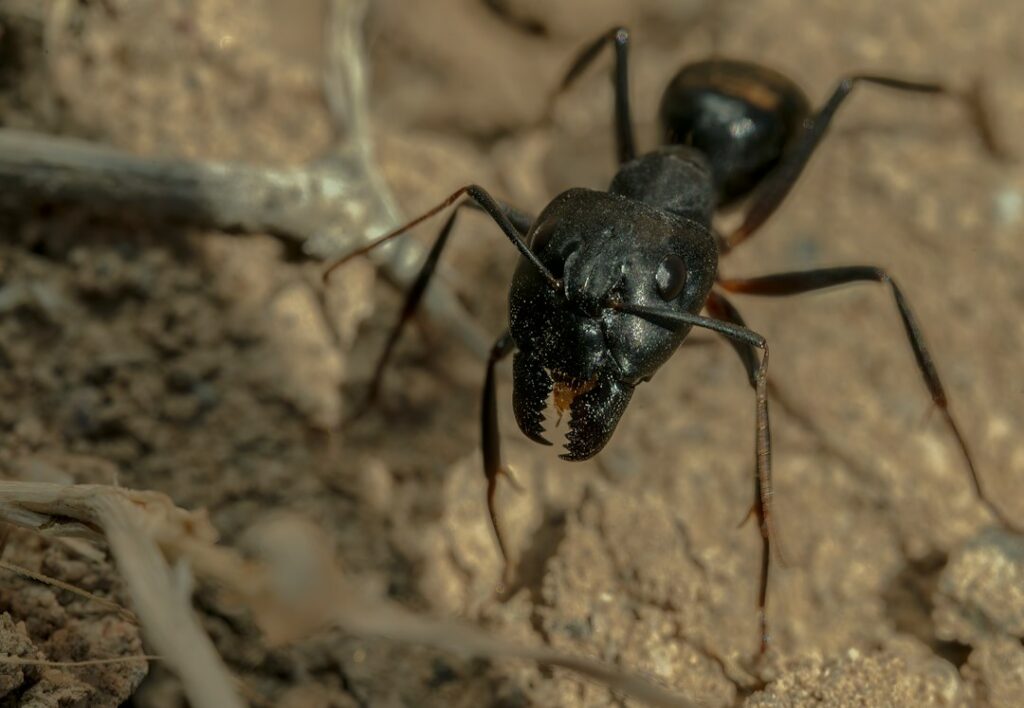
A large black ant wandering across the kitchen floor in spring is not always cause for alarm. But when those ants keep appearing indoors, or when piles of sawdust-like debris show up beneath a window sill, carpenter ants may be nesting in the structure itself. Unlike termites, carpenter ants do not eat wood; they excavate it to create galleries for their colonies, and they strongly prefer wood that is already damp or decaying. That makes them both a pest problem and a moisture warning. This guide explains how to tell carpenter ants from termites, what signs suggest an indoor nest, how serious the damage tends to be, how inspection works and how professional and DIY treatment options compare, with notes on their presence along the Colorado Front Range.
Part of our Specialty Home Inspections guide — start there for the full picture →
Are Carpenter Ants a Serious Problem?
Carpenter ants can cause real structural damage, but usually more slowly than termites, and the damage is often concentrated in areas already weakened by moisture. A single sighting of a foraging ant indoors does not necessarily mean there is a nest in the house; workers travel considerable distances from outdoor nests in stumps, firewood and trees. Repeated indoor activity, especially in late winter or early spring, flying ants (swarmers) emerging inside, or piles of coarse debris called frass point more strongly to a nest within the structure.
The bigger concern is often what the ants reveal. Because they favor damp, softened wood, an established indoor colony frequently signals a roof leak, plumbing leak, condensation problem or failed flashing. Fixing that moisture source is as important as eliminating the ants. Left alone for years, a mature colony with satellite nests can hollow out sections of framing, sill plates, window and door frames, decks and porch posts.
Carpenter Ants vs. Termites
Swarming carpenter ants and swarming termites are frequently confused, and the distinction matters because treatment approaches differ. The table summarizes the most reliable field differences.
| Feature | Carpenter ants | Subterranean termites |
|---|---|---|
| Waist | Narrow, pinched waist between thorax and abdomen | Broad waist; body looks thick and uniform |
| Antennae | Elbowed (bent) | Straight and bead-like |
| Wings (swarmers) | Front wings noticeably longer than hind wings | Front and hind wings roughly equal in length, extending well beyond the body |
| Color | Often black, or black and reddish; workers fairly large | Workers pale and creamy; swarmers dark |
| Relationship with wood | Excavate it to nest; do not eat it | Eat cellulose in wood |
| Gallery appearance | Smooth, clean, almost sanded tunnels | Rough galleries packed with soil and debris |
| Evidence left behind | Frass: coarse sawdust mixed with insect parts | Mud tubes on foundations and walls |
| Visibility | Workers seen foraging, often at night | Workers rarely seen; avoid light and open air |
If you are unsure, collect a specimen in a sealed bag or a small container with rubbing alcohol and have it identified by a pest professional or your county extension office. Our guide to termite inspection explains how wood-destroying insect inspections are performed, and the companion guide on termite treatment cost covers what termite work typically runs if the culprit turns out to be termites instead.
Signs of a Carpenter Ant Infestation
Frass piles
Frass is the most telling sign. It looks like coarse sawdust or wood shavings and often contains fragments of dead ants and other insects. It accumulates below small openings, called kick-out holes, that the ants use to push debris out of their galleries. Look under window sills, along baseboards, in attics, under decks and beneath porch columns.
Rustling sounds
Large colonies can produce faint rustling or crinkling sounds inside walls, ceilings or hollow doors, most noticeable at night when the house is quiet. It is not a reliable test on its own, but combined with other evidence it helps narrow the location.
Swarmers indoors
Winged reproductive ants emerging inside the home, typically in spring, strongly suggest a mature colony within the structure. Swarmers found outdoors are less conclusive, since they may come from nests in trees or landscaping.
Foraging trails
Workers often forage at night along predictable routes, such as utility lines, tree branches touching the roof, fence rails and gaps around pipes. Following a trail with a flashlight after dark can lead back to an entry point or nest.
Damaged wood
Wood that sounds hollow when tapped, feels soft or shows small slits and openings may conceal galleries. Unlike termite galleries, carpenter ant tunnels are clean and smooth.
Indoor activity in winter
Workers seen indoors during late winter, when outdoor colonies are typically inactive in cold climates, are a meaningful sign that a nest is inside the heated structure.
The Moisture Connection: Fix the Leak First
Carpenter ants are strongly attracted to wood softened by moisture and decay. Their satellite nests often sit in or near wet areas, which means an infestation map frequently overlaps a moisture map. Common moisture sources include:
- Roof leaks around chimneys, skylights, valleys and flashing; see our guide to roof leaks.
- Ice dams that back water under shingles in winter, wetting eaves and wall tops; the ice dams guide explains why they form.
- Plumbing leaks under sinks, behind dishwashers, around tubs and showers.
- Window and door leaks from failed caulking and flashing.
- Gutters and downspouts that overflow against siding and fascia.
- Damp crawl spaces and poorly ventilated attics where condensation collects.
- Wood-to-soil contact at decks, porches, siding and fence posts.
EPA’s guidance on moisture in homes stresses fixing the water source and drying or replacing damp materials within a short time to prevent mold, and the same logic applies to wood-boring insects. If ants are treated but the leak remains, the wood stays attractive, and reinfestation becomes more likely.
Homes with crawl spaces deserve particular attention. Sill plates, rim joists and subfloor near plumbing penetrations are common nest sites when the crawl space runs damp; our crawl space repair guide covers moisture-related fixes.
How Much Damage Do Carpenter Ants Cause?
Damage severity varies widely with colony age, number of satellite nests and how long the moisture problem persisted. In many homes, damage is localized: a window frame, a section of sill plate, a soffit or deck post. In long-neglected cases, galleries can extend through multiple framing members and weaken load-carrying wood.
Because the ants follow moisture, the true repair cost often includes the water damage that preceded them. Rot, mold and failed sheathing can account for much of the bill. A contractor or structural professional should evaluate any framing that appears significantly hollowed or soft. Where water damage is extensive, a water damage restoration assessment may be warranted before carpentry repairs begin.
Damage tends to be slower than with subterranean termites, which gives homeowners time to act, but slower should not be mistaken for harmless.
Inspection: Finding the Nest
Effective control depends on finding the parent colony and any satellite colonies. A pest management professional’s inspection typically includes:
- Interviewing the occupants about where and when ants are seen, including nighttime sightings and swarmer activity.
- Exterior survey of trees, stumps, firewood piles, landscape timbers, decks, fences and branches contacting the roof.
- Interior survey of kitchens, bathrooms, attics, crawl spaces, window and door frames and any areas with water stains.
- Searching for frass and kick-out holes, tapping wood for hollow sounds and probing suspect areas.
- Nighttime trail tracking or bait placement to follow workers back to the nest.
- Moisture assessment, sometimes with a moisture meter, to identify damp wood that may host satellites.
General home inspectors are not pest inspectors. Under the ASHI Standards of Practice, wood-destroying organisms are typically outside the scope of a standard home inspection, though an inspector will usually note visible damage, decay, frass or moisture problems encountered during the visual inspection. Buyers who want insects evaluated usually order a separate wood-destroying insect inspection. The specialty inspections guide explains how to schedule add-ons, and the main guide to hiring a home inspector covers how to coordinate everything within your inspection window.
Treatment Options: Professional vs. DIY
Professional treatment
Licensed pest professionals commonly combine several tactics:
- Direct nest treatment, injecting insecticide dusts or foams into galleries and wall voids where nests are located.
- Non-repellent perimeter sprays that foragers pick up and carry back to the colony.
- Baits placed along trails, which workers share with the colony.
- Habitat modification recommendations: trimming branches, moving firewood, replacing wet wood and correcting moisture.
Treatments may require follow-up visits, and some companies offer annual service plans. Costs vary with the extent of infestation and the access needed. Broad industry ranges for a typical single-family home often run from a few hundred dollars for a basic treatment to higher amounts where wall voids must be drilled, multiple nests are present or ongoing service is contracted. Get written quotes describing scope, follow-up and any warranty.
DIY baits and measures
Homeowners sometimes succeed with commercially available ant baits labeled for carpenter ants, especially for light activity or when outdoor colonies are foraging indoors. Results are mixed. Carpenter ants have changing food preferences through the season, so a bait that works in spring may be ignored in summer. Spraying visible ants with contact insecticides usually kills only foragers and can scatter the colony without eliminating it.
When using any pesticide, EPA’s safe pest control guidance is straightforward: read and follow the label, use products registered for the target pest and location, and keep products away from children and pets. Integrated pest management, which EPA promotes, puts prevention and habitat correction ahead of chemicals.
DIY is most reasonable when activity is minor, there is no sign of an indoor nest and you have already corrected moisture issues. If swarmers appear indoors, frass keeps accumulating, or activity persists after a few weeks of baiting, professional help is usually the more efficient route.
Carpenter Ants on the Colorado Front Range
Carpenter ants occur across Colorado, and they are a familiar pest in foothill and forested communities west of Denver and around Colorado Springs, where homes sit among ponderosa pine and other trees. They also turn up in older neighborhoods with mature trees, wood decks and firewood stored against the house.
The region’s semi-arid climate works partly in homeowners’ favor: dry wood is less attractive to them. But Front Range homes still experience the moisture events that create carpenter ant habitat, including winter ice dams, spring snowmelt against foundations, hail-damaged roofing that later leaks, swamp cooler leaks and irrigation spraying siding. Homes in Jefferson, Boulder, Douglas and El Paso counties near open space and tree cover tend to see more pressure from outdoor colonies.
Seasonal patterns follow temperature. Activity generally rises in spring, peaks in summer and declines in fall, with indoor winter activity being a stronger sign of a nest inside the heated envelope.
If Carpenter Ants Show Up During a Home Purchase
Finding carpenter ant evidence during a purchase is not automatically a reason to walk away, but it should change what happens next. The ants themselves are usually treatable. The open questions are where the moisture came from and how much wood has been affected.
A reasonable sequence for buyers looks like this:
- Read the general inspection report closely. Look for related notes such as roof leaks, staining, soft sheathing, poor drainage, deck decay or wood-to-soil contact. These often explain why ants are present.
- Order a wood-destroying insect inspection from a licensed pest professional to confirm the species, locate nests and outline a treatment plan.
- Bring in the right trade for the moisture source. A roofer, plumber or general contractor can determine what repair is needed and give a written estimate.
- Ask for access to concealed areas if evidence suggests damage behind finishes. Probing or limited removal may need seller permission.
- Negotiate on documented numbers. Treatment quotes, moisture repair bids and carpentry estimates give a solid basis for a credit or repair request.
Ask sellers whether the home has had prior pest treatment, and request receipts and any service agreement that may transfer. A home with a past infestation that was treated and whose leak was repaired, with records, is a far better proposition than one where ants were sprayed repeatedly and the leak was never found.
Sellers can get ahead of the issue by fixing obvious moisture problems before listing, removing firewood and debris from against the house, and having activity treated so a buyer’s inspector does not discover it mid-transaction.
Other Ants Commonly Mistaken for Carpenter Ants
Not every large or dark ant indoors is a carpenter ant. Field ants and some other mound-building species can be similarly sized and are frequently seen in Front Range yards, while smaller species such as pavement ants and odorous house ants are common kitchen invaders. These ants may be a nuisance but do not excavate structural wood.
A few clues help separate them. Carpenter ant workers vary noticeably in size within a single colony, and their thorax typically has an evenly rounded upper profile when viewed from the side. Frass and kick-out holes point to carpenter ants specifically; small ants trailing to a sugar spill or pet bowl usually do not. When in doubt, a specimen is worth more than a guess, because the wrong identification leads to the wrong treatment.
Prevention Checklist
- Fix roof, plumbing, window and gutter leaks promptly, and replace water-damaged wood.
- Trim tree branches and shrubs so they do not touch the roof or siding.
- Store firewood off the ground and away from the house.
- Remove stumps and decaying landscape timbers near the foundation.
- Maintain clearance between soil or mulch and wood siding.
- Seal gaps around utility penetrations, windows and doors.
- Keep crawl spaces and attics dry and well ventilated.
- Inspect decks, porches and fences periodically for soft or hollow wood.
When to Call a Professional
Call a licensed pest management professional if you see winged ants indoors, find frass piles, notice workers inside during late winter, or hear rustling in walls. Call a roofer, plumber or general contractor to fix the moisture source, and a carpenter or structural professional if damaged framing needs repair. When buying a home, add a wood-destroying insect inspection to your general inspection so that both pest and moisture conditions are documented before closing.
References
- Safe Pest Control — U.S. Environmental Protection Agency
- Citizen’s Guide to Pest Control and Pesticide Safety — U.S. Environmental Protection Agency
- Integrated Pest Management — U.S. Environmental Protection Agency
- A Brief Guide to Mold, Moisture and Your Home — U.S. Environmental Protection Agency
- ASHI Standards of Practice for Home Inspection — American Society of Home Inspectors
Frequently asked questions
How can I tell carpenter ants from termites?
Carpenter ants have a pinched waist, elbowed antennae and front wings longer than hind wings. Termites have a broad waist, straight antennae and equal-length wings. Carpenter ants leave sawdust-like frass, while subterranean termites build mud tubes.
Do carpenter ants eat wood?
No. Carpenter ants excavate wood to build nests and push the debris out as frass. They prefer wood that is damp or already decaying, which is why they often signal a moisture problem.
Is one carpenter ant in the house a sign of a nest?
Not necessarily. Workers forage far from outdoor nests. Repeated indoor sightings, winged ants emerging inside, ants seen indoors in late winter or frass piles are stronger signs of a nest within the structure.
Can I get rid of carpenter ants myself?
Light activity sometimes responds to baits labeled for carpenter ants, combined with fixing moisture problems. Indoor swarmers, ongoing frass or persistent activity usually call for a licensed pest professional who can locate and treat the nest.
How much does carpenter ant treatment cost?
Basic professional treatment for a single-family home often runs a few hundred dollars, with higher costs when wall voids must be treated, multiple nests exist or an ongoing service plan is used. Repairs to water-damaged wood are separate.
Front Range homeowners and buyers who want wood damage and moisture issues evaluated by a qualified professional can get in touch here for a local referral.