Fence Posts: Rot, Frost Heave and Setting Posts That Last
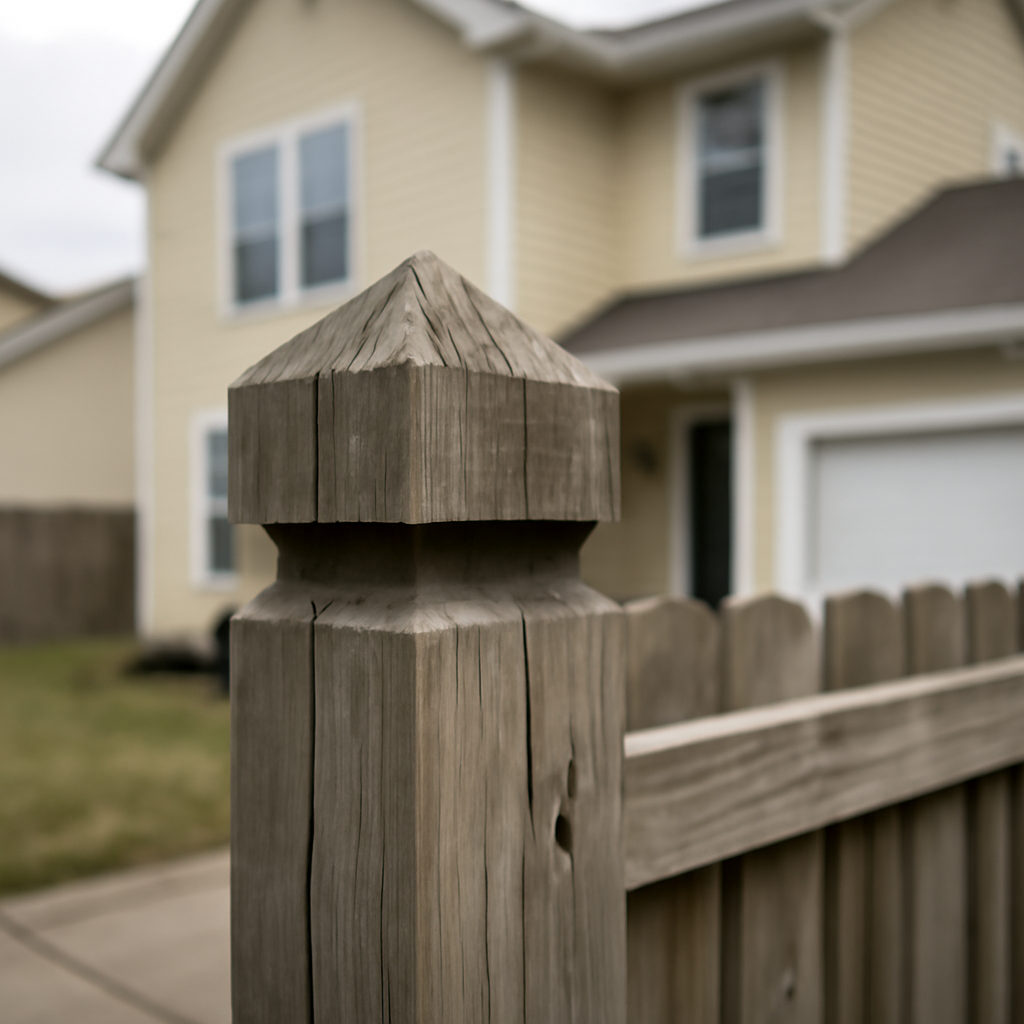
A fence is only as straight as its posts. Panels, pickets and rails can be swapped in an afternoon, but the posts carry the wind load, hold the gates and decide whether the whole line stays plumb for twenty years or starts leaning after five. On the Colorado Front Range, posts face a particular mix of stresses: intense sun that dries and checks the wood, clay soils that swell when wet, freeze-thaw cycles that can lift a shallow post out of the ground, and strong chinook and downslope winds that push on every solid privacy panel. This guide explains why a fence post fails, how setting methods differ, what to know about frost depth and heave, how treated wood compares with steel, why calling 811 matters before any digging, and what repairs typically cost.
Part of our Structure & Exterior guide — start there for the full picture →
Planning a new fence? Get a quote from a local fence installer.
📞 Call (866) 636-8383How a Fence Post Fails
Nearly every post problem traces back to one of four causes: rot, movement in the soil, inadequate depth or physical damage. Knowing which one is at work determines whether the fix is a single post replacement, a repair bracket or a rebuild of an entire run.
- Rot at grade. The zone a few inches above and below the soil surface is where wood posts almost always fail first. That band stays damp, has oxygen and warmth, and collects organic debris, which is the exact combination decay fungi need. A post can look sound above the ground while the section at the soil line has softened to a pencil-thin core.
- Soil movement. Expansive clay, common in parts of the Front Range, swells when wet and shrinks when dry. Repeated cycles can loosen a post or tilt it. Frost heave, discussed below, can jack a post upward a little each winter.
- Insufficient embedment. A post that is set too shallow for its height and the wind load on the panels will rotate in the ground, especially when the fence is solid and catches wind like a sail.
- Impact and overloading. Vehicles, snow pushed off a driveway, a heavy gate hung on an undersized post, or a climbing plant adding weight and holding moisture can all bend or crack a post.
The most common visible symptom is a lean. A leaning section usually means one or more posts have rotted through at grade or rotated in loose soil. Other clues include wobbling posts, soft wood or fungal growth at the base, gates that no longer latch, and lifted or cracked footings.
A simple post check
Walk the fence and push firmly on each post at chest height. Some flex is normal on a tall fence, but a post that moves at the base or rocks in its footing is failing. Probe the wood at and just below the soil line with an awl or a screwdriver. Sound treated wood resists penetration; decayed wood lets the tip sink in easily or comes away in fibrous chunks.
Concrete vs Gravel: Setting Posts and Managing Drainage
How a post is set in the ground affects both its stability and how long it lasts. There are three common approaches, and each has trade-offs.
Concrete footings
Concrete gives a stiff, heavy base that resists the overturning force of wind on a privacy fence. It is the default for many installers, and for gate posts and end posts that carry extra load it is often the sensible choice. The weakness is water. When concrete is poured flush with or below the soil and finished flat, or when the concrete stops short of the post’s bottom so the post sits in a cup, water collects against the wood and cannot drain. The post then rots inside the collar, often faster than it would have in plain soil.
Practices that help concrete-set wood posts last longer include placing several inches of gravel under the post so the end grain is not sitting in a sealed pocket, crowning the top of the concrete slightly above grade so water sheds away from the post, and keeping soil and mulch from building up against the wood above the footing.
Gravel and compacted backfill
Setting posts in tamped crushed gravel, or in a mix of gravel and native soil compacted in layers, lets water drain away from the wood and allows a damaged post to be dug out more easily later. Compacted gravel can hold a post very firmly if it is placed in thin lifts and tamped well. The trade-off is that on a tall, solid fence in a windy location, gravel alone may allow more movement than concrete, particularly in loose or sandy soils.
Whatever the method, drainage around the post matters. Downspouts that discharge along a fence line, sprinkler heads that spray the base of posts daily, and soil graded toward the fence all keep the bottom of the post wet. Redirecting water is often one of the cheapest ways to extend a fence’s life.
Frost Depth and Frost Heave on the Front Range
When water in the soil freezes, it expands and can form ice lenses that push upward. A post whose footing sits within the freezing zone can be lifted slightly each winter, especially if the footing is bell-shaped with a wider top than bottom, which gives frost something to grip. Over several seasons a heaved post may rise above its neighbors, tilt or loosen in the hole.
Front Range jurisdictions publish a design frost depth for building footings, and the figures commonly fall somewhere in the range of roughly 30 to 36 inches, depending on the city or county and elevation. Mountain communities may use deeper values. Not every jurisdiction requires a fence footing to reach frost depth, and many fences are built with shallower posts. Even so, frost depth is a useful reference point when deciding how deep to go, particularly for gate posts and corners where movement shows up immediately as a sticking gate. Check with the local building department for the figure that applies to a specific address and whether any fence permit specifies footing depth.
A common rule of thumb in the trade is to bury roughly one-third to one-half of the post’s above-ground height, with a minimum depth that varies by installer and soil. Footings with straight sides, or slightly narrower at the top than at the bottom, resist heave better than footings that mushroom out at the surface. Gravel at the bottom of the hole helps drain water away so there is less of it to freeze around the post.
Wind loads
Front Range wind events can be severe, and solid privacy fences take the brunt. A six-foot board-on-board fence acts as a wall, and the posts must resist overturning at the base. Spacing posts closer together, using larger posts at corners and gates, setting them deeper, or choosing a design with gaps between boards to let some wind through all reduce the load each post carries. Our guide to privacy fences covers design choices that influence wind performance.
Treated Wood vs Steel Posts
The two most common fence post materials in residential work are pressure-treated wood and galvanized steel. Vinyl, aluminum and composite fences usually have their own post systems, often with internal steel or aluminum reinforcement.
Pressure-treated wood
Treated wood remains popular because it is affordable, easy to cut and fasten, and visually matches wood fences. According to the U.S. Environmental Protection Agency, wood preservatives are used to control decay from fungal rot, molds and wood-destroying insects, and fence posts are among the typical treated products. Not all treated lumber is rated for ground contact, though, and that distinction matters a great deal for posts. Lumber intended for in-ground use carries a higher retention of preservative than material rated only for above-ground use. Ask for posts labeled for ground contact, and check the end tags on store-bought lumber.
Older fences may contain wood treated with chromated arsenicals (CCA). EPA explains that manufacturers voluntarily ended production of CCA-treated wood for most residential uses effective at the end of 2003, that EPA does not require removal of existing CCA structures, and that CCA-treated wood should not be burned in a residential setting or reused as mulch. EPA also advises wearing goggles and a dust mask when sawing it and washing hands after handling. Anyone removing old posts should keep those points in mind and check with the local waste management program about disposal.
Even ground-contact treated posts eventually decay, especially where they sit in wet soil or poorly drained concrete. Fresh cuts expose untreated interior wood, so cutting the bottom of a post shorter or notching it can shorten its life unless the cut end is treated with a field preservative as the product label directs.
Galvanized steel
Steel posts do not rot and are not attractive to termites. Galvanized round posts are standard for chain-link fences, and many wood fence builders now use steel posts with brackets to carry wood rails and pickets, hiding the steel behind boards. Their weaknesses are corrosion where the galvanizing is scratched or where the post sits in wet soil or poorly drained concrete, and the need for specific brackets and fasteners. A steel post that has rusted through at grade can fail as abruptly as a rotted wood one.
Fences near the house in wildfire areas
Many Front Range neighborhoods sit at or near the wildland-urban interface. The U.S. Fire Administration notes that embers can ignite nearby fuels such as fences, sheds and woodpiles, and it highlights using metal or stone fence materials where a house and wooden fence meet, for the first 5 feet from the house. Where a wood fence connects directly to the house, replacing the first section with a noncombustible gate or panel is one practical way to follow that guidance.
Call 811 Before Digging Any Post Hole
Fence posts are one of the most common reasons homeowners dig near buried utilities. Gas service lines, electric cables, communication lines and irrigation pipes frequently run along property lines, exactly where fences go. Hitting a gas line can cause a dangerous leak, and striking an electric cable can be fatal. Colorado’s one-call system, reached by dialing 811, arranges for utility owners to mark their public lines before digging. Allow the waiting period the system specifies, typically a few business days, and dig carefully by hand near the marks.
Private lines, such as a buried feed to a storage shed, a sprinkler system or landscape lighting, are often not marked by the utility locate service and may require a private locator. Our guide on calling before you dig explains how the request process works and what the colored marks mean.
Repairing a Leaning Fence
The right repair depends on why the post failed and how many posts are involved. Our guide to fence repair covers panels, pickets and rails; here the focus is the posts.
- Post repair brackets. Steel stakes or brackets can be driven alongside a rotted post and bolted to it, effectively creating a new footing. They are a quick fix for posts that have rotted at grade but are still sound above, though appearance and long-term strength vary by product.
- Replacing a single post. Disconnect the rails or panel, remove the old post and footing, and set a new post in a properly drained hole. Breaking out an old concrete footing is often the hardest part of the job; sometimes the new post is offset slightly to avoid it.
- Straightening a leaning post. A post that has rotated in loose soil but is not rotted can sometimes be pulled plumb, braced and re-packed with compacted gravel or new concrete.
- Rebuilding a run. When many posts in a line show decay, replacing them all at once is often more economical than repeated spot repairs, and it allows a change to steel posts or better drainage details.
Gate posts deserve extra attention because they carry a cantilevered load. A gate that sags or drifts out of latch is frequently a post problem rather than a hinge problem. Our guide to gate latches and sagging gates explains how to tell the difference. Where the fence also serves as a pool barrier, any lean or gap matters for safety as well as appearance.
Material-specific notes
Vinyl fences usually slide panels into routed posts, and a cracked or heaved vinyl post often has to be replaced as a unit; see our guide to vinyl fences. Wood fences can often be repaired post by post. Where rot has spread from the posts into rails or adjacent structures, the approach in our wood rot repair guide applies.
What Fence Post Work Typically Costs
Costs vary widely by material, access, soil conditions, fence height and local labor rates. The ranges below are general 2026 estimates for the Front Range and should be confirmed with written quotes.
- Post repair bracket on an existing wood post: often in the range of tens of dollars per bracket in materials, with installed prices commonly in the low hundreds of dollars per post.
- Replacing a single wood post: commonly in the low to mid hundreds of dollars installed, higher when an old concrete footing has to be broken out or when the panel has to be rebuilt.
- Replacing a gate post: often somewhat more than a line post because of the larger post, deeper footing and rehanging the gate.
- Re-posting an entire run: priced by the linear foot or per post, frequently a significant fraction of a new fence’s cost, especially if panels are damaged in removal.
Quotes should state the post material and rating, hole depth, setting method, how old footings and debris will be handled, whether utility locates are included, and whether any permit is needed. A fence permit is not required everywhere, but height limits and setback rules are common.
Fence Posts and the Home Inspection
Buyers are often surprised that fences fall outside the standard scope. The ASHI Standard of Practice lists fences, boundary walls and similar structures among the items the inspector is not required to inspect. Many inspectors still comment on obvious hazards they see in passing, such as a fence leaning toward a walkway or a pool gate that does not close, but a post-by-post evaluation is not part of a typical inspection.
Buyers can do a quick walk of the fence line themselves during a showing: push on posts, look at the base of each one, note leaning sections and check that gates swing and latch. Where a fence is part of a pool barrier, the gate and post condition becomes a safety question that is worth raising specifically with the inspector and the sellers.
For more on how inspectors handle exterior items, see the structure and exterior inspections section, and the main guide to hiring a home inspector explains what to ask before booking.
More Questions About Fence Posts
How long do pressure-treated fence posts last?
Pressure-treated fence posts typically last about 15 to 20 years, and sometimes longer when they are rated for ground contact and set with good drainage. Lifespan drops sharply when posts sit in wet soil, in concrete collars that trap water, or where lawn sprinklers hit the base every day. Posts cut on site should have the cut ends treated with a preservative, because the factory treatment does not reach the center of the wood. Checking the base with a screwdriver each spring reveals soft wood long before the post fails.
What size fence post should be used for a 6-foot fence?
A 6-foot wood privacy fence usually uses 4×4 posts at a minimum, and many builders step up to 4×6 or 6×6 posts for corners, gates and windy sites. Posts are typically spaced 6 to 8 feet apart, with closer spacing where wind load is high. Steel posts for wood fences are another option and resist rot well. Post length should allow roughly one-third of the post to sit below ground, adjusted for local frost depth, so a 6-foot fence often needs 8- to 10-foot posts.
How do you remove a fence post set in concrete?
A fence post set in concrete is usually removed by digging around the footing, then levering or jacking the post and concrete out together. A post puller, a farm jack with a chain, or a long pry bar against a block can lift a loosened footing. Breaking the concrete with a sledgehammer or rented breaker works for stubborn footings but takes more time. For rotted posts, some homeowners cut the post flush and set a new post beside the old footing. Calling 811 before digging is still required.
Should fence posts be metal or wood?
Galvanized steel fence posts outlast wood posts in most climates because they do not rot or attract insects, while wood posts are cheaper, easier to cut and match wood fences visually. Steel posts work behind wood privacy panels using brackets, giving the look of wood with a longer-lived structure. Wood is easier for DIY repairs and fits most hardware. In wildfire-prone areas, steel near the house reduces a combustible path to siding. The best choice depends on budget, soil moisture and how long the fence needs to last.
References
- Overview of Wood Preservative Chemicals — U.S. Environmental Protection Agency
- Chromated Arsenicals (CCA) — U.S. Environmental Protection Agency
- Protecting Structures from Wildfire Embers and Fire Exposures — U.S. Fire Administration
- ASHI Standard of Practice for Home Inspections — American Society of Home Inspectors
Frequently asked questions
Why do fence posts rot at ground level first?
The band a few inches above and below the soil line stays damp, has oxygen and collects debris, which is ideal for decay fungi. Posts often look sound above ground while the section at grade has softened badly.
Should fence posts be set in concrete or gravel?
Both can work. Concrete resists tipping on tall, solid fences and gate posts but can trap water against wood if poorly detailed. Compacted gravel drains better and makes future replacement easier. Gravel under the post and a crowned concrete top help either way.
How deep should a fence post be on the Front Range?
A common trade rule is to bury about one-third to one-half of the post's above-ground height. Local frost depths commonly fall around 30 to 36 inches, and going deeper helps resist heave, especially at gates. Check local building department rules.
Do I need to call 811 before digging fence post holes?
Yes. Utility lines often run along property lines where fences go. Call 811 and wait the required period for public lines to be marked, and consider a private locator for lines to sheds, sprinklers or lighting.
How much does it cost to replace a fence post?
Replacing a single wood post commonly runs in the low to mid hundreds of dollars installed, more if an old concrete footing must be broken out. Gate posts usually cost more. These are general 2026 ranges.
Can you set fence posts without concrete?
Yes. Fence posts can be set with compacted gravel or crushed stone instead of concrete, which drains water away from the post base and makes later replacement easier. Gravel-set posts need firm tamping in thin layers and work best in well-drained soil and for lighter fences.
How far apart should fence posts be?
Fence posts are typically spaced 6 to 8 feet apart on center for wood and vinyl fences, and up to 10 feet for chain link. Closer spacing adds strength in windy areas, for tall privacy fences, and for heavy materials. Gate posts should be measured to the exact gate width plus hardware clearance.
How do you keep fence posts from rotting?
Fence posts last longer when they are ground-contact rated, set with drainage gravel at the bottom of the hole, and crowned with concrete or soil sloped away from the wood. Keeping sprinklers off the posts, treating cut ends, and leaving a small gap between the soil and the bottom rail all reduce rot.
Buying a home with a long fence line or a pool gate that needs a closer look? Reach out to us to connect with a Front Range inspector who can walk the exterior with you.