Mold Removal Chemical: Chemistry and Safe Use

Every spray bottle that promises to kill mold relies on a chemical doing the work, and those chemicals are not interchangeable. Understanding what a mold removal chemical actually is, how its active ingredient behaves on a surface, and what the label’s registration number means turns a confusing shelf of bottles into a set of informed choices. This guide summarizes EPA and CDC guidance current as of 2026 and is for general education only; consult your physician about health symptoms and a certified professional for larger jobs.
Part of our Mold Removal & Remediation guide — start there for the full picture →
Is this mold, asbestos, or water damage? Get a free instant screen
Upload a clear photo of the suspect area. You'll get an instant AI screening opinion and what to do next. This is screening guidance, not a professional determination.
Screening guidance only. AI can be wrong. Confirm asbestos, mold type, or lead with lab testing or a licensed professional before acting.
What “mold removal chemical” really means
The phrase covers two different jobs that products often blur together. Some chemicals clean, lifting and physically removing mold from a surface. Others are biocides intended to kill mold organisms. The EPA’s central point is that the dead-versus-alive distinction matters less than people think: dead mold can still cause health effects and still needs to be physically removed. Killing mold is not the same as removing it.
That reframes the goal. A useful chemical helps you detach growth from a surface so it can be wiped or scrubbed away, after which the surface is dried. Sterilizing a wall while leaving the residue in place does not solve the problem. With that in mind, the value of any mold removal chemical is how well it supports physical removal on the surface you actually have.
The main classes of active ingredients
Most consumer products fall into a handful of chemical families, each with strengths and trade-offs.
Sodium hypochlorite (chlorine bleach)
The most familiar mold chemical. It oxidizes pigments, so it lightens stains quickly, and it kills surface organisms on hard, non-porous materials. Its weakness is porosity: on drywall or wood the water carries the active chlorine poorly into the material, and the EPA does not recommend routine bleach use for mold remediation. Bleach also off-gasses, and mixing it with ammonia or acids creates toxic gases.
Hydrogen peroxide
An oxidizer that breaks down into water and oxygen, leaving no chlorine residue. At household concentrations it handles light surface mold on many materials and is gentler on fabrics and grout than bleach. It is less aggressive on heavy growth and degrades in light, so it has a shorter shelf life once opened.
Quaternary ammonium compounds (quats)
Common in many EPA-registered disinfectants. Quats are surfactant-based, which helps lift growth, and they leave a residual film some products market as preventive. They are widely used in professional cleaning. As with all biocides, the label dwell time matters; wiping too soon undercuts the effect.
Botanical and acid-based options
Products built on thymol, citric acid, or similar ingredients appeal to homeowners who want lower-toxicity options. Some carry EPA registration as antimicrobials. Their performance varies, and they still depend on physical removal plus moisture control to work.
What EPA registration actually tells you
If a product claims to kill, control, or prevent mold, it is making a pesticidal claim, which means it must be registered with the EPA and carry an EPA registration number on the label. That number signals the company submitted efficacy and safety data for review. A cleaner that only claims to clean or remove, without a kill claim, does not require registration.
Reading the number is a quick credibility check. A product promising to kill mold with no EPA registration number is making a claim it is not entitled to make. The label also carries the legally binding directions: surfaces, dwell time, dilution, ventilation, and protective equipment. Following the label is not optional fine print; it is how the product was tested to work. For a wider look at the product categories these chemicals appear in, see this overview of mold removal products and how to choose one.
Surface and porosity drive chemical choice
Chemistry interacts with material. On non-porous tile, glass, and sealed surfaces, almost any of these chemicals can work because the growth sits on top. On semi-porous painted drywall, gentler removal with detergent or peroxide and careful drying usually beats soaking the wall with a strong oxidizer. On porous, unsealed materials like bare drywall paper, carpet, or insulation, the EPA’s guidance is blunt: when mold has penetrated porous material, removal of the material is usually the answer, because no chemical reliably reaches embedded growth.
This is why “what chemical kills mold” is the wrong first question. The right first question is what the surface is made of. A strong chemical on the wrong surface wastes money and can leave the material wetter and the problem worse. The mold inspection and testing hub connects surface type to the larger decision of cleaning versus removal.
How these chemicals actually attack mold
Understanding the mechanism clarifies why surface and dwell time matter so much. Oxidizers like chlorine bleach and hydrogen peroxide work by chemically breaking down the cell structures and pigments of the mold. The oxidation reaction needs direct contact with the organism and a period of time to proceed, which is why the label specifies a dwell time and why wiping early cuts the reaction short.
Surfactant-based chemicals, including quats and ordinary detergents, work differently. They reduce the surface tension between the growth and the material, loosening the grip mold has on the surface so it can be physically lifted away. Their value is less about killing and more about enabling removal, which aligns with the EPA’s emphasis on physical removal over sterilization.
This is the deeper reason porosity defeats so many chemicals. On a non-porous surface, the active ingredient sits in direct contact with growth that is entirely exposed. In a porous material, the chemical reaches only the surface layer while hyphae extend into the material out of contact range. No amount of dwell time lets a topical chemical reach growth it cannot physically touch, which is why the EPA points to material removal for porous items. The broader product landscape is mapped in this overview of mold removal products and how to choose one.
Concentration, dilution, and shelf life
Chemicals change with concentration and age, and homeowners often misjudge both. Stronger is not automatically better. A higher concentration can damage finishes, increase fumes, and, in the case of bleach on porous surfaces, simply deliver more water without improving the result. The label’s recommended dilution reflects the concentration the product was tested at, so following it is using the chemistry as intended rather than guessing.
Shelf life matters more than most people realize. Chlorine bleach degrades steadily once opened, losing potency over months, so an old jug may be far weaker than its label implies. Hydrogen peroxide breaks down in light and air and is best used fresh from an opaque container. Concentrated and registered products carry expiration or batch dating worth checking. A chemical that seems ineffective is sometimes simply old.
Temperature and ventilation during application also affect performance and safety. Cold surfaces slow chemical reactions, and poor ventilation concentrates fumes. Applying a chemical in a closed, cold basement is both less effective and more hazardous than applying it in a ventilated space at a moderate temperature, a detail the label’s conditions section usually addresses.
Using mold chemicals safely
The same properties that let these chemicals attack mold make them hazardous to people. Ventilate the space, wear an N95 respirator, gloves, and eye protection, and never mix products. The most dangerous home-cleaning mistake is combining bleach with ammonia or an acidic cleaner, which releases chloramine or chlorine gas.
The CDC advises that people with asthma, allergies, or weakened immune systems avoid mold cleanup and the chemicals involved. Apply to the affected area plus a margin, observe the dwell time, wipe to physically remove the growth, and dry the surface fully. Store concentrated products away from children and pets, and dispose of them per local rules.
Disposal and environmental considerations
What happens to a mold removal chemical after use matters for safety and for the environment. Concentrated and biocidal products should never be poured down a storm drain, and many municipalities have rules about disposing of leftover pesticides and strong cleaners. The label and local waste authority specify the correct method, which often means using the product up as directed or taking the remainder to a household hazardous-waste collection.
Rinse water carries the chemical too. When a label calls for rinsing, that runoff contains both the active ingredient and the mold debris, so it should go down a sanitary drain rather than into a yard or storm system where it can reach waterways. Bleach in particular is hard on septic systems in quantity and on aquatic life if it reaches surface water, which is another reason the EPA favors detergent and water plus drying for routine cleanup.
Storage is the other half of responsible handling. Keep concentrated products in their original labeled containers, away from children, pets, and incompatible chemicals, and never transfer them to unmarked bottles where a mix-up could lead to a dangerous combination. Treating these chemicals with the same caution as any household pesticide protects the people in the home and the environment beyond it.
When a chemical is not enough
No chemical fixes moisture. If the leak, condensation, or humidity that fed the mold remains, the growth returns regardless of how strong the product was. Treat any chemical as the cleanup step, not the cure; the cure is finding and correcting the water source.
Scale also sets a limit. The EPA suggests homeowners handle hard-surface growth under roughly ten square feet. Beyond that, or with hidden growth, contaminated HVAC, or sewage-grade water, professional remediation with containment is the safer path. A pro removes contaminated porous material rather than trying to chemically rescue it, which is usually the right call.
Reading the signal words on a label
Registered mold chemicals carry signal words that communicate their hazard level at a glance, and learning them helps a homeowner gauge what they are handling. The word “Caution” marks the lowest hazard tier, “Warning” indicates moderate hazard, and “Danger” signals the highest, sometimes paired with “Poison.” These words are assigned through the registration process, so they reflect a reviewed assessment rather than marketing.
The signal word should guide both product choice and precautions. For routine surface mold a homeowner might reasonably favor a lower-hazard product, reserving stronger chemistry for situations that warrant it. Whatever the tier, the precautionary statements beneath the signal word spell out the required ventilation, protective equipment, and first-aid steps. Reading them before opening the container, rather than after a problem, is how these chemicals are meant to be used, and it keeps the cleanup as safe as it is effective.
References
- Mold Cleanup in Your Home — U.S. Environmental Protection Agency
- A Brief Guide to Mold, Moisture and Your Home — U.S. Environmental Protection Agency
- About Mold and Your Health — Centers for Disease Control and Prevention
Frequently asked questions
What chemical is best for removing mold?
It depends on the surface. Bleach and quats work on hard, non-porous surfaces; hydrogen peroxide is gentler for light surface mold; detergent and water suit painted drywall. The EPA stresses that physical removal plus drying matters more than which chemical kills the mold.
Does a mold chemical need EPA registration?
If it claims to kill, control, or prevent mold, yes, and it must show an EPA registration number on the label. A product that only claims to clean or remove, with no kill claim, does not require registration. A kill claim with no number is not credible.
Is killing mold the same as removing it?
No. The EPA notes that dead mold can still cause health effects and must be physically removed. A chemical that kills growth but leaves the residue in place has not finished the job; the surface still needs wiping and drying.
Can I mix mold chemicals for a stronger effect?
Never. Mixing bleach with ammonia or an acidic cleaner releases toxic gases. Use one product at a time, ventilate the area, and wear an N95 respirator, gloves, and eye protection.
Front Range homeowners unsure whether a chemical or a professional is the right next step can connect with a vetted inspector through our contact page.
Mold removal & cleanup picks
For a small, contained patch (under ~10 sq ft) these EPA-friendly removers handle surface mold. Larger or recurring growth warrants a professional assessment first.
| Product | Why | Buy |
|---|---|---|
 RMR-86 Instant Mold Stain Remover | Fast-acting on stains; ventilate and wear PPE. | Amazon — $29.99 |
 Concrobium Mold Control | No-bleach formula that also helps prevent regrowth. | Amazon — $11.26 |
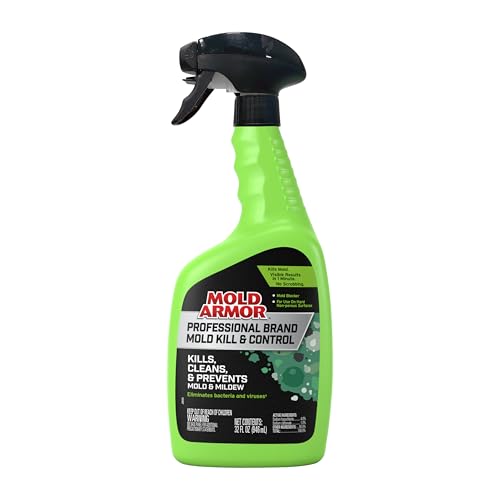 Mold Armor Mold & Mildew Remover | Widely stocked bathroom/surface remover. | Amazon — $22.98 |