Mold Killer: What Actually Works on Household Mold
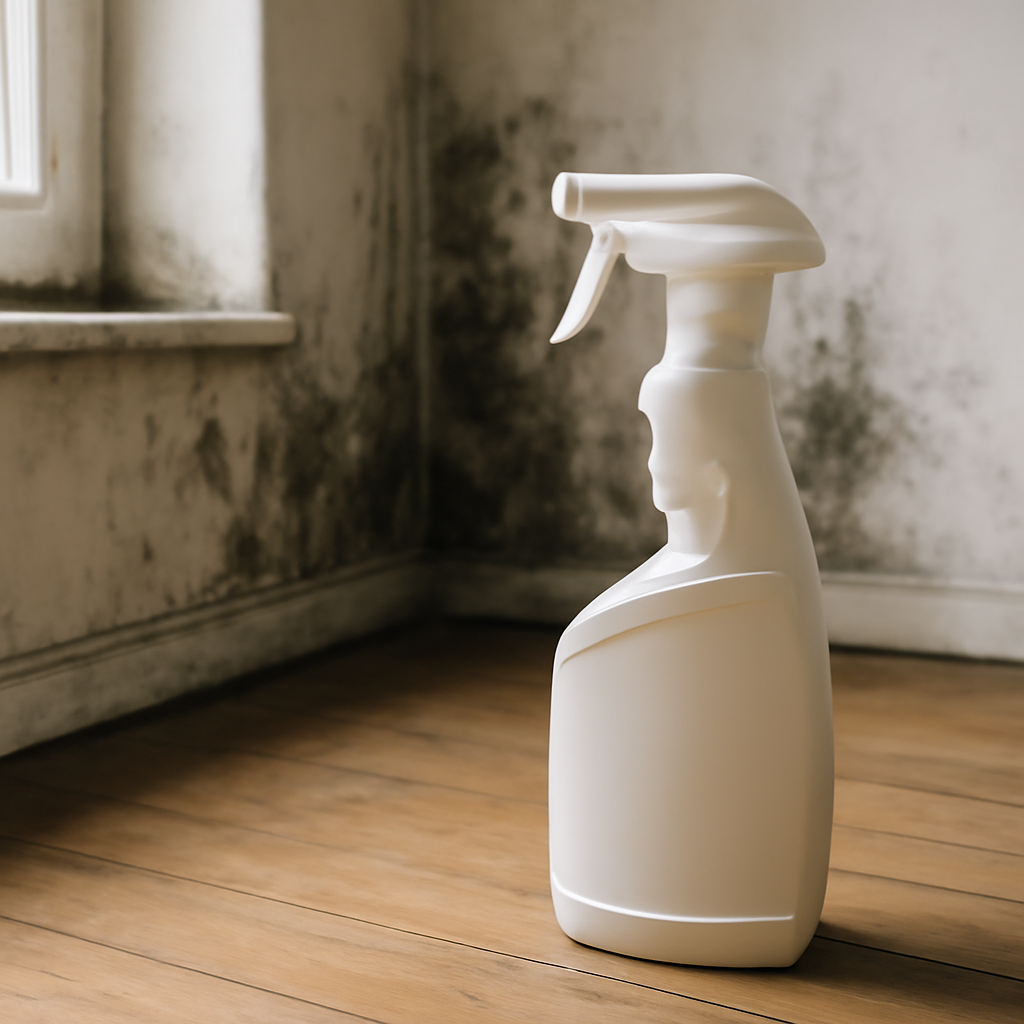
Reach for a spray bottle when dark spots creep across grout or a ceiling corner, and a good mold killer can clean the surface in minutes. The harder truth is that killing what you see rarely solves the problem underneath. Mold is a symptom of moisture, and unless the water source is found and dried, the same patch returns. This guide summarizes EPA and CDC guidance current as of 2026 on cleaning mold safely. It is educational only — consult your physician about symptoms and a certified professional for testing or large cleanups.
Part of our Mold Removal & Remediation guide — start there for the full picture →
Is this mold, asbestos, or water damage? Get a free instant screen
Upload a clear photo of the suspect area. You'll get an instant AI screening opinion and what to do next. This is screening guidance, not a professional determination.
Screening guidance only. AI can be wrong. Confirm asbestos, mold type, or lead with lab testing or a licensed professional before acting.
What a Mold Killer Actually Does
A mold killer is any product marketed to destroy mold organisms on a surface. The category spans household bleach solutions, hydrogen peroxide, distilled white vinegar, quaternary ammonium “quat” disinfectants, and branded sprays that combine a biocide with surfactants and fragrance. They share one job: reduce the living mold on a hard surface so it can be wiped or rinsed away.
Here is the part product labels gloss over. The EPA’s position is that on a porous, fully dried surface, the goal is removal, not chemical sterilization. Dead mold spores can still trigger allergic reactions, so wiping residue off matters as much as killing the colony. On a nonporous surface like glazed tile, sealed countertop, or glass, a disinfectant plus scrubbing works well. On porous materials such as drywall paper, ceiling tile, or bare wood, the roots thread below the surface and no spray reaches them.
That distinction drives every decision in this guide. Match the product to the surface, and accept that some materials get cut out rather than cleaned.
It also helps to understand what a mold killer is not. It is not a moisture barrier, a structural repair, or a permanent fix. A label that promises to “eliminate mold forever” is overpromising, because no chemistry can prevent regrowth on a surface that keeps getting wet. The realistic goal is a clean, dry surface, paired with a repair that removes the water. Read the marketing with that frame and the choices become clearer.
The Main Types of Mold Killer Compared
No single product wins every job. The right choice depends on the surface, the size of the area, and how much ventilation you have.
Chlorine Bleach Solutions
Household bleach diluted to roughly one cup per gallon of water is a long-standing recommendation for hard, nonporous surfaces. It kills surface mold quickly and lightens staining. The drawbacks are real: bleach is mostly water, so on porous materials the water can feed regrowth while the chlorine evaporates. Bleach fumes irritate eyes and lungs, and mixing it with ammonia or other cleaners creates toxic gas. Never combine products.
Hydrogen Peroxide
A 3% hydrogen peroxide solution straight from the brown bottle kills many mold species and breaks down into water and oxygen, leaving no harsh residue. It is gentler on lungs than bleach and works on a wider range of surfaces, though it can lighten fabrics and some finishes. Spray, let it sit roughly ten minutes, then scrub and wipe.
Distilled White Vinegar
Plain white vinegar is mildly acidic and penetrates slightly better than bleach on some porous surfaces. It is inexpensive, low-fume, and reasonable for small bathroom or kitchen spots. The smell is strong but fades. Vinegar is slower and less effective on heavy growth, so it suits maintenance more than remediation.
Branded and Commercial Sprays
Ready-to-use mold killers bundle a biocide with cleaning agents and often a fragrance. Convenience is the selling point. Read the label for the EPA registration number if the product claims to kill mold — that number means the antimicrobial claim was reviewed by the agency. Follow the dwell time printed on the bottle, because contact time is what makes a disinfectant work.
Quaternary Ammonium Disinfectants
The “quats” found in many commercial and institutional cleaners are effective surface disinfectants when given their full contact time. They tend to have a milder odor than bleach and leave a residual film some users find useful, though that film can build up over repeated use. Quats suit hard, nonporous surfaces and routine disinfection. As with any product carrying a kill claim, the EPA registration number on the label is the signal that the antimicrobial performance was reviewed.
How to Compare Two Products Quickly
When two bottles look similar, three details separate them. First, the active ingredient tells you the chemistry and which surfaces it suits. Second, the listed dwell or contact time tells you how long the product must stay wet to work; shorter is more convenient but only if the claim is backed. Third, the surface list and any color-safe note tell you whether it is safe on your material. Price per use matters less than matching those three details to the job in front of you.
How to Use a Mold Killer Safely
Cleaning a small patch is reasonable for most homeowners. The EPA generally suggests that a hard-surface area under about ten square feet — roughly a three-by-three-foot patch — is within reach of a careful do-it-yourself approach. Beyond that, the risk of spreading spores and disturbing hidden growth rises sharply.
Ventilate first. Open a window, run an exhaust fan, and close the door to the rest of the house so spores do not drift. Wear an N95 respirator, eye protection without vents, and rubber gloves. The CDC recommends these basics even for modest jobs because disturbing mold releases spores into the air you breathe.
Pre-dampen the area lightly to keep spores from going airborne, apply the product, and respect the dwell time. Scrub with a stiff brush on textured surfaces. Wipe the residue away rather than letting it dry in place. Bag and discard rags, brush heads, and any porous debris. Dry the surface completely with a fan, because lingering moisture invites the colony right back.
If you start cleaning and find the patch is larger than it looked, the drywall is soft, or there is a musty smell with no visible source, stop. Those are signs the growth extends into the wall cavity where a spray cannot follow.
When a Mold Killer Is Not Enough
Products fail most often because they are aimed at the wrong target. Spraying the stain does nothing about the leaking supply line, the condensation on cold pipes, or the bathroom that never dries out. Until the moisture is fixed, you are cleaning the same wall every few weeks.
Porous materials are the other limit. Mold that has colonized the paper face of drywall, soaked into ceiling tile, or grown into framing lumber usually has to be removed, not cleaned. The EPA’s own remediation guidance leans toward cutting out and replacing affected porous material rather than trying to disinfect it. A surface that looks clean after scrubbing can still hold living roots below.
Square footage matters too. A widespread problem, anything tied to sewage or contaminated water, or growth in HVAC ductwork moves past homeowner range. At that point, professional remediation and proper containment protect both your health and the rest of the house. Homeowners weighing where to start can review the broader homeowner guide to mold inspection and testing for context on when cleaning stops being a do-it-yourself task.
Preventing Mold From Coming Back
The most effective mold killer is dry air. Mold needs moisture, organic food, and time. Remove the moisture and the rest does not matter. Keep indoor humidity in the range the EPA suggests, roughly 30 to 50 percent, and use a dehumidifier in damp basements common across the Front Range, where seasonal swings push humidity up and down.
Run bathroom exhaust fans during and after showers, and for a stretch afterward to clear lingering steam. Fix plumbing leaks and roof drips promptly; a slow leak behind a cabinet can feed a colony for months unseen. Improve airflow in closets and corners where stagnant air collects. Squeegee shower walls and wipe window condensation in winter.
For homeowners deciding between a quick spray and a more thorough product, comparing options in a roundup of products that actually kill mold and their limits can clarify what each chemistry does and does not handle. Maintenance cleaning is far easier than remediation, and consistent humidity control is what keeps a treated surface clean for good.
Common Mistakes That Waste a Mold Killer
Even a good product fails when it is used poorly, and the same handful of errors come up again and again. Knowing them in advance saves money and rework.
The first is skipping the dwell time. A disinfectant kills during contact, so spraying and wiping in the same motion leaves living mold behind. The second is using a thin spray on a vertical surface, where it runs off before it can work; a foam or gel that clings is the better choice there. The third is mixing products. Combining bleach with ammonia, vinegar, or other acids produces toxic gases, and layering cleaners almost never improves the result.
A fourth mistake is treating staining as if it were living mold. Some surfaces keep a gray or pink shadow after the colony is dead, especially on grout and caulk. Scrubbing harder will not remove a stain set into the material, and that is a cosmetic issue rather than a sign the product failed. A fifth is cleaning aggressively without protection, which sends spores into the air you breathe. The final and most consequential mistake is cleaning the surface while ignoring the water source, which guarantees the colony comes back.
When to Call a Professional Instead
Some situations are not do-it-yourself jobs no matter how good the product. If the affected area is larger than roughly ten square feet, the EPA’s guidance points toward professional help with proper containment. The same applies when mold appears after flooding or a sewage backup, when it is growing in HVAC ductwork, or when household members have asthma, allergies, or weakened immune systems and react to the air.
A persistent musty smell with no visible source is another reason to bring in a professional, because the growth is likely inside a wall, floor, or ceiling cavity. Recurrent growth that returns within weeks of every cleaning signals an unresolved moisture problem that an inspection can locate. A professional can assess the extent, identify the moisture source, and remove affected materials safely.
References
- Mold Cleanup in Your Home — U.S. Environmental Protection Agency
- About Mold and Your Health — Centers for Disease Control and Prevention
- A Brief Guide to Mold, Moisture and Your Home — U.S. Environmental Protection Agency
Frequently asked questions
Does a mold killer work on drywall?
It cleans the surface but cannot reach mold that has rooted into the paper face of drywall. Once growth penetrates porous material, the EPA generally recommends removing and replacing the affected section rather than trying to disinfect it in place.
Is bleach the best mold killer?
Bleach works on hard, nonporous surfaces like tile and glass, but it is mostly water and performs poorly on porous materials. Hydrogen peroxide and vinegar are gentler alternatives, and on porous surfaces removal beats any spray.
How much mold can I safely clean myself?
The EPA suggests that a hard-surface patch under about ten square feet is reasonable for a careful homeowner using an N95 respirator, gloves, and eye protection. Larger areas or water-damage situations call for a professional.
Why does mold keep coming back after I kill it?
Because the moisture source is still there. A mold killer treats the symptom; until you fix the leak, condensation, or humidity feeding the colony, the same patch returns within weeks.
If you are in the Denver metro or along the Front Range and want a clearer picture before you scrub or cut into a wall, connect with a vetted local inspector through our contact page to talk through testing and next steps.
Mold removal & cleanup picks
For a small, contained patch (under ~10 sq ft) these EPA-friendly removers handle surface mold. Larger or recurring growth warrants a professional assessment first.
| Product | Why | Buy |
|---|---|---|
 RMR-86 Instant Mold Stain Remover RMR-86 Instant Mold Stain Remover | Fast-acting on stains; ventilate and wear PPE. | Amazon — $29.99 |
 Concrobium Mold Control Concrobium Mold Control | No-bleach formula that also helps prevent regrowth. | Amazon — $34.27 |
 Mold Armor Mold & Mildew Remover Mold Armor Mold & Mildew Remover | Widely stocked bathroom/surface remover. | Amazon — $22.98 |