Killer Mold: Dangerous Types and How to Control It

“Killer mold” is a phrase that gets attached to dramatic news stories about toxic black mold, but the reality is more measured than the headlines. No common indoor mold reliably kills a healthy person, yet some species and exposures genuinely warrant caution, and any large or persistent growth signals a moisture problem worth fixing. This guide summarizes EPA, CDC, and NIH guidance current as of 2026 and is informational only — it is not medical advice. If you have health symptoms you believe are mold-related, consult your physician; for testing and remediation decisions, work with a certified professional. The useful question is not whether mold can be deadly but which types raise concern and how to control any growth before it spreads.
Part of our Mold Removal & Remediation guide — start there for the full picture →
Is this mold, asbestos, or water damage? Get a free instant screen
Upload a clear photo of the suspect area. You'll get an instant AI screening opinion and what to do next. This is screening guidance, not a professional determination.
Screening guidance only. AI can be wrong. Confirm asbestos, mold type, or lead with lab testing or a licensed professional before acting.
What People Mean by Killer Mold
The term almost always points to Stachybotrys chartarum, the dark greenish-black mold that grows on chronically wet, cellulose-rich materials like soaked drywall and paper. It earned its reputation in the 1990s after reports linked it to severe illness, though later scientific reviews found the early cause-and-effect claims overstated. The CDC’s position is that while damp indoor environments are associated with respiratory effects, a direct causal link between this mold and serious disease in otherwise healthy people has not been established.
That does not make black mold harmless. It produces mycotoxins under certain conditions, and people with asthma, allergies, or weakened immune systems can react to it. The practical takeaway is that color alone does not tell you a mold is “toxic,” and you cannot identify a species by sight. What you can identify is that growth this extensive means a long-running water problem that needs to be addressed regardless of which species is present.
Which Mold Types Actually Raise Concern
Several genera show up in indoor investigations and carry different levels of concern. The distinction matters less for cleanup, which is the same across species, than for understanding the health picture.
Stachybotrys (Black Mold)
This is the classic “killer mold” of headlines. It needs sustained moisture and grows slowly, so its presence usually indicates weeks or months of water exposure. It can produce mycotoxins, and sensitive individuals may react more strongly to it. Its appearance — dark, often slimy when wet — is suggestive but not diagnostic.
Aspergillus and Penicillium
These are among the most common indoor molds. Most species are harmless to healthy people, but certain Aspergillus strains can cause infections in immunocompromised individuals, a condition physicians call aspergillosis. The NIH and CDC both flag these molds as more relevant to people with serious underlying illness than to the general population.
Cladosporium and Alternaria
Both are extremely common, indoors and out, and are frequent allergy triggers. They rarely cause infection but can drive sneezing, congestion, and asthma flares in sensitive people. Their ubiquity is exactly why air testing must compare indoor counts to an outdoor baseline to mean anything.
Best Mold and Mildew Remover: our top 3 picks
| Product | Best for | Key features | Price | Buy |
|---|---|---|---|---|
| RMR-86 Instant Stain Remover | Fast mildew stain removal |
| — | Buy now →Check current price |
| Concrobium Mold Control | Mold control and prevention |
| — | Buy now →Check current price |
| 30 SECONDS Pro | Indoor and outdoor stains |
| $17.28as of Nov 26, 2026 5:10 am GMT+0000 | Buy now →Check current price |


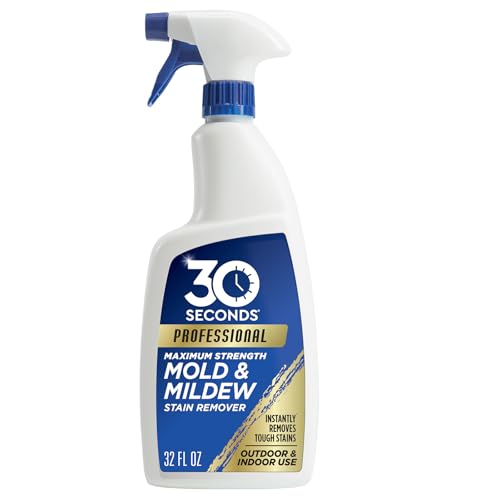
Prices are Amazon’s listed prices as of the time shown and change often; check Amazon for today’s price. As an Amazon Associate we earn from qualifying purchases.
What the Health Science Actually Supports
The clearest, best-supported finding is that damp, moldy indoor environments are associated with respiratory symptoms: coughing, wheezing, upper-respiratory irritation, and worsened asthma. That association holds across many studies and forms the backbone of EPA and CDC guidance. What the evidence does not support is the popular idea that ordinary household mold causes memory loss, bleeding, or death in healthy adults.
Risk concentrates in specific groups. Infants, older adults, people with asthma or allergies, and those with compromised immune systems are more likely to react. For everyone, the sensible response to visible mold is removal plus moisture control, not species testing. If symptoms are present, a doctor evaluates the person; the building professional evaluates the mold. Keeping those two roles separate prevents both health anxiety and wasted testing money. For the bigger picture of how growth is found and assessed, our plain-language mold inspection hub lays out the full process.
How to Control Mold Before It Spreads
Controlling any mold, “killer” label or not, comes down to denying it water and removing what has already grown. The EPA’s core guidance is consistent across species: fix the moisture source, clean or remove the affected materials, and dry everything thoroughly. Mold cannot establish on dry surfaces, so moisture control is the permanent fix.
For small surface growth on hard materials, careful cleaning works. For porous materials that have absorbed mold — drywall, carpet, ceiling tile — removal is the only complete solution because roots penetrate below the surface. The faster you act, the smaller the job: mold can begin growing on wet materials within 24 to 48 hours, so a same-day response to leaks and floods prevents most problems. If growth is already established and spreading, our guide to stopping mold from spreading covers containment and drying in detail.
Routing Health Questions Correctly
If someone in the home has persistent respiratory symptoms, unexplained fatigue, or reactions that improve when they leave the house, the right first call is a physician, not a mold lab. A doctor can evaluate allergies, asthma, and infection risk in the context of the person’s full health history. Mold testing of the air cannot diagnose a medical condition, and a “clean” test does not rule out a sensitivity, just as a “positive” test does not prove the mold caused a symptom.
On the building side, the action is the same whether or not anyone is sick: find the water, remove the growth, keep humidity in check. This division keeps decisions grounded — health professionals address the body, remediation professionals address the structure.
Where Dangerous-Looking Mold Tends to Grow
The species that earn the “killer mold” label need sustained moisture, so they appear in predictable places. Chronically damp basements and crawlspaces, common in Front Range homes with below-grade living space, are prime locations because concrete wicks moisture and airflow is often poor. Behind drywall in rooms with a slow plumbing leak, growth can spread for weeks unseen. Attic sheathing soaks up moisture when a bathroom or dryer vent discharges into the attic instead of outdoors, creating ideal conditions on the wood.
Around windows, especially older single-pane units, condensation collects on cold surfaces and feeds growth on sills and adjacent drywall. Under carpet and pad that got wet and was never fully dried, mold establishes out of sight. The pattern across all of these is the same: a material that stays wet long enough. That is why finding “dangerous” mold is less about identifying a species and more about identifying where water has been sitting. Trace the moisture and you find the growth.
What to Do If You Are Worried About a Health Reaction
If a household member has symptoms they connect to mold, the most useful steps separate the medical question from the building question. On the medical side, keep a simple record: which symptoms, when they occur, and whether they ease when the person is away from the home for a day or more. That pattern is information a physician can use. Bring it to a doctor rather than to a mold lab, because a clinician can evaluate allergies, asthma, and infection risk against the person’s full history.
On the building side, look for the moisture and the growth regardless of whether anyone is sick. Reducing exposure while you investigate is reasonable: improve ventilation, run a dehumidifier in damp areas, and avoid disturbing visible growth, which releases spores. Sensitive individuals can stay out of affected rooms until the problem is addressed. The goal is to lower exposure and fix the source, not to chase a diagnosis through air testing, which cannot tell you whether a given person will react.
When to Bring in a Professional
Professional help is warranted when growth covers a large area (the EPA suggests roughly 10 square feet as a do-it-yourself ceiling), when mold sits inside HVAC systems, when contamination follows sewage or flood water, or when growth keeps returning after cleanup. Suspected hidden mold behind walls also calls for trained assessment rather than tearing into the structure blindly. A professional brings containment and HEPA filtration that keep a disturbed colony from seeding the rest of the house, which matters more with extensive growth than with a small surface patch.
The “killer mold” framing tends to push homeowners toward panic and expensive testing. A calmer, more effective response is to treat any significant mold as a moisture failure, fix the source, remove what is there, and bring in a professional when the scope exceeds a safe do-it-yourself job. That approach handles the genuinely concerning cases without overreacting to a name. The dramatic stories make for memorable headlines, but the boring, reliable truth is that controlling moisture controls mold, whatever the species turns out to be.
Why Species Identification Rarely Changes the Plan
A persistent belief drives a lot of unnecessary spending: that you must identify the exact mold species to know how to respond. The EPA and CDC both push back on this. For visible growth, the recommended action — remove the mold, fix the moisture — is identical regardless of which species is present. Knowing that a sample is Stachybotrys rather than Cladosporium does not change whether you clean a hard surface or remove a saturated porous one.
Species testing has legitimate uses: confirming hidden growth, settling disputes, investigating health complaints with no visible source, or verifying a cleanup. Outside those cases, paying a lab to name the mold on a visible patch is money that would be better spent on the moisture fix and removal. The “killer mold” anxiety often funnels homeowners toward testing first, when testing is the step most situations can skip. Reframing the response around moisture and removal, with testing reserved for the specific scenarios that warrant it, is both calmer and more cost-effective.
Reducing Exposure While You Address the Problem
Whether or not anyone in the home is reacting, limiting exposure during the period between discovery and cleanup is sensible. Avoid disturbing visible growth unnecessarily, since disturbance releases spores into the air. Keep the affected area closed off from the rest of the home where practical, and have sensitive household members stay out of it. Running a HEPA air purifier in or near the area can capture some airborne spores.
Control humidity throughout the home with a dehumidifier and good ventilation, since lower humidity slows growth and reduces the conditions that let spores settle and establish elsewhere. Do not run the HVAC in a way that pulls air from the contaminated space through the whole house, as that distributes spores. These measures are about reducing exposure and preventing spread during the interval before the problem is properly removed, and they apply to any significant growth regardless of whether it carries a dramatic label. The combination of reduced exposure, moisture control, and prompt removal addresses the genuine concerns behind the “killer mold” worry without the panic.
More Questions About Dangerous Mold
Can mold exposure be fatal?
Deaths from mold exposure in homes are rare, but mold can cause serious infections in people with severely weakened immune systems, such as some transplant recipients, chemotherapy patients or people with certain lung diseases. For most healthy people, indoor mold is linked to allergy symptoms, asthma flares and respiratory irritation rather than life-threatening illness. Anyone with a weakened immune system or serious lung condition should avoid moldy areas and discuss concerns with a doctor. Sudden breathing difficulty is a medical emergency, regardless of the suspected cause.
What are the symptoms of mold exposure?
Common symptoms linked to indoor mold exposure include a stuffy or runny nose, sneezing, coughing, wheezing, itchy or watery eyes, throat irritation and skin rashes. People with asthma may notice more frequent or severe attacks. Symptoms often improve when away from the moldy area. These symptoms overlap with colds, other allergies and many other conditions, so symptoms alone cannot confirm mold as the cause. A doctor can evaluate symptoms and decide whether allergy testing or other follow-up makes sense.
Are pets affected by toxic mold?
Pets can be affected by indoor mold, with signs that may include sneezing, coughing, itching, skin problems or breathing difficulty. Dogs and cats spend time close to floors and carpets where spores settle, and some animals eat moldy food or garbage, which can make them seriously ill. Any pet showing vomiting, tremors, weakness or breathing problems needs prompt care from a veterinarian. Cleaning mold, fixing moisture and keeping pets away from work areas during cleanup reduce their exposure.
What is the most dangerous type of mold in a house?
No single mold type is officially classified as the most dangerous, but Stachybotrys chartarum, Aspergillus species and some Penicillium species often get the most attention because certain strains can produce mycotoxins or cause infections in vulnerable people. Public health agencies such as the CDC advise treating all indoor mold growth the same way rather than focusing on species. The amount of growth, the moisture source and the health of the people in the home matter more than the name of the mold when deciding how quickly to act.
References
- CDC information on mold and health effects — Centers for Disease Control and Prevention
- EPA mold cleanup guidance — U.S. Environmental Protection Agency
- NIEHS overview of mold and human health — National Institute of Environmental Health Sciences
Frequently asked questions
Is black mold actually deadly?
For healthy adults, common black mold has not been shown to cause death. The CDC notes the early severe-illness claims were overstated. It can still trigger reactions in sensitive people, and large growth always signals a moisture problem worth fixing.
Can you identify toxic mold by its color?
No. Color and texture cannot reliably identify a mold species, and species identification rarely changes the cleanup. Any visible mold should be removed and the moisture source corrected regardless of appearance.
Who is most at risk from indoor mold?
Infants, older adults, and people with asthma, allergies, or weakened immune systems face higher risk. For these groups, prompt removal and moisture control matter most, and any health symptoms should be evaluated by a physician.
Should I test mold to find out if it is dangerous?
Usually not. The EPA and CDC advise that visible mold be cleaned regardless of type. Testing is most useful for hidden growth, dispute resolution, or verifying a cleanup, not for deciding whether visible mold is dangerous.
Can mold cause memory problems?
Some people report memory or concentration problems in moldy homes, but the scientific evidence linking indoor mold directly to cognitive problems is limited and debated. Many other conditions cause similar symptoms. A doctor is the right person to evaluate memory or concentration concerns.
Can mold grow in a newer home?
Yes, mold can grow in newer homes, especially tightly sealed homes with poor ventilation, wet framing that was enclosed during construction, or leaks at windows and roof flashing. Proper ventilation, humidity control and builder warranty follow-up help address problems early.
How quickly should dangerous-looking mold be removed?
Visible mold should be addressed promptly, ideally within days, regardless of its color or appearance. The first step is fixing the moisture source, then cleaning or removing affected materials. Areas over about 10 square feet, or mold affecting sensitive occupants, usually call for a professional.
Concerned about extensive or recurring growth in a Front Range home? You can get connected with a vetted local inspector through our contact page.