Mold Colony: What Homeowners Need to Know
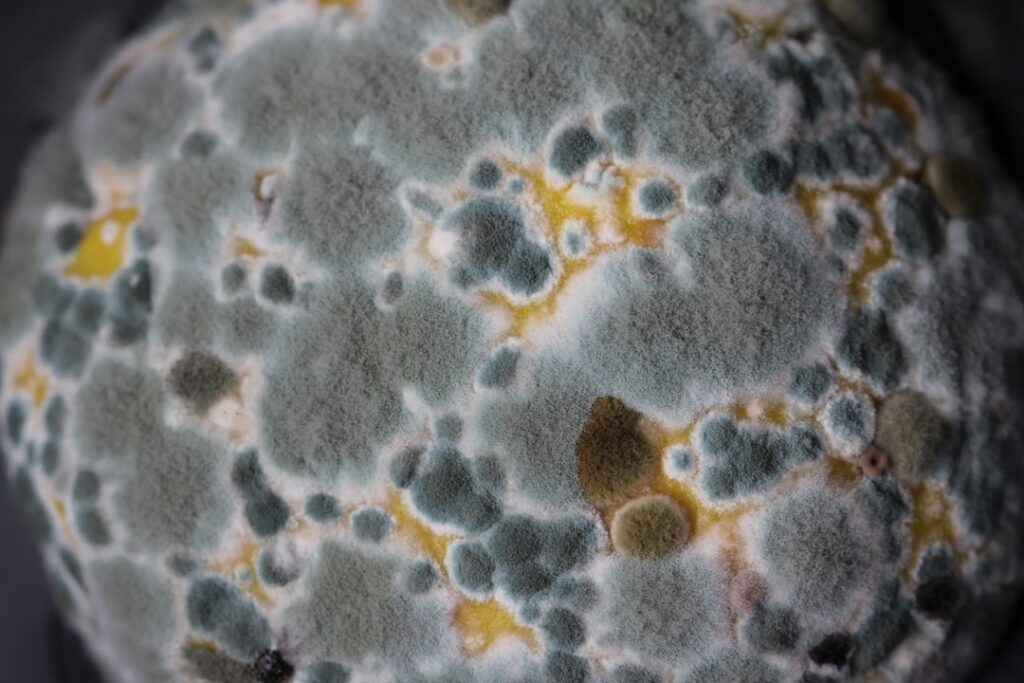
The patch on a wall that people call mold is, biologically, a colony, a living network growing and reproducing on a surface. Understanding what a mold colony actually is, how it forms, and how it spreads makes the cleanup advice from agencies like the EPA click into place. This guide is educational, explaining the biology of hyphae, spores, and surface growth in plain language, then connecting it to practical home decisions. It summarizes EPA, CDC, and NIEHS guidance current as of 2026 and is home-environment information, not medical advice.
Part of our Types of Mold guide — start there for the full picture →
Is this mold, asbestos, or water damage? Get a free instant screen
Upload a clear photo of the suspect area. You'll get an instant AI screening opinion and what to do next. This is screening guidance, not a professional determination.
Screening guidance only. AI can be wrong. Confirm asbestos, mold type, or lead with lab testing or a licensed professional before acting.
What Is a Mold Colony?
A mold colony is a visible mass of fungal growth made up of countless microscopic threads plus the spores it produces. What looks like a single spot is in fact a dense, interconnected organism feeding on the surface it sits on. Mold is a fungus, not a plant or bacterium, and like other fungi it grows by extending thread-like filaments and reproduces by releasing spores. A colony becomes visible only once it has grown large enough for the eye to register, which means a visible patch has usually been developing for a while.
Hyphae: The Building Blocks
The basic structural unit of a mold colony is the hypha, a microscopic tubular filament. Hyphae branch and intertwine into a network called a mycelium, the body of the colony. As the mycelium grows, it secretes enzymes that break down the material it lives on, drywall paper, wood, fabric, dust, turning that material into food. This is why mold does not just sit on a surface but can grow into it, and why porous materials that are heavily colonized often must be removed rather than wiped clean, as the EPA advises.
Why Hyphae Make Porous Materials Hard to Clean
Because hyphae penetrate below the surface, scrubbing the top removes only part of the colony. On drywall, ceiling tile, or carpet, the network reaches into the material where cleaning cannot follow, which is the biological reason the EPA recommends discarding saturated porous materials.
Spores: How a Colony Reproduces and Spreads
Spores are the reproductive units of mold, microscopic and released in enormous numbers from a mature colony. They drift through the air, and when one lands on a surface with enough moisture and food, it germinates into new hyphae and starts a fresh colony. Spores are everywhere, indoors and out, which is why the EPA says eliminating all spores is impossible; the achievable goal is denying them the moisture they need to germinate. Disturbing a colony, by scrubbing or demolition, releases a burst of spores, which is why containment matters during remediation.
What a Colony Needs to Grow
A colony requires three things: spores, which are always present; a food source, which most building materials supply; and moisture, the only factor a homeowner can fully control. Temperature and time also play a role, with most indoor molds favoring the same comfortable range people do. Remove sustained moisture and the colony cannot establish or expand, no matter how abundant the spores or food. This single dependency is the foundation of all mold prevention. The guide on preventing mold growth at home turns it into concrete steps.
How a Colony Grows Over Time
Growth begins when a spore germinates on a wet surface, often within 24 to 48 hours. Hyphae extend outward, the mycelium thickens, and once mature the colony begins producing its own spores, which seed new growth nearby. A small patch can expand steadily as long as moisture persists. This timeline is why speed matters after a leak: drying within a day or two interrupts germination before a colony ever forms. The detail on how mold damage develops in a house traces that progression.
What a Colony’s Appearance Tells You
The color and texture of a colony come from its spores and structure, which is why mold looks fuzzy, powdery, or slimy rather than flat. Appearance hints at the genus but never confirms it; only a lab examining hyphae and spores under a microscope can identify the species. A larger, well-established colony with a strong musty odor generally signals longer-standing moisture than a faint new patch. The guide on what mold looks like by type connects appearance to the underlying biology.
Dormancy: Why Dead-Looking Mold Isn’t Safe
A colony that loses its moisture supply does not necessarily die; it often goes dormant. The hyphae and spores can survive in a dried state and resume growth when moisture returns. This is why simply drying out a moldy area without removing the growth is incomplete: the colony is paused, not gone, and the next leak or humid spell can reactivate it. Dormant spores also remain capable of becoming airborne and triggering reactions in sensitive people. The biological reality of dormancy is the reason the EPA emphasizes removing growth in addition to fixing moisture, rather than relying on drying alone.
How Colonies Communicate and Compete
Mold colonies are not passive. As they grow, they release enzymes to digest their substrate and chemical compounds that can inhibit competing microbes, and some of those compounds are the microbial volatile organic compounds responsible for the characteristic musty smell. Different colonies compete for the same damp territory, and the dominant species often reflects the specific conditions of moisture, material, and temperature. This microbial activity is why a long-established colony smells stronger and why the odor itself is a reliable clue to active, mature growth rather than a few stray spores.
Colony Size as a Moisture Timeline
The extent of a colony roughly tracks how long moisture has been present. A faint, small patch suggests a recent or intermittent damp event, while a large, well-developed colony with a strong odor points to sustained moisture over weeks or months. Reading colony size this way helps a homeowner gauge urgency and scope: a sprawling colony usually means the water source has been active a long time and may have caused hidden damage beyond the visible growth. The guide on how mold damage develops in a house traces how a colony’s growth parallels structural deterioration.
What Colony Biology Means for Cleanup
Understanding the colony explains the standard response. Because hyphae penetrate materials, saturated porous items are removed, not cleaned. Because disturbing a colony releases spores, larger jobs use containment. Because spores are everywhere and need only moisture, the durable fix is controlling water rather than chasing spores. For a healthy household, identifying the species rarely changes any of this. The pillar overview of mold inspection and testing explains when characterizing a colony through testing is genuinely worthwhile.
Why You Cannot Sterilize a Home of Spores
A common misconception is that the goal is a spore-free home. It is not, and it cannot be. Spores are a normal, unavoidable part of indoor and outdoor air, drifting in continuously no matter how clean a house is. The EPA is explicit that eliminating all mold and spores indoors is impossible. The achievable and correct goal is to prevent colonies from forming by denying spores the moisture they need to germinate. Reframing the objective from sterilization to moisture control is the single most useful shift a homeowner can make, because it points effort at the one factor they can actually govern.
The Life Cycle of a Colony
A colony moves through recognizable stages. It begins when a spore lands on a surface with enough moisture and germinates, sending out its first hyphae within a day or two. The mycelium then expands, branching across and into the material as it digests nutrients. At maturity, the colony produces reproductive structures that release new spores, which drift off to start the cycle elsewhere. If moisture disappears, the colony enters dormancy rather than dying. Understanding this life cycle explains why early intervention matters so much: interrupting the cycle at germination, before the mycelium establishes, is far easier than removing a mature, spore-producing colony.
Why Colonies Release a Musty Smell
The characteristic musty odor of mold comes from microbial volatile organic compounds, byproducts a colony releases as it grows and metabolizes its substrate. This is why smell is such a reliable indicator of active, established growth, and why a strong musty odor often signals a colony hidden inside a wall or under flooring before any of it is visible. The odor is essentially the colony advertising its metabolism. For a homeowner, treating a persistent musty smell as evidence of an active colony, even with nothing in sight, is a sound and often accurate instinct.
Colonies on Porous Versus Nonporous Surfaces
A colony behaves very differently depending on its surface. On nonporous materials like glazed tile, glass, or sealed metal, the colony sits on top and can usually be cleaned away because the hyphae cannot penetrate. On porous materials like drywall, carpet, and untreated wood, the hyphae grow down into the structure, making surface cleaning ineffective and often requiring removal of the material. This single difference, whether hyphae can penetrate, is the biological basis for the EPA’s guidance to clean hard surfaces but discard saturated porous ones, and it explains why the same colony demands different responses on different materials.
From Colony Biology to Homeowner Action
The biology of a colony, hyphae that penetrate, spores that spread, dormancy that waits, and a dependence on moisture, all converge on a short list of actions. Find and stop the water that feeds it, contain the area so disturbance does not spread spores, remove growth from porous materials rather than just wiping, dry everything thoroughly, and keep humidity low so dormant spores never reactivate. Understanding the organism makes these steps feel logical rather than arbitrary, and it equips a homeowner to recognize when a colony has outgrown a do-it-yourself response, as the guide to detecting mold describes.
How Colonies Spread Through a Building
A single colony rarely stays put if moisture allows it to expand. Spores released from a mature colony travel on air currents, settling in other damp spots where they germinate into new colonies. HVAC systems accelerate this by drawing in spores and distributing them through ductwork to rooms far from the original source. This is why a localized leak can lead to growth in seemingly unrelated parts of a house, and why the EPA flags HVAC contamination for professional handling. Understanding how colonies spread explains the value of containment during cleanup and of addressing moisture before disturbed spores can colonize fresh territory.
What a Colony Reveals About a Building
A colony is, in a sense, a diagnostic marker for the building. Its location points to where moisture collects, its size suggests how long water has been present, and its species hints at the moisture history of the material. Reading a colony this way turns it from a nuisance into information: a large, established colony on a basement wall tells a story about chronic dampness that a homeowner can act on. The colony is the symptom, and the moisture is the disease, so interpreting what the growth reveals about the building guides the homeowner straight to the source that needs fixing.
References
- How Mold Grows and Spreads — Centers for Disease Control and Prevention
- Mold Biology and Health — National Institute of Environmental Health Sciences
- Introduction to Molds — U.S. Environmental Protection Agency
Frequently asked questions
What is a mold colony made of?
A mold colony is a network of microscopic filaments called hyphae, collectively forming a mycelium, along with the spores it produces. What looks like a single spot is a living, interconnected organism feeding on the surface.
How does a mold colony spread?
A mature colony releases spores into the air. When a spore lands somewhere with enough moisture and food, it germinates into new hyphae and starts another colony. Disturbing growth releases a burst of spores.
How fast does a mold colony form?
A spore can germinate on a wet surface within 24 to 48 hours. The mycelium then grows outward and eventually produces its own spores, so drying quickly after a leak interrupts the process.
Why can't you just wipe a colony off porous material?
Hyphae penetrate below the surface into the material, so wiping removes only the top. That is why the EPA recommends discarding saturated porous materials like drywall and carpet rather than cleaning them.
If a growing colony has appeared in your Front Range home, reach out through our contact page to connect with a vetted inspector who can assess its extent and the moisture feeding it.