Local Mold Removal: What Homeowners Need to Know
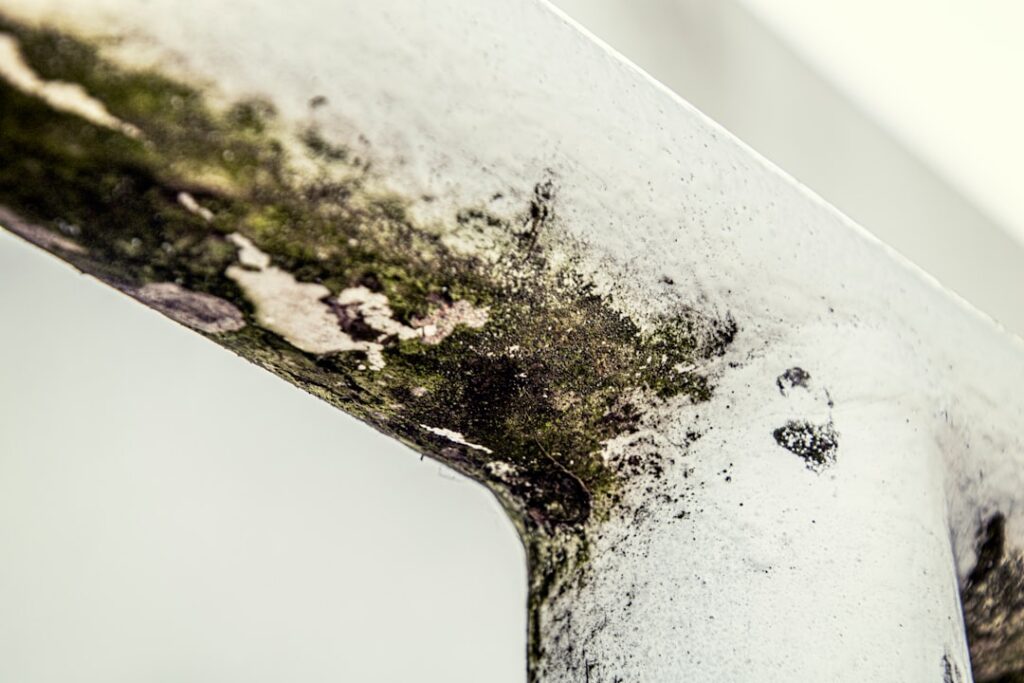
Typing “local mold removal” into a search bar usually means a homeowner has already found something they do not like — a stain spreading behind a baseboard, a musty closet, or a moldy patch a buyer’s inspector just flagged. The next step is choosing a nearby company without overpaying or hiring someone who treats the symptom and leaves the cause. This guide summarizes EPA and industry guidance current as of 2026 and is educational only; it is not a substitute for a certified professional’s assessment. Here is how to approach local mold removal so the job gets done right the first time.
Part of our Mold Removal & Remediation guide — start there for the full picture →
Is this mold, asbestos, or water damage? Get a free instant screen
Upload a clear photo of the suspect area. You'll get an instant AI screening opinion and what to do next. This is screening guidance, not a professional determination.
Screening guidance only. AI can be wrong. Confirm asbestos, mold type, or lead with lab testing or a licensed professional before acting.
What does local mold removal involve?
Legitimate mold removal — the industry term is remediation — follows a consistent process regardless of which local company you hire. A reputable crew assesses the extent and the moisture source, sets up containment with plastic sheeting to keep spores from spreading, removes or thoroughly cleans affected materials, runs HEPA filtration and vacuuming, dries the area, and verifies the result. The EPA stresses that the two non-negotiable goals are removing the mold and correcting the water problem that caused it.
The phrase “removal” is slightly misleading. You cannot remove every mold spore from a home — spores are everywhere in normal indoor and outdoor air. The realistic goal is returning the indoor environment to normal, comparable to the spore levels outside, and eliminating active growth. A local company that promises to “kill all mold” or guarantees a spore-free home is overselling.
How to vet a local mold removal company
Not every outfit advertising mold removal is equally qualified. A few checks separate the professionals from the opportunists:
- Credentials. Look for technicians certified through the IICRC (water and mold restoration standards) and ask whether the firm follows the EPA’s remediation guidance.
- Insurance. Confirm general liability coverage and, ideally, pollution liability. Ask for a certificate.
- Separation of testing and removal. A company that both tests and remediates has an incentive to find work. Independent assessment before and after avoids that conflict.
- Itemized written scope. The estimate should spell out containment, removal, drying, and the moisture fix — not a single lump sum.
- References and reviews. Recent local references and a track record in your county matter more than a flashy ad.
The conflict-of-interest point deserves emphasis. Independent testing before and after remediation, performed by someone who is not also selling the cleanup, gives you an unbiased clearance. Our overview of finding a mold detection service near you walks through how to keep assessment and remediation as separate steps.
Why “local” matters for mold removal
There is a real advantage to hiring a company rooted in your area rather than a distant franchise dispatched from afar. Local firms understand the regional moisture patterns that drive most mold, and they look for the right causes. A contractor who works a particular climate every day knows whether to suspect basement seepage, crawl-space condensation, swamp-cooler humidity, or winter ice-dam leaks, and they recognize the building styles common in local housing stock.
Local familiarity extends to the practical and legal side too. A nearby company knows the regional disclosure expectations when a sale is involved, can provide references from your own county, and is reachable for follow-up if a question arises after the work. Response time matters with water problems, where the 24-to-48-hour drying window is critical; a local crew can mobilize faster than one traveling from another region.
None of this means a local label alone guarantees quality — the vetting steps still apply — but proximity combined with credentials and independence is a strong combination. The goal is a company that brings both the technical process and the regional knowledge to find the moisture source that an out-of-area generalist might miss. When a contractor can speak specifically to the moisture triggers in your type of home and neighborhood, that local insight often translates directly into a more accurate diagnosis and a longer-lasting fix.
What local mold removal typically costs
Costs vary by region, the size of the affected area, and what materials must be removed. Industry-reported ranges put many residential jobs between roughly $1,500 and $6,000, with small isolated patches sometimes under $1,000 and major contamination — whole-basement, HVAC, or flood-related — running well into five figures. Square footage, accessibility, and the cost of repairing the moisture source all move the number.
Beware of bids that are dramatically lower than the others; they often skip containment or the moisture fix, which means you pay twice. Equally, the most expensive bid is not automatically the most thorough. Comparing two or three itemized estimates against the same scope is the reliable approach. For a regional sense of pricing, our guide to how much mold removal costs breaks down the drivers in plain terms.
How long local mold removal takes
Homeowners coordinating a local cleanup often want a timeline, and it varies with the scope. A small, isolated job — a single contained area with straightforward access — may be completed in a day, including removal, cleaning, and setting up drying equipment. The drying phase itself, however, frequently runs an additional day or more, as dehumidifiers and fans bring materials back to normal moisture levels before any rebuilding begins.
Larger jobs stretch longer. A whole-room or multi-area remediation can take several days across assessment, containment, removal, cleaning, drying, and verification, and restoration of removed drywall or flooring adds time on top of that. Jobs involving hidden mold inside walls, HVAC contamination, or contaminated water expand the schedule further because more material must be removed and more careful containment maintained.
The moisture repair can also affect timing. If a plumber or roofer must fix the source before remediation finishes, coordinating those trades extends the overall window. When scheduling a local company, ask for a realistic timeline that includes drying and any moisture repair, not just the removal day, so you can plan around the disruption. A contractor who gives a same-day promise for a significant job is likely skipping the drying or verification that makes the result durable, which is worth questioning before the work starts.
When you can handle it yourself
Not every mold problem requires a local pro. The EPA suggests that a homeowner can often tackle an area smaller than about 10 square feet — roughly a 3-by-3-foot patch — on hard, non-porous surfaces, using detergent and water, an N95 respirator, gloves, and eye protection, and discarding porous materials that cannot be cleaned. A patch of surface mildew in a bathroom or on a windowsill usually falls in this category.
The case for hiring a local company strengthens when the area is larger, when mold has entered the HVAC system, when the water involved sewage or flooding, or when anyone in the household has asthma, a mold allergy, or a weakened immune system. Hidden mold inside walls or under flooring also calls for professional investigation, because disturbing it without containment spreads spores throughout the home.
Red flags in a local mold removal company
The mold industry attracts its share of high-pressure operators, and a handful of warning signs reliably separate them from legitimate firms. Watch for any of these:
- Fear-based sales. A company that emphasizes dire health outcomes to push an expensive contract is selling anxiety, not remediation. Reputable firms describe risk in measured terms consistent with EPA and CDC guidance.
- Free inspection tied to mandatory removal. A “free” assessment that always concludes you need their costly services is a sales funnel, not an honest evaluation.
- No written scope. A lump-sum verbal quote with no detail on containment, removal, drying, or the moisture fix leaves you no way to verify what you paid for.
- Reluctance to discuss the moisture source. A firm that wants to clean the mold but shrugs at the leak guarantees a repeat job.
- Same company tests, removes, and clears. The built-in conflict of interest undermines any clearance result.
- Pressure to sign today. Legitimate problems do not require a same-day decision; the urgency is a tactic.
None of these alone proves bad faith, but several together are a strong signal to get other bids. The goal is a contractor who explains the problem plainly, scopes the work in writing, and is honest about when a job is small enough to handle yourself. Our guide on judging whether basement mold is genuinely dangerous can help you sanity-check a company’s claims about severity before you commit.
What to expect during a local mold removal job
Knowing the typical workflow helps a homeowner judge whether a crew is doing the job properly. A standard residential remediation moves through assessment, containment, removal, cleaning, drying, and verification. During containment, expect plastic sheeting over doorways and, on larger jobs, a HEPA air scrubber running to keep the work area under slight negative pressure so spores do not migrate.
Removal means porous materials like soaked drywall and carpet come out and leave the house in sealed bags, while hard surfaces are cleaned and HEPA-vacuumed. The crew should protect HVAC returns so the system does not distribute spores. After removal, the area is dried — often with dehumidifiers and fans running for a day or more — and the moisture source is corrected. A conscientious contractor then documents the work, and on significant jobs an independent party verifies the result before the space is restored.
Throughout, occupants with asthma, allergies, or weakened immunity are usually advised to stay clear of the work zone. The whole sequence reflects the EPA’s emphasis on containment, removal, and moisture control rather than chemical treatment alone. If a local company you hire skips containment, ignores the HVAC, or never addresses the leak, those are signs the job will not hold — and reasons to raise the issue before the final invoice.
Finding the right local company on the Front Range
Colorado’s dry climate means fewer chronic mold problems than humid regions, but the Front Range has its own triggers: finished basements with groundwater seepage, swamp-cooler humidity, ice-dam leaks, and burst pipes during deep cold snaps. Local familiarity matters because a Denver-area contractor understands these regional patterns and the local disclosure expectations for a sale.
When searching, prioritize companies that serve your specific county, carry current certifications, and are willing to walk the affected area before quoting. Our regional resources on mold remediation in Denver and the broader mold inspection and testing hub outline the questions to ask and the red flags to avoid. A good local provider will explain not just what they will remove, but how they will keep it from returning — which always comes back to controlling moisture.
One last practical note: get everything in writing, confirm who is responsible for the moisture repair, and ask whether post-remediation verification is included or billed separately. Clear expectations up front prevent the most common disputes after the work is done.
Questions to ask a local mold company before hiring
A short list of questions quickly reveals whether a local firm is a fit. Asking them up front also signals that you are an informed customer, which tends to keep a contractor honest:
- Are you independent, or do you also profit from the testing? Independence matters most for clearance.
- What certifications do your technicians hold? IICRC water and mold credentials are the baseline.
- Will you identify and document the moisture source? If they cannot, the job will not last.
- Is containment and HEPA filtration part of the scope? For anything beyond a tiny patch, it should be.
- Who is responsible for fixing the leak — you or a separate trade? Clarify this before signing.
- Is post-remediation verification included? Know whether you are paying for confirmation the work succeeded.
- Can you provide recent local references? A track record in your county carries weight.
A reputable local company answers these without hesitation and welcomes the scrutiny. One that grows evasive, dismisses the moisture question, or pushes you toward an immediate contract is telling you something useful. The combination of clear answers, an itemized written scope, and verifiable credentials is what separates a removal you only pay for once from one you end up repeating.
More Questions About Local Mold Removal
How do you know if mold removal was successful?
Mold removal is generally successful when no visible growth or musty odor remains, affected materials are dry, and post-remediation verification passes. Verification usually includes a visual inspection and moisture readings, and often air or surface sampling by an independent inspector. Clearance air samples should show indoor spore levels and types similar to or lower than the outdoor control. Removal is only lasting if the moisture source, such as a leak or high humidity, has also been fixed. Ask the contractor for written documentation of the clearance.
Is mold removal covered by homeowners insurance?
Mold removal is usually covered by homeowners insurance only when the mold results from a sudden and accidental covered event, such as a burst pipe or appliance leak. Mold from long-term leaks, humidity, poor maintenance, or flooding is commonly excluded. Many policies cap mold-related payouts at a set limit, often a few thousand dollars, and some offer optional mold endorsements. Reporting water damage quickly, documenting it with photos, and starting drying promptly improve the chances of a claim being accepted.
Does bleach kill mold on drywall and wood?
Bleach is not a reliable way to kill mold on drywall or wood, because those porous materials let mold grow below the surface where bleach does not reach well. Bleach can lighten stains on the surface while leaving growth behind, and its water content can add moisture. Mold on hard non-porous surfaces like tile can be cleaned with detergent and water. Moldy drywall is usually cut out and replaced, and framing is cleaned, sanded if needed, and dried. Never mix bleach with ammonia-based cleaners.
Can mold come back after professional removal?
Mold can come back after professional removal if the moisture problem that caused it is not fixed. Common causes of regrowth include an unrepaired roof or plumbing leak, poor bathroom ventilation, high indoor humidity, and groundwater entering a basement or crawl space. Good remediation contracts include identifying and addressing the moisture source, or recommending a specialist to fix it. Keeping indoor humidity roughly between 30 and 50 percent and drying any water damage within 24 to 48 hours helps prevent recurrence.
References
- Mold Cleanup in Your Home — U.S. EPA
- Mold Remediation Guidance — U.S. EPA
- Basic Facts About Mold — CDC
- Mold and Your Home — Colorado Dept. of Public Health & Environment
Frequently asked questions
Is mold removal the same as remediation?
They are used interchangeably, though remediation is the more accurate term. You cannot remove every spore from a home, so the realistic goal is eliminating active growth, fixing the moisture source, and returning indoor spore levels to normal.
Should the company that tests for mold also remove it?
Ideally not. A firm that both tests and remediates has a financial incentive to find work. Independent assessment before and after the job, by someone who is not selling the cleanup, gives you an unbiased result.
How do I know a local mold company is qualified?
Look for IICRC-certified technicians, proof of liability insurance, an itemized written scope that includes the moisture fix, and recent local references. Be wary of bids far below the others, which often skip containment.
Can I remove mold myself instead of hiring locally?
For hard-surface patches under about 10 square feet, the EPA says many homeowners can clean it with detergent, water, and basic protective gear. Larger areas, HVAC contamination, sewage water, or any high-risk occupant call for a professional.
How big a mold area can a homeowner clean safely?
The EPA suggests many homeowners can clean mold covering less than about 10 square feet themselves, if the cause is fixed and they use gloves, goggles, and an N95 respirator. Larger areas, mold in HVAC systems, or mold after sewage-contaminated water generally call for a professional remediation company.
Does mold removal require leaving the house?
Most mold removal jobs do not require leaving the house, because contractors seal the work area with plastic and negative air pressure. Occupants with asthma, allergies, or weakened immune systems may want to stay elsewhere during larger projects. The contractor should explain which areas will be closed off.
Do mold removal companies offer warranties?
Many mold removal companies offer warranties, but terms vary widely. Some warranties only cover regrowth in the treated area if the moisture source stays fixed, and others require annual inspections. Read the warranty for exclusions such as new leaks, humidity problems, and areas not included in the original scope.
Front Range homeowners who want help separating a sound local bid from an inflated one can reach out through our contact page for a connection to a vetted, independent inspector.
Mold removal & cleanup picks
For a small, contained patch (under ~10 sq ft) these EPA-friendly removers handle surface mold. Larger or recurring growth warrants a professional assessment first.
| Product | Why | Buy |
|---|---|---|
 RMR-86 Instant Mold Stain Remover | Fast-acting on stains; ventilate and wear PPE. | Amazon — $29.99 |
 Concrobium Mold Control | No-bleach formula that also helps prevent regrowth. | Amazon — $11.26 |
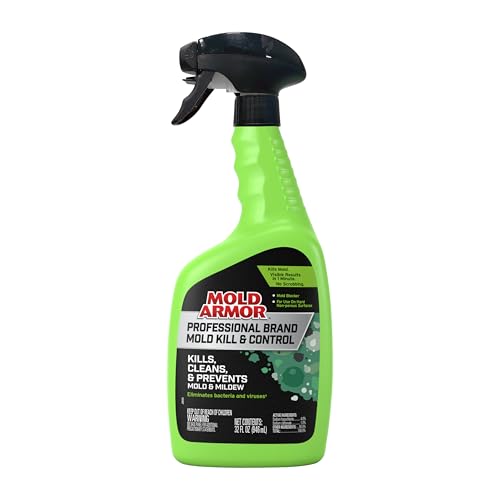 Mold Armor Mold & Mildew Remover | Widely stocked bathroom/surface remover. | Amazon — $22.98 |