Mold Detection Near Me: How to Find the Right Service
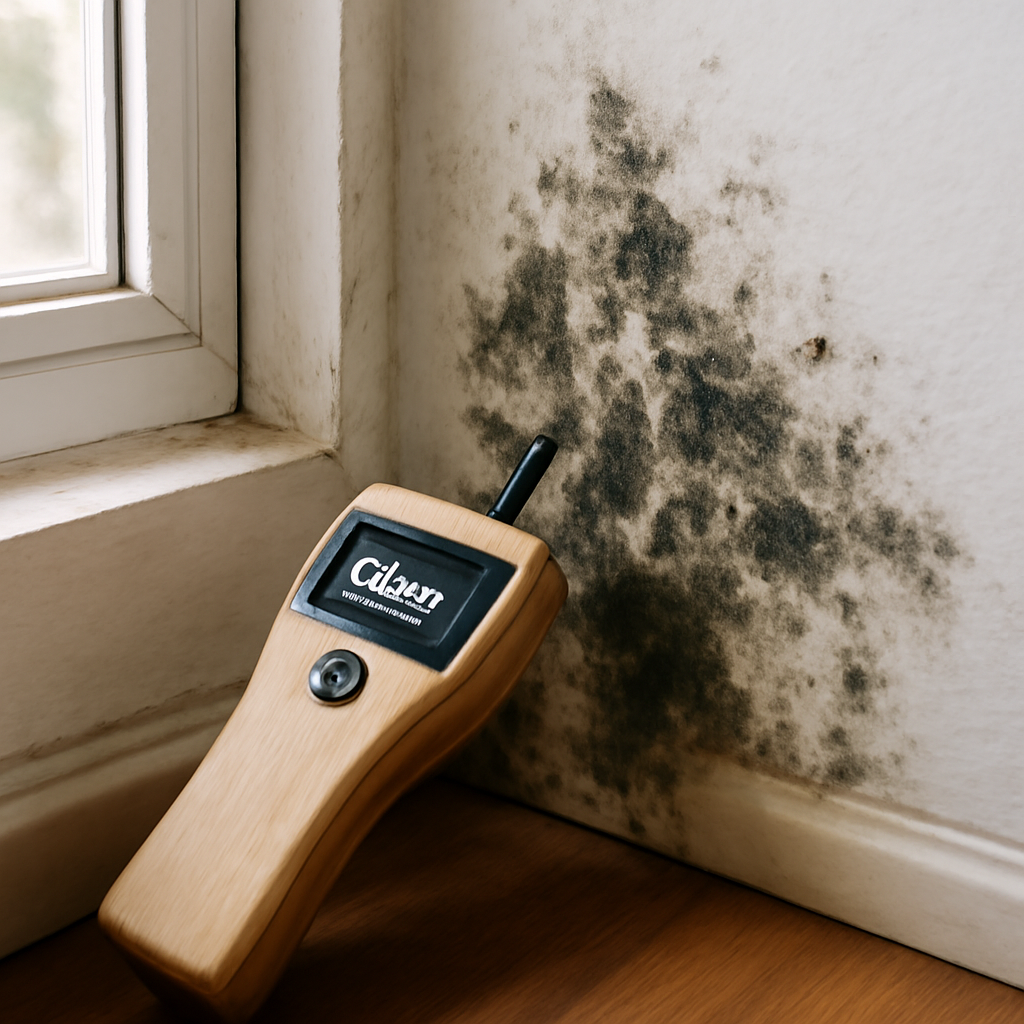
When a musty smell will not go away or a stain keeps reappearing, the natural next step is a search for mold detection near me. The results mix legitimate inspectors, remediation companies offering free assessments, and at-home test kits, and the differences matter for both your wallet and your decision-making. This guide summarizes EPA and CDC guidance current as of 2026 and is educational only; consult a physician about health symptoms and a certified professional for testing and remediation decisions.
The key thing to understand before booking anyone: detection is about finding moisture and growth, not just confirming spores exist. Spores are present in nearly every building. A good provider locates the water problem feeding the mold, which is what actually needs fixing.
Is this mold, asbestos, or water damage? Get a free instant screen
Upload a clear photo of the suspect area. You'll get an instant AI screening opinion and what to do next. This is screening guidance, not a professional determination.
Screening guidance only. AI can be wrong. Confirm asbestos, mold type, or lead with lab testing or a licensed professional before acting.
How does mold detection work, and what should I look for nearby?
Professional mold detection combines visual inspection, moisture measurement, and sometimes sampling. A qualified inspector walks the property looking for visible growth, water staining, and conditions that support mold. They use a moisture meter to find damp materials, often check humidity, and may use thermal imaging to spot temperature differences that reveal hidden wet areas behind walls or under floors. Where warranted, they collect air or surface samples and send them to a laboratory.
When evaluating local options, look for an inspector who emphasizes finding the moisture source rather than only counting spores. The EPA does not generally recommend routine air sampling, because there are no health-based standards for acceptable mold levels and visible growth already tells you cleanup is needed. So the most valuable local service is a thorough moisture-focused inspection, not the cheapest spore count. Our hub on mold inspection and testing explains the full workflow, and finding mold detection nearby ties into broader vetting habits.
Independent inspector vs. remediation company
A useful distinction is whether the company that detects the mold also profits from removing it. An independent inspector who does not perform remediation has no financial incentive to over-diagnose. A remediation company offering free detection may be thorough and honest, but the built-in conflict is worth recognizing. For a significant or disputed problem, an independent assessment first, then competitive remediation bids, protects you. This mirrors the logic of vetting any home inspector: independence and process matter.
What does local mold detection cost?
Pricing varies by region and scope, so treat any single number as a starting point. A basic visual mold inspection of a typical home commonly runs in the low-to-mid hundreds of dollars. Adding laboratory sampling raises the cost, since each air or surface sample carries a lab fee, and multi-sample jobs add up quickly. Larger homes, crawl-space access, and post-remediation verification testing cost more.
Some remediation companies offer free or low-cost detection as a sales step, which can be fine if you treat the findings as one input and seek a second opinion before agreeing to a large job. At-home test kits are the cheapest option at roughly twenty to fifty dollars, but they have real limitations covered below. The honest framing: pay for a thorough moisture-focused inspection when you have a real problem, and skip routine sampling that produces numbers with no health benchmark to interpret them against.
Are at-home mold test kits worth it?
Home mold test kits, including settling-plate and swab varieties, are inexpensive and widely sold, but they answer a question that usually does not need answering. They confirm that mold spores exist, which is true in essentially every building, and they do not reliably tell you whether you have a problem, where the moisture comes from, or how much growth is hidden. The EPA notes that sampling should be done by professionals experienced in mold investigation, and that surface-settling kits can give misleading results.
Where a kit can help is narrow: a homeowner curious about a specific visible patch might use one out of interest, but the response to visible growth is the same regardless of the result, namely cleanup and moisture correction. If your goal is to decide on remediation, an inspection that finds the water source beats a kit that names a spore. The practical value of professional detection is locating hidden moisture, which kits cannot do.
When is professional mold detection actually worth it?
Several situations justify paying a professional. The first is a persistent musty odor with no visible source, which suggests hidden growth that needs instrument-assisted detection. The second is a real-estate transaction, where a buyer wants an independent assessment of a suspected problem before closing. The third is an insurance or landlord-tenant dispute, where documented findings carry weight. The fourth is post-remediation verification, confirming that a completed cleanup actually worked.
A fifth case is health-driven: if household members have unexplained respiratory symptoms and you suspect a damp-building cause, a professional can map moisture and growth so the underlying problem can be corrected. The CDC associates damp indoor environments with respiratory irritation and aggravated asthma in sensitive people, so symptomatic homes have good reason to investigate. By contrast, routine “just to check” air sampling in a home with no symptoms, odor, or visible growth rarely returns actionable value.
Front Range considerations
Colorado’s dry climate complicates detection. Low ambient humidity lets a leak dry on the visible surface while staying wet inside a wall, hiding growth from a casual look. That makes instrument-based detection, especially moisture meters and thermal imaging, more useful here than visual inspection alone. Denver-metro and El Paso County basements, with expansive soils and seasonal snowmelt against foundations, are common hidden-moisture sites worth professional attention.
What detection methods actually involve
A thorough provider uses several methods in combination. A moisture meter, either pin or pinless, identifies damp materials by reading electrical resistance or capacitance, and a skilled inspector compares suspect areas against known-dry baselines. Thermal imaging adds a non-contact survey: damp areas often read cooler because of evaporative cooling, so a thermal camera highlights where to point the moisture meter next. Where the question is whether a hidden problem exists, a borescope inserted through a small hole can give a direct look inside a wall cavity without major demolition. Air or surface sampling, sent to an accredited laboratory, is reserved for cases where documentation or verification is needed, not as a first step.
What does a detection report tell you?
A useful report goes beyond “mold present” or “no mold found.” It documents the moisture readings taken, the locations of suspected or confirmed growth, the likely water source, and a prioritized set of recommendations. If sampling was done, it includes the laboratory results with context explaining what the numbers do and do not mean, since there is no health-based standard against which to judge a spore count. The most valuable section is usually the moisture-source diagnosis and the recommended corrective action, because that is what stops the problem from recurring. A report that simply lists spore types without addressing the water leaves you no better positioned to act.
How do I vet a mold detection provider near me?
Start with a few screening questions. Does the inspector focus on finding the moisture source, or only on selling a spore count? Do they carry liability insurance? Do they follow a recognized inspection or sampling standard? Will they provide a written report describing findings, moisture readings, and recommended next steps? Are they independent of the remediation work, or do they profit from the cleanup they recommend?
Read reviews critically, looking for comments about thoroughness and clear reporting rather than just friendliness. Ask whether the inspector uses moisture meters and thermal imaging, since these tools find the hidden problems that visual inspection misses. Confirm what the quoted price includes: a flat visual inspection, lab sampling fees, or post-remediation verification are different services. A provider who explains the limits of testing honestly, and who steers you toward moisture correction rather than expensive sampling, is usually the better choice.
Comparing two common local offers
Imagine two quotes. One is a remediation company offering free detection, which sounds appealing but couples the diagnosis to the sale. The other is an independent inspector charging a few hundred dollars for a moisture-focused inspection with a written report and no remediation upsell. For a small, obvious patch, the free assessment may be perfectly adequate. For a larger, hidden, or disputed problem, the paid independent assessment usually pays for itself by giving you leverage to compare remediation bids and avoid unnecessary work.
What happens after detection?
If detection confirms growth and finds a moisture source, the path forward depends on scale. The EPA’s roughly 10-square-foot guideline marks where homeowner cleanup gives way to professional remediation. Small patches on hard surfaces can be cleaned with protection and ventilation. Larger areas, recurring growth, HVAC contamination, or sewage involvement go to a remediator who contains the area and removes unsalvageable materials.
Either way, correcting the moisture source is the step that makes detection worthwhile. Sealing foundation cracks, improving grading, repairing leaks, venting bath fans outdoors, and holding indoor humidity below about 50 percent prevent regrowth. Detection that does not lead to moisture correction simply documents a problem that will return. The best local providers connect their findings to a clear, prioritized fix.
Detection during a real-estate transaction
Mold detection takes on added weight when a home is changing hands. A buyer who notices a musty odor, water staining, or visible growth during a showing has a legitimate reason to request an assessment before closing, and an independent inspection gives leverage in negotiation. A finding of active growth and an unresolved moisture source can justify asking the seller for remediation, a price credit, or a contingency. Sellers, conversely, sometimes commission a pre-listing assessment to address problems before they surface during the buyer’s inspection.
In these cases, independence is especially valuable. A buyer wants an assessor with no stake in selling remediation, and a documented written report carries more weight in negotiation than a verbal opinion. Because Front Range homes frequently have finished basements over expansive soils, basement moisture is a common transaction issue, and catching it before closing is far cheaper than discovering it after move-in. Detection here is not about fear; it is about making an informed decision on one of the largest purchases most people make.
Questions to ask before booking
A short call screens most providers effectively. Ask whether they are independent of remediation work or profit from the cleanup they recommend. Ask what tools they use, since moisture meters and thermal imaging find hidden problems that a visual walk-through misses. Ask whether the quoted price is a flat visual inspection or includes laboratory sampling, since those are different services at different prices. Ask for a sample written report so you know what you will receive. Finally, ask how they determine the moisture source, because a provider who focuses only on counting spores is selling a number, while one who traces the water is solving the actual problem.
References
- Mold Cleanup in Your Home — U.S. Environmental Protection Agency
- A Brief Guide to Mold, Moisture and Your Home — U.S. Environmental Protection Agency
- About Mold and Health — Centers for Disease Control and Prevention
- Mold and Your Health — Colorado Department of Public Health and Environment
If you are along the Front Range and want an unbiased connection to a vetted local mold inspector, get in touch through our contact page.