Is Black Shower Mold Dangerous: A Homeowner Guide
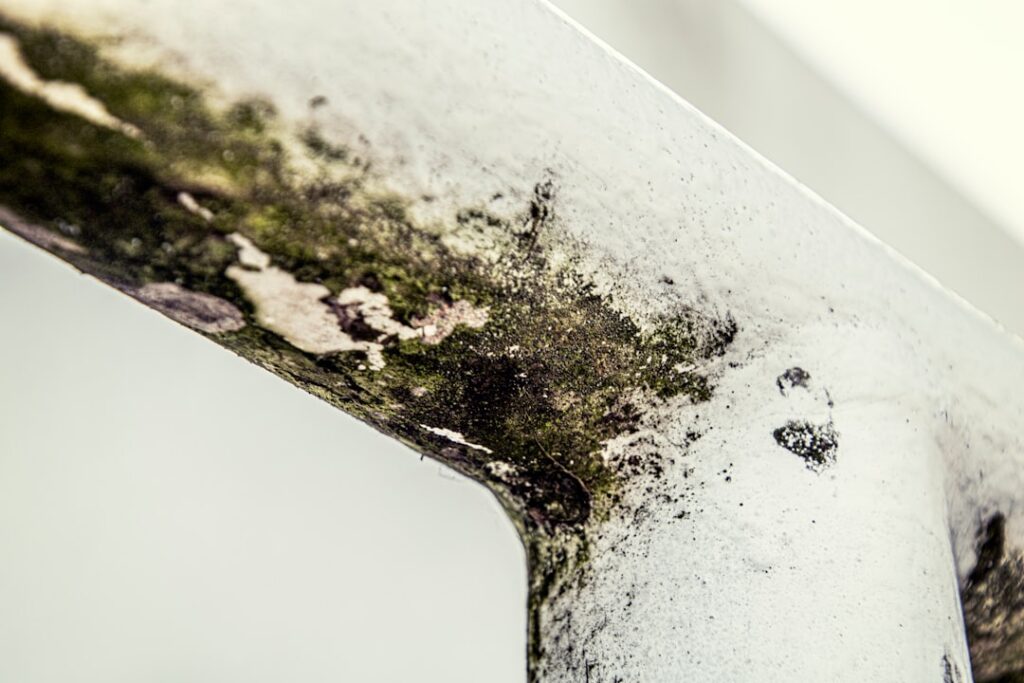
The black or dark gray growth on shower grout and silicone is one of the most common mold concerns homeowners ask about, and the answer to “is black shower mold dangerous” is more nuanced than the typical search result implies. Most shower mold is not Stachybotrys; it is usually Cladosporium, Aspergillus niger, or Alternaria — species that produce allergic and irritant responses in sensitized people but rarely the dramatic narratives associated with toxic black mold. This article summarizes EPA, CDC, and NIEHS guidance for homeowners on bathroom and shower mold. It is not medical advice. Anyone with symptoms believed to be related to mold should consult a physician.
Is this mold, asbestos, or water damage? Get a free instant screen
Upload a clear photo of the suspect area. You'll get an instant AI screening opinion and what to do next. This is screening guidance, not a professional determination.
Screening guidance only. AI can be wrong. Confirm asbestos, mold type, or lead with lab testing or a licensed professional before acting.
Is Black Shower Mold Dangerous: The Calibrated Answer
For healthy adults, a small patch of dark shower mold on grout or silicone is typically a cleaning task, not a medical emergency. The bathroom environment supports common indoor molds that prefer warm, frequently wetted surfaces. Cladosporium is the most common identification on dark shower-mold samples sent to mold laboratories; Aspergillus niger and Alternaria run second. Stachybotrys chartarum, the species most commonly meant by lay use of “toxic black mold,” needs chronically saturated cellulose substrates and rarely establishes on glazed tile or non-paper surfaces.
The risk profile changes when occupants are immunocompromised, severely asthmatic, or include infants and elderly residents. For those households, even small bathroom mold should be addressed promptly, and a physician should be informed if any household member reports symptoms tied to bathroom use. The CDC’s mold fact sheets and NIH-indexed literature support both positions: low concern for healthy adults with a small bathroom colony, elevated concern for vulnerable household members.
What Is Actually Growing on Your Shower Grout
Lab analysis of bathroom-mold samples consistently shows a few common species rather than the rare ones featured in news coverage.
Cladosporium
The most common bathroom mold. Produces dark olive-green to black colonies on warm, intermittently wet surfaces. Allergenic to sensitized people. Does not require chronic saturation — it tolerates the dry-wet cycle of daily shower use better than many other species.
Aspergillus niger
Forms black mat-like growth on grout and silicone caulk, often confused with Stachybotrys at a glance. Aspergillus species are allergenic and can cause clinical infection in severely immunocompromised patients, but residential bathroom exposure for healthy adults is not generally a documented mortality concern.
Alternaria
Dark gray to brown to black colonies. Common in damp bathrooms with intermittent ventilation. A well-documented allergen with strong clinical evidence for triggering and worsening allergic asthma.
Pink Mildew (Not Actually Mold)
The pink film often seen in shower corners is usually Serratia marcescens — a bacterium, not a mold. It is a different organism with different cleanup considerations but shares the moisture-driven cause.
When Stachybotrys Might Be Involved
Stachybotrys can appear behind shower walls when chronic leaks have saturated drywall paper for weeks or months. That is a different problem from grout-line growth — it involves hidden moisture in the wall cavity rather than surface growth on tile.
Cleaning Thresholds for Surface Shower Mold
EPA guidance organizes mold response by visible scale and surface type. Bathroom-mold cleanup typically falls into the DIY category when caught early.
Small Patches on Glazed Tile and Sealed Grout
Detergent and water with mechanical scrubbing remove most surface bathroom mold from non-porous and sealed surfaces. Wear an N95 respirator, gloves, and eye protection — not because residential bathroom mold is acutely hazardous in small quantities, but because mechanical agitation aerosolizes spores during cleaning. Dry the area fully after cleaning.
Discolored or Damaged Silicone Caulk
Once mold has penetrated silicone caulk, surface cleaning rarely produces lasting results. The right path is removal and replacement: scrape out the old caulk, clean and dry the substrate fully, and apply fresh mildew-resistant silicone. Annual caulk inspection is the easiest preventive measure for any bathroom over five years old.
Penetrated Grout
Old grout that has not been sealed in years often shows mold deep enough that surface cleaning fails. Regrouting affected areas costs more in labor but produces a clean, sealable surface. Annual grout sealing prevents the deep penetration that requires regrouting.
When DIY Fails or Recurs
If the same bathroom area regrows within weeks after thorough cleaning, the underlying issue is moisture management — usually inadequate exhaust ventilation, missing fan use, or hidden moisture from a fixture leak. Address the moisture problem before the next round of cleaning.
Bathroom Ventilation: The Single Best Prevention Lever
Bathroom mold prevention is mostly about ventilation. EPA recommends running exhaust fans during and after every shower, with continued operation 15 to 30 minutes after the shower ends to evacuate residual humidity. Three common ventilation failures drive most repeat bathroom-mold problems.
Inadequate Fan CFM
Builder-grade bathroom fans rated at 50 CFM are often undersized for typical American bathrooms. Industry guidance suggests roughly 1 CFM per square foot of bathroom area, with a minimum of 80 CFM for small bathrooms and higher for large ones. Replacing an underperforming fan is typically a $150 to $400 project including installation.
Fan Not Used
The best fan does nothing if occupants do not turn it on. Timer switches that automatically run the fan for 20 to 30 minutes after a shower solve the user-compliance problem cheaply. Humidity-sensing switches activate the fan when relative humidity exceeds a setpoint.
Duct Issues
Bathroom fans must vent to the exterior, not into attic space. Discharging humid bathroom air into the attic seeds attic-sheathing mold and damages roof structure. Verify that the fan duct runs to a soffit, gable, or roof penetration with proper backdraft damper.
When Bathroom Mold Indicates a Bigger Problem
Not all bathroom mold is grout-surface mold. Three patterns suggest something larger.
Mold on Wall Paint Outside the Shower
Dark spotting on bathroom walls outside the immediate shower area usually points to insufficient ventilation and ongoing humidity loads, not localized splash exposure. Replacing the fan and managing humidity typically solves it.
Mold on the Ceiling
Bathroom ceiling mold may be ventilation-driven or may indicate a roof leak above. A moisture meter on the ceiling surface and a check of attic conditions above the bathroom narrow the cause.
Mold Behind the Shower Wall
Cracked tile, failed caulk, or shower-pan leaks can let water into the wall cavity behind the shower. Hidden growth here is a different problem requiring wall opening, contaminated material removal, and proper rebuild. This is professional remediation territory. The mold inspection hub covers wall-cavity sampling and remediation.
Mold in the Bathroom Subfloor
Long-term shower-pan or toilet-base leaks saturate subfloor wood under bathroom flooring. The visible signal is sometimes soft spots, sometimes nothing visible at all until renovation reveals the damage. Annual visual inspection of the bathroom flooring perimeter catches some of these early.
Front Range Bathroom Considerations
Colorado’s dry climate works in homeowners’ favor for bathroom mold prevention. Indoor relative humidity often sits below 30 percent during winter, which suppresses many mold species. Bathroom mold along the Front Range usually comes down to localized shower humidity, ventilation failures, or fixture leaks rather than ambient indoor humidity problems.
Newer production homes in Denver, Aurora, Lakewood, and the Boulder corridor often have undersized bathroom fans relative to the bathroom size. Replacing them is a low-cost retrofit with lasting benefit. Older homes — Denver bungalows, mid-century Englewood and Wheat Ridge homes — sometimes have no exhaust fan at all and rely on operable windows that do not get used in winter. Adding ventilation is the highest-leverage retrofit for bathroom-mold prevention.
The DIY Cleanup Sequence
For typical surface bathroom mold caught early, the cleanup is straightforward.
Step 1: Stop the Moisture Source
Check for fixture leaks, failed caulk, cracked tile, and ventilation failures. Address them first.
Step 2: Gear Up
N95 respirator, nitrile gloves, eye protection, old clothes. Ventilate the bathroom — open a window, run the fan.
Step 3: Clean With Detergent and Water
EPA’s recommendation for non-porous surfaces. Mechanical scrubbing removes the colony. Bleach is not the EPA’s first choice but is acceptable on non-porous surfaces if grout is already discolored beyond cleaning. Never mix bleach with ammonia-based cleaners.
Step 4: Dry Fully
Wipe down, run the fan, leave the shower door open. Residual moisture seeds the next colony within days.
Step 5: Reseal and Replace
Reseal grout annually. Replace caulk every two to three years or when it discolors. The mildew versus mold identification guide helps distinguish the two for cleanup purposes.
Annual Bathroom Maintenance That Prevents Shower Mold
A short annual maintenance routine prevents most shower mold problems. Inspect grout for cracking or wear, regrout as needed. Reseal grout with a penetrating sealer once each year. Remove discolored or split silicone caulk and replace with mildew-resistant silicone — clean and fully dry the substrate before applying new caulk. Test the bathroom fan with a tissue at the grille during hot-water operation; replace the fan if it fails to pull air through. Verify the fan exhausts to the exterior, not into attic space. Check the bath fan duct for any disconnected sections or kinks that reduce airflow. Clean the fan grille and motor housing annually — dust accumulation reduces performance significantly.
Bathroom Fan Replacement: A High-Leverage Upgrade
For Front Range homes with builder-grade 50 CFM fans in bathrooms over 40 square feet, fan upgrade is one of the most cost-effective mold-prevention retrofits available. Modern bathroom fans rated at 80 to 110 CFM, with low sound ratings (under 1.0 sone) and humidity-sensing automatic operation, run $80 to $250 in materials with another $100 to $300 in installation labor. The improvement in humidity management is significant and lasting. For bathrooms over 100 square feet, two fans or a single higher-CFM unit may be appropriate. Verify proper duct routing during installation — the fan body alone does nothing if the duct is undersized, kinked, or terminates in the attic.
When to Call a Professional
Call a credentialed mold inspector or remediation contractor when bathroom mold extends beyond the immediate shower area, when growth recurs quickly after thorough cleaning, when hidden growth is suspected behind walls or under flooring, when household members fall into vulnerable groups, or when a fixture leak has been ongoing. A qualified inspector with a moisture meter and infrared camera can find hidden wall-cavity moisture before any demolition begins.
References
- Brief Guide to Mold, Moisture, and Your Home — U.S. Environmental Protection Agency
- About Mold — Centers for Disease Control and Prevention
- Mold Health Topics — National Institute of Environmental Health Sciences
- Mold and Dampness — American Lung Association
Front Range homeowners with bathroom mold that keeps coming back or appears to extend beyond surface grout can get in touch through our contact page for a connection to a vetted local inspector.