Indoor Air Quality Monitor: What Homeowners Should Know
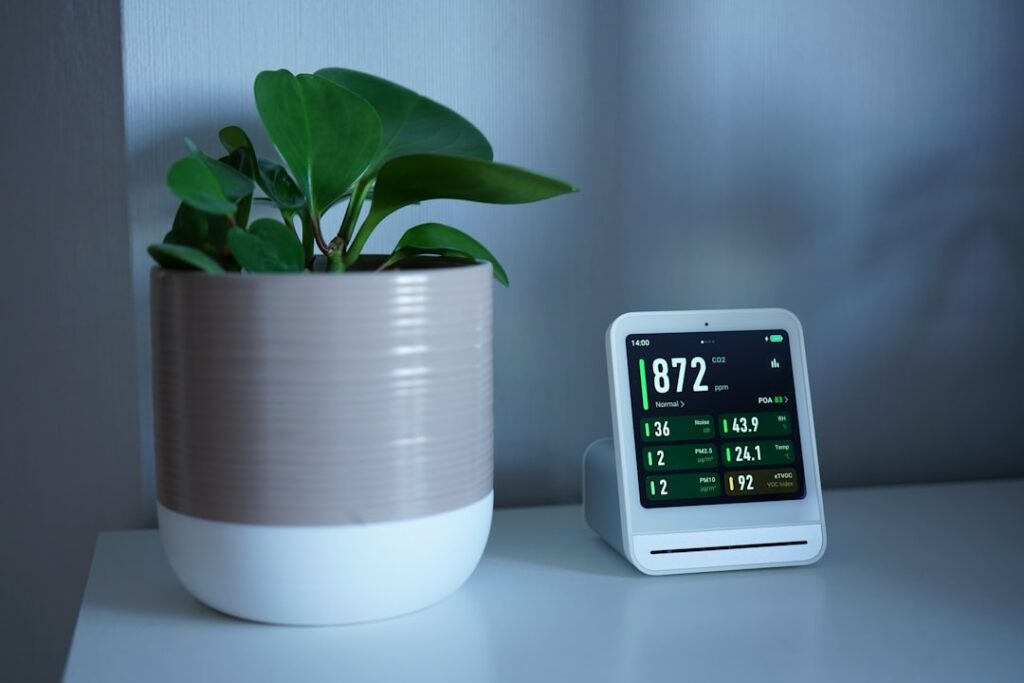
Indoor air can carry more pollutants than the air outside, and most of them are invisible. An indoor air quality monitor puts numbers on what you cannot see — particulates, carbon dioxide, humidity, and sometimes volatile organic compounds — so you can spot problems and respond. These devices have moved from professional tools to affordable consumer gadgets, but not all measurements are equally reliable. This guide explains what an indoor air quality monitor measures, where consumer units shine, where they fall short, and how to choose one that fits your needs.
Part of our Home Inspection Tools guide — start there for the full picture →
What does an indoor air quality monitor measure?
Most consumer monitors track a combination of metrics. Particulate matter (PM2.5 and PM10) covers fine and coarse particles from dust, smoke, and cooking. Carbon dioxide (CO2) indicates how well a space is ventilated, since it rises as people breathe in a closed room. Volatile organic compounds (VOCs) are gases off-gassed by paints, cleaners, and furnishings. Temperature and humidity round out the picture, since both affect comfort and the risk of mold growth. Higher-end and professional units may add formaldehyde, radon, or carbon monoxide sensing.
Reading these together tells a story. A spike in PM2.5 during cooking, a climbing CO2 level in a closed bedroom overnight, or persistently high humidity all point to specific actions — ventilate, filter, or dehumidify. A monitor is most useful as a trend tracker, not a single-number verdict. It pairs naturally with a dedicated home air quality monitor overview for buyers comparing options.
Particulate matter sensing
PM2.5 — particles 2.5 microns and smaller — is the metric most consumer monitors emphasize, because fine particles penetrate deep into the lungs and are a recognized health concern. Indoor sources include cooking, candles, fireplaces, and infiltration of outdoor wildfire smoke, which is a real seasonal issue on the Colorado Front Range. A monitor that tracks PM2.5 helps you see when to run an air purifier or improve ventilation. Consumer optical PM sensors are generally good at showing trends and relative changes, though their absolute accuracy is lower than reference-grade instruments.
Carbon dioxide and ventilation
CO2 is one of the most useful and underrated metrics. It is not a direct pollutant at indoor levels, but it is an excellent proxy for ventilation. When CO2 climbs in an occupied, closed room, fresh-air exchange is poor — and that same stale air accumulates other pollutants too. Readings rising well above outdoor background (roughly 400 parts per million) in a bedroom or office signal a need for more ventilation. Look for monitors with a true NDIR CO2 sensor; some cheaper units estimate CO2 from VOC readings, which is far less reliable.
VOCs, humidity, and other metrics
Volatile organic compounds
VOC sensors detect a broad mix of gases rather than identifying specific chemicals. They are good for spotting events — new furniture off-gassing, cleaning products, a paint project — but they report a general index, not a precise concentration of any one compound. Treat VOC readings as a relative alert.
Humidity
Humidity tracking matters for mold prevention. Keeping indoor relative humidity in the 30 to 50 percent range discourages mold, and a monitor flags when a room drifts high. For dedicated humidity tracking, a standalone digital hygrometer can be more precise, though many air monitors include a capable humidity sensor.
What an air quality monitor cannot do
Consumer monitors have important limits. They are not certified safety devices. A monitor’s VOC or general “air quality” score should never substitute for a dedicated, code-compliant carbon monoxide alarm, which is a life-safety device with specific standards. Most consumer units do not measure radon, which requires a dedicated radon test. Sensor accuracy drifts over time, and low-cost sensors report trends better than precise absolute values. A monitor tells you when something changed and prompts investigation; it does not replace professional testing for hazards like radon, mold extent, or combustion gases.
Choosing an indoor air quality monitor
Match the device to your concerns. If wildfire smoke and cooking particulates are the priority, focus on a quality PM2.5 sensor. If stuffy rooms and ventilation are the issue, insist on a true NDIR CO2 sensor. If mold and comfort drive the decision, humidity accuracy matters. Consider whether you want data logging and app history to spot trends, and whether the unit needs calibration. Build quality and sensor type matter more than the length of the metric list — a monitor with three accurate sensors beats one with eight unreliable ones. Buyers weighing related devices can compare an indoor air quality monitor against single-purpose tools.
Consumer monitors versus professional instruments
The gap between a consumer indoor air quality monitor and a professional instrument comes down to sensor quality, calibration, and certification. Reference-grade instruments used by industrial hygienists and laboratories are calibrated to traceable standards and report accurate absolute concentrations. Consumer optical and electrochemical sensors are tuned for cost and convenience; they excel at showing relative change and trends but drift over time and carry wider error margins. A consumer unit that shows PM2.5 doubling during cooking is reliable for that comparison, even if the exact microgram figure is approximate.
This is not a reason to dismiss consumer monitors, only to use them for what they do well: continuous trend tracking and early warning. When a precise, defensible measurement is needed — for a health investigation, a real-estate matter, or a suspected hazard — a professional with calibrated equipment is the right call. The two roles are complementary rather than competing.
Acting on the data
A monitor is only worthwhile if its readings drive action. Rising CO2 in an occupied room calls for more ventilation — opening a window, running an HVAC fan, or improving fresh-air exchange. A PM2.5 spike during cooking points to using the range hood and running an air purifier, and during wildfire-smoke events it signals closing up the house and filtering. A VOC alert after a paint or cleaning project means ventilating until levels settle. Persistently high humidity calls for dehumidification and a check for moisture sources, since it raises mold risk.
The most useful habit is reviewing trends over days and weeks rather than reacting to every momentary blip. Patterns reveal the real issues: a bedroom that runs high on CO2 every night, a basement that stays humid all spring, a kitchen that spikes particulates without the hood on. Those patterns translate directly into ventilation, filtration, and humidity-control decisions that improve the air people actually breathe.
How monitors fit into home inspection
Air quality monitors complement, rather than replace, the diagnostic tools a home inspector uses. An inspector relies on calibrated instruments and may use combustion analyzers, moisture meters, and dedicated CO and radon equipment. A homeowner’s monitor is a continuous early-warning system between professional assessments — it can flag a humidity or particulate problem that justifies a closer look. The broader role of measurement gear is covered in our home inspection tools buyer’s guide.
Wildfire smoke and seasonal air quality
For Colorado Front Range households, wildfire smoke has become a recurring air-quality concern that makes an indoor air quality monitor especially useful. During smoke events, outdoor PM2.5 can climb to unhealthy levels and infiltrate homes through gaps, open windows, and ventilation. A monitor with a reliable particulate sensor shows when indoor levels are rising and confirms whether closing up the house and running air filtration is keeping the indoor air cleaner than outside.
The data turns vague worry into clear action: when indoor PM2.5 climbs, close windows, run a portable air purifier sized for the room, set the HVAC fan to recirculate with a good filter, and avoid adding indoor particulate sources like candles or frying. When the smoke clears and outdoor air improves, ventilating flushes accumulated indoor pollutants. A monitor makes these decisions evidence-based rather than guesswork during smoke season.
Connectivity, apps, and data logging
Many modern monitors connect to a smartphone app that logs readings over time, sends alerts when a metric crosses a threshold, and charts trends. This logging is where a lot of the value lives, because the patterns over days and weeks reveal problems a single glance misses — a bedroom that climbs in CO2 every night, a basement that stays humid through spring, a kitchen that spikes particulates at dinnertime. Alerts can prompt timely ventilation or filtration.
That said, connectivity adds considerations. Some units depend on a cloud service and an internet connection, which raises questions about data privacy and what happens if the service changes. A monitor with a clear on-device display and local logging offers more independence. Weigh whether app features genuinely help your situation or simply add complexity, and prioritize sensor accuracy over a long feature list, since unreliable data logged beautifully is still unreliable data.
Getting reliable readings
Placement and maintenance shape accuracy. Put the monitor at breathing height, away from windows, vents, and direct sources like the stove, and let it stabilize before trusting a reading. Avoid placing it in a corner with stagnant air. Follow the manufacturer’s guidance on calibration and sensor lifespan, since optical and electrochemical sensors degrade and some need periodic replacement. Track trends over days rather than reacting to a single spike, and use the data to guide ventilation, filtration, and humidity control.
Common metrics and healthy ranges
Knowing roughly what a healthy reading looks like helps a homeowner act on the numbers. For carbon dioxide, outdoor air sits near 400 parts per million, and indoor readings climbing well past that in an occupied room signal poor ventilation. For relative humidity, the 30 to 50 percent range balances comfort and mold prevention. Particulate matter is best kept as low as practical, since fine particles have no safe threshold; a monitor showing PM2.5 climbing during cooking or a smoke event is a prompt to ventilate or filter. VOC indices are relative, so the useful signal is a sharp rise after a paint or cleaning event rather than an absolute number.
These are general references, not safety limits, and a consumer monitor reports them with some margin of error. The value lies in watching how they move — a metric trending the wrong way over days is more meaningful than a single reading. Using the ranges as guideposts, a homeowner can translate the display into concrete steps: ventilate when CO2 rises, dehumidify when humidity climbs, and filter when particulates spike.
Is a monitor worth it for your home?
Whether an indoor air quality monitor earns its place depends on the household’s concerns. For homes in wildfire-prone areas, households with asthma or allergies, tightly sealed energy-efficient homes that can trap CO2, or anyone troubled by stuffiness, dampness, or cooking smoke, a monitor provides actionable feedback that justifies the cost. For a home with no particular concerns and good natural ventilation, the value is more modest, though the educational insight into one’s own air is still useful.
The key is to treat a monitor as a tool that prompts behavior, not a gadget that fixes anything on its own. Its readings only help if they lead to ventilating, filtering, dehumidifying, or investigating further. Paired with that mindset, even a modestly accurate consumer unit improves how a household manages its air. Chosen for sensor quality over feature count, and used to track trends rather than chase single readings, a monitor becomes a genuinely practical addition to a home.
References
- ENERGY STAR: Seal and Insulate — U.S. Environmental Protection Agency (ENERGY STAR)
- Indoor Air Quality Inspection Guidance — International Association of Certified Home Inspectors
- Indoor Air Quality Guide — ASHRAE
Frequently asked questions
What does an indoor air quality monitor measure?
Most consumer monitors track particulate matter (PM2.5 and PM10), carbon dioxide, volatile organic compounds, temperature, and humidity. Higher-end units may add formaldehyde or other sensors. Together these metrics flag ventilation, particulate, and moisture problems.
Can an air quality monitor replace a carbon monoxide alarm?
No. A consumer air quality monitor is not a certified life-safety device. You still need a dedicated, code-compliant carbon monoxide alarm. The monitor's general air-quality score should never be relied on for CO safety.
Do air quality monitors detect radon or mold?
Most do not measure radon, which requires a dedicated radon test, and none identify mold species. A monitor can flag high humidity that favors mold and prompt a closer look, but professional testing is needed for radon and mold extent.
How do I choose an indoor air quality monitor?
Match it to your concern: a quality PM2.5 sensor for smoke and cooking, a true NDIR CO2 sensor for ventilation, and accurate humidity sensing for mold and comfort. A few reliable sensors beat a long list of unreliable ones.
Indoor air-quality monitors
A continuous IAQ monitor tracks particulates, CO2, VOCs, humidity — and some add radon — so you can see how ventilation and filtration changes affect the air.
| Product | Why | Buy |
|---|---|---|
 Airthings View Plus Airthings View Plus | Radon + PM + CO2 + VOC + humidity. | Amazon — $329.99 |
 Temtop M10 IAQ Monitor Temtop M10 IAQ Monitor | Budget PM2.5 + HCHO + TVOC. | Amazon — $95.00 |