How to Check for Mold in Walls: A Plain-Language Guide
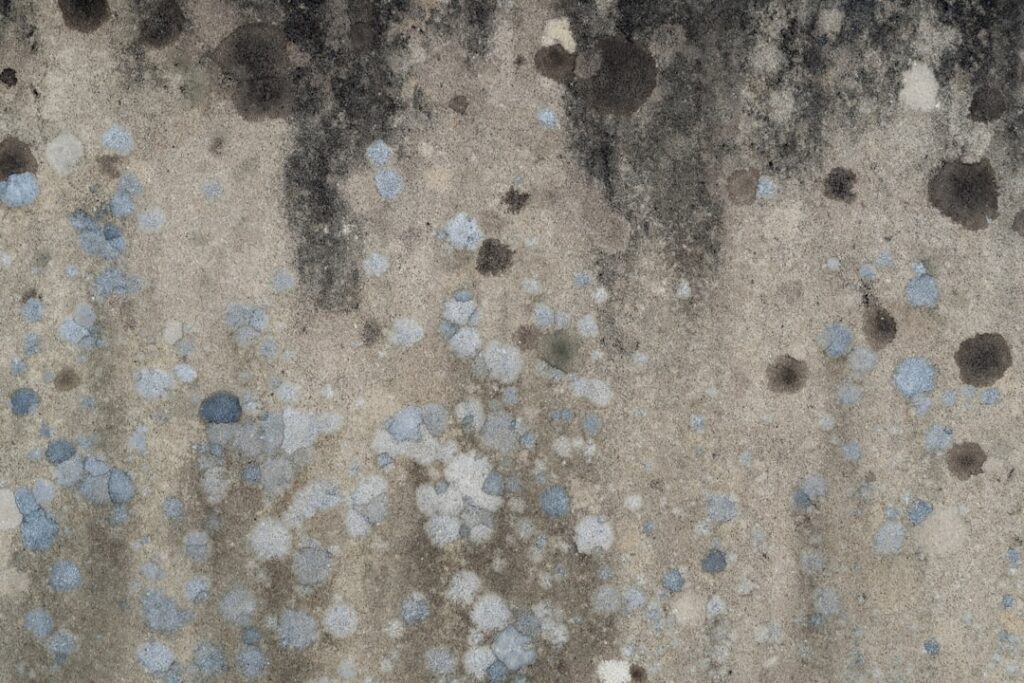
Figuring out how to check for mold in walls is a common homeowner question that sits at the intersection of DIY observation and professional testing. This guide covers what an owner can do alone, the moisture meters and inspection mirrors worth owning, the smell and visual cues that mean it’s time to open the wall, and the threshold where calling a Front Range professional makes sense. This information summarizes EPA, CDC, and InterNACHI guidance current as of 2026 — consult a certified professional for testing decisions tied to a real-estate transaction or a documented health complaint.
Part of our Mold Around the Home guide — start there for the full picture →
Is this mold, asbestos, or water damage? Get a free instant screen
Upload a clear photo of the suspect area. You'll get an instant AI screening opinion and what to do next. This is screening guidance, not a professional determination.
Screening guidance only. AI can be wrong. Confirm asbestos, mold type, or lead with lab testing or a licensed professional before acting.
What signs suggest hidden mold inside a wall?
Hidden wall mold rarely announces itself with visible growth on the painted surface. The earliest reliable cue is a persistent musty odor concentrated in one part of a room — especially behind furniture, in closets sharing a plumbing wall, or near baseboards. The smell intensifies on warm humid days and after running heat in winter. Cold spots felt by hand on an interior wall during winter, or warm damp spots in summer, indicate either insulation gaps or moisture, and moisture is the higher-stakes interpretation.
Visual cues on the painted side include yellow-brown rings, dark spots bleeding through paint, paint that bubbles or peels in a pattern matching plumbing runs behind the drywall, and baseboards that show staining at the joint with the floor. Crown moulding and ceiling cornices that show discoloration below an upstairs bathroom signal a probable supply or drain leak. Front Range homeowners can review the broader inspection workflow at the InspectandTest mold inspection hub.
DIY moisture-meter use for homeowners
A consumer-grade pinless moisture meter (General Tools, Klein Tools, Stihl, or Calculated Industries make versions in the $40 to $90 range) lets a homeowner scan drywall, plaster, and finished wood floors without leaving marks. Pinless meters use electromagnetic frequency and read relative moisture content through approximately three quarters of an inch of material. They are well suited to scanning the area below sinks, behind toilets, around water-heater closets, and along the bottom edge of any wall that backs to a kitchen or bathroom.
Pin meters drive small electrodes into the material and read electrical resistance to deliver a moisture-content percentage. Pin meters mark the surface with two small holes, so most homeowners save them for unfinished spaces like crawlspaces, basements, attics, or framing exposed during renovation. Readings above 16 to 20 percent on drywall and above 28 to 30 percent on framing are common action thresholds, though no single number triggers a federal-level concern.
Using the meter in practice
Sweep the meter slowly across the wall in a grid pattern, starting at the top of any suspect area and working downward. The meter often reads higher near baseboards, behind cabinets, and along plumbing chases. Compare readings to a known dry interior wall in another part of the house — the differential matters more than the absolute number. Most pinless meters use a 1-to-100 relative scale rather than a calibrated moisture-content percentage, so they signal “wet versus dry” rather than producing scientifically defensible numbers.
Best Mold and Mildew Remover: our top 3 picks
| Product | Best for | Key features | Price | Buy |
|---|---|---|---|---|
| RMR-86 Instant Stain Remover | Fast mildew stain removal |
| — | Buy now →Check current price |
| Concrobium Mold Control | Mold control and prevention |
| — | Buy now →Check current price |
| 30 SECONDS Pro | Indoor and outdoor stains |
| $17.28as of Nov 26, 2026 5:10 am GMT+0000 | Buy now →Check current price |


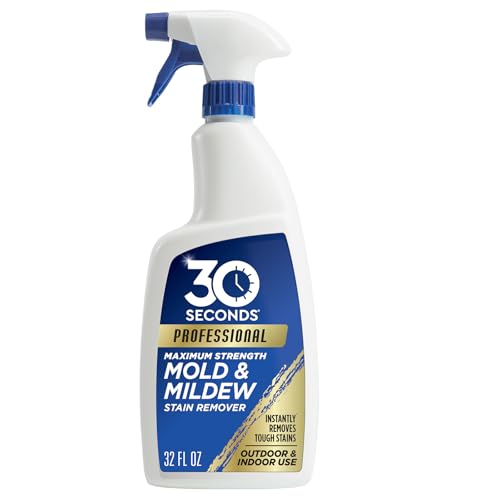
Prices are Amazon’s listed prices as of the time shown and change often; check Amazon for today’s price. As an Amazon Associate we earn from qualifying purchases.
Where wall moisture concentrates in Front Range homes
Colorado’s climate produces moisture patterns different from humid-coast states but no less consequential. Front Range homes face episodic moisture from ice damming, roof-snow meltwater, sprinkler overspray, basement window-well infiltration, and supply-line condensation during humid summer afternoons. Slab leaks under concrete floors are less common here than in older Utah or Texas housing, but post-tensioned slabs in newer Douglas County construction do develop pinhole leaks over decades.
The highest-probability moisture zones in Front Range homes are: basement walls below grade where exterior dampproofing has aged, plumbing chases between floors in two-story homes, the wall behind washing-machine connections, the wall beneath an upstairs bathroom, the wall around any window that has weathered without replacement of caulking, and the ceiling immediately below any flat or low-slope roof section. Homeowners benefit from systematic scanning of all six zones every couple of years.
Smell tests, borescopes, and inspection mirrors
Smell remains the most sensitive detector for hidden wall mold. A musty earthy odor concentrated in one location strongly suggests biological growth on a damp surface. Sniff at baseboard gaps, electrical outlets (turn off the power first), and air-supply registers. Outlets often leak air from inside wall cavities, carrying spore-rich air into the room when the cavity is contaminated.
For homeowners who want to confirm before opening drywall, a $30 to $60 USB borescope or inspection camera passes through a small hole drilled at the bottom of a wall (always check for electrical wiring with a stud finder first, and never drill into a known plumbing chase blindly). The camera reveals what is inside the cavity: dry framing, wet framing, visible growth, or saturated insulation. The hole patches with spackle and a small touch-up of paint.
When to open the wall versus when to call a professional
Three scenarios justify opening drywall as a DIY step: a small obvious wet area below a known plumbing fixture where the source is already identified and accessible, a small isolated section near a window where rain intrusion is suspected, or a section of finished basement wall where exterior dampproofing failure is the obvious cause. In each case, the homeowner uses an oscillating saw or utility knife to remove a small section of drywall, photographs the cavity, and assesses scope.
Three scenarios call for a professional: visible growth on more than ten square feet of drywall (the EPA threshold for considering professional cleanup), wall cavities serving a forced-air return chase or other HVAC pathway, and any situation where occupants have respiratory complaints. Front Range homeowners interested in the professional workflow can read the how do inspectors test for mold explainer on InspectandTest for full methodology details.
What to do once you confirm moisture or mold
The sequence is non-negotiable: fix the water source first, dry the cavity completely, remove and replace contaminated porous materials, HEPA-clean non-porous surfaces and remaining structure, then reinstall finishes. Skipping the source repair guarantees recurrence. EPA, CDC, and IICRC S520 all reinforce this sequence. Small jobs (under ten square feet of affected drywall, no HVAC involvement, no occupant complaints) can often be handled by an experienced DIY homeowner with proper PPE.
Personal protective equipment for any drywall removal includes an N95 respirator at minimum (P100 for larger jobs), nitrile gloves, eye protection, and disposable coveralls. Seal off the work area with plastic sheeting and painter’s tape. Bag contaminated drywall in heavy-mil construction trash bags and seal before carrying it through clean spaces. EPA recommends running a HEPA air scrubber during the work if affected area exceeds about ten square feet.
Front Range climate triggers that drive wall moisture
Three seasonal mechanisms account for most hidden wall moisture in Front Range homes, and recognizing them shortens the diagnostic loop considerably. Winter stack effect drives heated indoor air upward through stud cavities, rim joists, and any unsealed penetration into the attic. When interior humidity climbs above 35 to 40 percent — common in homes running humidifiers, cooking with gas, or hosting more occupants than the envelope was designed for — the warm air condenses on the cold exterior side of insulation, on rim-joist sheathing, and on cold corners of north-facing exterior walls. Homeowners scanning with a pinless meter in February often find elevated readings on north-facing wall sections at the rim-joist level and at upper-corner intersections of exterior walls and ceilings.
Evaporative coolers (swamp coolers) on Denver, Aurora, Westminster, and Arvada homes deliver a second seasonal pulse from May through September. Swamp coolers add 10 to 20 points of relative humidity to interior air while running, and the moisture concentrates wherever airflow stalls — behind beds against exterior walls, in closets, behind hanging tapestries, and at floor level in basements where the cooled air settles. A homeowner scanning walls in late August often finds higher pinless readings near the floor in basement rooms even when no leak exists. The fix is operational rather than structural: run the swamp cooler with a window cracked, run a dehumidifier during muggy stretches, and avoid stacking storage against exterior walls.
Spring snowmelt and ice-dam meltwater are the third regional trigger. Snow accumulation against the foundation slowly saturates exterior dampproofing while temperatures hover around freezing. Ice dams on north-facing eaves trap meltwater behind shingles, which then back-fills along underlayment and into the wall cavity at the top plate. Front Range homeowners often see staining appear on interior ceilings two to three weeks after a major storm event, by which time the wall cavity already contains active moisture. A pinless meter scan at the top plate of any wall directly below a known ice-dam eave is worth doing every March.
What indicates that a wall opening is warranted versus when non-invasive tools are enough comes down to three factors. Non-invasive tools (pinless meter, borescope through a small drilled hole, infrared imaging) are sufficient when readings are mildly elevated, the source is identified and already repaired, no odor is present, and occupants have no symptoms. A wall opening is warranted when the meter reads sustained elevation across a contiguous area, when persistent musty odor concentrates in one location, when occupants report respiratory complaints, when the moisture source remains unclear after the non-invasive workup, or when the homeowner needs documentation for an insurance claim or real-estate transaction. Front Range readers can review the broader sampling methodology at the how do inspectors test for mold guide for the professional side of the workflow.
More Questions About Hidden Wall Mold
Can a thermal imaging camera find mold inside walls?
A thermal imaging camera cannot see mold directly, but it can show cooler damp areas in a wall where mold is likely, which makes it a useful screening tool.
Evaporating moisture cools the wall surface, so wet sections usually appear as darker, irregular patches on the screen. Missing insulation and air leaks can look similar, so every suspicious spot should be checked with a moisture meter before drawing conclusions. Phone-attachment thermal cameras work for homeowners, while inspectors use higher-resolution units and know how to interpret the patterns.
Does mold behind walls make you sick?
Mold behind walls can affect health when spores or odors reach the living space, most often causing allergy symptoms, asthma flare-ups, or irritation in sensitive people.
How much reaches the room depends on air leakage through outlets, gaps, and HVAC returns. Some occupants notice nothing, while infants, older adults, and people with lung conditions or weakened immune systems are more vulnerable. Health questions belong with a doctor, while the home side is handled by finding the moisture source and removing the affected materials.
How much drywall should be removed for mold in a wall?
Drywall is usually removed at least 12 to 24 inches beyond the edge of visible mold or wet material, so the cut reaches clean, dry board on every side.
After flooding, crews often make a flood cut about 2 feet above the water line, or higher if water wicked up farther. Wet insulation in the cavity comes out with the drywall. Anything larger than about 10 square feet, the EPA threshold for homeowner cleanup, is best handled by a professional using containment and HEPA filtration.
What is the most common cause of mold in walls?
The most common cause of mold in walls is a slow water leak, usually from supply or drain plumbing, a leaking window or door, or a roof or siding flashing failure.
Condensation is the second major cause: warm indoor air meeting cold wall surfaces in winter, or humid outdoor air hitting air-conditioned walls in summer. Basement walls also wick ground moisture. Knowing which source is involved matters more than the mold itself, because cleaning without fixing the water simply leads to regrowth in the same place.
References
- Mold Cleanup in Your Home — U.S. Environmental Protection Agency
- About Mold and Health — Centers for Disease Control and Prevention
- Mold Inspection Standards of Practice — InterNACHI
- Mold and Indoor Air Quality Guidance — Colorado Department of Public Health and Environment
- Mold and Dampness Indoor Air Guidance — American Lung Association
Frequently asked questions
Can I check inside a wall without cutting drywall?
Yes, partially. A pinless moisture meter scans through paint and drywall without leaving marks. A $30 to $60 USB borescope camera passes through a small drilled hole (smaller than a pencil) to inspect the cavity directly. Both tools let homeowners screen suspect areas before committing to opening the wall.
What moisture reading on drywall means I have a problem?
Pin meters reading above 16 to 20 percent on drywall flag concern. Pinless meters use a relative 1-to-100 scale, so compare suspect readings to a known dry interior wall elsewhere in the home. A significant differential matters more than the absolute number on consumer-grade pinless meters.
Is the musty smell behind my wall mold?
Persistent musty earthy odor concentrated in one area strongly correlates with biological growth on a damp surface. The odor itself does not confirm species, but it reliably indicates a moisture and growth condition that warrants investigation. EPA recommends treating odor as actionable evidence.
When should I call a professional instead of investigating myself?
Call a professional when visible growth exceeds about ten square feet, when wall cavities serve HVAC return chases, when occupants have respiratory complaints, or when the source of moisture is unclear. Real-estate transactions and insurance claims also call for professional documentation.
Can mold grow behind baseboards?
Yes, mold commonly grows behind baseboards because water from mopping, plumbing leaks, or flooding settles at the bottom of the wall. Swollen or separating baseboards, stained caulk lines, and a musty smell near the floor are the usual clues. Removing a short piece of trim lets you inspect the drywall directly.
Will paint stop mold inside a wall?
No, paint will not stop mold inside a wall. Painting over growth only hides it while the moisture keeps feeding mold behind or under the paint, and stains usually return. The wall needs to be opened, the leak fixed, affected material removed, and the area dried before any repainting.
Does homeowners insurance cover mold behind walls?
Homeowners insurance usually covers mold behind walls only when a sudden, covered event like a burst pipe caused it and the loss was reported promptly. Mold from slow leaks or condensation is typically excluded, and many policies cap mold coverage at a fixed sublimit.
Front Range homeowners ready to talk to a vetted local inspector about confirming hidden wall moisture can reach out through our contact page.