How Does Radon Get Into Homes? A Plain Guide
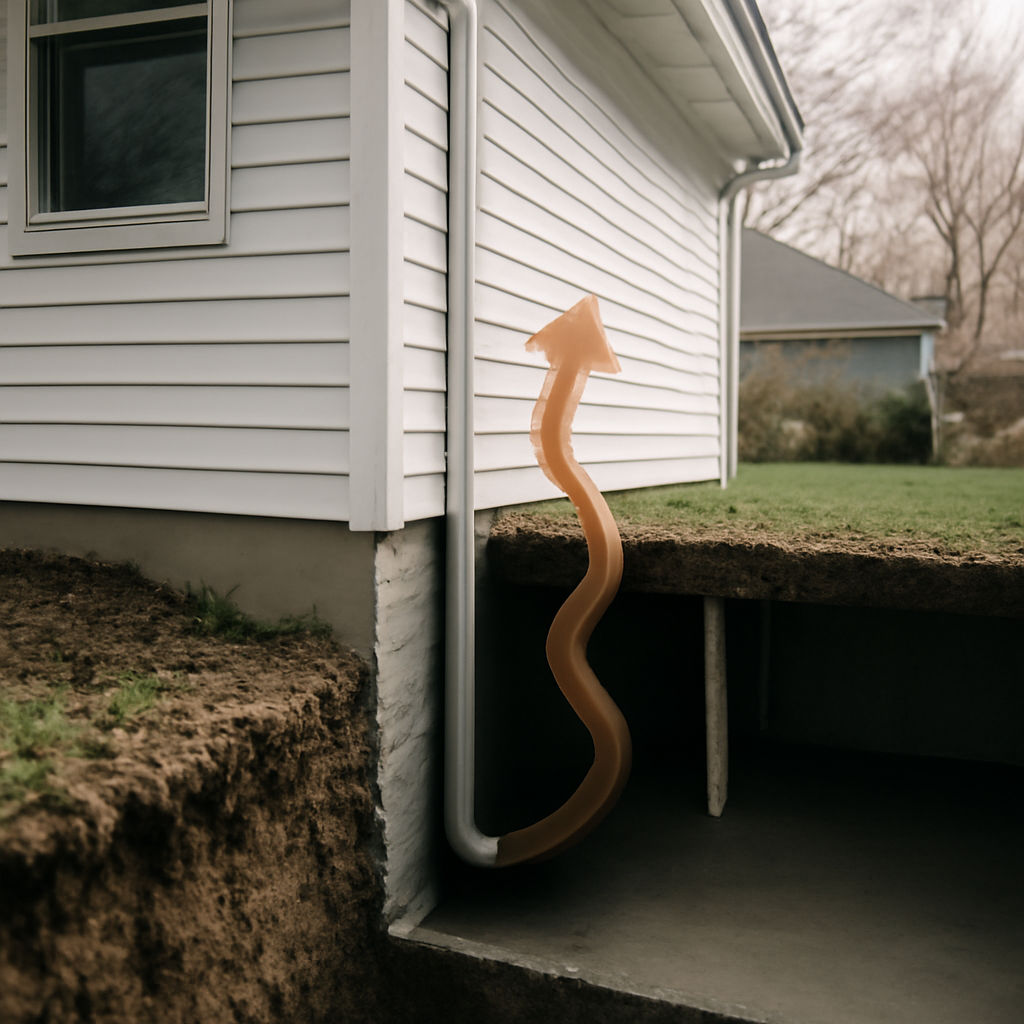
Understanding how radon gets into homes explains why a colorless, odorless gas from the ground can build up indoors to levels that pose a health risk. Radon forms naturally as uranium in soil and rock decays, then seeps upward and is drawn into houses through the foundation by differences in air pressure. This guide summarizes EPA and public-health guidance current as of 2026 on the entry pathways and what makes some homes accumulate more than others. It is informational, not medical advice; consult your physician about health concerns and a certified professional for testing and mitigation decisions.
Part of our Radon Levels guide — start there for the full picture →
How radon gets into homes
Radon enters a home primarily as a soil gas. It is produced underground by the radioactive decay of uranium, which is present in trace amounts in most soils and rocks. The gas migrates upward through pore spaces in soil and rock until it reaches the surface, and where a building sits, it finds its way through openings in the foundation into the lowest levels of the house.
The reason radon concentrates indoors rather than dispersing harmlessly is air pressure. A house is often at slightly lower air pressure than the soil beneath it, an effect driven by warm air rising, exhaust fans, and the stack effect in heated buildings. That pressure difference acts like a gentle vacuum, actively pulling soil gas, including radon, in through any available gap. The American Lung Association and EPA describe this soil-gas-and-pressure mechanism as the dominant pathway, and our overview of the radon house test explains how to measure the result indoors.
Where radon comes from in the first place
Before radon can enter a home, it has to form, and the source is the slow radioactive decay of uranium present in trace amounts throughout the earth’s crust. Uranium decays through a chain of elements, one of which is radium, and radium decays into radon. Because uranium is so widespread in soil and rock, radon is produced almost everywhere, though the amount varies with how much uranium the local geology contains.
What makes radon distinctive is that it is a gas, while the elements before it in the decay chain are solids locked in soil and rock. As a gas, radon can escape the mineral grains where it forms and migrate through the pore spaces and fractures of the soil toward the surface. Most of it disperses harmlessly into outdoor air, where it dilutes to negligible levels. The problem arises only when a building sits over the soil and provides both a pathway in and a pressure difference to pull it through, which is what turns a natural background gas into an indoor hazard.
The pressure difference that drives entry
The stack effect is central to understanding radon entry. As warm indoor air rises and escapes through the upper levels of a house, it creates negative pressure lower down, near the foundation. This depressurization draws replacement air from wherever it can, and a significant share comes from the soil through foundation openings, carrying radon with it. The effect is strongest in winter, when the indoor-outdoor temperature difference is greatest and homes are sealed.
Mechanical systems add to it. Exhaust fans, clothes dryers, range hoods, and combustion appliances that vent air outside all remove indoor air, lowering pressure further and increasing the pull on soil gas. This is why radon levels often read higher in colder months and can vary with how a home is operated, and why a single test is a snapshot of the conditions during the measurement rather than a fixed property of the house.
Common entry points in the foundation
Radon exploits the gaps every foundation has. The most common entry points include cracks in concrete slabs and foundation walls, the joint where the floor slab meets the wall, gaps around pipes and utility penetrations, sump pits and drainage systems open to the soil, and crawl space floors that are bare earth or covered only by a thin vapor barrier.
Construction joints, control joints, and the porous nature of concrete block walls also allow soil gas to pass. Even a tightly built home has enough small openings to admit radon when the pressure difference is pulling it in. A finished basement does not eliminate the pathways; it may simply hide them behind drywall while the slab and wall-floor joint continue to admit gas. Identifying these openings is part of designing an effective fix, as our guide on how radon mitigation systems work describes.
Why some homes have higher radon than others
Several factors determine how much radon a given home accumulates. The uranium content of the underlying soil and rock sets the supply, and it varies widely by region and even within a neighborhood. Soil permeability matters too: loose, gravelly, or fractured soils let gas move freely toward the house, while dense clay slows it, though clay can also channel gas along cracks.
The home itself shapes the result. Foundation type, slab-on-grade, basement, or crawl space, affects the contact area with soil and the number of entry points. The tightness of construction, the strength of the stack effect, and how the home is heated and ventilated all influence the pressure difference driving entry. This combination is why two adjacent homes on similar soil can test very differently, and why the EPA recommends testing every home rather than relying on a neighbor’s result or a regional map.
Water and building materials as minor pathways
Soil gas is by far the main route, but radon can enter through other paths in smaller amounts. Well water drawn from radon-bearing rock can release the gas indoors when the water is agitated, during showering, dishwashing, or laundry, though this typically contributes far less to indoor air levels than soil gas, except in specific high-radon-water situations. Public water supplies are usually less of a concern because radon dissipates during treatment and storage.
Some building materials made from radon-bearing stone or aggregate can emit small amounts of radon, but in most homes this is a negligible contributor compared with soil gas. For the vast majority of houses, addressing the soil-gas pathway through the foundation is what reduces indoor radon, which is why mitigation systems focus on the ground beneath the slab rather than on water or materials.
Does the type of home matter?
A persistent myth is that only old homes, or only homes with basements, have radon. Neither is true. Radon enters new and old homes alike, because the soil gas and pressure mechanism does not depend on a home’s age, and a tightly built modern home can actually trap radon more effectively than a drafty older one if no mitigation features are present. The EPA is clear that homes of all ages and construction types can have elevated radon.
Foundation type changes the entry points but not the fundamental risk. Basement homes have more below-grade surface area and entry points near the radon source. Slab-on-grade homes admit gas through the slab and the perimeter joint. Crawl space homes can draw radon from exposed earth beneath the floor. Even a home with no basement, sitting on a slab, can test high. This is why the recommendation to test applies to every home regardless of style, age, or whether it has a basement, and why a neighbor’s low result says nothing definitive about the house next door.
How weather and daily habits change levels
Radon entry is not constant, because the pressure difference that drives it shifts with weather and how a home is used. Cold weather strengthens the stack effect and tends to raise indoor radon, which is why winter readings often run higher than summer ones. Wind, barometric pressure changes, and even rain that saturates the soil and caps it can all nudge the rate at which soil gas enters.
Daily habits contribute too. Running exhaust fans, a clothes dryer, or a range hood removes indoor air and increases the suction on soil gas, while opening windows can temporarily dilute indoor radon. These fluctuations explain why a single short-term test is a snapshot rather than a fixed value, and why the EPA recommends confirming elevated results and considering a long-term test for the truest average. The variability is also a reason to retest periodically, since changes to a home or how it is operated can shift the balance, a point our guide on how often to test for radon addresses.
Front Range geology and radon entry
Colorado’s geology makes radon a widespread concern, and much of the Front Range, including Denver, Boulder, Douglas, and El Paso counties, falls into the EPA’s highest radon zone. The uranium-bearing soils and rock common to the region supply radon, and the cold winters that drive a strong stack effect pull it indoors efficiently through foundation openings during the heating season.
The prevalence of basements in Front Range homes adds to the picture, since a basement increases the foundation’s contact with soil and provides more entry points and surface area near the source. None of this means a particular home has a problem, only that the conditions favoring radon entry are common across the region. That is the practical reason testing is so widely recommended for Colorado homes regardless of how new or well-built they are.
Why sealing alone rarely solves the problem
A natural first instinct is to seal the cracks and openings radon enters through, and while sealing helps, it rarely solves the problem on its own. Foundations have countless small pathways, and the porous nature of concrete and block means soil gas can pass even through surfaces that look solid. Sealing every route is practically impossible, and the pressure difference driving entry simply finds the openings that remain.
Sealing does play a supporting role. Closing major openings, the wall-floor joint, large cracks, an open sump, helps a mitigation fan depressurize the sub-slab area more efficiently, so sealing and active mitigation work together. But sealing as a standalone fix tends to disappoint, which is why the EPA’s recommended solution is an active system that addresses the pressure difference itself rather than chasing individual cracks. Understanding this distinction prevents a homeowner from spending on caulk and patches expecting a result only a fan can deliver. The full range of solutions is covered in our radon testing and reduction guide.
Stopping radon from entering
Because radon enters through the foundation under a pressure difference, mitigation works by reversing or interrupting that flow. The most common and effective method, sub-slab depressurization, installs a vent pipe through the slab connected to a continuously running fan that draws soil gas from beneath the foundation and exhausts it above the roofline, before it can be pulled into the living space. Sealing visible cracks and openings supports the system but rarely solves the problem alone, since unsealed pathways remain.
The first step is always testing, since radon is undetectable by the senses and the level cannot be known any other way. If a test shows 4 pCi/L or higher, a certified mitigation contractor can design a system suited to the foundation type, with a post-installation test confirming the reduction. Understanding the entry mechanism makes the fix intuitive: cut off the soil-gas pathway, and the indoor level falls.
References
- A citizen’s guide to radon — U.S. EPA
- Health risk of radon — U.S. EPA
- How radon enters and affects homes — American Lung Association
Frequently asked questions
How does radon get into a house?
Radon forms underground as uranium decays, migrates up through soil, and is drawn into a home through foundation openings by a pressure difference. The house is often at lower pressure than the soil beneath it, acting like a vacuum that pulls soil gas, including radon, in through cracks, joints, and gaps.
What are the main radon entry points?
Common entry points include cracks in slabs and foundation walls, the joint where the floor meets the wall, gaps around pipes and utility penetrations, sump pits open to soil, and bare-earth or thinly covered crawl space floors. Porous concrete block and construction joints also admit soil gas.
Why do some homes have more radon than others?
It depends on the uranium content and permeability of the underlying soil, the foundation type and number of entry points, how tightly the home is built, and the strength of the pressure difference drawing soil gas in. This is why adjacent homes can test very differently and why the EPA recommends testing every home.
Can radon come from water?
Yes, but usually in small amounts. Well water from radon-bearing rock can release the gas indoors when agitated during showering or laundry, though this typically contributes far less than soil gas. Public water is generally less of a concern. Soil gas through the foundation is the dominant pathway in most homes.
If you are a Front Range homeowner who wants to test for radon or connect with a certified professional to address entry pathways, contact us here.
Test your home for radon
Radon is invisible and odorless, so a test is the only way to know your level. A short-term kit gives a first reading in days; a digital monitor tracks it over time.
| Product | Why | Buy |
|---|---|---|
 AirChek Charcoal Radon Test Kit AirChek Charcoal Radon Test Kit | Lab fee usually included; EPA short-term protocol. | Amazon — $21.95 |
 First Alert RD1 Radon Test Kit First Alert RD1 Radon Test Kit | Widely stocked; 48-hour charcoal test. | Amazon — $16.98 |
 Airthings Corentium Home Airthings Corentium Home | Digital monitor with a long-term average. | Amazon — $147.31 |