How Do You Get Rid of Radon? A Plain-Language Guide
A radon test above the EPA’s 4.0 pCi/L action level prompts an urgent question: how do you get rid of radon once you know it is there? The reassuring answer is that radon is one of the most fixable indoor hazards, and proven systems routinely cut levels by 80 to 99 percent. The catch is that not every method works, and a few popular ideas waste money while leaving the gas in place. This guide summarizes EPA and CDPHE guidance current as of 2026; it is educational and not a substitute for a certified mitigation contractor or medical advice from your physician.
Part of our Radon Levels guide — start there for the full picture →
How Do You Get Rid of Radon: The Short Answer
The most effective way to get rid of radon is active soil depressurization, almost always sub-slab depressurization (SSD). A fan creates negative pressure beneath the foundation, intercepting radon-laden soil gas and venting it above the roofline before it can enter living space. The EPA identifies this as the most reliable method, and it works in the slab and basement homes common across the Front Range.
Radon does not get “filtered out” of the air the way dust does; it gets prevented from entering, or actively drawn out from under the house. Keeping that distinction in mind explains why some approaches succeed and others fail. For the full decision framework, our hub on radon testing in Colorado covers when removal becomes necessary and how to confirm the result afterward.
Sub-Slab Depressurization: The Gold Standard
SSD addresses the source. A suction point is cored through the slab into the gravel below, a fan pulls soil gas into a sealed PVC pipe, and the pipe carries the gas up and out above the roof. Because it reverses the pressure that draws radon indoors, it stops the problem at its origin rather than chasing the gas after it arrives.
This method delivers the largest, most consistent reductions and is the system professionals install in the vast majority of homes. Our detailed look at the sub-slab radon mitigation system walks through the components and verification. A well-designed SSD system runs quietly in the background for years, requiring only a glance at the manometer to confirm it is working.
Variations for Different Foundations
Crawl spaces use sub-membrane depressurization, where a sealed plastic vapor barrier covers the soil and a fan draws gas from beneath it. Homes with drain-tile systems can sometimes use drain-tile depressurization. The principle is the same: capture and vent the soil gas before it enters. The right variation depends on how your home meets the ground, which is why a contractor assesses the foundation before quoting.
Sealing Cracks and Openings
Sealing foundation cracks, the floor-wall joint, sump pits, and pipe penetrations reduces the openings radon uses to enter. On its own, sealing rarely solves a radon problem, because soil gas finds even tiny gaps. Its real value is as a partner to active depressurization: sealing reduces the air the fan must move, improving the system’s reach and efficiency. Treat it as a supporting step, never a standalone fix, and be wary of any service that sells sealing alone as a radon “cure.”
Ventilation Approaches and Their Limits
Increasing ventilation can dilute indoor radon, but the methods vary in practicality.
- Natural ventilation (opening windows) lowers radon temporarily but is impractical year-round, especially in a Colorado winter, and levels rebound the moment windows close.
- Heat recovery ventilators (HRVs) bring in filtered outdoor air while recovering heat, modestly reducing radon in tighter homes.
- Crawl-space ventilation can help in vented crawl spaces but is less reliable than depressurization.
Ventilation is a supplement, not a primary cure for elevated readings. Our guide on how to remove radon from your home compares these trade-offs in more depth and explains when an HRV is worth considering.
What Does Not Work
Several popular ideas waste money. Standard HEPA air purifiers do not remove radon gas, since radon atoms are far smaller than the particles those filters capture, though they may capture some radon decay products without addressing the gas. Houseplants do not meaningfully reduce radon. Simply running the furnace fan does not solve the problem, and sealing alone, as noted, falls short. Anyone promising a quick gadget fix is selling a false solution, and relying on one can leave a family exposed for years while believing the problem is handled.
Radon in Water Needs a Separate Fix
If your home is on a private well and the water tests high for radon, an air mitigation system will not address that pathway. Waterborne radon requires point-of-entry treatment, either aeration or a granular activated carbon filter, installed where water enters the home. Most homes get the majority of their radon from soil gas, so air mitigation is usually the priority, but well owners with a high water result should treat both sources to fully get rid of the exposure.
Verifying the Radon Is Actually Gone
Removal is not complete until a test confirms it. After installing a mitigation system, run a post-mitigation radon test, and the result should fall below 4.0 pCi/L, ideally as low as reasonably achievable. The EPA recommends retesting after installation, then every two years, and again after any major renovation that could disturb the foundation or change airflow.
The system’s manometer gauge offers a quick daily check: uneven liquid levels confirm the fan is pulling a vacuum. But only a radon measurement confirms the air is safe. Knowing how to read a radon meter turns that confirmation into confidence rather than guesswork.
Keeping Radon Away Long-Term
Getting rid of radon is durable if you maintain the system. Keep the fan running continuously, since levels rebound within hours of losing depressurization. Check the manometer monthly, plan for a fan replacement every 5 to 10 years, and retest on the EPA’s schedule. A maintained system protects the home indefinitely, and the small habit of a monthly gauge check is the main thing standing between a working system and a silent failure.
How Long It Takes to Get Rid of Radon
Homeowners are often relieved to learn how quickly radon can be addressed. The mitigation system itself is usually installed in a single day. The fan begins reducing radon immediately, and levels typically drop sharply within the first day of operation as the system establishes negative pressure under the slab.
The longer part is verification, not the fix. A post-mitigation test runs at least 48 hours, and many homeowners prefer a longer confirmatory measurement for confidence. So from the day work begins, a home can go from elevated to verified-safe within several days. That speed is one of the most reassuring aspects of radon: unlike many home hazards that require extended remediation, getting rid of radon is fast, reliable, and confirmed with a clear number at the end. For a family that has just learned their home tests high, knowing the problem can be resolved within days, not months, removes much of the anxiety that a frightening test result can bring. The path from a worrying number to a verified safe home is short, well-understood, and backed by a clear measurement at the finish, which is a far better position than living with an unaddressed hazard indefinitely.
A Step-by-Step Path to Getting Rid of Radon
For a homeowner facing a high result, the process of getting rid of radon follows a clear order. It starts with confirmation: a second test, ideally a longer one, verifies the elevated reading before any money is spent. A confirmed result above 4.0 pCi/L then justifies mitigation.
- Confirm the elevated reading with a follow-up test.
- Get itemized quotes from certified mitigation contractors.
- Install a sub-slab depressurization system sized to the home.
- Run a post-mitigation test to confirm levels dropped below the action level.
- Maintain the system and retest every two years.
Each step builds on the last, and skipping the confirmation or the post-mitigation test undermines the whole effort. Following the sequence is what turns the vague goal of getting rid of radon into a verified, documented result you can trust.
Why You Cannot Simply “Remove” Radon From Air
The phrasing of getting rid of radon can be misleading, because it suggests scrubbing the gas out of the indoor air like filtering smoke. Radon does not work that way. It enters continuously from the soil, so even if you could clear the air instantly, it would refill within hours. Any approach that targets the air rather than the entry has to fight a constant inflow, which is why air-cleaning gadgets fail.
The methods that actually work either stop radon from entering or capture and vent it before it reaches living space. Sub-slab depressurization does both: it reverses the pressure that draws gas in and routes the soil gas outdoors. This is the conceptual key to getting rid of radon, you address the source and the pathway, not the gas already in the room. Holding that idea in mind makes it easy to evaluate any product or claim.
New Construction and Radon-Resistant Design
The cheapest way to get rid of radon is to build the home so it never accumulates. Radon-resistant new construction installs a gas-permeable layer under the slab, a vapor barrier, sealed openings, and a vent pipe routed from beneath the slab to above the roof, all during the build. If a later test shows elevated levels, a fan can be added to the existing stack to make the passive system active, a fraction of the cost of a full retrofit.
Across the Front Range, many newer homes already include this passive infrastructure, which is why a buyer may find a capped pipe in a new house. It is not a sign of a problem; it is a sign the builder planned ahead. Activating that stack with a fan, if testing warrants, is the simplest and least expensive path to a radon-free home.
Verifying and Maintaining the Fix Over Time
Getting rid of radon is not a one-and-done event; it is a state you maintain. After any mitigation, a post-mitigation test confirms the level dropped below 4.0 pCi/L. From there, the system needs the fan to keep running and an occasional check of the manometer to confirm it is pulling a vacuum. A fan that quietly fails can let radon creep back to pre-mitigation levels within hours.
The EPA’s recommended cadence, retesting every two years and after major renovations, catches both gradual change and the consequences of a failed component. Treating the fix as an ongoing condition rather than a finished task is what keeps radon gone for the long term, and it costs almost nothing beyond a few minutes of attention a year.
When to Call a Professional
Radon removal is a job for a certified mitigation contractor. The design decisions, fan sizing, suction-point placement, vent termination, determine whether the gas actually leaves, and mistakes can recirculate it indoors. A state-certified contractor diagnoses the foundation, installs the right system, and provides a post-mitigation test documenting success. For Front Range homeowners, that verified result is the difference between assuming the radon is gone and knowing it.
More Questions About Getting Rid of Radon
How much does it cost to get rid of radon?
Getting rid of radon with a typical sub-slab depressurization system costs $800 to $2,500 for most homes, according to industry estimates, with complex foundations or crawl spaces sometimes costing more. The fan uses roughly as much electricity as a small light bulb running continuously, and the fan itself usually needs replacement every five to ten years or so. Some state radon programs or local agencies offer assistance for qualifying households. Get quotes from certified radon mitigation professionals and confirm the price includes a post-mitigation test.
Can you get rid of radon yourself?
Some homeowners install their own radon mitigation systems, but the EPA recommends hiring a qualified radon mitigation contractor, and some states require licensing or certification to install systems. A system must be sized correctly, the fan placed outside living space, and the exhaust routed above the roof line away from windows. Mistakes can leave radon levels high or push exhaust back into the home. Homeowners can safely handle supporting steps like sealing visible cracks, but should test after any change to confirm the result.
Does a radon mitigation system affect home value?
A radon mitigation system generally does not lower home value and can make a home easier to sell, because it shows the radon issue has been addressed. Buyers in high-radon areas often expect testing and may request mitigation if levels are elevated. Keep the installation records, post-mitigation test results, and fan warranty to share with buyers. A recent test showing low levels is the strongest reassurance. Some buyers still retest during inspection to confirm the system is working.
Is radon worse in winter?
Radon levels are often higher in winter, because closed windows and warm indoor air rising through the house create a stack effect that pulls more soil gas through the foundation. Frozen or saturated ground can also redirect soil gas toward the home. Levels can still be high in summer in some homes, especially with air conditioning. Testing in the heating season with closed-house conditions gives a conservative short-term result, and a long-term test of 90 days or more better captures the seasonal average.
References
- A Consumer’s Guide to Radon Reduction — U.S. Environmental Protection Agency
- Reducing Radon in Colorado Homes — Colorado Department of Public Health and Environment
- How to Reduce Radon Levels — American Lung Association
Frequently asked questions
What is the best way to get rid of radon?
Active sub-slab depressurization is the most effective method. A fan creates negative pressure under the foundation, capturing radon-laden soil gas and venting it above the roof before it enters the home. The EPA recognizes it as the most reliable approach, cutting levels 80 to 99 percent.
Will an air purifier remove radon?
No. Standard HEPA air purifiers do not remove radon gas because radon atoms are far smaller than the particles those filters capture. They may trap some radon decay products but do not address the gas itself or solve an elevated reading.
Does sealing cracks get rid of radon?
Not by itself. Soil gas finds even tiny gaps, so sealing alone rarely solves the problem. Its value is as a partner to active depressurization, reducing the air the fan must move and improving the system's efficiency.
How do I know the radon is really gone?
Run a post-mitigation radon test, which should read below 4.0 pCi/L. The manometer gauge confirms the fan is working, but only a measurement confirms the air is safe. Retest every two years and after major renovations.
Will opening windows get rid of radon?
Opening windows can temporarily lower radon levels by bringing in outdoor air, but it is not a reliable or practical long-term fix, especially in winter. Levels rise again once windows close. A sub-slab depressurization system is the standard permanent solution.
How quickly does radon drop after mitigation?
Radon levels usually drop within hours to a day after a mitigation system starts running. Wait at least 24 hours after installation before starting a post-mitigation test, and test again every two years or after major renovations to confirm the system is still working.
Does radon go away on its own?
No, radon does not go away on its own, because it comes continuously from uranium decay in the soil and rock under the home. Levels can change with seasons and weather, but a home with elevated radon will keep having it until a mitigation system is installed.
Front Range homeowners ready to get rid of radon and wanting a verified result can connect with a vetted local inspector through our contact page.
Test your home for radon
Radon is invisible and odorless, so a test is the only way to know your level. A short-term kit gives a first reading in days; a digital monitor tracks it over time.
| Product | Why | Buy |
|---|---|---|
 AirChek Charcoal Radon Test Kit | Lab fee usually included; EPA short-term protocol. | Amazon — $21.95 |
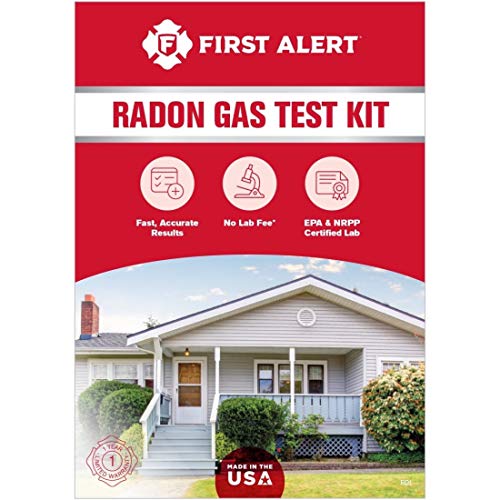 First Alert RD1 Radon Test Kit | Widely stocked; 48-hour charcoal test. | Amazon — $17.95 |
 Airthings Corentium Home | Digital monitor with a long-term average. | Amazon — $99.99 |