How Do I Kill Mold: A Plain-Language Homeowner Guide
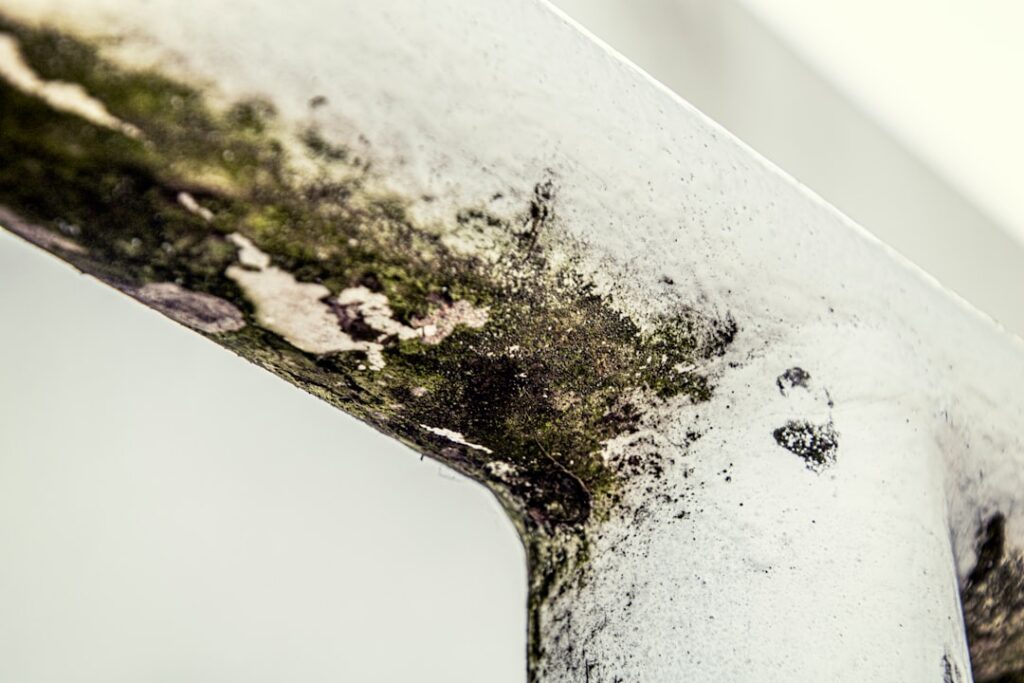
The question “how do I kill mold” sits on a small but important semantic point: mold is alive, so technically it can be killed, but the framing leads homeowners toward the wrong workflow. EPA guidance does not center on “killing” the colony. It centers on removing the visible growth physically and eliminating the moisture that allowed it to grow. Bleach does not penetrate porous materials like drywall paper or unfinished wood, so a spray-and-wipe approach gives the illusion of progress while the colony rooted inside the substrate continues. Honest answer: remove it, dry the substrate, fix the water source. That is the EPA-aligned sequence. This guide summarizes EPA and CDC guidance current as of 2026 — consult your physician for symptoms and a certified professional for testing decisions on larger jobs.
Part of our Mold Removal & Remediation guide — start there for the full picture →
Is this mold, asbestos, or water damage? Get a free instant screen
Upload a clear photo of the suspect area. You'll get an instant AI screening opinion and what to do next. This is screening guidance, not a professional determination.
Screening guidance only. AI can be wrong. Confirm asbestos, mold type, or lead with lab testing or a licensed professional before acting.
How do I kill mold — and why the EPA reframes the question
Yes, mold is killable in a technical sense. Common disinfectants — bleach, hydrogen peroxide, quaternary ammonium compounds, vinegar at sufficient concentrations — denature mold proteins on direct contact with non-porous surfaces. The problem is that the visible mold is only the fruiting body of a much larger organism. Hyphae extend below the surface into porous materials, and the colony continues to grow as long as the substrate is wet. Chemical contact does not reach the deep hyphae in materials like drywall paper, unfinished wood, or carpet fibers.
EPA’s Mold Cleanup guidance and the CDC’s mold pages both recommend physical removal of visible growth, disposal of mold-affected porous materials, and complete drying of the substrate. None of these documents lead with “kill the mold.” The implicit reframing is that a clean, dry substrate is the goal, not a chemically-disinfected one. This is why detergent and water work as well as bleach for routine homeowner cleanup on non-porous surfaces — the mechanical removal is what matters.
What actually works to remove mold from a home
The EPA-preferred sequence for areas under ten square feet runs through three steps. First, HEPA vacuuming or wiping to remove settled spores and surface dust before scrubbing — this prevents disturbance from scattering spores. Second, detergent and warm water scrubbed mechanically on non-porous surfaces, with mold-affected porous materials cut out and bagged for disposal. Third, complete drying using fans and dehumidifiers, with relative humidity in the room brought back below 50 percent and held there.
PPE during the work: N95 respirator, nitrile or rubber gloves, and non-vented eye protection. Open a window to outside for ventilation, close interior doors to keep the disturbance contained. Bag waste immediately rather than letting bags accumulate. The full workflow is documented in EPA’s homeowner publication “A Brief Guide to Mold, Moisture, and Your Home” and aligns with the IICRC S520 standard professional remediators follow at larger scales.
Why bleach does not “kill mold” the way homeowners expect
Bleach is a strong oxidizer that destroys living mold cells on direct contact with non-porous surfaces. That part is real. The reason it fails to address porous substrates is that bleach is a water solution, the chlorine evaporates quickly, and the water carries hyphae nutrients deeper into the substrate as it soaks in. The visible surface looks clean and the staining lightens, while the colony below continues. Within weeks, new visible growth often appears on the same spot.
EPA’s homeowner publications explicitly note that bleach is not necessary for routine mold cleanup. The 2001 publication “Mold Remediation in Schools and Commercial Buildings” goes further and recommends against routine bleach use because of the inhalation risks, the mixing hazards with other cleaners, and the false reassurance of a cleaned surface over a still-living substrate. OSHA cautions about ventilation requirements and the danger of mixing bleach with ammonia. Vinegar, hydrogen peroxide, and quaternary ammonium products have similar limitations on porous materials — none of them substitute for physical removal.
What about commercial mold-killing sprays?
Retail “mold killer” products generally combine a surfactant, a disinfectant, and a stain remover. They work as well as detergent and water on non-porous surfaces and no better on porous substrates. The marketing language often implies permanent kill, which misleads homeowners into spraying and walking away. The EPA position remains that the moisture source has to be fixed and the porous material has to be removed for the result to last. For an overview of how professional remediators approach scope and verification, the mold inspection and testing hub describes the typical IICRC S520 workflow.
The hierarchy of cleaning chemicals for mold
Different cleaning agents have different roles in the mold workflow, though none of them solve the fundamental problem. Household detergent is the EPA-preferred starting point for routine cleanup on non-porous surfaces. It dissolves biofilm and surface oils, lets the mechanical scrubbing action lift the colony, and rinses cleanly with water. The detergent does not need to be specialized — standard dish soap works as well as branded mold cleaners at a fraction of the cost.
Dilute bleach (one cup per gallon of water) adds an oxidative kill step on non-porous surfaces, useful when staining persists after detergent scrubbing. Bleach loses effectiveness within hours of dilution, so mix it in small batches as needed rather than storing. Hydrogen peroxide at three percent (the standard drugstore concentration) substitutes for bleach when chlorine sensitivity is a concern; it has similar efficacy on non-porous surfaces and shorter shelf life once opened. Vinegar at full strength kills some mold species but is less broadly effective than bleach or hydrogen peroxide.
Quaternary ammonium products (the active ingredient in many commercial disinfectants) provide longer residual antimicrobial action than bleach or hydrogen peroxide. They are useful for post-cleanup surface treatment to reduce recolonization. None of these chemicals — household detergent, bleach, peroxide, vinegar, or quats — penetrate porous substrates effectively enough to address mold rooted below the surface.
The “kill the mold” mindset and what it leaves out
The single largest gap in chemical-only approaches is moisture control. Mold needs three things to grow: spores, organic substrate, and water. Spores are ubiquitous in any indoor environment and cannot be eliminated. Organic substrate is built into most of the home — drywall paper, wood framing, carpet, dust. Water is the only one a homeowner can actually control. Indoor relative humidity between 30 and 50 percent, no active leaks, and good ventilation are the only sustainable defense against recurrence.
Front Range homes have specific moisture pressure points worth checking before any cleanup. Snowmelt entering foundations through poor grading or window-well drainage. Crawl-space vapor migration through missing ground vapor barriers. Bathroom exhaust fans dumping moist air into attics. Ice damming at eaves driving water back under shingles. Each of these requires its own fix; spraying mold killer on the symptom does nothing about the cause.
What chemical disinfection is actually useful for
There is a narrow role for chemical disinfection in the EPA-aligned workflow. After physical removal of visible growth and complete drying of the substrate, a residual disinfectant or antimicrobial primer on non-porous surfaces can reduce reseeding from environmental spores. This is post-cleanup, not instead of cleanup. Mold-resistant primers on drywall before painting reduce the risk of recurrence on properly remediated surfaces. They are not a substitute for removing the colony or fixing the moisture.
Professional remediators sometimes apply antimicrobial agents at the end of a containment-protected job. The application is controlled, the substrate is already clean and dry, and the agent is registered with EPA for the specific use. This is not the same as a homeowner spraying bleach on a moldy wall. Terminology around “eliminating mold” covers similar misleading-permanence framing and the homeowner reality of ongoing moisture management.
Verifying the cleanup actually worked
For DIY-scale cleanups, the verification is visual and time-based. The surface is clean and visibly dry. Moisture meter readings on framing or substrate read below 16 percent. No new growth appears over the following weeks. Indoor relative humidity stays in the 30 to 50 percent range. If any of these conditions fail, the cleanup did not address the underlying problem and the job needs to be reopened.
Professional remediation includes some form of post-remediation verification — visual inspection for small jobs, optional air sampling for larger ones or where insurance carriers require documentation. EPA does not recommend routine air sampling for residential settings after small cleanups. The visual standard is generally adequate. If symptoms persist in occupants after a complete cleanup, that is a medical question for a physician rather than additional mold testing.
Why ozone generators and foggers are usually a bad idea
Ozone generators and antimicrobial foggers are marketed aggressively for mold treatment. Both technologies have legitimate uses in specific industrial and commercial settings, and both are commonly misapplied in residential mold contexts. EPA’s position on ozone is clear: it is a lung irritant at concentrations needed to kill mold, and the agency does not recommend ozone-generating devices for residential use to address mold or air quality. The required concentrations to be effective on porous materials exceed safe occupancy levels by significant margins.
Antimicrobial foggers distribute fine droplets of disinfectant throughout a space. They have legitimate use in professional remediation after physical removal of mold-affected materials and complete drying — applying a residual antimicrobial to non-porous surfaces to reduce recolonization. They do not substitute for physical removal, and they do not penetrate porous substrates any better than spraying does. Companies marketing fogger-only mold “kill” services without physical removal are selling something that does not work as advertised, regardless of how impressive the equipment looks.
Heat and dry-ice treatments — niche industrial methods
Thermal and dry-ice mold treatments occupy a small niche in the remediation industry. Heat treatment raises the ambient temperature in a contained space to levels (typically 130-140°F) that kill mold cells. The method has limited use because most homes contain materials and contents that cannot tolerate sustained heat — electronics, pharmaceuticals, certain finishes. Dry-ice blasting uses solid CO2 pellets accelerated against contaminated surfaces; the pellets sublimate on impact, mechanically removing the surface contamination without generating wet waste.
Both methods can be effective in specific industrial or commercial settings where their requirements are manageable. In residential settings, the cost typically exceeds conventional remediation while the benefits are marginal. Homeowners offered heat or dry-ice services as a primary mold-treatment approach should ask carefully about the specific advantages over conventional methods for their particular scope. In most cases, conventional IICRC S520 remediation with physical removal, containment, and drying produces equivalent or better results at lower cost.
References
- Mold Cleanup in Your Home — U.S. Environmental Protection Agency
- A Brief Guide to Mold, Moisture, and Your Home — U.S. Environmental Protection Agency
- Mold: About — Centers for Disease Control and Prevention
- Mold-Related Standards — Occupational Safety and Health Administration
- Mold Inspection Resource — International Association of Certified Home Inspectors
Frequently asked questions
Does bleach really kill mold?
Bleach destroys mold cells on direct contact with non-porous surfaces, but it does not penetrate porous materials like drywall paper, carpet, or unfinished wood. The hyphae below the surface continue to grow. EPA notes bleach is not necessary for routine mold cleanup and that detergent plus water works equally well on non-porous surfaces.
What kills mold permanently?
Nothing kills mold permanently in a home. Spores are present in all indoor air and will recolonize wherever moisture allows. The sustainable approach is physical removal of visible growth, disposal of mold-affected porous materials, complete drying, and ongoing moisture control with indoor humidity between 30 and 50 percent.
Is vinegar better than bleach for mold?
Vinegar at full strength kills some mold species on contact with non-porous surfaces. It shares the same limitation as bleach — it does not penetrate porous substrates. The EPA-aligned approach is physical removal rather than chemical kill, so the choice between vinegar and bleach matters less than getting the colony physically off the surface.
Can I just spray mold killer and walk away?
No. Retail mold-killing sprays clean the surface but do not address the colony rooted in porous materials or the moisture source feeding it. Without physical removal and source control, the visible growth typically returns within weeks. Spray-and-walk-away is the single most common cause of mold recurrence.
If you are on the Colorado Front Range and the mold keeps coming back despite repeated cleanups, reach out through our contact page for a connection to a vetted local mold inspector who can identify the moisture source.
Mold removal & cleanup picks
For a small, contained patch (under ~10 sq ft) these EPA-friendly removers handle surface mold. Larger or recurring growth warrants a professional assessment first.
| Product | Why | Buy |
|---|---|---|
 RMR-86 Instant Mold Stain Remover RMR-86 Instant Mold Stain Remover | Fast-acting on stains; ventilate and wear PPE. | Amazon — $29.99 |
 Concrobium Mold Control Concrobium Mold Control | No-bleach formula that also helps prevent regrowth. | Amazon — $34.27 |
 Mold Armor Mold & Mildew Remover Mold Armor Mold & Mildew Remover | Widely stocked bathroom/surface remover. | Amazon — $22.98 |