Hot Tubs at Home: Electrical, Deck Loads and Safety Covers
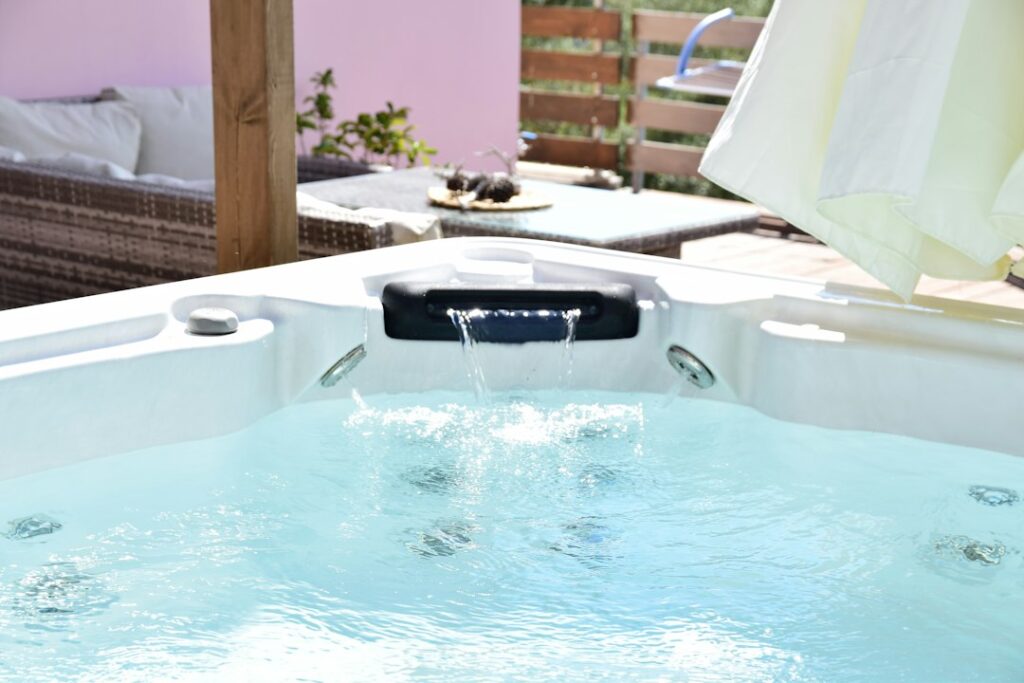
A hot tub looks like a simple backyard appliance, but it combines several systems that each carry real risk when done poorly: a large electrical load sitting next to water, several thousand pounds of weight on a deck or slab, hot water that can raise body temperature quickly, a suction system that can trap hair or limbs, and warm water that bacteria like. On the Front Range, freezing winters add their own stress on covers, plumbing and equipment. This guide walks through what homeowners and buyers should look at: the dedicated circuit and GFCI protection, the disconnect, structural support, locking covers, temperature limits, water care and typical costs. It summarizes federal safety guidance from the Consumer Product Safety Commission and the CDC, and it uses hedged language for code items because requirements depend on the edition your jurisdiction has adopted. Electrical work belongs with a licensed electrician, and most Colorado jurisdictions require a permit for it.
Part of our Home Electrical guide — start there for the full picture →
What a Safe Hot Tub Installation Looks Like
A well-installed hot tub usually has five things in common. It sits on a base that was designed or verified for its filled weight. It is fed by a dedicated circuit sized to the manufacturer’s nameplate, with ground-fault circuit-interrupter (GFCI) protection. It has an emergency shutoff or disconnect that the owner can locate and reach quickly. It has a cover that locks when the tub is not in use. And the water is kept at a safe temperature and properly sanitized.
Plug-and-play versus hardwired tubs
Hot tubs fall broadly into two electrical categories. So-called plug-and-play models run on 120 volts and plug into a dedicated GFCI-protected outdoor receptacle. They are lighter and cheaper to install, but they heat more slowly and often cannot run the heater and jets at full speed at the same time. Larger tubs typically run on 240 volts and are hardwired through a disconnect, often on a circuit in the range of 40 to 60 amps, though the manufacturer’s installation manual and nameplate set the actual requirement.
Electrical Requirements: Dedicated Circuit, GFCI and Disconnect
The single most important safety system on a hot tub is its electrical protection. The CPSC’s “Don’t Swim with Shocks” guidance lists the places electricity is found around pools, hot tubs and spas, including underwater lights, pumps, filters, extension cords, outlets and switches, and overhead power lines. Water and wet skin make a shock far more dangerous, so the circuit design is not a place to save money.
GFCI protection
Electrical codes based on the National Electrical Code generally require GFCI protection for hot tub and spa equipment. On a hardwired tub this is most often provided by a GFCI breaker in the disconnect enclosure or in the main panel. A GFCI breaker monitors the current going out on the hot conductors and returning on the neutral, and trips in a fraction of a second when the two do not match. Many tub manufacturers also build a ground-fault device into their own control pack, but that does not replace whatever protection the local code requires on the supply side.
A GFCI only helps if it works. The test button should trip it and the reset should restore power. Owners are commonly advised to test GFCI devices monthly, and a device that will not trip, or one that trips repeatedly, warrants a call to an electrician rather than a workaround. Nuisance tripping on a hot tub often points to moisture in a heater element, a failing pump motor or a wiring problem, not a bad breaker.
The disconnect within sight
Most current codes call for a disconnecting means for hot tub equipment that is within sight of the tub and located a minimum distance from its inside wall, commonly cited as at least 5 feet, so that someone sitting in the water cannot reach it. Local amendments vary, and the inspector who signs off the permit is the final word. CPSC’s 1996 hot tub warning also advises owners to know where the cut-off switch for the pump is so they can turn it off in an emergency, a simple step that takes on new meaning if a child’s hair is caught in a suction fitting.
Panel capacity and subpanels
A 240-volt tub adds a substantial continuous load. Older 100-amp services, common in some mid-century Denver and Lakewood neighborhoods, may not have room for a 50-amp spa circuit on top of an electric range, dryer and central air. An electrician will usually run a load calculation. If the panel is full, options include a load-managed setup, a subpanel fed from the main, or a service upgrade. The electrical inspection hub covers what inspectors look for at the panel and how to read their findings.
Common red flags
- An extension cord feeding a plug-and-play tub, which manufacturers typically prohibit.
- No GFCI protection anywhere between the panel and the tub.
- A disconnect that is missing, out of sight of the tub, or close enough to touch from the water.
- Exposed or unprotected wiring along the ground, or conduit that has pulled apart.
- Overhead service drops or power lines running directly above the tub area.
- Corrosion inside the equipment bay, which suggests chronic leaks near electrical components.
Deck and Patio Load Capacity
Water weighs roughly 8.3 pounds per gallon. A tub holding 400 gallons therefore carries more than 3,300 pounds of water before adding the shell, the cabinet and four or five adults. Manufacturers publish a filled weight and often a pounds-per-square-foot figure on their spec sheets, and those numbers frequently exceed what a typical residential deck was designed to carry. Many decks are built for ordinary live loads such as people and furniture, not a concentrated mass of this size.
For a tub on a deck, an engineer or experienced contractor normally reviews the joists, beams, posts and footings under the footprint and adds framing or new footings where needed. A deck inspection can spot warning signs on an existing installation: sagging joists, split or crushed beams, posts out of plumb, rot at bearing points, missing hardware at the ledger, and boards that bounce near the tub. The deck footings deserve particular attention, because a footing that was sized for a lightweight deck can settle under a tub and pull the structure out of level. In Colorado, expansive clay soils along much of the Front Range make settlement more likely if footings are shallow or undersized.
Ground-level installations
On the ground, the most common bases are a reinforced concrete pad, a compacted gravel bed, or an engineered pad system recommended by the manufacturer. The base needs to be level and able to support the full weight without settling unevenly, and it should drain away from the house. A tub sitting on an unsupported paver patio or bare soil can tilt, stress the shell and crack plumbing joints.
Indoor and sunroom tubs
Indoor hot tubs bring their own concerns. The floor structure must still carry the weight, and the moisture load is large. Warm water evaporates continuously, and without good exhaust ventilation and dehumidification the room can develop condensation, mold and rot in surrounding framing. The CDC’s Legionella guidance for hot tubs also points out that hot tubs create aerosols, and for indoor installations it suggests considering rooms with isolated air handling and dehumidification.
Locking Covers, Drowning and Entrapment
Drowning is the leading hazard associated with hot tubs, just as it is with pools. In a 1996 warning, CPSC reported knowing of more than 700 deaths in spas and hot tubs since 1980, with about one-third of those being drownings of children under age five. Its first safety tip was to always use a locked safety cover when the spa is not in use and keep young children away from spas and hot tubs unless there is constant adult supervision.
A good hot tub cover is more than an insulating lid. Look for:
- Working locking clips or straps on every side, ideally keyed or childproof.
- A cover that is not waterlogged, cracked or sagging in the middle, which can make it heavy, hard to secure and weak if someone climbs on it.
- Hinges and lifters in good condition so adults actually put the cover back on.
- A label or listing indicating it is intended as a safety cover where the manufacturer offers one.
The pool safety cover guide explains the difference between an ordinary cover and one designed to carry a load, and many of the same principles apply to spa covers. Gates, fencing and alarms around a backyard with both a pool and a spa add further layers of protection.
Suction entrapment and hair entanglement
Hot tubs draw water through suction fittings to the pump. CPSC’s 1996 warning explained that if a drain is blocked, suction increases and can hold a person under water; it also described dozens of incidents in which hair was sucked into a suction fitting. CPSC advised making sure the spa has the dual drains and drain covers required by current safety standards, having a professional check the spa regularly, and checking that drain covers are in place and not cracked or missing. A cracked, missing or loose suction cover is a reason to stop using the tub until it is replaced with a compliant part. The pool pump guide covers anti-entrapment covers and the federal Virginia Graeme Baker Pool and Spa Safety Act in more detail.
Hot Water Temperature Limits
Hot tub water that feels pleasant can still be dangerous. CPSC has long warned that hot tub water temperatures should never exceed 104 degrees Fahrenheit, and that a temperature of 100 degrees is considered safe for a healthy adult. Its early warning noted that soaking in water heated to 106 degrees can raise body temperature to the point of heat stroke, and that drowsiness from hot water, especially combined with alcohol, can lead to unconsciousness and drowning.
CPSC also cautioned that thermostats may be off by as much as four degrees, so checking the water with an accurate thermometer is a reasonable habit. Its guidance singled out several groups for extra care: pregnant women, who were advised to keep to a 100-degree maximum; young children; people with heart disease, circulatory problems, diabetes or blood pressure problems, who were advised to get a physician’s advice before using a hot tub; and people taking medications that cause drowsiness. Anyone in those groups, or anyone with a health question, should talk to a doctor before soaking.
Practical steps for owners include setting the controller well below the 104-degree ceiling when children or older guests use the tub, limiting soak times, keeping alcohol out of the tub, and making sure the control panel cannot easily be changed by children.
Water Care and Legionella
Warm, aerated water is an ideal environment for bacteria. The CDC’s toolkit for controlling Legionella in hot tubs notes that hot tubs keep water within the most favorable range for Legionella growth, roughly 77 to 113 degrees Fahrenheit, create aerosols that people breathe in, and speed up the decay of disinfectants. Legionella can cause Legionnaires’ disease, a serious form of pneumonia, and the CDC notes that hot tubs have been associated with outbreaks.
The CDC toolkit is written mainly for public and commercial operators, but its control limits are useful reference points for home owners. For display tubs and as control limits, it lists free chlorine at 3 to 10 ppm, bromine at 4 to 8 ppm and pH at 7.2 to 7.8. It also emphasizes steady water flow through the filter, cleaning or replacing filters according to the manufacturer, and draining, scrubbing and refilling on a schedule tied to how much the tub is used. Its water replacement formula divides the spa volume in gallons by three and then by the average number of users per day to estimate days between changes.
For a typical household this translates into a few routines: test sanitizer and pH several times a week and before heavy use, shock the water as the sanitizer manufacturer directs, rinse or replace filters on schedule, and drain and refill every few months. A tub that has sat unused with no sanitizer should be drained, cleaned and refilled rather than simply topped up and heated.
Winter Operation on the Front Range
Colorado’s dry air and freeze-thaw cycles affect hot tubs in specific ways. Evaporation is high, so water levels drop faster than many owners expect, and a low water level can let the pump run dry or the heater overheat. A power outage during a cold snap can freeze plumbing in hours if the tub is not drained or protected. Some owners keep a small generator plan or a freeze-protection alarm for that reason. Snow loading on the cover can also crack an older lid or break hinges.
What an Inspection Covers
Many standard home inspections treat hot tubs as limited or excluded items, and some inspectors offer a separate review for an added fee. Ask in advance. A visual check commonly includes the presence of GFCI protection, the location of the disconnect, visible wiring, the cover and its locks, signs of leaks around the cabinet, the condition of the deck or pad, and whether the tub fills, heats and circulates when it is running. Water chemistry, internal plumbing leaks and the condition of heater elements usually call for a spa technician.
The guide to hiring a home inspector explains how to compare scopes and ask the right questions when a property has a hot tub, pool or other specialty equipment. Buyers looking at a house with both a spa and a sauna may also want to read the infrared sauna guide for the electrical considerations they share.
Typical Hot Tub Costs
Costs vary widely by tub size, region, access and how much electrical and structural work is involved. The ranges below are general 2026 ballpark figures and should be confirmed with local quotes.
- Tub purchase: plug-and-play models often start in the low thousands of dollars; larger 240-volt acrylic tubs commonly run from several thousand to well over ten thousand dollars.
- Electrical installation: a dedicated 240-volt circuit with a GFCI disconnect often costs from several hundred dollars to a few thousand, depending on distance from the panel, trenching and permit fees. A service upgrade, if needed, adds considerably more.
- Base or deck reinforcement: a concrete pad or gravel base is often in the hundreds to low thousands; engineered deck reinforcement can cost more.
- Replacement cover: commonly a few hundred to around a thousand dollars.
- Ongoing costs: electricity, chemicals, filters and periodic service, which vary with climate, insulation and use.
Getting the electrical and structural work right at installation is almost always cheaper than retrofitting it later.
References
- CPSC Issues Warning for Pools, Spas, and Hot Tubs — U.S. Consumer Product Safety Commission
- CPSC Warns of Hot Tub Temperatures — U.S. Consumer Product Safety Commission
- Don’t Swim with Shocks: Electrical Safety In and Around Pools, Spas and Hot Tubs — U.S. Consumer Product Safety Commission
- Controlling Legionella in Hot Tubs — Centers for Disease Control and Prevention
Frequently asked questions
Does a hot tub need a dedicated circuit?
Yes. Plug-and-play tubs typically need a dedicated GFCI-protected 120-volt receptacle, and larger tubs usually need a dedicated 240-volt circuit sized to the manufacturer's nameplate. A licensed electrician should confirm the requirements and pull the permit.
How far does the hot tub disconnect need to be from the tub?
Codes commonly call for the disconnect to be within sight of the tub and at least about 5 feet from its inside wall so it cannot be reached from the water. Local code editions and amendments vary, so confirm with your building department.
Can my existing deck hold a hot tub?
Possibly, but many decks are not designed for a filled tub, which can weigh several thousand pounds. Have an engineer or qualified contractor check the joists, beams, posts and footings against the manufacturer's filled weight before installing.
What is a safe hot tub temperature?
CPSC advises that hot tub water should never exceed 104 degrees Fahrenheit and considers 100 degrees safe for a healthy adult. Pregnant women, children and people with heart or blood pressure conditions should be more cautious and ask a physician.
How often should hot tub water be changed?
It depends on use. CDC's hot tub toolkit estimates days between changes as the spa volume in gallons divided by three, then by the average number of daily users. Many households drain and refill every few months.
Buying a home with a hot tub and not sure whether the wiring, deck and cover are up to the job? Reach out to us and we can connect you with a Front Range inspector who looks at spa installations.