Pool Pumps: Variable Speed, Bonding and Common Failures
The pool pump is the heart of a swimming pool. It pulls water from the skimmers and main drain, pushes it through the filter and heater, and returns it to the pool, keeping the water clear enough to sanitize and safe enough to swim in. It is also, for many households, one of the largest electricity users on the property, and it sits at the junction of two serious hazards: electricity next to water, and suction strong enough to trap a swimmer. This guide explains what homeowners and buyers should know about the equipment pad: how the pump works, single-speed versus variable-speed models and ENERGY STAR certification, GFCI protection and equipotential bonding, drain entrapment and anti-entrapment covers, common failures and leaks, what an inspection covers and typical costs. Code references are described in general terms; local requirements depend on the adopted edition and any amendments.
Part of our Specialty Home Inspections guide — start there for the full picture →
What a Pool Pump Does and How It Works
A residential pool pump is a centrifugal pump driven by an electric motor. Water enters through the suction side, passes a strainer basket that catches leaves and debris, and is flung outward by a spinning impeller into the discharge side. From there it travels through the filter, any heater or chlorinator, and back to the pool through return jets. A typical in-ground system has suction lines from one or more skimmers and a main drain, with valves that let the owner balance flow between them.
Three numbers describe how a pump fits a pool. Flow rate, usually given in gallons per minute, is how much water it moves. Head, or resistance, depends on pipe size, pipe length, fittings, the filter and the heater. Turnover is how long it takes to circulate the full volume of the pool once. A pump that is too large for the plumbing wastes energy and can exceed the rated flow of the filter or the drain covers; a pump that is too small leaves water poorly filtered.
Above-ground versus in-ground pumps
Above-ground pool pumps are usually smaller, often run on 120 volts and may plug into a GFCI-protected receptacle. In-ground pumps are typically larger and more often hardwired at 240 volts through a timer or automation panel. ENERGY STAR certifies models in both categories, as well as pressure-cleaner booster pumps.
Single-Speed vs Variable-Speed Pool Pumps
For decades the standard pool pump ran at one speed. ENERGY STAR explains the problem with that approach: different tasks need different flow rates, and filtration requires only about half the flow needed to run a pool cleaner. A conventional single-speed pump runs at the higher speed all the time and wastes energy during ordinary filtration.
Variable-speed and multi-speed pumps can be programmed to run slowly for routine filtration and speed up only when a cleaner, spa jets or a water feature needs more flow. The physics strongly favors that approach. According to ENERGY STAR, reducing pump speed by one-half allows the pump to use just one-eighth as much energy.
What ENERGY STAR certification means
ENERGY STAR describes the pool pump as potentially a home’s second-largest energy user, costing as much as $310 a year in electricity. Its figures for certified models include:
- Certified in-ground pool pumps using 20 percent less energy than standard pumps, saving roughly $50 a year.
- Certified above-ground pumps using 11 percent less energy, saving about $20 a year.
- Lifetime savings of up to $290 and payback in less than two years.
ENERGY STAR also notes that variable-speed pumps are quieter, require less maintenance and last longer, and that slower circulation puts less strain on filters and plumbing, reducing the chance of leaks and premature component replacement. Actual savings depend on local electricity rates, run time, pool size and how well the pump is programmed. A variable-speed pump left on its highest setting all day saves little.
Federal efficiency standards for many dedicated-purpose pool pumps took effect in 2021, and they have pushed most new in-ground replacement pumps toward variable-speed designs. Homeowners replacing an older single-speed in-ground pump should expect the installer to propose a variable-speed model.
Run time and timers
Pump run time is the other big lever. ENERGY STAR notes that running a pool filter 6 hours a day instead of 24 reduces energy use by 75 percent, and that several short cycles spread through the day can keep the pool cleaner than one long run. The right schedule depends on bather load, weather, debris and sanitizer, and pool professionals can help set it. Colorado’s short swimming season, with pools on the Front Range commonly closed from fall through late spring, also limits how many months the pump runs at all.
Best Pool Pumps: our top 3 picks
| Product | Best for | Key features | Price | Buy |
|---|---|---|---|---|
| Pentair SuperFlo VS 1.5 HP | Best variable speed for in-ground |
| $1,250.00as of Nov 19, 2026 12:56 am GMT+0000 | Buy now →Check current price |
| Aquastrong VS 2 HP | Best high-flow variable speed |
| $699.00as of Nov 19, 2026 12:56 am GMT+0000 | Buy now →Check current price |
| XtremepowerUS 2HP Dual Speed | Best two-speed in-ground pump |
| $299.95as of Nov 19, 2026 12:56 am GMT+0000 | Buy now →Check current price |

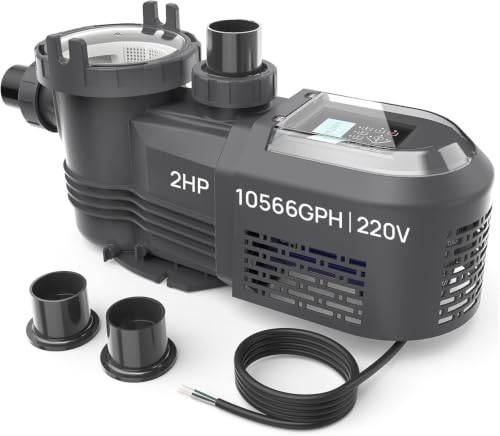
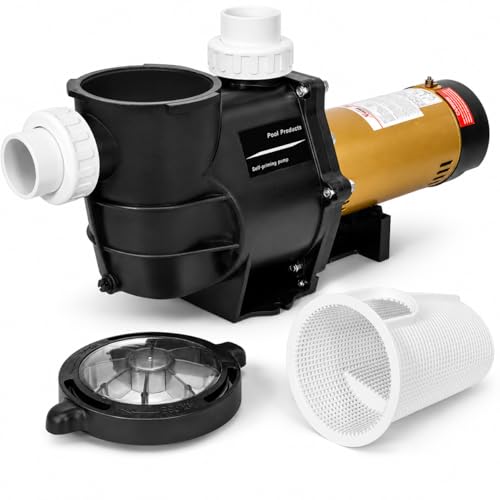
Prices are Amazon’s listed prices as of the time shown and change often; check Amazon for today’s price. As an Amazon Associate we earn from qualifying purchases.
Electrical Safety: GFCI Protection and Equipotential Bonding
Pool equipment combines electricity, water, wet skin and metal, which is why pool wiring is governed by its own detailed section of the electrical code. The Consumer Product Safety Commission’s “Don’t Swim with Shocks” guidance reports that since 2002 it has been aware of 33 fatalities involving electrocution in swimming pools and spas. It lists the places electricity is found around pools, including underwater lights, electric pool equipment such as pumps, filters and vacuums, extension and power cords, outlets and switches, and overhead power lines.
GFCI protection
Codes based on the National Electrical Code generally require ground-fault circuit-interrupter protection for pool pump motors and many other pool circuits, and recent editions have expanded those requirements. Protection is usually provided by a GFCI breaker in the panel or the equipment subpanel, or by a GFCI receptacle for a cord-connected above-ground pump. Older pools built before current requirements may lack GFCI protection on the pump, and adding it is a common upgrade recommendation. Test GFCI devices regularly, and if one trips repeatedly, have an electrician find the cause rather than replacing it with a standard breaker.
Equipotential bonding
Bonding is often confused with grounding, but it serves a different purpose. An equipotential bonding grid connects the metal parts of the pool and its surroundings, such as the pump motor, metal ladders and handrails, light niches, reinforcing steel in the shell and deck, and certain fittings, with a solid copper conductor so that they all sit at the same electrical potential. If something goes wrong, the goal is that no voltage difference exists between surfaces a swimmer might touch at the same time.
At the pump, inspectors typically look for a solid copper bonding conductor attached to the motor’s external bonding lug with a listed connector. Corroded or missing bond wires, a lug clamp that has been removed during a pump replacement, or a new pump that was never re-bonded are common findings. Bonding work and verification belong with a licensed electrician.
Warning signs of stray voltage
CPSC lists signs that someone in the water may be receiving a shock: tingling, muscle cramps, inability to move, or a feeling of being held in place. Underwater lights that flicker or behave erratically are another warning. CPSC advises swimmers who feel a shock to move away from the source and get out, avoiding metal ladders if possible, and advises bystanders to immediately turn off all power before attempting any rescue. Any tingling in or around a pool is a reason to close it until an electrician has investigated.
Drain Entrapment and Anti-Entrapment Covers
The pump’s suction is what makes it work, and it is also what makes a blocked drain dangerous. CPSC explained the mechanism in a 1996 warning: pipes leading from a pool drain to the pump draw water from the pool, and if something blocks the drain, suction increases as the pump pulls water past the obstruction. That suction can hold a person’s body, or hair, against the drain under water.
The federal Virginia Graeme Baker Pool and Spa Safety Act requires anti-entrapment drain covers that meet a mandatory safety standard. CPSC continues to act against noncompliant covers; in a January 2026 warning about one brand of drain covers sold online, it reported that the covers lacked required product markings, did not state their service life and lacked installation and maintenance instructions. CPSC urged consumers to stop using pools with those covers until they were replaced, to ensure all pools and spas have VGBA-compliant drain covers, and to teach children to stay away from drains.
For a home pool, practical checks include:
- Drain covers present, secured with all screws, and not cracked, faded or brittle.
- Covers marked with compliance information and still within their stated service life; many have a limited life and must be replaced on schedule.
- Flow ratings on the covers that match or exceed the pump’s maximum flow, which matters when a larger or faster pump replaces an older one.
- Dual main drains or other secondary safeguards where the system design calls for them.
- A pump shutoff that adults know how to reach quickly.
Drain safety is one layer among several. Barriers and alarms, covered in the pool safety fence guide, protect against the much more common hazard of a child reaching the water unsupervised.
Common Pool Pump Failures
Pumps fail in recognizable ways, and many of the symptoms show up during a walk around the equipment pad.
Loud bearings and motor problems
A screeching or grinding noise usually means worn motor bearings. Humming without starting can point to a failed start capacitor on some single-speed motors, a seized impeller or a voltage problem. A motor that trips its breaker or runs very hot needs an electrician or pool technician.
Loss of prime and air in the system
Bubbles in the strainer basket, a pump that will not hold prime, or weak return flow usually point to an air leak on the suction side: a loose lid, a dried-out lid O-ring, a cracked fitting or a low water level in the skimmer. Clogged baskets and dirty filters reduce flow in a similar way.
Leaks at the pump
Water dripping from the area between the motor and the pump housing often means a failed shaft seal. Left alone, that water can reach the motor bearings and windings. Leaks at unions, threaded fittings or valves are also common. Water loss that cannot be traced at the equipment may be in underground plumbing or the shell, and pool leak detection explains how professionals locate it.
Freeze damage
Along the Front Range, a pump and plumbing left full of water through a cold snap can crack housings, filter tanks and pipes. Proper winterization involves draining the pump and filter, blowing out lines and, depending on the setup, adding antifreeze rated for pool plumbing. Many owners hire a pool service to close the pool each fall.
Choosing and Sizing a Replacement Pump
When a pump fails, the quickest fix is to buy the same horsepower and bolt it in. That is not always the best choice. Many older pools were fitted with pumps larger than the plumbing could use efficiently, and a variable-speed replacement gives the installer a chance to right-size the system. A few points are worth raising with the pool contractor:
- Plumbing size. Smaller pipes limit how much flow a pump can usefully deliver; pushing more horsepower through narrow pipe mostly adds noise, heat and cost.
- Filter rating. Every filter has a maximum flow rate. A pump that exceeds it can reduce filtration quality or damage the filter.
- Drain cover ratings. Anti-entrapment covers are rated for a maximum flow. A larger replacement pump can exceed the rating of the existing covers.
- Heater and accessories. Gas heaters, salt cells and some cleaners need a minimum flow to operate safely. The pool heater repair guide explains how low flow can trip heater safety switches.
- Controls. Variable-speed pumps can run on built-in schedules or integrate with automation panels; confirm compatibility with any existing system.
Ask for the pump’s ENERGY STAR status, warranty terms, and whether the installer will re-attach the bonding conductor and verify GFCI protection as part of the job. Those details are easy to skip on a rushed replacement.
Routine maintenance
Simple habits extend pump life: empty the skimmer and pump strainer baskets regularly, lubricate the lid O-ring with a product the manufacturer approves, keep the water level in the middle of the skimmer opening, clean or backwash the filter when pressure rises, and keep the motor’s cooling vents free of leaves, mulch and snow.
What a Pool Inspection Covers
Standard home inspections often limit or exclude pools, and a separate pool inspection is common when a property has one. A pool inspector typically runs the pump, checks for leaks and unusual noise, looks at the bonding conductor and GFCI protection, examines drain and skimmer covers, and evaluates the filter, heater, valves and visible plumbing. Some inspect the shell, coping and deck as well. Ask whether the inspector will operate the equipment in the season the house is being sold; a pool closed for winter limits what can be tested.
The specialty inspections hub explains when a separate pool review makes sense, and the broader guide to hiring a home inspector covers how to compare inspection scopes. Homes with an attached spa share the same pump and drain concerns; the hot tub guide covers spa-specific issues.
Typical Pool Pump Costs
Costs depend on pump type, horsepower, brand, plumbing changes and electrical work. The ranges below are general 2026 figures to be confirmed with local quotes.
- Above-ground pump: often a few hundred dollars for the unit.
- Single-speed in-ground pump: where still available for replacement, often several hundred to over a thousand dollars installed.
- Variable-speed in-ground pump: commonly from roughly a thousand to a few thousand dollars installed, depending on model and plumbing changes. Utility rebates may offset part of the cost.
- Motor replacement only: often a few hundred to around a thousand dollars.
- Shaft seal or O-ring repair: often a modest service call plus parts.
- Bonding or GFCI corrections: highly variable, from a short service visit to more extensive electrical work.
- Replacement drain covers: the parts are often modest, but replacing covers may require partially draining the pool or hiring a diver.
More Questions About Pool Pumps
How long do pool pumps last?
Pool pumps typically last about 8 to 12 years, though motors and seals may need repair or replacement before the pump housing wears out.
Running a pump dry, poor ventilation, voltage problems and debris in the impeller shorten life. Variable-speed pumps run cooler at lower speeds, which can extend motor life. Signs of a pump nearing the end include loud grinding bearings, frequent tripping, leaks at the shaft seal and an inability to hold prime. Replacing worn seals and bearings can extend the life of an older single-speed pump, but upgrading may make more sense.
How much electricity does a pool pump use?
A pool pump is often one of the largest electricity users in a home with a pool, and a single-speed pump running many hours a day can account for a substantial share of the summer power bill.
Usage depends on motor size, daily run hours and speed. Variable-speed pumps use far less energy because cutting speed reduces power draw much more than it reduces flow. Running a variable-speed pump longer at low speed is typically cheaper than a single-speed pump running fewer hours. Check the pump’s ENERGY STAR rating, and ask the utility about rebates for efficient pool pumps.
Where should pool pump equipment be located?
Pool pump equipment should sit on a level, solid pad close to the pool, with good ventilation, room for service and enough distance from bedrooms and neighbors to keep noise acceptable.
Keeping the pump near the pool and at or slightly below water level helps it hold prime. Avoid low spots where rain pools or sprinklers soak the motor. Leave clearance for removing the motor and filter. Electrical work for the equipment pad, including GFCI protection, disconnects and bonding, should be done by a licensed electrician. Fencing or lattice can hide equipment, but it should not trap heat around the motor.
Can you replace just the motor on a pool pump?
Yes, the motor on many pool pumps can be replaced separately when the pump housing, impeller and basket are in good condition, which is often cheaper than replacing the whole pump.
Motor replacement involves matching horsepower, voltage, frame type and shaft, and usually installing a new shaft seal at the same time. When the housing is cracked, the pump is very old or the motor is a single-speed unit, replacing the full pump with an efficient variable-speed model may make more sense. Some areas require variable-speed replacements under efficiency rules, so check before ordering a motor.
References
- Pool Pumps — ENERGY STAR
- Don’t Swim with Shocks: Electrical Safety In and Around Pools, Spas and Hot Tubs — U.S. Consumer Product Safety Commission
- CPSC Issues Warning for Pools, Spas, and Hot Tubs — U.S. Consumer Product Safety Commission
- CPSC Warns Consumers to Stop Using Amber Brook Pool Drain Covers — U.S. Consumer Product Safety Commission
Frequently asked questions
Is a variable-speed pool pump worth it?
Often, yes. ENERGY STAR notes that cutting pump speed in half can reduce energy use to one-eighth, and certified pumps can pay for themselves in under two years. Savings depend on electricity rates, run time and programming.
How long should a pool pump run each day?
It depends on pool size, bather load, debris and weather. ENERGY STAR notes that running the filter 6 hours instead of 24 cuts energy use by 75 percent. A pool professional can help set a schedule that keeps the water clear.
Does a pool pump need GFCI protection?
Codes based on the National Electrical Code generally require GFCI protection for pool pump motors, and recent editions have expanded the requirements. Older pools may lack it, so have a licensed electrician evaluate the circuit.
What is pool bonding?
Bonding connects metal parts of the pool and equipment, such as the pump motor, ladders, rails and reinforcing steel, with a copper conductor so they share the same electrical potential. It reduces the chance of a voltage difference between surfaces a swimmer could touch.
Why is my pool pump leaking?
A drip between the motor and the pump housing often means a failed shaft seal. Leaks at unions, valves or the lid O-ring are also common. Unexplained water loss away from the equipment may call for professional leak detection.
Why is my pool pump humming but not running?
A pool pump that hums but does not spin usually has a failed capacitor, seized bearings, debris jamming the impeller or low voltage. Turn off power at the breaker before checking for debris. Capacitor and motor problems should be handled by a qualified technician.
Can a pool pump run without water?
No, a pool pump should not run without water, because running dry quickly damages the shaft seal and can melt plastic parts. Always prime the pump and confirm water is flowing through the basket before leaving it running.
Can a pool pump overheat?
Yes, a pool pump can overheat from poor ventilation, blocked motor vents, low voltage, running dry or a clogged impeller. Many motors have a thermal overload that shuts them off. Repeated shutdowns, a burning smell or a motor too hot to touch call for a technician.
Looking at a house with a pool and want the pump, bonding and drain covers checked before closing? Contact us to connect with a Front Range inspector who evaluates pool equipment.