Gazebo: Permits, Anchoring, Roofs and Upkeep
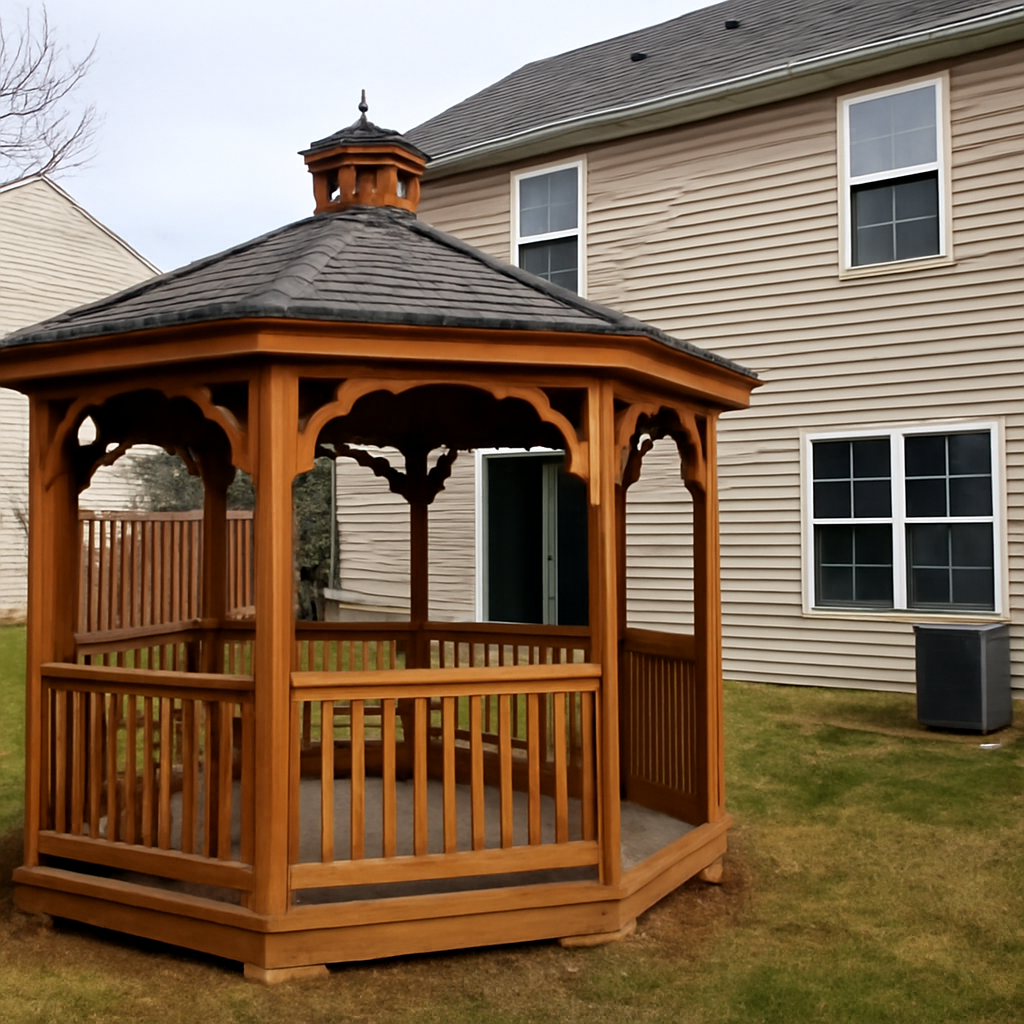
A gazebo gives a yard something a patio umbrella never can: a real roof overhead, room for a table or hot tub, and a sheltered spot to sit through an afternoon thunderstorm. On the Colorado Front Range, that roof also has to survive hail, wet spring snow, strong downslope winds and long stretches of intense sun. Gazebos range from pop-up fabric canopies to permanent timber pavilions with shingled roofs and built-in wiring, and they behave very differently under load. This guide covers the main gazebo types, how they should be anchored to decks, patios and pavers, what snow and wind do to them, how to handle outdoor electrical, where rot and roof leaks start, which permit and fire-safety questions to ask, and what different builds tend to cost. Prices below are general 2026 estimates that vary by size, materials, site and installer.
Part of our Structure & Exterior guide — start there for the full picture →
What Is a Gazebo and Which Type Fits a Front Range Yard?
A gazebo is a freestanding, roofed outdoor structure with open or screened sides, traditionally six- or eight-sided but now commonly square or rectangular. Its solid roof is what separates it from a pergola, whose top is open slats. That roof provides real shade and rain protection, but it also collects snow and catches wind, which is why construction quality matters so much more.
Soft-Top Gazebos
Soft-top gazebos use a steel or aluminum frame with a fabric canopy, often with a vented double-tier top and optional mosquito netting. They are inexpensive and easy to assemble, but the canopy is the weak link. Most manufacturers recommend removing it before winter and during high winds, and fabric degrades quickly under high-altitude UV. A soft-top left up through a Front Range winter often ends with torn fabric, bent rafters or a frame pushed off its anchors.
Hardtop Gazebos
Hardtop gazebos have a rigid roof of steel, aluminum or polycarbonate panels over a metal or wood frame. Many kits list a rated snow load and wind rating, and they are designed to stay up year-round. They are heavier, need stronger anchoring and cost more, but they hold up far better to weather than fabric.
Site-Built Wood Gazebos
Custom timber gazebos framed with cedar, redwood or treated lumber can carry asphalt shingles, metal roofing or cedar shakes. They can be engineered to local loads and finished to match the house, and they are the most likely to need a building permit. They also need the most maintenance over time.
Anchoring a Gazebo to a Deck, Patio or Pavers
Most gazebo failures in wind start at the base. A solid roof on four or six posts acts like a sail, and without proper anchoring a gazebo can shift, tip or lift off its footing entirely. The right method depends on what sits underneath.
On a Concrete Patio
A sound slab can usually anchor a gazebo with wedge anchors, sleeve anchors or epoxy-set threaded rod through the post brackets. The slab needs enough thickness and edge distance for the anchor to hold; anchors set too close to the edge of a thin or cracked patio can break out. The concrete patio guide explains how to judge slab condition before adding new loads.
On Pavers
Pavers float on a sand and gravel base, so anchors driven into individual pavers rarely hold well. Better options include pouring small concrete footings beneath the paver field at each post, or lifting pavers to install anchor plates into a footing below. Our guide to paver installation cost covers base preparation, which also affects how well a gazebo sits on top.
On a Wood Deck
Placing a hardtop gazebo on an existing deck adds both downward weight from the roof and snow and upward pull from wind. Posts should be bolted through to framing, ideally directly over joists or blocking, rather than screwed only into decking boards. The deck itself has to carry the extra load, and an older deck with marginal footings, a weak ledger or undersized joists may not be up to it. The deck inspection guide outlines what to check before adding a heavy structure on top.
On Soil or Lawn
Ground anchors, auger stakes or concrete piers below the frost line can secure a gazebo set directly on soil. Shallow stakes may hold a light soft-top in calm weather, but they are often not enough for a hardtop in Front Range wind gusts.
Snow and Wind on Gazebo Roofs
Snow is the load that most often damages hardtop gazebos in Colorado. FEMA’s Snow Load Safety Guide notes that 1 foot of fresh snow can weigh roughly 3 pounds per square foot when light and dry and around 21 pounds per square foot when wet and heavy. A spring storm that drops a foot or more of heavy snow can push a lightly built roof well past what it was designed to carry.
FEMA also explains that drifting and sliding snow create unbalanced loads, with deeper accumulation against obstructions and on lower roofs near taller parts of a building. A gazebo placed beside a two-story house, under a roof edge or next to a tall fence can collect far more snow than the open-yard average. The roof snow load guide explains how design loads are assigned locally.
Practical steps include:
- Comparing the manufacturer’s rated snow load with local design requirements before buying.
- Removing fabric canopies before winter, as most soft-top makers instruct.
- Clearing heavy snow from hardtop roofs with a roof rake from the ground rather than climbing on the structure.
- Inspecting for bent rafters, loose bolts and cracked panels after major storms.
Wind pushes sideways and lifts upward. Kits rated for higher winds usually require specific anchors and fasteners, and leaving any out can reduce the real-world rating. Hail is a separate concern; polycarbonate panels can crack or craze, and metal panels can dent.
Electrical for Lights, Fans and Heaters
Gazebos often end up with ceiling fans, chandeliers, string lights, speakers or a hot tub nearby. Every one of those brings electricity into a wet location, so the wiring deserves more care than an indoor room.
- Ground-fault protection: outdoor receptacles are generally expected to be GFCI protected, which trips power when current leaks to ground. If outlets in a gazebo go dead, our GFCI outlet not working guide covers how to find and reset the device.
- Weather-rated equipment: fans and fixtures should be rated for damp or wet locations depending on exposure, and receptacles need in-use covers that stay closed with a cord plugged in.
- Proper feeds: permanent power should come from a buried circuit in conduit or rated cable, not extension cords run across the lawn.
- Low-voltage options: path and accent lighting can often use low-voltage systems, covered in our landscape lighting guide.
Electrical work for a gazebo usually needs its own permit and a licensed electrician, even when the structure itself is exempt. Buried lines also mean digging, so locating existing utilities first is essential.
Rot, Roof Leaks and Ongoing Upkeep
Timber gazebos age the way decks and fences do, only with a roof that adds its own failure points. Rot tends to start at post bottoms, beam tops, the joints where rafters meet a central hub and any spot where water sits. Posts set directly in soil or concrete without elevated bases are especially vulnerable. Probing suspect areas with an awl or screwdriver is a quick screening test; soft, spongy wood is a warning sign. Our guide to wood rot repair explains when members can be patched and when they should be replaced.
Roof leaks are common on multi-sided gazebos because every hip line and the central peak are joints that need proper caps or flashing. Look for:
- Water stains or dark streaks on rafters and ceiling boards.
- Missing, curled or hail-damaged shingles.
- Loose or rusted screws on metal panels, especially around the cupola.
- Cracked or yellowed polycarbonate panels.
- Debris and pine needles collecting in valleys or gutters.
Regular upkeep includes re-staining or sealing wood every few years, tightening hardware, checking anchors after windstorms and keeping vegetation trimmed back from the roof.
Fire Safety for Grills, Heaters and Fire Features
A gazebo seems like a natural place to put a grill: it keeps the cook dry and close to the table. Fire-safety agencies urge caution. The U.S. Fire Administration advises placing grills well away from siding and deck railings and out from under eaves and overhanging branches, and keeping a 3-foot safe zone around the grill for children and pets. NFPA’s grilling safety page gives similar placement advice and reports that nearly one-quarter of grill structure fires started on an exterior balcony or open porch, based on 2020 to 2024 averages.
A grill under a low wood or fabric gazebo roof puts heat, grease flare-ups and smoke right beneath combustible material. Some manufacturers sell metal-roofed “grill gazebos” designed for that use, with specific clearance instructions; following those instructions and the grill maker’s own clearances is the baseline. Fire pits and patio heaters raise similar questions. USFA advises using fire pits and outdoor fireplaces at least 10 feet from the home or anything that can burn, which rules out most gazebo interiors for wood-burning fires. Heaters list minimum ceiling clearances in their manuals.
In wildfire-prone parts of the foothills, a wood gazebo near the house also adds fuel close to the structure. Keeping leaves and needles off the roof and away from posts reduces ember exposure.
Hot Tub Gazebos and Screened Enclosures
One of the most common reasons Front Range homeowners buy a gazebo is to shelter a hot tub. That pairing adds a few specific concerns. A filled hot tub is extremely heavy, so the tub normally sits on its own slab or reinforced pad, and the gazebo posts need anchoring that does not depend on the tub’s base. Warm, humid air rising from the water condenses on the underside of a cold roof, which can drip back down and keep wood framing damp for long periods. Ventilated roof designs, a cupola and rot-resistant materials help, and regular checks for mildew and soft wood are worthwhile.
The electrical supply for a hot tub is a dedicated circuit with ground-fault protection and a disconnect within sight of the tub, typically installed by a licensed electrician under permit. Lighting and fans in the gazebo above should be rated for the damp conditions they will see. Snow sliding off a gazebo roof can also land on the tub cover or block the access path, so roof slope and placement deserve thought.
Screened gazebos and enclosures with panels or curtains create a semi-indoor space. Screens and curtains catch wind like sails, so they increase the load on anchors, and many manufacturers recommend opening or removing them in storms. Fully enclosed gazebos with doors and windows may be treated more like small buildings by local permit offices.
Permits, HOA Rules and Setbacks
Whether a gazebo needs a permit depends on the jurisdiction, size, height, roof type and whether it includes electrical or plumbing. Many Front Range cities exempt small accessory structures under a certain footprint, while larger or permanently anchored gazebos with solid roofs more often need review. Setback rules can limit how close a gazebo sits to property lines or easements, and HOAs frequently regulate size, color and placement.
Useful questions for the building department include:
- What footprint or height triggers a permit for an accessory structure?
- Are engineered drawings or manufacturer snow and wind ratings required?
- How far must the gazebo sit from property lines, the house and any easements?
- Does placing it on an existing deck trigger a structural review of the deck?
- Are separate electrical, gas or plumbing permits needed?
Checking with both the building department and the HOA before ordering a kit avoids expensive changes later. When a gazebo goes on a deck, the deck permit guide covers related questions.
Drainage Around the Gazebo Base
A solid roof concentrates rain and snowmelt along its drip edge. Without gutters, that water lands in a ring around the gazebo, where it can wash out pavers, erode soil around footings and splash onto post bases. On a deck, it can soak the boards below and speed up decay. When a gazebo sits near the house, its runoff should be directed away from the foundation rather than toward it. Gutters with downspouts, a gravel drip strip or regrading can all help, depending on the site. On larger lots where runoff from the gazebo, patio and lawn all heads the same way, a shallow grassed channel can carry it safely past the structures; our drainage swale guide explains how those are shaped and maintained. Sprinkler heads that spray onto gazebo posts every evening are another quiet source of rot worth adjusting.
How Much Does a Gazebo Cost?
Gazebo prices span a wide range. As rough 2026 estimates:
- Soft-top gazebo kits: often a few hundred dollars to around $1,500.
- Hardtop metal kits: commonly about $1,500 to $6,000 before installation.
- Professionally installed hardtop or wood kits: frequently $5,000 to $15,000.
- Custom timber gazebos with shingled roofs and wiring: often $15,000 to $35,000 or more.
Footings, anchoring, electrical, permits and site preparation can add substantially. Written quotes that list the snow and wind ratings, anchoring method and roof material help make comparisons fair.
Checking a Gazebo When Buying a Home
When a home comes with a gazebo, look at the base and the roof first: anchors, post bottoms, rafters, roof covering and any signs of racking or leaks. Test outdoor outlets and look for proper covers and ground-fault protection. Under the ASHI Standard of Practice, inspectors are not required to inspect outbuildings other than garages and carports, or recreational facilities, so a freestanding gazebo may be outside a standard inspection unless it is added to the agreement. Our guide to hiring a home inspector and the structure and exterior hub explain how to confirm what is covered. If the property also has an open-roofed structure, the pergola guide covers its different attachment and load issues.
More Questions About Gazebos
How long does a gazebo last?
A gazebo typically lasts anywhere from 2 to 30 years or more, depending on construction. Soft-top canopy gazebos often need new fabric every 2 to 5 seasons because sun and wind wear down the cover. Powder-coated aluminum or steel hardtop gazebos commonly last 10 to 20 years with occasional fastener checks. Well-built wood gazebos with a shingled roof, sealed posts and good drainage can last 20 to 30 years or longer. Sun exposure, snow load, anchoring and how often bolts and finishes are maintained make the biggest difference.
How long does it take to build a gazebo?
Assembling a gazebo kit typically takes one to two days for two or three people, while a site-built wood gazebo can take several days to a few weeks. Soft-top kits can often go up in an afternoon. Hardtop metal kits take longer because of roof panels and anchoring. Custom builds add footing work, concrete curing time, roofing and any electrical work, plus time for permits and inspections where they apply. Having the base, whether a patio, deck or footings, ready beforehand is the biggest time saver.
Does a gazebo add value to a home?
A gazebo can add some appeal to a home, but it rarely returns its full cost at resale. A solid, well-maintained hardtop or timber gazebo that fits the yard may help a listing stand out and support outdoor-living marketing. A sagging, rusted or unpermitted structure can do the opposite, since buyers and inspectors will flag it. Permanent structures with wiring may be reviewed during a sale for permits. For value, the gazebo should be anchored properly, sized to the yard and kept in good condition.
Does homeowners insurance cover a gazebo?
Homeowners insurance often covers a permanent gazebo under the “other structures” portion of the policy, typically up to a percentage of the dwelling coverage. Damage from covered events such as wind or a falling tree may be included, while wear, rot and poor maintenance usually are not. Freestanding soft-top canopies may be treated as personal property instead. Policies vary, so homeowners should check the wording and tell the insurer about large or wired structures. Keeping photos and receipts helps if a claim is needed.
What size gazebo fits a patio table and chairs?
A 10×10 gazebo typically fits a small table with four chairs, while a 12×12 or 12×14 gazebo fits a six-person dining set with room to walk around. Allow roughly 3 feet of clearance between the table edge and the posts so chairs can slide back. Add more space if a grill, heater or seating area shares the footprint, keeping heat sources well away from the roof. Measuring the patio first, including any slope or step-down, avoids buying a gazebo whose posts land off the slab.
References
- Snow Load Safety Guide (FEMA P-957) — Federal Emergency Management Agency
- Outdoor Fire Safety — U.S. Fire Administration
- Grilling Safety — National Fire Protection Association
- ASHI Standard of Practice for Home Inspections — American Society of Home Inspectors
Frequently asked questions
Do you need a permit for a gazebo in Colorado?
It depends on the city or county, the gazebo's size and height, and whether it has electrical or plumbing. Small accessory structures are often exempt, while larger, permanently anchored gazebos with solid roofs more often need a permit. HOA approval may also be required.
Can a gazebo stay up all winter?
Hardtop gazebos designed for year-round use can, if their rated snow load suits local conditions and heavy snow is cleared. Most soft-top makers recommend removing the fabric canopy before winter and in high winds.
How do you anchor a gazebo on pavers?
Anchors driven into individual pavers usually hold poorly because pavers sit on loose sand and gravel. Small concrete footings poured beneath the paver field at each post generally provide a much more secure base.
Is it safe to grill under a gazebo?
Fire-safety agencies advise placing grills away from siding and deck railings and out from under eaves and overhanging branches. A grill under a low wood or fabric roof puts heat beneath combustible material, so follow the grill and gazebo makers' clearance instructions.
How much does a gazebo cost?
Soft-top kits often cost a few hundred dollars to around $1,500, hardtop kits about $1,500 to $6,000, and custom timber gazebos $15,000 to $35,000 or more. Installation, anchoring, electrical and permits add to the total.
What is the difference between a gazebo and a pergola?
A gazebo has a solid or fabric roof that blocks sun and rain, while a pergola has an open slatted roof that only filters sunlight. Gazebos are usually freestanding with a defined shape, and pergolas are often attached to the house. Gazebos carry more snow and wind load, which affects anchoring and permits.
Can a gazebo be put on grass?
A gazebo can sit on grass, but it needs proper ground anchors or footings because soil shifts and drains unevenly. Soft-top kits use stakes or auger anchors, while hardtops usually need concrete piers or a gravel pad. Grass under the roof will also die back over time from lack of sun and water.
Should a gazebo be taken down in winter?
A soft-top gazebo cover should usually be taken down or removed for winter where snow falls, because fabric roofs are not built for snow loads. Hardtop gazebos rated for snow can stay up, but heavy, wet snow should be cleared from the roof with a soft roof rake when it builds up.
Not sure whether the gazebo on a home you are considering is well anchored and leak-free? Get in touch to arrange an inspection and ask about adding outdoor structures to the scope.