FLIR Camera Price: A Tier-by-Tier Breakdown

This guide presents FLIR camera price information as categorical pricing data — what the market looks like at each tier, what features sit in each price bracket, and what 2026 list-versus-street pricing patterns look like. Unlike a recommendation-driven decision framework, this article is the bare pricing landscape, useful for buyers comparison-shopping or budgeting a purchase without yet having a use case fully defined. Citation routing is to government building-science publications and trade associations rather than manufacturer documentation, in line with the inspection-trade neutral framing.
Part of our Thermal Imaging for Homes guide — start there for the full picture →
How Thermal Camera Pricing Is Structured
Thermal imaging camera pricing has segmented into roughly five tiers over the past decade, driven by sensor technology and intended user market. The lowest tier carries smartphone-attached thermal modules. The second tier carries standalone consumer-grade handhelds with built-in displays. The third tier carries prosumer and entry-professional handhelds. The fourth tier carries working-professional standalone units with full radiometric capability. The fifth tier carries specialty and industrial units with cooled detectors, integrated diagnostics, or extreme-temperature capability.
Across all tiers, pricing reflects sensor resolution, thermal sensitivity (NETD), measurement accuracy, radiometric data export, visible-light camera integration, build quality, software ecosystem, and warranty support. The relationship between price and these features is roughly linear within tiers but jumps sharply at tier boundaries. The energy.gov building-science publications treat the tier boundaries as meaningful divisions reflecting different use-case categories rather than smooth continuums.
Tier 1: Phone Attachment Modules ($200–$500)
Smartphone-attached thermal modules anchor the entry tier. Typical specs include 160×120 to 192×256 microbolometer sensors, thermal sensitivity in the 60–100 mK range, and measurement accuracy of ±3°C or ±3% of reading. The form factor plugs into a phone’s USB-C, Lightning, or older micro-USB port, with the host phone supplying the display, processing, and image storage.
Street pricing in 2026 sits around $250–$300 for entry units, $350–$400 for upper-tier units with higher resolution. List prices are usually 10–15% above street prices except during promotional periods. Refurbished units occasionally appear at 30–40% discount. Accessory costs (cases, lanyards, USB-C adapters) add $30–$70 depending on choices.
Tier 2: Consumer Standalone Handhelds ($350–$750)
Standalone consumer-grade handhelds carry small built-in displays (typically 2.4 to 3.5 inch), 160×120 thermal sensors, basic visible-light camera integration, and battery operation independent of a host phone. Thermal sensitivity is similar to phone modules; the differentiator is form factor, durability, and the integrated display rather than thermal performance.
Street pricing sits around $400–$700 depending on display size and visible-light camera quality. List prices follow the same 10–15% premium pattern. Refurbished and open-box units appear at $300–$500.
Tier 3: Prosumer and Entry-Professional ($800–$2,500)
The prosumer tier carries 160×120 to 320×240 sensors, NETD around 50–70 mK, ±2°C accuracy, full radiometric data export, larger and brighter displays, and dedicated reporting-software support. Form factor moves from pocket-sized to dedicated handheld-grip ergonomics with separate camera body and detachable battery. The FLIR thermal camera reference guide covers why the brand dominates this market.
Street pricing sits around $1,000–$2,300 in 2026. Pricing has been relatively stable for the past three years at this tier, with refurbished programs offering 25–35% discount on prior-generation units. Several mid-tier units have moved into this bracket as predecessors at the $3,000+ price point dropped down with platform updates.
Tier 4: Working Professional ($2,500–$8,000)
Working-professional handhelds carry 320×240 to 640×480 sensors, NETD of 30–50 mK, ±1°C measurement accuracy, professional-grade displays (4 inch or larger, sometimes touchscreen), full radiometric data export with reporting-software integration, and ruggedized enclosures rated for field use. Battery life and accessory ecosystems (multiple batteries, fast chargers, hard cases) reach professional standards.
Street pricing sits around $3,000–$7,500 depending on resolution and feature set. List prices show wider variance at this tier, with significant discounts available during quarterly promotional periods. Manufacturer-certified refurbished programs are common at this tier with 25–40% discount.
Tier 5: Specialty and Industrial ($8,000–$50,000+)
Above $8,000, equipment specializes by application. High-resolution units with 640×512 or larger sensors, cooled-detector units for extreme-sensitivity applications, building-diagnostic specialty units with integrated moisture meters and dew-point sensors, electrical-inspection units optimized for high-temperature targets and safety standoff, and integration-ready units for drone or fixed-installation contexts all sit in this tier.
Street pricing is highly application-specific and quote-driven rather than catalog-driven. The buyer market here is dominated by utility companies, large commercial inspection firms, research institutions, and government agencies. The home inspection trade rarely sources from this tier. The home inspection tools pillar covers when each tier matches the trade segment.
How Discounts Work Across Tiers
Pricing patterns vary by channel. Authorized distributor pricing typically sits at list with occasional 5–10% promotional discounts. Direct enterprise sales (for fleet purchases of multiple units) negotiate 10–20% off list. Manufacturer-certified refurbished programs offer 25–40% off comparable new units with limited warranties (often 12 months versus the 24-month new-unit warranty). Trade-in programs offer 10–25% credit toward upgrade purchases when older units in working condition are returned.
Discount manufacturer outlet and authorized-reseller liquidation channels appear sporadically for prior-generation models at the end of platform lifecycles. Discontinued units sometimes show 50–60% discount in the final inventory clearing window, often before new platforms launch. Buyers comfortable with prior-generation technology can wait for these windows.
Accessories and Total Cost
The headline price covers the camera body, one battery, a charger, and a basic carrying case for most professional units. Costs that accumulate around the camera include additional batteries ($80–$300 each), hard transport cases ($150–$500), additional lenses for some professional units ($800–$3,000 each), specialty filters ($200–$800), and reporting software subscriptions ($300–$1,200 annually). Calibration service runs $150–$400 annually for professional units and is recommended for accuracy compliance in client-facing inspection work.
Used and Rental Markets
The used market for professional thermal cameras has thickened as more units age out of fleet service. Reputable used-equipment dealers offer professional-tier units at 40–60% of new prices, often including limited warranty and recent calibration. Private-seller used equipment is cheaper but carries calibration and warranty risk. Rental rates for professional-tier units run $150–$300 per week and $400–$700 per month at national rental chains and regional industrial-rental operations.
Pricing by Use Case at a Glance
For very occasional homeowner troubleshooting: Tier 1, $250–$400. For DIY-enthusiastic homeowners with rental property or owner-operator small commercial: Tier 2 or low Tier 3, $400–$1,500. For entry-level home inspector building a starter kit: Tier 3, $1,000–$2,500. For working home inspector incorporating thermal into every job: Tier 4, $3,000–$7,500. For commercial inspector handling roof, energy audit, and electrical work: upper Tier 4 or low Tier 5, $6,000–$15,000.
Pricing on Specific Feature Upgrades
Within each tier, several specific feature upgrades carry meaningful price impact. Doubling sensor resolution (160×120 to 320×256) typically adds 30–50% to the base price. Halving NETD (from 70 mK to 40 mK) adds 20–35%. Adding radiometric data export to a JPEG-only unit adds 25–45% in the prosumer tier and is usually standard at the professional tier. Visible-light fusion adds 15–30% but is increasingly standard rather than optional at upper tiers. Touchscreen displays add 10–20%. Ruggedization to IP54 or higher adds 5–15%. Each upgrade should be evaluated against actual use rather than checkbox attractiveness.
Regional Pricing Variation
U.S. pricing for thermal cameras varies modestly by region. East and West Coast urban markets tend to see slightly higher street prices due to logistics costs. Online sales from major retailers (Amazon, B&H Photo, manufacturer-direct) often run 5–10% below brick-and-mortar local prices but lack the in-person tech support. International pricing is meaningfully different — Canada typically runs 10–15% above U.S. pricing due to import duties and tax differences, while European pricing reflects different tariff and VAT structures entirely. For most U.S. buyers, the practical comparison is between authorized online retailers and local industrial-instrument dealers.
Buying New vs Refurbished vs Used Decision Matrix
For client-facing professional work where calibration documentation matters: new from authorized distribution or manufacturer-certified refurbished. For working professional use with budget constraint: certified refurbished is the value sweet spot at 25–40% discount with limited warranty. For DIY homeowner use or hobby applications: certified refurbished or reputable used-equipment dealers offer reasonable value. For occasional use that does not justify ownership at all: rental at $150–$300 per week from national chains.
Price Stability Across the Last Three Years
Professional thermal-camera pricing has been relatively stable from 2023 through 2026, with most platform updates introducing successor models at similar price points rather than raising the headline figure. Sensor technology improvements have generally moved down the tier ladder — features that required Tier 4 pricing three years ago now appear in Tier 3 units. This pattern favors buyers who can wait one platform generation; an inspector buying a professional unit today gets roughly what enterprise buyers were paying for three years ago in equivalent specification. The FLIR camera prices guide covers fluctuation patterns and refurbished availability in more depth.
Bundles, Kits, and What They Include
Many tier 3 and tier 4 cameras ship as either bare-unit purchases or as bundled kits. A bare unit typically includes the camera, one battery, a charger, a wrist strap, and basic documentation. A kit typically adds a hard transport case ($150–$300 value), an extra battery ($100–$300 value), a memory card, and sometimes a software-license activation. Kits price 10–25% above bare units but deliver more than that in face-value content for working inspectors who would purchase the accessories anyway. Bundles can also include training credits, in-person tech support sessions, or software subscriptions that price differently as separate purchases.
Software Subscription Costs Across Tiers
Reporting software for thermal imaging spans free entry-level tools, mid-tier paid subscriptions ($300–$600 annually), and pro-tier subscriptions ($800–$1,500 annually). Free tools typically handle basic image viewing and palette adjustment but lack templated reporting and quantitative analysis features. Mid-tier subscriptions cover most working-inspector workflows including PDF report generation and basic team collaboration. Pro-tier subscriptions add fleet management, advanced analytics, and enterprise-grade integration features. Most working inspectors land in the mid-tier subscription bracket; the pro tier earns its cost for larger inspection firms with multiple field inspectors.
Calibration Costs and Frequency
Calibration service typically runs $150–$400 per year for professional handheld thermal cameras. The service is performed at manufacturer service centers or authorized third-party calibration labs and produces documented chain-of-calibration paperwork that supports client report defensibility. Inspectors should plan for the recurring calibration cost as part of total cost of ownership. Skipping calibration creates issues if findings are challenged — un-calibrated equipment produces un-defensible reports, and savvy attorneys representing the other side of a dispute know how to exploit this.
More Questions About FLIR Camera Prices
How much does a FLIR camera cost for a home inspector?
A FLIR camera for a home inspector typically costs from about $1,500 to $5,000, with many working inspectors choosing mid-tier handhelds in the $2,000 to $3,500 range. Entry cameras below that work for basic scans but produce less detailed report images.
Higher resolution helps when scanning ceilings, roofs, and exterior walls from a distance. Inspectors should also budget for thermography training, which often matters more than the camera itself. Many start with a mid-tier camera and upgrade after building a thermal imaging client base.
Do FLIR cameras have hidden subscription fees?
FLIR cameras generally do not require a subscription to capture and save images, but some advanced software features, cloud storage tiers, and professional reporting tools may involve ongoing fees. The core camera functions work out of the box.
Check what the bundle includes before purchase, since software packages change between generations. Many homeowners never pay beyond the camera price. Professionals who produce formal reports often budget for desktop software licenses alongside the camera.
Is a FLIR camera cheaper than other thermal camera brands?
A FLIR camera is usually not the cheapest option at a given resolution; several competing brands offer similar sensor specifications for less. FLIR’s price premium often reflects software, support, MSX image blending, and established professional reporting tools.
For homeowners, a well-reviewed competitor may deliver comparable results for occasional use. Inspectors and contractors who need dependable service and widely recognized report formats may find the premium worthwhile. Compare thermal resolution, sensitivity, warranty length, and software before deciding on price alone.
How much does it cost to repair a FLIR camera?
Repairing a FLIR camera typically costs from about a hundred dollars for minor service to several hundred dollars or more for screen, battery, or sensor issues. Repairs covered by warranty may cost nothing beyond shipping.
Sensor damage on low-cost cameras can approach the price of a new unit, making replacement more sensible. For professional handhelds, manufacturer repair is often worth it because it may include recalibration. Ask for a repair quote before authorizing work, and back up stored images first.
References
- ENERGY STAR: Seal and Insulate — U.S. Environmental Protection Agency (ENERGY STAR)
- ASHRAE Standards and Guidelines — American Society of Heating, Refrigerating and Air-Conditioning Engineers
- InterNACHI: Infrared Certification — International Association of Certified Home Inspectors
- ICC: Building Performance Standards — International Code Council
Frequently asked questions
What is the cheapest usable FLIR thermal camera?
Sub-$300 phone-attachment thermal modules are the entry point. They offer 160x120 to 192x256 resolution and adequate accuracy for finding obvious thermal anomalies like insulation gaps and active plumbing leaks.
Does street pricing match list pricing?
List prices typically run 10-15% above street. Promotional discounts of 5-10% are common; certified refurbished programs offer 25-40% off comparable new units; end-of-platform clearance sometimes reaches 50-60%.
Should I buy used or refurbished?
Manufacturer-certified refurbished is generally a reasonable buy with limited warranty. Private-seller used equipment carries calibration and warranty risk and is harder to justify for client-facing work where defensible documentation matters.
What additional costs follow the camera purchase?
Budget 30-60% above the camera price for full first-year cost including extra batteries, hard case, reporting software subscription, formal thermography training, and annual calibration service for professional units.
Are FLIR cameras cheaper on Black Friday?
FLIR cameras are sometimes cheaper around Black Friday and year-end sales, especially entry-level and phone attachment models. Discounts on professional cameras tend to be smaller. Buying from an authorized dealer during a sale keeps warranty coverage intact.
Do FLIR camera prices include a case and battery?
Most FLIR camera prices include a battery and a basic case or pouch, plus a charging cable. Spare batteries, hard cases, tripod mounts, and extra lenses are usually extra. Check the box contents before comparing prices between sellers.
Is a cheap thermal camera worth buying?
A cheap thermal camera can be worth buying for basic draft and heat-loss checks, but low resolution limits detail and distance. Very low-cost models may lack measurement accuracy and reliable software. For repair decisions, a mid-range camera or professional scan is more dependable.
Thermal imaging cameras
Infrared cameras reveal hidden moisture, missing insulation, and air leaks. Phone-attachment models are the budget entry point; standalone units have higher resolution.
| Product | Why | Buy |
|---|---|---|
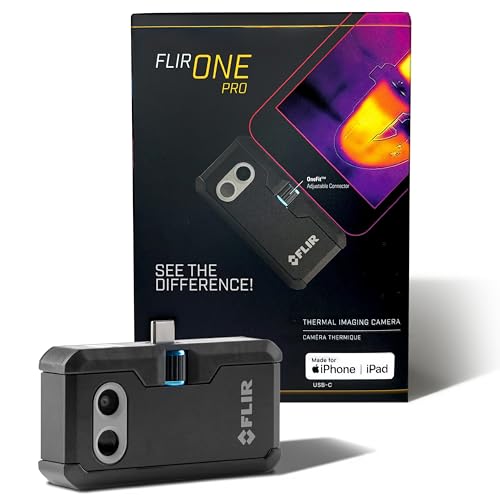 FLIR ONE Pro (phone) | Plugs into iPhone/Android; inspector favorite. | Amazon — $296.65 |
 Topdon TC001 | High-res phone module at a low price. | Amazon — $249.00 |
 FLIR C5 Compact | Standalone pocket camera with Wi-Fi. | Amazon — $593.99 |