FLIR C5 Price: What Homeowners Need to Know
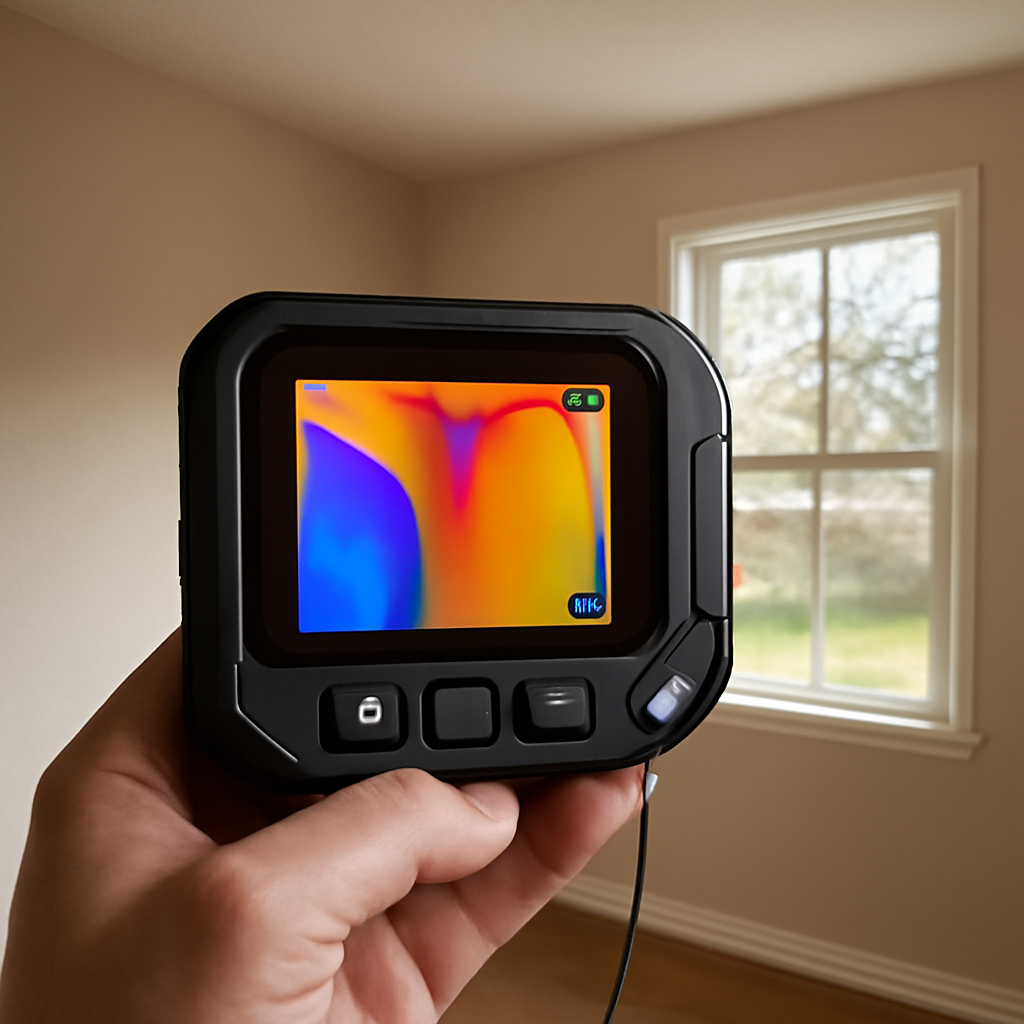
Homeowners and entry-level inspectors looking at the FLIR C5 are usually weighing whether a roughly $700-$800 pocket thermal camera is the right tool for their workflow. The price tier is the entry point to credible thermal imaging — below this band the trade-offs become severe, and above this band the capability jumps meaningfully but so does the cost. This guide walks through what the C5 price band typically includes, what it omits compared to higher tiers, and where a pocket-format thermal camera fits in residential inspection work.
Part of our Thermal Imaging for Homes guide — start there for the full picture →
Where the C5 Price Sits in the Broader FLIR Lineup
Pocket-format thermal cameras occupy a recognizable tier in the broader thermal-camera market. Phone-attach accessories sit below the pocket tier at roughly $200-$450. Pocket cameras like the C5 sit in the $700-$1,500 band. Prosumer-tier handhelds with larger resolution and articulating displays sit at roughly $1,500-$5,000. Professional-grade tools with high-resolution sensors and advanced analysis features run $5,000-$15,000 and beyond. The home inspection tools guide covers the full tier landscape.
The C5 price represents the entry point to “credible standalone thermal” — a tool that does not require a smartphone to operate and produces images useful for inspection documentation.
What the C5 Tier Typically Includes
Compact Pocket Form Factor
The whole tool is meant to live in a tool-belt pocket or coat pocket. The thermal sensor, visible-light camera, display, battery, and storage are integrated into a single unit. This is the operational difference from phone-attach products, which require pulling out a phone and aligning the attached sensor for each shot.
Built-in Display
A small color touchscreen — typically 3 to 3.5 inches — lets the operator see the live thermal image without needing a paired device. For inspectors moving quickly between rooms, this matters. Phone-attach products break the operator’s flow by requiring a separate device.
Wi-Fi and Cloud Upload
Most pocket-tier cameras include Wi-Fi and direct upload to vendor cloud services. Inspectors can offload imagery from the field rather than waiting until they return to the office.
Onboard Storage
Internal flash storage holds hundreds to thousands of inspection images. Pocket-tier cameras typically lack a removable SD card, so transfer is via USB or Wi-Fi.
Basic Radiometric Capability
Pocket-tier cameras at this price point typically record radiometric thermal data — meaning per-pixel temperature values are saved in the image file, allowing post-flight analysis with vendor or third-party software. This is the feature that separates inspection-grade thermal from visualization-only thermal.
What You Give Up at the C5 Price
Lower Thermal Resolution
Pocket-tier sensors typically run at 160×120 native thermal resolution. Some products use image-enhancement techniques to display larger interpolated images, but the underlying native pixel count is the limiting factor. Higher tiers offer 320×240, 384×288, 640×480, and up. For finding gross anomalies — missing insulation, large moisture intrusion, obvious electrical hotspots — 160×120 is sufficient. For finding subtle anomalies on small components, it is limiting.
No MSX or Limited MSX
FLIR’s MSX (Multi-Spectral Dynamic Imaging) overlays visible-light edge detail on the thermal image, making it easier to identify exactly which building feature an anomaly corresponds to. MSX is widely available across FLIR’s product range; the implementation on pocket-tier cameras is typically more constrained than on prosumer or pro models.
Lower Thermal Sensitivity
NETD (Noise Equivalent Temperature Difference) measures how small a temperature difference the sensor can reliably detect. Pocket-tier cameras typically rate around 70 mK; prosumer tier improves to 40-50 mK; pro-grade reaches sub-30 mK. The practical effect is that the higher tiers detect smaller anomalies and produce cleaner images at low delta-T.
No Articulating Display
The screen is fixed to the housing. Inspecting hot spots in awkward locations — high ceiling registers, behind appliances, low under-cabinet areas — is harder than with a tool whose screen tilts.
Limited Manual Controls
Pocket-tier cameras typically auto-range temperatures and offer limited manual span control. Pro-grade tools allow precise manual span adjustment, which matters for visualizing small anomalies in environments with wide temperature variation.
Lifetime Calibration and Service Contract
Pro-grade tools typically come with annual or multi-year calibration contracts as standard practice; pocket-tier may not. Calibration drift matters for accurate temperature readings and for documentation in commercial or insurance contexts.
What the C5 Price Buys for a Homeowner
For a homeowner doing infrequent moisture, insulation, or electrical inspections, the pocket-tier price is a notable jump from phone-attach products but the operational gains are real:
- Faster deployment — pull from a pocket, press a button, image is captured.
- No phone dependency, which matters in basements or signal-attenuated environments.
- Better optics and sensor noise performance than phone-attach products.
- Radiometric data files that support documentation if findings need to be shared with a contractor.
Most casual homeowners do not need this tier. A phone-attach product at $200-$450 covers the basic “is there a cold spot behind this wall” use case. Pocket-tier is appropriate when the homeowner wants standalone operation and credible documentation.
What the C5 Price Buys for a New Inspector
An inspector building a residential inspection business often starts at the pocket tier and upgrades over time. The entry-point reasoning includes:
- Sufficient capability for the most common residential thermal use cases (moisture, insulation, electrical scan).
- Compact form factor that fits in standard inspector tool kit.
- Vendor support and software ecosystem (image management, report generation) shared with higher-tier products.
- A clear upgrade path to prosumer-tier without needing to relearn the brand’s UI.
The thermal camera imager device anatomy guide covers the spec items that drive performance across the lineup.
When to Step Up From the C5 Tier
Several signals indicate an inspector should step up:
- Finding the 160×120 resolution insufficient for subtle anomalies — small electrical components, individual leakage joints, narrow insulation gaps.
- Needing more precise manual span control for documenting commercial work.
- Working in conditions with low delta-T where higher sensitivity matters.
- Producing inspection reports for commercial or insurance clients who expect prosumer-tier image quality.
Where to Buy and Pricing Variability
Pocket-tier prices fluctuate. Refurbished units from authorized resellers can be 20-30 percent below new retail. Annual sale events (industry trade-show seasons, end-of-fiscal-year clearances) sometimes offer discounts on current-generation products. Rental options exist through industrial-tool rental houses for inspectors with intermittent thermal needs. The FLIR camera prices guide covers price-fluctuation patterns across the lineup.
Total Cost Beyond the Camera
The full cost of operating a pocket-tier thermal camera includes the camera itself plus:
- Annual calibration if documentation is required (typically $100-$200 per year through vendor service).
- Carrying case and rugged protection beyond the included case (typically $50-$150).
- Software for report generation if the vendor’s free tool is insufficient (often included in the camera price for FLIR’s ecosystem).
- Training time — even simple thermal tools have a learning curve for proper temperature interpretation. ASHRAE and the Department of Energy publish free building-envelope guidance that helps.
Common Pricing Misconceptions
“Pocket cameras are basically the same as phone-attach products”
They are not. Sensor quality, operational flow, and radiometric capability differ meaningfully. The price gap reflects real capability gap.
“Higher resolution always justifies the price step”
Not always. For most residential homeowner use, the pocket-tier resolution is adequate. Stepping up adds capability the user may never tap. The decision should be use-case driven, not spec-driven.
“Refurbished means risky”
Authorized-reseller refurbished units typically include factory recalibration and warranty. Risk is comparable to new at meaningful savings. Third-party refurbished (eBay, generic resellers) is a different category and warrants more scrutiny.
Pocket-Tier Camera Use Cases in Detail
Practical use cases that map cleanly to the pocket tier include verifying insulation coverage in attic spaces, locating moisture intrusion behind drywall before opening it up, identifying air-leakage paths around windows and door frames during heating season, locating overheating electrical components in a panel box (with appropriate PPE), checking radiant-floor system function by visualizing warm pathways, and documenting cold-spot locations for a contractor’s repair work. Each of these benefits from radiometric data files, which let the contractor review specific temperatures rather than just colors on a screen.
What the Operator Has to Know About Emissivity
Surface emissivity affects how thermal imagers interpret the radiation reaching the sensor. Polished metals reflect much of the infrared from surrounding objects, producing misleading temperature readings unless the operator adjusts the emissivity setting or applies a high-emissivity tape patch to the target. For most building-envelope materials (paint, wood, painted metal, masonry), the default emissivity setting on pocket-tier cameras (~0.95) produces reasonable accuracy. For polished metals, copper pipes, mirror-finish appliances, and reflective foils, manual emissivity adjustment is required for accurate readings. Operators who skip this step on those materials produce imagery that looks compelling but reads incorrectly.
Software and Reporting Workflow
Pocket-tier cameras at this price point typically include vendor desktop software for image review, span and palette adjustment after capture, and basic report generation. The vendor software supports radiometric files — letting the operator change emissivity, span, and palette during review rather than only at capture. Some operators also use third-party tools for advanced analysis. For inspection workflows where reports are delivered to clients, the software side matters as much as the camera itself.
Battery Life and Field Workflow
Pocket-tier cameras at this price band typically deliver 2-4 hours of continuous use per charge. For full-day inspection workflows across multiple properties, this is enough for most days but tight enough that a backup charging arrangement matters. USB-C charging from a vehicle inverter or a portable power bank extends operating time between properties. Cold weather (which is relevant for Front Range winter inspections) reduces battery capacity meaningfully; carrying the camera in an inside pocket on cold days keeps the battery warm enough to maintain rated capacity.
Tripod and Stability Considerations
Most pocket-tier cameras include a standard tripod thread on the housing. Mounting on a small tripod or monopod produces steadier images, particularly for documentation work or for inspecting components that require longer exposure (low-delta-T targets, narrow temperature spans). For most handheld inspection use, the tripod thread is not needed; for documentation production or analysis, it earns its space in the kit.
Warranty and Support
Pocket-tier cameras from major brands typically come with a 24-month warranty on the camera body and 12 months on the battery. Coverage typically excludes accidental damage and exposure to liquid. Extended warranty options exist at additional cost. Vendor support quality varies; brands with established service centers in the U.S. typically resolve issues faster than imports without domestic service infrastructure. For inspection professionals who rely on the camera for paid work, vendor support quality is a real consideration in tier selection.
Comparing Pocket-Tier to Phone-Attach in Practice
For buyers considering whether to step up from a phone-attach product, the practical capability difference is meaningful. A phone-attach camera produces usable imagery for obvious anomalies but struggles with subtle ones. A pocket-tier camera at this price band typically produces cleaner imagery, faster framerate, better sensitivity, and more reliable color accuracy. The operational flow is also more efficient — no phone-app dependency, no connector-compatibility worries when the buyer’s phone upgrades, no battery drain on the phone during long inspection sessions. For homeowners moving from “occasional curiosity” to “regular practical use,” the step-up is usually worth it.
When the Pocket Tier Is Not Enough
Pocket cameras have honest limits. Inspecting a commercial flat-roof system for moisture intrusion across thousands of square feet exceeds the area-coverage practical for a 160×120 sensor. Documenting subtle electrical anomalies on small components is constrained by the same resolution. Producing inspection reports for clients who expect prosumer-tier image quality may fall short. Inspectors who hit these limits regularly move up to prosumer or pro tiers — at notably higher cost but with capability that matches the work demands.
When to Hire an Inspector Instead
For a one-time issue — moisture suspicion before a remodel, an electrical concern before closing on a home — hiring an inspector with their own thermal equipment is usually cheaper than buying a pocket-tier camera. The InterNACHI and ASHI directories list certified inspectors who carry thermal as part of standard practice.
References
- ENERGY STAR: Seal and Insulate — U.S. Environmental Protection Agency (ENERGY STAR)
- ASHRAE Building Envelope Technical Resources — ASHRAE
- InterNACHI Infrared Thermography Reference — International Association of Certified Home Inspectors
- ASHI Standards of Practice — American Society of Home Inspectors
Frequently asked questions
What does the FLIR C5 price band typically include?
Pocket-format thermal cameras in the $700-$800 band typically include a 160×120 native thermal sensor, integrated visible-light camera, color touchscreen, Wi-Fi connectivity, cloud upload, onboard storage, and basic radiometric capability.
What do you give up at this price compared to higher tiers?
Lower thermal resolution (160×120 vs 320×240 or higher), more limited MSX implementation, higher NETD (lower sensitivity around 70 mK), no articulating display, and limited manual span controls. Annual calibration contracts may also be separate.
Is the C5 tier enough for a homeowner?
For most casual residential use, yes. For finding gross anomalies — moisture intrusion, missing insulation, obvious hotspots — the pocket tier is sufficient. Phone-attach products at $200-$450 cover the lightest homeowner use cases.
When should an inspector step up from this tier?
When 160×120 resolution becomes limiting, when manual span control is needed for commercial documentation, or when working in low-delta-T conditions where higher sensitivity matters. Many residential-only inspectors stay at pocket tier indefinitely.
Thermal imaging cameras
Infrared cameras reveal hidden moisture, missing insulation, and air leaks. Phone-attachment models are the budget entry point; standalone units have higher resolution.
| Product | Why | Buy |
|---|---|---|
 FLIR ONE Pro (phone) FLIR ONE Pro (phone) | Plugs into iPhone/Android; inspector favorite. | Amazon — $349.00 |
 Topdon TC001 Topdon TC001 | High-res phone module at a low price. | Amazon — $199.99 |
 FLIR C5 Compact FLIR C5 Compact | Standalone pocket camera with Wi-Fi. | Amazon — $611.50 |