FLIR Handheld: A 2026 Lineup Guide for Homeowners
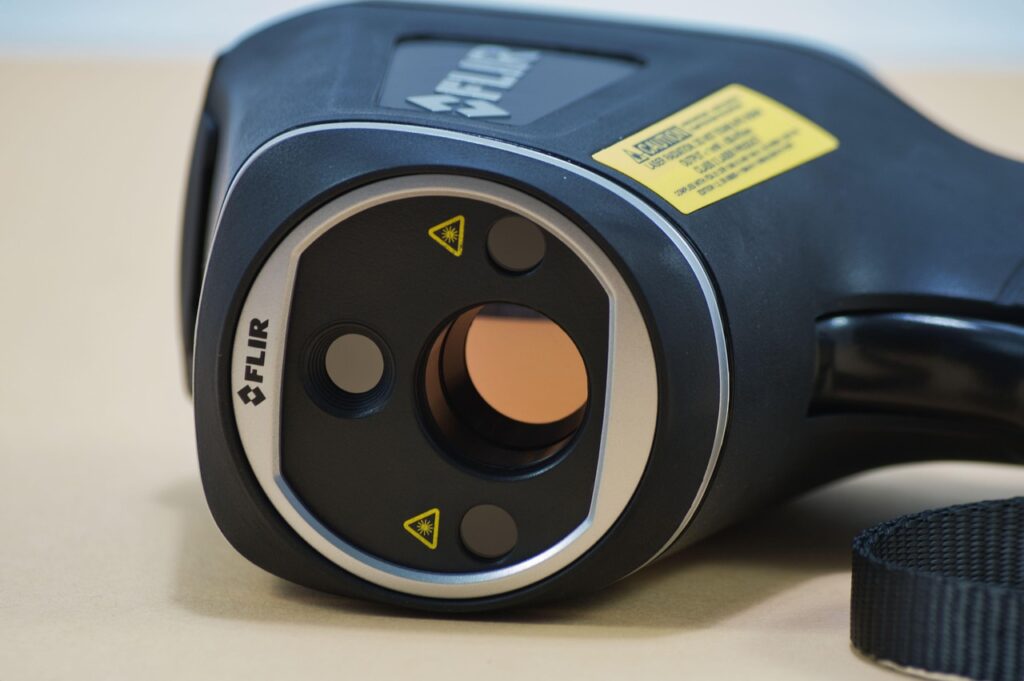
“FLIR handheld” covers a wide range of products from a $200 phone-clip sensor to a $15,000 high-resolution inspector camera. The marketing material rarely makes the distinctions easy to navigate, and even the model number conventions have shifted across product generations. This guide structures the FLIR handheld lineup as it stands in 2026, explains what each family does well, and provides homeowners and professionals with a decision framework for picking a model that matches actual use. The same physics underlies every FLIR product (a microbolometer sensor in the long-wave infrared band capturing thermal data), so the differentiators are resolution, sensitivity, ergonomics, and software features rather than fundamentally different technology.
The FLIR Handheld Product Families
FLIR’s handheld lineup splits into five recognizable families. The smartphone-clip family includes the One Pro and One Pro LT, which attach to iPhone or Android phones via Lightning, USB-C, or USB. The pocket-camera family is the C-series (C2, C3, C5), small standalone cameras with built-in displays. The traditional inspector family is the E-series (E4, E6, E8 Pro, E54, E96), pistol-grip cameras with larger displays and higher-resolution sensors. The hybrid moisture-thermal family is the MR-series (MR176, MR277). The spot-thermometer-with-thermal family is the TG-series (TG165, TG297, TG54).
Beyond these consumer-oriented families, FLIR also makes industrial and security cameras (T-series at $20,000+, vehicle-mounted security units, drone-mounted units). Those sit outside the homeowner and home-inspector market and are not covered here. The parent home inspection tools hub covers thermal imaging in the broader inspector toolkit context.
The One Pro: FLIR’s Most Common Homeowner Model
The FLIR One Pro is the model most homeowners shopping for thermal capability end up with. The reasons are clear: pricing at $400-$500, integration with the smartphone the user already owns, MSX visual overlay that makes thermal images easier to interpret, and 160×120 thermal resolution that is sufficient for most homeowner diagnostic tasks. The One Pro LT at $200-$300 is the lower-cost variant with reduced sensitivity and feature set; for most users, the price gap to the full One Pro is worth the upgrade.
What the One Pro does well: insulation gap mapping in walls and attics during heating or cooling season, water leak diagnosis when temperature contrast exists between wet and dry materials, electrical hot spots in panels and outlets, HVAC duct issues, air leakage at windows and doors, underfloor heating troubleshooting. What it does not do well: precise spot temperature reading on shiny or low-emissivity surfaces, high-detail imaging of small targets at distance, prolonged use sessions in hot environments where the smartphone may thermally throttle.
The C-Series: Pocket Standalone Cameras
The C5 (and the discontinued C2 and C3 it replaces) is FLIR’s pocket-sized standalone camera. It includes a built-in 3.5-inch touchscreen, internal storage, Wi-Fi connectivity for image offload, and the same MSX visual overlay as the One Pro. Thermal resolution is 160×120, matching the One Pro. The form factor is roughly the size of a deck of cards, fits easily in a tool pouch, and operates without a phone tether.
For homeowners and inspectors who want thermal capability always ready in the toolbox without phone setup overhead, the C5 at $700-$900 fills a different role than the One Pro. The trade-off is pricing roughly double the One Pro for similar imaging capability. Sibling resources like portable thermal imaging cameras as a category cover this format more broadly.
The C5 vs One Pro Decision
For users who already carry an iPhone or Android phone and prefer minimum gear, the One Pro is the more flexible choice. For users who want a thermal camera that is always ready in a tool pouch with no phone dependency, the C5 is the right fit. Inspectors often own both: One Pro on the phone for portability, C5 in the truck for redundancy and extended sessions where phone battery drain is a concern.
The E-Series: Inspector Working-Tool Tier
The E-series is FLIR’s traditional pistol-grip inspector camera lineup. E4 (160×120) at $1,000-$1,500 is the entry tier. E6 (240×180) at $2,000-$2,500 adds resolution. E8 Pro (320×240) at $3,500-$4,500 is the most common camera carried by certified home inspectors in the United States. E54 (320×240) at $5,000-$7,000 adds higher sensitivity and more lens options. E96 (640×480) at $8,000-$15,000+ is high-resolution professional work.
For working home inspectors building a credentialed practice, the E8 Pro is the working-tool choice. The 320×240 resolution produces report-grade images that hold up in printed deliverables, the documentation features (voice annotation, manual emissivity entry, level/span adjustment) match what inspectors need, and the form factor is durable for daily field use. For homeowners doing occasional diagnostic work on their own property, the E-series is generally over-specified.
The MR-Series: Combined Moisture and Thermal
The MR176 and MR277 combine a thermal camera and a contact moisture meter in one body. The MR176 has 80×60 thermal resolution with MSX and a pin-or-pinless moisture probe; the MR277 has 160×120 thermal with both pin and pinless moisture meters integrated. The intended workflow is restoration documentation: the thermal sensor identifies suspect cool patches, and the moisture meter confirms whether the temperature anomaly correlates with active moisture.
For restoration contractors documenting drying jobs, the integrated form factor saves switching tools and produces unified reports. For homeowners, separate tools usually deliver better value: a One Pro at $400 plus a $150-$300 moisture meter from Lignomat, Wagner, or Protimeter covers the same workflow at lower total cost. Sibling resources like FLIR gun-style cameras cover the spot-thermometer hybrid format.
The TG-Series: Spot Thermometers with Thermal Viewfinders
The TG165, TG297, and TG54 are infrared spot thermometers with a small thermal imaging viewfinder added. Spot temperature accuracy is the primary specification; the thermal viewfinder helps the user aim at the right target. Pricing runs $250-$600. These are popular in HVAC, electrical, and automotive applications where spot temperatures drive diagnostic decisions and full-frame thermal imaging is unnecessary.
For homeowner use, the TG-series fits a narrower set of cases than the One Pro or C5. If the primary need is spot temperatures (checking individual circuit breakers, monitoring HVAC vent output temperatures, troubleshooting refrigerator coolant cycles), the TG-series is well-targeted. If the need is general thermal scanning across walls and ceilings, the One Pro or C5 is the better tool at similar pricing.
Pricing in 2026
FLIR handheld pricing in 2026 stacks like this. Smartphone-clip family: One Pro LT at $200-$300, One Pro at $400-$500. Pocket family: C5 at $700-$900. Inspector family: E4 at $1,000-$1,500, E6 at $2,000-$2,500, E8 Pro at $3,500-$4,500, E54 at $5,000-$7,000, E96 at $8,000-$15,000+. Hybrid family: MR176 at $1,500-$2,000, MR277 at $2,500-$3,500. Spot-thermometer family: TG165 at $250-$350, TG297 at $400-$500, TG54 at $500-$600.
The used market for FLIR handhelds is active, particularly for the E-series. Working inspectors trading up to higher resolution release E6 and E8 Pro units that typically sell at 30-50% below new pricing. Verifying calibration date and battery health on used units is worthwhile before purchase; FLIR offers factory recalibration service that adds $200-$400 to a used buy if needed.
How to Choose for Homeowner Use
The decision framework for homeowner FLIR purchase: start with the One Pro at $400-$500. It covers the diagnostic use cases most homeowners actually have, integrates with phones and cloud storage, and produces images good enough to share with contractors during repair discussions. Upgrade to the C5 if phone-independent operation matters; this is more common for users who own multiple iPhones in a household or whose iPhone battery management is already strained.
Step up to the E-series only if documentation requirements actually justify it. For a homeowner concerned about a single insulation issue, the One Pro produces sufficient evidence for any contractor conversation. For a buyer commissioning multiple inspections during a real-estate search, the per-inspection cost of an inspector with an E8 Pro is far cheaper than buying one. Sibling resources like how thermal imaging cameras rank for inspection use cover the comparison space in detail.
References
- Infrared Thermography in Home Inspection — International Association of Certified Home Inspectors
- ASHI Standard of Practice — American Society of Home Inspectors
- International Code Council Resources — International Code Council
Thermal imaging cameras
Infrared cameras reveal hidden moisture, missing insulation, and air leaks. Phone-attachment models are the budget entry point; standalone units have higher resolution.
| Product | Why | Buy |
|---|---|---|
 FLIR ONE Pro (phone) FLIR ONE Pro (phone) | Plugs into iPhone/Android; inspector favorite. | Amazon — $349.00 |
 Topdon TC001 Topdon TC001 | High-res phone module at a low price. | Amazon — $199.99 |
 FLIR C5 Compact FLIR C5 Compact | Standalone pocket camera with Wi-Fi. | Amazon — $449.00 |