Best Moisture Meter for Home Inspectors
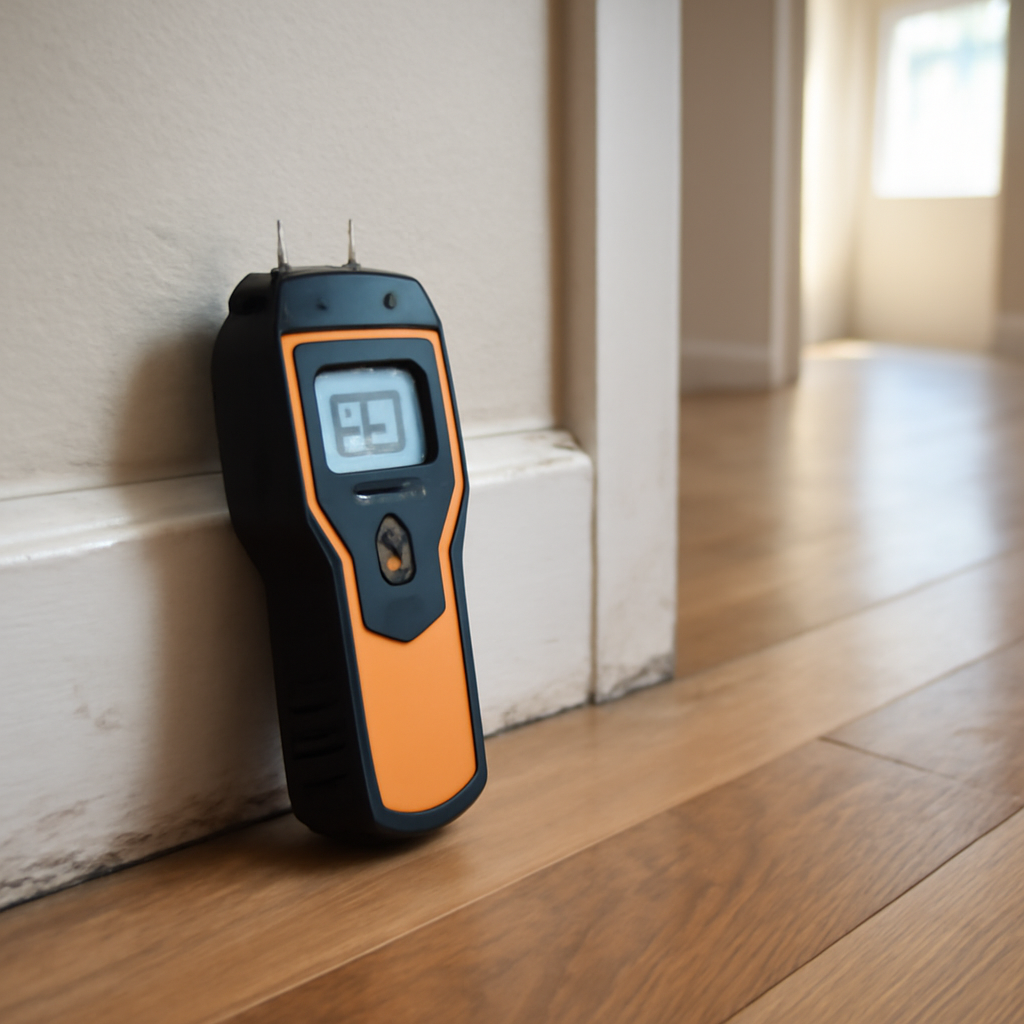
Picking a moisture meter for home inspectors is a different job from picking one for a woodworker or a weekend DIY project. An inspector scans dozens of rooms a week, has to document what the meter showed, and cannot leave a client’s freshly painted wall full of pinholes. The meter also needs to confirm a suspect spot, not just flag it. That pushes the choice toward dual-mode meters, solid calibration checks and some way to record readings. Below are seven picks drawn from current listings, each matched to a specific inspection job, followed by a buying guide written around how inspectors actually use the tool on a Front Range house.
Part of our Moisture Meters & Water Damage Detection guide — start there for the full picture →
As an Amazon Associate we earn from qualifying purchases.
How we compared: we compared 18 current Amazon listings for pin, pinless and dual-mode building moisture meters on what each listing actually states: sensing method, material modes, stated sensing depth, calibration features, display, power and any way to save readings. We did not lab-test any of these meters or use them hands-on. One soil-moisture probe for houseplants also came back in the search and was set aside. Prices and availability change often, so check the current listing before buying.
Quick picks: the best moisture meters for home inspectors
| Pick | Best for | Key spec | Key detail |
|---|---|---|---|
| Protimeter SurveyMaster BLD5375 | Full-time inspectors who document readings | Pin + non-invasive modes | Bluetooth app saves time- and date-stamped readings |
| NDI KC-316MIX | Budget pin-and-pinless combo | Pin + pinless, up to 3/4 in | Drywall, cement board, softwood and hardwood modes |
| General Tools MMH800 | Pairing material readings with room humidity | Pin + pinless pad | Also shows ambient temperature and relative humidity |
| Klein Tools ET150 | Pocket-carry pin confirmation | 8 mm stainless pins | Cap doubles as a calibration check; 0.14 lb listed |
| RDINSCOS MT28 (flashlight) | Crawl spaces, attics and under-sink cabinets | Pinless | Built-in LED flashlight |
| General Tools MMD4E | Entry-level pin meter for a second kit | 1.5–33% building-material scale | Calibration-check cap and spare pins included |
| RDINSCOS MT28C | Color-screen pinless scanning | Pinless, up to 19 mm | Color backlit display with HOLD |
The seven picks, compared listing by listing
1. Protimeter SurveyMaster BLD5375 — Best Overall for Professional Inspectors
Dual-function pin and non-invasive meter with Bluetooth logging, auto calibration checks and field calibration.
Check price on Amazon| Specification | Details |
|---|---|
| Sensing method | Switchable pin mode and non-invasive (pinless) mode in one unit |
| Materials named | Wood, drywall, concrete and fiberglass boat hulls |
| Recording | Bluetooth link to the Protimeter Connect app; readings saved with time and date stamps |
| Calibration | Automatic calibration check every 50 power cycles; field calibration for the non-invasive mode |
| Settings / power | Adjustable auto shut-off (0–10 min), backlight and buzzer; battery life described as three times longer than earlier models; battery type not stated in listing |
| Model / warranty | BLD5375; warranty not stated in listing |
Protimeter SurveyMaster BLD5375 — pin + non-invasive, Bluetooth app logging, auto cal check every 50 cycles, field cal, OTA firmware
The Only Listing on the Shelf That Logs Readings to an App
Of the 18 building moisture meters considered, the SurveyMaster is the only one whose listing describes Bluetooth or any phone app. Only one other listing, the AEGTEST AWT-380, mentions storing data at all, and it does so on the meter itself. For an inspector, time- and date-stamped readings that can be downloaded are the difference between “the meter showed elevated moisture” in a report and a record that can be pulled up if a seller or contractor disputes the finding later.
It is also one of only four dual-mode meters on the shelf. The other three are the NDI KC-316MIX, the General Tools MMH800 and the LASELION MS03. That matters because dual mode lets an inspector sweep a wall in non-invasive mode and then confirm a flagged area with pins without switching tools. The SurveyMaster is the only listing describing an automatic, recurring calibration check; two pin meters (the General Tools MMD4E and Klein ET150) instead use a cap that doubles as a manual check, and the MS03 offers manual calibration in pinless mode. Firmware updates over the air are another detail no other listing mentions. Protimeter’s older pin meter is covered in our Protimeter MMS3 guide for comparison.
What the listing leaves out is notable for a professional tool. It does not state a measurement range, a sensing depth for the non-invasive mode, the battery type, a weight or a warranty term. The dimensions given (about 9 x 6 x 3 in) may describe the package rather than the meter. Confirm those details with the manufacturer before buying.
Pros
- Only listing with app-based, time-stamped reading records
- Pin and non-invasive modes in one meter
- Automatic calibration checks plus field calibration
- User-adjustable shut-off, backlight and buzzer
Cons
- No measurement range or sensing depth stated
- Battery type and warranty not stated
- App workflow adds a phone to the process
2. NDI KC-316MIX — Best Budget Pin-and-Pinless Combo
Pin and pinless meter with drywall, cement board, softwood and hardwood modes and an angled sensor head.
Check price on Amazon| Specification | Details |
|---|---|
| Sensing method | Pin-type for spot numbers and pinless for surface scanning; title claims up to 3/4 in depth |
| Material modes | Softwood, drywall, cement board and hardwood, plus a mildew index indicator bar |
| Sensor design | Angled sensor that makes partial contact with the surface; longer handle |
| Controls | HOLD, auto power-off, out-of-range alarm, low-battery indicator |
| Power | Two AAA batteries, included |
| Model / warranty | KC-316MIX; warranty and dimensions not stated in listing |
NDI KC-316MIX — pin + pinless, 3/4 in claimed depth, 4 material modes + mildew index bar, 2xAAA, HOLD, auto-off
The Only Combo Listing With a Dedicated Cement Board Mode
Among the four dual-mode meters on the shelf, the KC-316MIX is the only one that names a cement board setting. That is a useful mode for inspectors, because cement backer board sits behind tile in showers and tub surrounds, exactly where leaks hide. It is also the only listing on the shelf that describes a “mildew index” bar, though the listing does not explain how that index is calculated, so treat it as a moisture-level indicator rather than any measure of mold.
Compared with the other combos, the NDI states a pinless depth (up to 3/4 inch in the title), which the SurveyMaster, MMH800 and MS03 listings do not. Eight of the 18 listings state a pinless sensing depth, and all eight land at roughly 19 to 20 mm (about 3/4 inch), so the NDI is in line with the rest rather than deeper.
The gaps: no measurement ranges, no accuracy figure, no calibration check and no warranty term are stated.
Pros
- Pin and pinless in one tool
- Only combo naming a cement board mode
- Stated pinless depth up to 3/4 inch
- Common AAA batteries included
Cons
- No ranges, accuracy or calibration check stated
- “Mildew index” is not explained
- Warranty and size not stated
3. General Tools MMH800 — Best for Pairing Material Readings With Room Humidity
Pin and pinless meter with separate displays for moisture, ambient temperature and relative humidity.
Check price on Amazon| Specification | Details |
|---|---|
| Sensing method | Flat pinless pad for scanning; flip-open cap exposes pins for spot readings |
| Extra measurements | Ambient temperature and relative humidity, with a °F/°C switch |
| Display | Two dedicated displays; audible and visual low, medium and high indicators |
| Materials named | Floors, plastered walls and wood |
| Size / weight | Listed at 1.95 lb and about 3.6 x 8.1 x 12 in, which may reflect packaging |
| Model / warranty | MMH800; 1-year parts warranty |
General Tools MMH800 — pin + pinless pad, moisture %, ambient temp and RH on dual displays, °F/°C, 1-yr parts warranty
The Only Listing That Measures Room Relative Humidity
Two listings on the shelf mention temperature: the MMH800 and the LASELION MS03. Only the MMH800 also reads relative humidity of the air. That pairing is useful in the field because elevated readings on a basement wall can come from a leak or from condensation, and the room’s humidity helps tell those apart. The EPA recommends keeping indoor relative humidity below 60 percent and ideally between 30 and 50 percent, and notes that condensation can be a sign of high humidity.
Like the SurveyMaster and NDI, it combines a pinless pad with pins, so the scan-then-confirm workflow is built in.
The listing does not state a moisture measurement range, a sensing depth for the pad, the battery type or a calibration check. The weight and dimensions look large for a handheld meter and may describe a retail box; confirm the actual size before assuming it will ride in a shirt pocket.
Pros
- Only listing with an air relative humidity reading
- Pinless pad plus pins under a flip cap
- Audible and visual moisture-level cues
Cons
- No moisture range or pad depth stated
- Listed size and weight are unclear
- Only a 1-year parts warranty
4. Klein Tools ET150 — Best Pocket Pin Meter for Confirming a Spot
Slim pin meter with 8 mm stainless pins, material modes, three-color backlight and a cap calibration check.
Check price on Amazon| Specification | Details |
|---|---|
| Sensing method | Stainless steel pins that insert up to 8 mm deep |
| Material modes | Softwood, hardwood, drywall and other building materials |
| Display | Backlit LCD that turns red, orange or green for high, medium or low moisture |
| Calibration | Top of the cap verifies calibration |
| Size / weight | About 6.4 x 1.2 x 1.0 in; 0.14 lb; pen-style pocket clip |
| Model / warranty | ET150; battery type not stated; warranty refers to manufacturer website |
Klein ET150 — pin type, 8 mm stainless pins, 4 material modes, 3-color backlit LCD, cap cal check, 0.14 lb with pocket clip
The Lightest Meter on the Shelf, With a Built-In Calibration Check
Five of the 18 listings are pin-only meters. Of all the listings that state a weight, the ET150 is the lightest at 0.14 lb, and its pen clip means it can ride in a shirt pocket next to a flashlight. For an inspector who already carries a pinless scanner or a thermal camera, a light pin meter is the confirmation step: scan to find the anomaly, push pins in to see whether it is really wet.
It is one of only two meters on the shelf whose cap doubles as a calibration check; the other is the General Tools MMD4E. That small detail supports a routine our moisture meter calibration guide recommends, checking the meter before the day starts instead of trusting it blindly.
The listing does not give numeric measurement ranges, the battery type or a fixed warranty term. Pin depth of 8 mm reads the paper face and gypsum near the surface of drywall, not the framing behind it; insulated hammer-probe accessories, covered in our moisture meter probe guide, are a separate purchase category for deeper readings.
Pros
- Lightest stated weight on the shelf
- Cap doubles as a calibration check
- Drywall and building-material modes, not just wood
- Three-color backlight reads at a glance
Cons
- Pin-only, so it leaves small holes
- No numeric ranges stated
- Battery type and warranty term not stated
5. RDINSCOS MT28 (Flashlight Model) — Best for Crawl Spaces and Attics
Pinless wall and wood meter with an integrated LED flashlight for crawl spaces, attics and cabinets.
Check price on Amazon| Specification | Details |
|---|---|
| Sensing method | Pinless, non-destructive sensor |
| Materials named | Wood, masonry, concrete and other surfaces |
| Built-in light | Integrated LED flashlight for crawl spaces, attics and behind cabinets |
| Usage note | Keep away from metal objects to avoid interference |
| Size / weight | About 6.7 x 3.5 x 1.6 in; roughly 0.33 lb |
| Model / warranty | MT28; sensing depth, power source and warranty not stated in listing |
RDINSCOS MT28 — pinless, built-in LED flashlight, wood/masonry/concrete, metal-interference caution, about 0.33 lb
The Only Pinless-Only Meter Here With a Built-In Light
Two listings on the shelf include a flashlight: this MT28 and the dual-mode LASELION MS03. The MT28 is the only pinless-only meter of the two. That is a niche feature until an inspector is lying on a crawl space vapor barrier holding a meter, a light and a phone at once. The EPA’s mold course singles out crawl spaces with high relative humidity, particularly those with bare earth floors, as common sites of hidden mold growth.
It is one of three RDINSCOS listings on the shelf, and all three warn against reading near metal objects. That honesty is useful: any pinless meter can be pulled high by a pipe, a steel strap or foil-faced insulation behind the surface, and those warnings simply say so out loud.
Unlike its MT28C sibling (pick 7) and the MT28 wall model, this listing does not state a sensing depth, display type, battery type or measurement modes. It is a screening tool for dark spaces, so pair it with a pin meter for confirmation.
Pros
- Built-in LED light for dark work areas
- Pinless, so no marks on finished surfaces
- Listing is upfront about metal interference
Cons
- No sensing depth or modes stated
- Power source and warranty not stated
- Screening only; needs pin confirmation
6. General Tools MMD4E — Best Entry-Level Pin Meter for a Backup Kit
Pin meter with 5–50% wood and 1.5–33% building-material scales, calibration-check cap, spare pins and 9V.
Check price on Amazon| Specification | Details |
|---|---|
| Sensing method | Stainless steel pins pushed into the surface |
| Ranges | 5–50% for wood; 1.5–33% for building materials such as drywall and concrete |
| Display / cues | Backlit LCD with 0.3 in digits; low, medium and high tones and icons; HOLD |
| In the box | Spare 8 mm pins, protective cap that works as a calibration checker, 9V battery |
| Size / weight | Listed at 1 lb; dimensions given may describe packaging |
| Model / warranty | MMD4E; 1-year warranty |
General Tools MMD4E — pin type, wood 5–50% / building 1.5–33%, backlit LCD, tones + HOLD, cal-check cap, spare pins, 9V
One of Two Cap-Calibrated Pin Meters, With a Stated Building-Material Scale
Like the Klein ET150, the MMD4E’s protective cap doubles as a calibration checker. Unlike the ET150, its listing gives numbers: 5 to 50 percent on the wood scale and 1.5 to 33 percent on the building-material scale. Only a handful of listings on this shelf publish a separate building-material range at all; the COCZOW PM6811A (1.5–30%) and LASELION MS03 (0–25%) are the others, while the TopTes TS-630 gives one 0–57% span across its wood and building scales.
Spare pins matter more than they sound. Pins bend and dull on plaster and older dense drywall, and a meter with a bent pin gives a poor reading. Four of the 18 listings run on a 9V battery, and this is one of them, so it shares a battery with many smoke alarms in an inspector’s truck stock.
The listing’s marketing leans heavily on the word “mold,” calling the meter a mold tester. A moisture meter does not detect mold; it detects moisture that mold needs. Read past that wording. The listing also does not state the meter’s own weight clearly or any accessory-probe compatibility.
Pros
- Numeric wood and building-material ranges stated
- Cap calibration check and spare pins included
- Audible tones help in loud or dim spaces
Cons
- Pin-only, no scanning mode
- Listing overstates it as a “mold tester”
- Only a 1-year warranty
7. RDINSCOS MT28C — Best Color-Screen Pinless Scanner
Pinless meter that scans to 19 mm with a color backlit display, HOLD lock and clear usage guidance.
Check price on Amazon| Specification | Details |
|---|---|
| Sensing method | Pinless, scans up to 19 mm below the surface |
| Display | Color backlit LCD; HOLD button locks a reading |
| Modes | Wood mode for wood moisture content; other materials read for comparison |
| Usage guidance | Keep the sensor fully in contact, away from the hand and from metal |
| Weight | About 0.35 lb |
| Model / warranty | MT28C; battery type and warranty not stated in listing |
RDINSCOS MT28C — pinless, 19 mm depth, color backlit LCD, HOLD, wood mode + comparative readings, about 0.35 lb
A 19 mm Scan With a Color Screen and Plain-Spoken Instructions
Five of the 18 listings describe a color display, and the MT28C is one of them. The listing is also unusually clear about how a pinless meter should be used on non-wood materials: use wood mode for wood, and for anything else, compare readings on the same material to find the area that stands out. That is the correct way to read drywall and plaster, and it matches the method in our drywall moisture meter readings chart.
Its stated 19 mm depth matches the other seven listings that state a pinless depth, all of which cluster around 3/4 inch. The HOLD lock helps when reading behind a toilet or under a sink where the screen cannot be seen while the sensor is in place.
The listing does not state the battery type, ranges, number of material modes or warranty. As a pinless-only tool, it should be paired with a pin meter such as the ET150 or MMD4E for confirmation.
Pros
- Color backlit display with HOLD
- Stated 19 mm scanning depth
- Listing explains comparative reading on non-wood materials
Cons
- No ranges or mode count stated
- Battery type and warranty not stated
- No pins for confirmation
Pin, pinless or dual mode: what an inspector actually needs
Pin meters measure electrical resistance between two probes pushed into the material. Wet material conducts better, so the reading rises. The reading reflects conditions at the pin tips and nowhere else, which is precise but slow, and it leaves two small holes.
Pinless meters press a flat sensor pad against the surface and read a field beneath it, roughly 3/4 inch deep on most listings here. They scan a whole wall in seconds and leave no marks, but they average everything in that field, including studs, fasteners, wiring, pipes and foil-faced insulation.
The EPA describes moisture meters in exactly these two forms: a thin probe inserted into the material or a sensor pressed directly against its surface, used on carpet, wallboard, wood, brick and concrete. It also notes that investigators use them to find wet areas where mold may be growing and to monitor drying.
For a working inspector, the practical answer is both. Either buy one dual-mode meter (the SurveyMaster, NDI or MMH800 above) or carry a pinless scanner plus a light pin meter. Our guide to the home inspection moisture meter walks through how the two-step workflow fits into a standard inspection.
Specs that matter for inspection work
Material modes and scales
A wood moisture-content percentage is only meaningful on wood. On drywall, plaster and masonry, the number is a relative indicator. Meters with a dedicated drywall or building-material mode, and listings that state a separate building-material scale, make that distinction explicit. When a listing only shows a wood range, assume non-wood readings are comparative.
Stated sensing depth
Eight of the 18 listings state a pinless depth, and every one is in the 19–20 mm range. A listing claiming far deeper scanning should be read skeptically, and a listing that gives no depth at all should be treated as unknown. Three-quarters of an inch covers the drywall layer and a little of what sits behind it, which is usually enough to flag a leak.
Calibration checks
A meter that drifts quietly is worse than no meter, because it produces confident wrong numbers in a report. A cap-style check, a reference block or an automatic check routine lets an inspector confirm the meter before a job.
Recording readings
Most inspectors photograph the meter display next to the suspect area. A HOLD button, offered by many listings here, makes that photo easy. App logging, offered only by the SurveyMaster on this shelf, removes a step and timestamps the result.
Power and durability
Two listings here have built-in rechargeable batteries (the AEGTEST AWT-380 and RDINSCOS MT37), four use 9V cells and two use AAA. For a meter used every day, a spare battery in the bag matters more than battery chemistry. Few listings on this shelf state a drop rating, so a protective case is worth budgeting for; see our moisture meter accessories guide.
How inspectors use a meter on a Front Range house
The meter goes where water tends to show up first:
- Below window sills and at the corners of window and door openings, especially on walls facing prevailing weather.
- Around tubs, shower surrounds and toilet bases, where leaks soak the subfloor and cement backer board long before stains appear.
- Under kitchen and bathroom sinks, along supply and drain lines.
- Basement foundation walls and finished basement drywall, particularly at the bottom few inches.
- Ceilings below bathrooms, below roof penetrations and at exterior wall tops where ice dams can back water up after heavy snow.
- Crawl spaces and attics, where the EPA notes hidden moisture often accumulates.
The EPA also lists the back side of drywall, wallpaper and paneling, and cold corners behind furniture where condensation forms, among places hidden moisture and mold occur. A pinless scan across those areas is fast; a pin reading confirms what the scan suggests.
Colorado’s dry indoor air in winter works in the inspector’s favor: dry building materials make a wet patch stand out more against its surroundings. The reverse is also true in older basements and crawl spaces, where a whole wall can read moderately elevated from ground moisture rather than a single leak. That is why a baseline reading from a known-dry area of the same material, taken first, is the anchor for every comparison.
Moisture meters pair naturally with thermal cameras. A camera shows a cool patch on a ceiling, and the meter confirms whether the patch is wet or just a cold spot from missing insulation. Our infrared leak detection guide explains how the two tools work together.
Reading results without over-calling them
A high reading over a stud, a nail line or a metal corner bead is a known false positive on pinless meters. A good habit is to scan a grid, note where the pattern rises, then move a few inches to either side to see whether the high follows the framing or spreads like water. Confirm with pins where the client allows it.
A reading also describes the moment, not the history. A wall that was soaked last month and has since dried may read normal; a wall that was just wiped with a damp cloth may read high at the surface. Context from staining, odor, the age of repairs and the seller’s disclosures belongs in the interpretation. When readings are elevated, the EPA’s guidance is to dry water-damaged areas within 24 to 48 hours to prevent mold growth, and inspectors usually recommend that the source be found and fixed by the appropriate trade.
What a moisture meter cannot tell you
A moisture meter measures moisture, not mold. Several listings on this shelf describe themselves as mold detectors; none of them can identify mold. The CDC states that it does not recommend mold testing in homes, because there are no set standards for acceptable levels and the response to any visible mold is the same: remove it and fix the moisture problem.
A meter also cannot see inside a wall cavity beyond its sensing depth. The EPA notes that investigating hidden mold can be difficult, may require a professional experienced with water- and mold-damaged buildings, and requires caution because disturbing moldy areas can spread spores. That is the line between a homeowner screening a wall and a full inspection or mold assessment, which our moisture meter for home inspection guide discusses in more depth.
For the broader kit that surrounds a moisture meter, see the home inspection tools guide.
References
- Mold Course Chapter 3: Investigating Mold and Moisture — U.S. Environmental Protection Agency
- Mold Course Chapter 2: Why and Where Mold Grows — U.S. Environmental Protection Agency
- Mold Remediation in Schools and Commercial Buildings, Chapter 3 — U.S. Environmental Protection Agency
- A Brief Guide to Mold, Moisture and Your Home — U.S. Environmental Protection Agency
- About Mold — Centers for Disease Control and Prevention
Frequently asked questions
What type of moisture meter do most home inspectors use?
Most working inspectors use a dual-mode meter or carry two meters: a pinless scanner to sweep walls and floors quickly without marking them, and a pin meter to confirm a suspect spot. The EPA describes both forms, a thin probe inserted into the material or a sensor pressed against the surface, as common investigation tools.
Is a pinless moisture meter accurate enough for home inspections?
Pinless meters are reliable for finding where moisture is concentrated, but they average everything within roughly 3/4 inch of the surface, including studs, fasteners and pipes. That makes them screening tools. Inspectors confirm elevated pinless readings with pins or with a comparison against a known-dry area of the same material.
Can a moisture meter detect mold?
No. A moisture meter detects moisture that mold needs to grow, not mold itself, even when a listing calls it a mold tester. The EPA notes that investigators use meters to locate wet areas where mold may be growing, and the CDC does not recommend routine mold testing in homes.
How often should an inspector check moisture meter calibration?
Many inspectors check calibration before each inspection day using a built-in cap check, a reference block or the meter's self-check routine. A quick check takes seconds and catches drift, bent pins or a weak battery before a wrong reading ends up in a report.
Do moisture readings on drywall mean the same as readings on wood?
No. Wood moisture-content percentages apply to wood. On drywall, plaster and masonry, readings are relative unless the meter has a calibrated building-material scale. Compare a suspect spot against a known-dry area of the same wall rather than reading the number as an absolute percentage.
Buying a home on the Front Range and want a full moisture survey from an inspector who carries both pin and pinless meters? Get in touch through our contact page to connect with a vetted local inspector.
Moisture meters for home inspection
Pin meters read deep but leave marks; pinless meters scan surfaces non-destructively. Many inspectors carry both.
| Product | Why | Buy |
|---|---|---|
 Klein Tools ET140 Pinless Klein Tools ET140 Pinless | Non-destructive scanning; affordable. | Amazon — $49.14 |
 General Tools MMD4E General Tools MMD4E | Best-selling pin meter for drywall/wood. | Amazon — $39.98 |
 Lignomat Mini-Ligno Lignomat Mini-Ligno | Trusted by woodworkers; species-calibrated. | Amazon — $99.00 |