Protimeter MMS3: A Complete Moisture Meter Guide
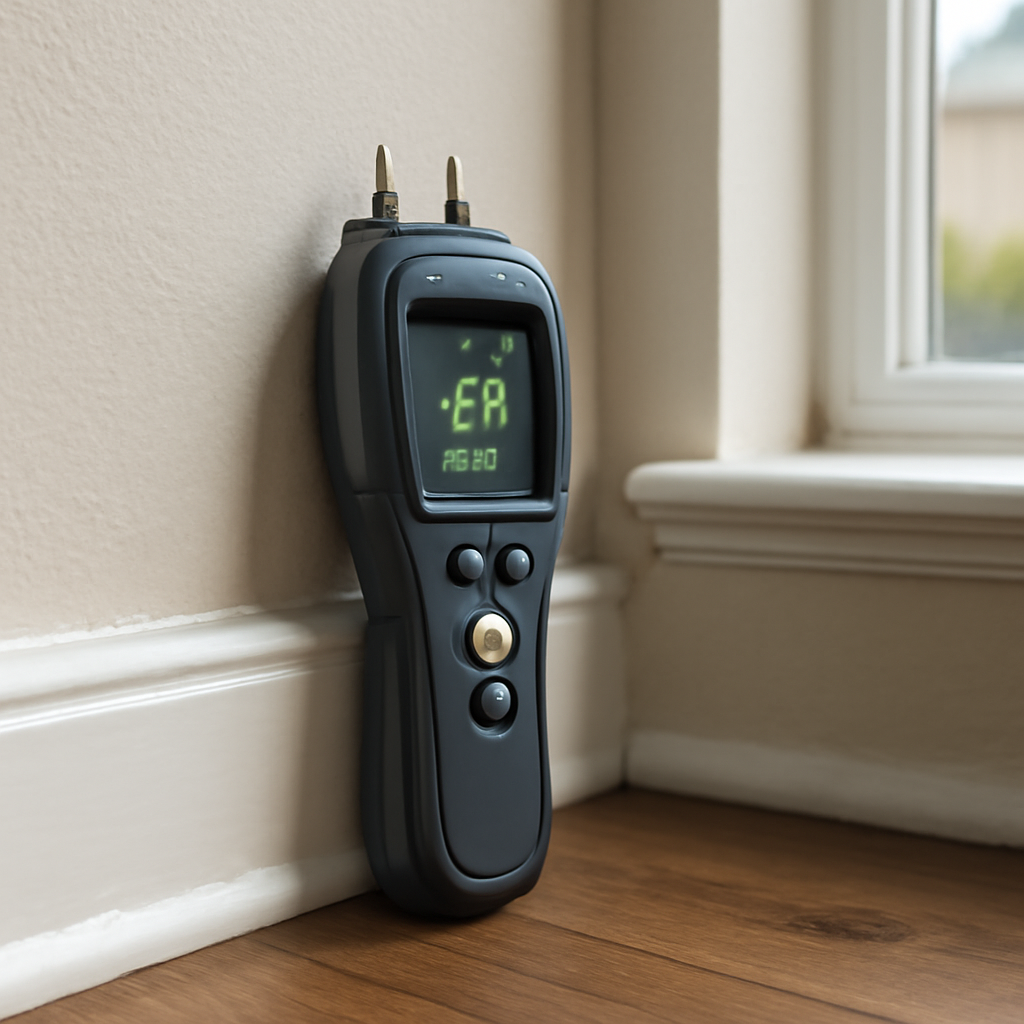
The Protimeter MMS3 is one of the most widely recognized multi-function moisture meters used by building inspectors, restoration technicians, and remediation contractors. Built by Protimeter, a brand owned by Amphenol Advanced Sensors, it combines several measurement methods in a single handheld instrument: resistance (pin) readings, capacitance (pinless) scanning, relative humidity with temperature, and a thermo-hygrometer condensator function. For homeowners researching what professionals carry into a wet basement or a stained ceiling, the MMS3 is a useful reference point. This guide walks through what the meter measures, its published specifications, and how each mode fits into a real inspection workflow.
Part of our Home Inspection Tools guide — start there for the full picture →
What Is the Protimeter MMS3 and What Does It Measure?
The MMS3 (Moisture Measurement System, third generation) is a survey-grade meter that consolidates four jobs into one body. In pin mode it reads electrical resistance between two probes to estimate moisture content directly in wood and other materials. In pinless mode it uses a non-invasive radio-frequency capacitance sensor to scan beneath a surface without leaving holes. The hygrometer mode reads ambient relative humidity, air temperature, and dew point. The condensator function, used with a separate humidity sleeve and probe, lets a technician measure humidity inside a wall cavity or behind a finish.
That combination matters because no single method answers every moisture question. A pinless scan finds a damp area fast across a wide surface. Pins then quantify how wet a specific spot is. Humidity readings explain whether the air itself is driving condensation. The MMS3 is designed so an inspector can move between these answers without switching tools. For a broader look at how these measurement principles compare, the difference between probe and scan methods is covered in the guide on pinless versus pin moisture meters.
Protimeter MMS3 Specifications and Display
Protimeter publishes a defined set of specifications for the MMS3. Understanding the numbers helps clarify what the readings mean and where the meter’s limits sit.
Measurement ranges
In pin (resistance) mode, the meter reports wood moisture content across a range of roughly 7.9 to 99.9 percent, with a calibrated scale tied to wood and a relative reference scale for other materials. The pinless (capacitance) mode reads on a relative scale, commonly described as 0 to 100 on the meter’s reference index, scanning to a depth of approximately 19 millimeters (about three-quarters of an inch) below the surface. The hygrometer mode measures relative humidity from 0 to 100 percent and temperature across a working span suitable for indoor building environments. Dew point and grains-per-pound or equivalent humidity ratio outputs are calculated from those inputs.
Color-coded readings
One practical feature is the three-color reference system. Readings display against green (dry, generally safe), yellow (borderline, monitor), and red (wet, at risk) zones. This traffic-light logic lets a less experienced user grasp a result quickly, though the underlying numeric value still matters for documentation. The MMS3 carries a backlit LCD that shows the active mode, the numeric value, and the color band together.
Power and build
The instrument runs on a standard 9-volt battery and ships in a hard carry case with the integrated electrode, a remote pin probe lead, a humidity sleeve, and reference accessories. The rubberized housing is built for field use, and the integral pins on the top of the unit allow quick spot checks without attaching the remote lead.
The Four Modes Explained
Pin (resistance) mode
Two pins penetrate the material surface, and the meter passes a small current between them. Wetter material conducts more readily, so resistance falls and the displayed moisture content rises. This is the most direct way to quantify moisture in wood framing, subfloor, trim, and sheathing. Because the calibration scale is built for wood, readings on drywall, plaster, or masonry are interpreted on a relative reference scale rather than as a true percentage. Pin mode leaves two small holes, so inspectors place them where cosmetic impact is minimal.
Pinless (capacitance) mode
Holding the flat sensor pad against a surface lets the MMS3 detect moisture below the finish without penetration. This is ideal for quickly mapping a damp wall, finding the edge of a leak, or scanning finished flooring where holes are unacceptable. The trade-off is that capacitance readings are influenced by density, embedded metal, and surface contact, so they indicate relative wetness rather than an exact percentage. The technique parallels what is described for inspecting finished surfaces in the guide on the best moisture meter for walls.
Hygrometer mode
With the meter’s humidity sensor active, the MMS3 reports relative humidity, temperature, dew point, and the difference between surface temperature and dew point. That last value warns when a surface is cold enough to risk condensation. In Colorado’s dry climate, indoor humidity is often low, but bathrooms, crawl spaces, and poorly ventilated basements can still create localized condensation problems that this mode reveals.
Condensator (hygrostick) mode
Using the humidity sleeve over the probe, a technician can measure the relative humidity inside a drilled cavity or behind baseboard. This helps determine whether trapped moisture sits inside an assembly even when the visible surface reads dry. It is a slower, more deliberate measurement reserved for diagnostic work rather than quick screening.
How Inspectors Use the MMS3 on a Job
A typical sequence starts with pinless scanning. The technician sweeps the sensor across a suspect wall or floor to find where readings climb, mapping the wet area without marking the finish. Once the boundary is established, pin mode quantifies the worst spots and confirms whether the elevated capacitance reading reflects actual moisture or simply a dense or metallic background. The hygrometer mode then characterizes the room’s air, which informs whether the source is a leak, condensation, or rising humidity.
This layered approach is why a multi-function meter earns its place in a kit. Restoration crews use the same workflow to document drying progress, taking repeated readings in identical spots over several days until the numbers fall back into the green zone. Inspectors comparing it against simpler single-mode tools will find context in the broader home inspection tools buyer’s guide, which frames where survey meters fit alongside thermal cameras and borescopes.
Pairing the MMS3 with infrared imaging is common. A thermal camera highlights temperature anomalies that suggest hidden moisture, and the moisture meter then verifies whether those cold spots are actually wet. The camera narrows the search; the meter confirms the finding.
Interpreting MMS3 Readings Correctly
A meter is only as useful as the judgment applied to its readings, and the MMS3 rewards an operator who understands what each mode is actually reporting. In pin mode on wood, the displayed percentage is a genuine moisture content figure, and the practical thresholds are well established: many species are considered dry at roughly 6 to 12 percent, while sustained readings above the high teens or twenties indicate a problem that can support decay and mold over time. On non-wood materials, the same pins report on a relative reference scale, so the number is a comparison tool rather than a true percentage.
Pinless readings call for even more care. Because capacitance responds to density and anything conductive behind the surface, a high relative reading near a junction box, a pipe, or foil-faced insulation may reflect the background rather than water. The disciplined approach is to treat a pinless result as a flag, then confirm with pins or with a comparison to a known-dry area of the same material. Comparative scanning, sweeping a wall and watching for where the number climbs above its dry baseline, is often more reliable than fixating on a single absolute value, a point reinforced in the guide on the thermal moisture meter.
Humidity readings round out the picture. When the surface temperature sits close to the dew point the meter calculates, condensation risk is high, which can explain damp readings that have nothing to do with a leak. Reading the three modes together, material moisture, relative humidity, and the surface-to-dew-point margin, lets an operator distinguish a plumbing leak from a humidity-driven condensation problem.
How the MMS3 Compares With Single-Mode Meters
The MMS3 sits at the professional end of a market that ranges from inexpensive consumer pin meters to dedicated pinless scanners and standalone hygrometers. A basic pin meter answers one question, how wet is this spot in wood, and does it cheaply. A dedicated pinless meter scans surfaces without holes but cannot quantify or read humidity. A hygrometer reads air conditions but nothing in the material. The MMS3’s value proposition is consolidating all three into one calibrated instrument with a defensible wood scale and a shared display.
That consolidation matters most for users who move between questions repeatedly, inspectors documenting a whole house, restoration techs tracking drying across many points, or property managers handling recurring moisture complaints. For someone who only needs an occasional pinless spot check, a simpler tool may deliver most of the benefit at a fraction of the cost. The trade-offs across meter types are laid out in the guide comparing the pin versus pinless moisture meter approaches, which helps a buyer decide how much instrument the job warrants.
Strengths, Limitations, and Care
The chief strength of the MMS3 is consolidation. Carrying one calibrated instrument that scans, probes, and reads humidity reduces gear and speeds documentation. The color-coded display lowers the learning curve, and the published wood calibration gives defensible numbers for reports.
The limitations are inherent to the methods, not the brand. Capacitance readings remain relative and can be fooled by foil-faced insulation, wire mesh, or plumbing behind a surface. Resistance readings depend on good pin contact and a known material; salts and surface coatings can skew them. The meter measures moisture, not the cause, so interpretation still requires judgment. Calibration should be checked against the supplied reference, and the pins should be inspected for wear, since bent or corroded pins distort resistance readings.
Storing the unit dry, replacing the 9-volt battery before it weakens, and keeping the sensor pad clean all preserve accuracy. The humidity sensor in particular benefits from being kept away from dust and standing moisture between uses.
Is the MMS3 Right for a Homeowner?
For most homeowners, a professional-grade meter like the MMS3 is more instrument than a one-time leak check requires, and its price reflects that professional positioning. The value case is strongest for working inspectors, restoration contractors, and serious DIY property managers who measure moisture repeatedly and need documentation. A homeowner facing a single suspected leak may be better served by hiring an inspector who already carries this class of tool, or by a simpler pinless meter for spot checks. Readers weighing entry-level options can review the comparison of consumer models in the guide on the best pinless moisture meter.
Calibration, Accuracy, and Maintenance
A moisture meter is only useful if its readings can be trusted, and the MMS3 includes provisions to verify that. Protimeter supplies a reference check, often a calibration check device or known reference, that lets a user confirm the pin (resistance) function reads correctly. Performing this check periodically, and before any consequential measurement, guards against drift and damaged probes producing misleading numbers. If a reference check fails, the meter should be serviced rather than relied upon.
The pins themselves are a common source of error. Bent, corroded, or worn pins make poor contact and distort resistance readings, so they should be inspected and replaced when degraded. The pinless sensor pad must be kept clean and held flat against the surface, since debris or poor contact skews capacitance readings. The humidity sensor is sensitive to dust and standing moisture and benefits from being stored clean and dry between uses.
Battery condition matters more than users expect. A weak 9-volt battery can cause erratic readings before the meter signals a low-battery warning, so replacing the battery proactively preserves accuracy. Storing the instrument in its case, away from temperature extremes and humidity, extends the life of both the electronics and the sensors. Treated this way, the MMS3 holds its calibration and remains a dependable survey tool across years of fieldwork.
Where the MMS3 Fits in a Tool Kit
For a working inspector or restoration technician, the MMS3 typically lives alongside a thermal imaging camera and, often, a borescope. The thermal camera scans broad areas for temperature anomalies that hint at hidden moisture, the MMS3 confirms whether those anomalies are actually wet and quantifies the worst spots, and a borescope can inspect inside a wall cavity when a finding warrants a closer look. Each tool answers a question the others cannot, and together they form an efficient moisture-diagnosis workflow.
That complementary relationship is why a multi-function meter earns its place rather than duplicating other gear. A homeowner assembling a kit for occasional use may not need all three, but a professional documenting moisture problems day after day benefits from the speed and defensibility the MMS3 provides. Readers building out a broader inspection kit can see how the meter pairs with imaging in the guide on the thermal imaging moisture meter combo workflow.
References
- Moisture Intrusion and Inspection Standards — InterNACHI
- Standard of Practice for Home Inspections — American Society of Home Inspectors
- Building Codes and Moisture Provisions — International Code Council
Frequently asked questions
What is the difference between pin and pinless mode on the MMS3?
Pin mode uses two probes to measure electrical resistance and quantify moisture content directly, leaving small holes. Pinless mode uses a non-invasive capacitance sensor to scan beneath a surface without penetration, giving a relative reading. Inspectors often scan first, then probe the wettest spots.
How deep does the MMS3 pinless sensor read?
The capacitance sensor scans to roughly 19 millimeters, about three-quarters of an inch, below the surface. Readings are relative rather than an exact percentage and can be affected by density or embedded metal.
Does the MMS3 measure humidity?
Yes. Its hygrometer mode reads relative humidity, temperature, and dew point, and the condensator function with a humidity sleeve can measure humidity inside a wall cavity. This helps distinguish a leak from condensation.
Is the Protimeter MMS3 worth it for a homeowner?
For a single leak check it is usually more meter than needed. It is best suited to inspectors, restoration contractors, and property managers who measure moisture repeatedly and need documented readings. Homeowners may prefer a simpler pinless meter or hiring a professional.