Moisture Meter Pin vs Pinless: A Full Comparison
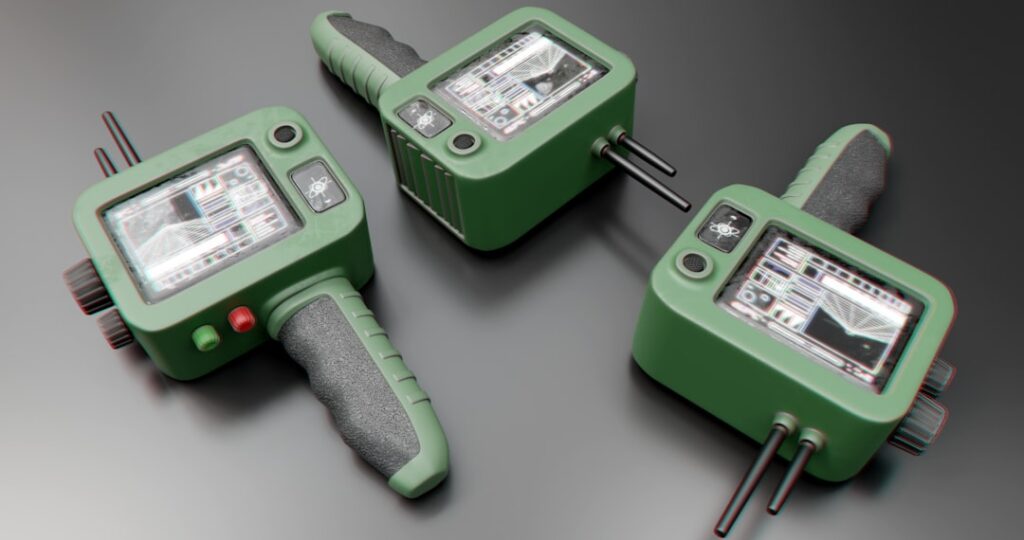
Two technologies dominate the handheld moisture-detection market, and the choice between them shapes how a reading gets taken, what it actually measures, and whether the surface gets marked in the process. The moisture meter pin vs pinless decision comes down to a tradeoff: invasive electrical-resistance probes that bite into the material versus non-invasive capacitance sensors that scan beneath the surface without leaving a mark. Each approach answers a slightly different question, and the better tool depends on the material, the depth of interest, and whether cosmetic damage is acceptable. This guide breaks down the working principles, accuracy, scan depth, %MC scales, named example meters, and concrete buying guidance for homeowners and working inspectors.
Part of our Moisture Meters & Water Damage Detection guide — start there for the full picture →
Pin vs pinless moisture meters: the short answer
A pin-type meter drives two metal electrodes into the material and measures the electrical resistance between them. Wet material conducts electricity more readily than dry material, so a lower resistance corresponds to a higher moisture reading. A pinless meter sits flat against the surface and uses a capacitance or electromagnetic field to sense the moisture in a volume of material below the sensor pad — no penetration required.
Pin meters give a precise, localized reading at a known depth (the depth the pins reach), and they can be calibrated to specific wood species for a true percentage of moisture content. Pinless meters scan a broader area quickly and non-destructively, making them ideal for surveying a wall or floor without leaving pinholes. Most professional inspectors carry both, or buy a dual-mode meter that switches between the two. For a homeowner checking a single damp patch, the answer hinges on what the surface is and whether holes matter.
Put simply, pins answer “exactly how wet is this spot, at this depth?” while pinless answers “where, across this area, is the moisture, and how does it compare to dry?” Neither question is more valid; they are different jobs. A flooring installer deciding whether oak has acclimated needs the pin’s absolute number. A homeowner tracing the boundary of a ceiling stain needs the pinless meter’s fast, mark-free survey. Recognizing which question is being asked is the first step in choosing — or in deciding to own both.
How a pin-type moisture meter works
Pin meters operate on electrical resistance — sometimes called the conductivity method. Two (or more) sharpened pins press or hammer into the material a few millimeters deep. The meter passes a tiny current between the pins and measures resistance. Because water carries dissolved salts that conduct current, more moisture means less resistance, which the meter converts into a moisture-content figure or a relative scale.
The reading reflects the wettest path between the two pins, and the effective depth equals roughly how far the pins penetrate. Insulated or contact pins change this: standard uninsulated pins read the highest-moisture point along their full length, while insulated pins (bare only at the tip) read moisture specifically at the tip depth, which is useful for locating moisture gradients through a thickness of material.
Pin meters shine on wood. Calibrated species correction lets a quality meter report a genuine percentage of moisture content (%MC) — the weight of water relative to oven-dry wood weight. Flooring installers, woodworkers, and inspectors rely on this for decisions like whether hardwood has acclimated before installation. The downside is obvious: every reading leaves two small holes, which is unacceptable on finished surfaces, furniture, or a seller’s freshly painted wall.
Pin design varies in ways that matter. Basic meters use short, fixed pins on the body, fine for surface checks but limited in reach. Better meters accept a remote electrode or a hammer probe — a slide-hammer handle that drives longer, often insulated pins deep into framing, beams, or subfloor to read moisture where it actually sits. Insulated pins are the key upgrade for diagnostic work: because only the exposed tips conduct, they isolate moisture at a chosen depth, letting an inspector tell whether a wet beam is damp at the surface or saturated at its core. Uninsulated pins, by contrast, report the wettest point anywhere along their length, which can mislead when surface moisture sits over dry wood.
Temperature and chemistry also shape a pin reading. Resistance-based meters are calibrated for a reference temperature, and very cold or hot wood reads slightly off without correction. Dissolved salts, wood preservatives, glue lines, and fire-retardant treatments all change conductivity and can inflate a reading, which is why a single number on treated lumber should be treated with caution rather than trusted outright.
How a pinless moisture meter works
Pinless meters use electrical capacitance (or a related electromagnetic-impedance method). A sensor pad on the back of the meter emits a low-frequency field that penetrates the material. Moisture changes the dielectric properties of the material, and the meter measures that shift to estimate moisture content across the scanned volume — typically the area of the pad to a depth of roughly three-quarters of an inch to an inch and a half, depending on the model.
Because nothing penetrates, a pinless meter scans large areas fast. Glide it across a drywall ceiling or a hardwood floor and watch the reading climb as you approach a wet zone — a quick way to map the extent of a leak without perforating the finish. This non-destructive survey ability is the main reason home inspectors favor pinless meters for the walkthrough phase, then confirm with pins where a definitive number matters.
The tradeoffs are real. Capacitance readings are sensitive to material density, so a dense hardwood and a light softwood at the same true moisture will read differently unless the scale is set correctly. The sensor also needs flat, full contact — textured surfaces, uneven floors, or anything behind the wall (a stud, a pipe, foil-backed insulation, a nail plate) can skew the reading. Pinless meters report relative or scaled values more often than a precise species-corrected %MC.
Surface preparation and technique matter more than buyers expect. The sensor pad must sit flush; rocking the meter, pressing through a textured wallpaper, or scanning over a tile grout line introduces error. Holding the meter against a hand or any conductive object while reading can also throw the value. Good practice is to keep the pad fully seated, take several readings across an area, and look for the trend rather than fixating on one figure. Metal is the classic false-positive source — a pinless meter passing over a stud, a nail plate, ductwork, or foil-faced insulation can spike as if the area were soaked, which is why a high pinless reading should always be confirmed before anyone tears open a wall.
Depth of field is fixed by the model and cannot be dialed in. A shallow-scan pad reads only the near surface and may miss moisture deeper in a thick member; a deep-scan pad reads further but averages more material, blurring a small wet zone within a large dry area. Knowing a given meter’s stated scan depth keeps expectations realistic about what it can and cannot detect.
Accuracy, depth, and what each meter actually measures
Accuracy is not a single number; it depends on what you need. For an absolute, traceable percentage of moisture content in a known wood species, a calibrated pin meter with species correction is the reference standard — many report ±1% accuracy in the calibrated range. Pinless meters are excellent at relative measurement: comparing a suspect area to a known-dry reference area on the same material. That comparison is often more useful for leak detection than any absolute figure.
Depth is where the two diverge most. A pin meter reads only as deep as the pins go — usually 5–8 mm with standard pins, deeper with hammer-probe attachments and insulated extension pins. A pinless meter reads a shallow subsurface volume, commonly up to about 19–38 mm (0.75–1.5 in) below the surface, but it cannot isolate a single depth; it averages everything in the field. So a pinless meter might flag elevated moisture without telling you whether it sits at the surface or two centimeters in, whereas insulated pins can pinpoint the depth of a wet layer.
Both technologies can be fooled. Pins over-read where surface condensation or salts bridge the tips; pinless meters over-read near metal, dense framing, or behind tile. The disciplined approach — used by inspectors and explained in our overview of how to read a moisture meter — is to take multiple readings, always compare against a dry reference, and treat a single number with skepticism.
Understanding %MC scales and reference scales
Three scale types appear on these meters. The %MC (percent moisture content) scale is the true ratio of water weight to dry material weight, valid for wood when the species is set correctly; flooring and woodworking decisions use this scale, with most kiln-dried lumber targeted around 6–12% depending on region and end use. The %WME (wood moisture equivalent) scale expresses non-wood readings as if the material were wood, letting you use a familiar threshold on plaster or masonry. The relative or reference scale (often 0–100 or color-coded green/yellow/red) shows comparative dampness without claiming an absolute percentage — the most honest scale for pinless surveys of mixed materials.
For wood specifically, a green/dry band typically sits below about 15% MC, a caution band runs roughly 15–20%, and readings above 20% MC indicate conditions where decay fungi can become active over time. Always confirm the species setting before trusting an absolute number; an oak setting used on pine will report a misleading figure.
Reference scales deserve respect rather than dismissal. On mixed building materials — drywall, plaster, masonry, subfloor — a true %MC is meaningless because those materials hold and release water differently from wood. A relative scale that simply flags “this area reads higher than the dry reference” is the honest tool there, and it is exactly what most leak investigations need. The mistake to avoid is treating a relative number as if it were a calibrated percentage; a “30” on a 0–100 reference scale is not 30% moisture content, it is a comparative index. Reading the meter correctly means knowing which scale is displayed and what it claims, a distinction our companion guide on interpreting readings explains in plain terms.
Equilibrium moisture content (EMC) is the other concept worth knowing. Wood gives off or takes on moisture until it balances with the surrounding air’s temperature and humidity. In dry climates like Colorado’s Front Range, interior EMC often sits lower than in humid regions, so a “dry” target for installed flooring may be a few points lower than the same wood would reach near the coast. A meter reports the wood’s current moisture; pairing that with the local EMC tells an installer whether the material has finished acclimating.
Named example meters: pin, pinless, and dual-mode
Pin meters
The General Tools MMD4E is a widely sold entry pin meter with a 5–50% wood / 1.5–33% building-material range and audible alarm — inexpensive and adequate for spot checks. The Delmhorst BD-2100 is a long-standing professional pin meter favored by flooring pros for its species correction and rugged build. The Lignomat mini-Ligno line offers reliable species-corrected %MC for woodworkers.
Pinless meters
The Wagner Meters Orion line is a respected pinless family with strong species and density calibration. The General Tools MMD7NP and similar pads serve homeowners scanning drywall and subfloor. For drywall-focused surveying, see our roundup of the best moisture meter for drywall, which leans heavily on pinless and dual-mode picks.
Dual-mode meters
The Klein Tools ET140 and the GE/Protimeter family (the Protimeter MMS2 being a professional standard) combine a pinless scan mode with a pin/probe mode in one body. The Surveymaster Protimeter is the classic dual-function instrument inspectors reach for: search mode (pinless) to find the wet area, then measure mode (pins) to quantify it. Dual-mode tools cost more but eliminate the buy-one-or-the-other dilemma.
When to use which: practical scenarios
Reach for pinless when the surface must stay unmarked (finished hardwood, a staged home, furniture, a buyer’s walkthrough), when scanning a large area quickly, or when mapping the boundary of a leak. Reach for pins when an absolute species-corrected %MC matters (acclimating flooring, woodworking, kiln checks), when the surface is rough or uneven and a flat pad won’t seat, or when you need to know moisture at a specific depth using insulated pins.
For real-world home inspection, the workflow is usually sequential: pinless to survey and locate, pins to confirm and quantify. A reading behind a baseboard, inside a cabinet kick, or at the base of a stud bay is far easier to verify with a probe than a pad. Moisture work is one slice of a broader toolkit, and our parent guide to home inspection tools covers how meters fit alongside thermal cameras and borescopes during a typical inspection.
Consider a few concrete cases. A buyer’s inspector notices a faint stain on a finished hardwood floor near a dishwasher. Pins are out of the question — the floor is staged and pristine — so a pinless scan maps how far the elevated reading extends, and the inspector compares it to a clearly dry spot across the room. If the area reads high, the next step is a thermal camera to see the moisture pattern and, if a closet or unfinished underside allows, a pin probe from below to quantify it without marking the visible floor. In a different case, a woodworker checking a slab of walnut before joinery cares only about the absolute %MC at the core, so insulated pins set to walnut are the right and only tool. And in a flooded basement, a pinless meter sweeps the bottom of the drywall fast to draw the wet line for cut-out, then pins confirm whether the framing behind it is also wet.
The lesson across these scenarios is that the two technologies cooperate more than they compete. Survey wide and fast without damage, then drill down — literally — only where a definitive number changes a decision. Inspectors who skip the survey step and start probing waste time and leave holes; those who rely on the pad alone risk acting on a metal-induced false positive.
Buying guidance: which moisture meter should you buy?
For a homeowner who occasionally checks a damp wall or a houseplant-adjacent floor, an inexpensive pinless meter (or a basic pin meter if pinholes don’t matter) under $40 is plenty. For someone installing hardwood or doing serious woodworking, prioritize a species-corrected pin meter with a documented accuracy spec. For anyone inspecting homes professionally or chasing intermittent leaks across many materials, a dual-mode meter — pinless search plus pin measure — pays for itself.
Check four things before buying: the stated accuracy and calibration range, whether it offers species/material correction, the scan depth (for pinless) or pin/probe options (for pin), and whether a calibration-check standard is included so you can verify the meter stays trustworthy. A meter that can’t be checked against a reference is hard to trust over time. Compare current options in our moisture meter reviews before committing.
Price tiers map roughly to capability. Under about $30 buys a basic meter — usually pins, sometimes a simple pinless pad — adequate for a homeowner spot-checking a wall or a plant pot, with a coarse scale and no species correction. The $40–$120 band brings species/material settings, better build quality, and on the pinless side a usable scan depth. From roughly $150 to several hundred dollars sit the professional dual-mode instruments with documented accuracy, hammer-probe options, and calibration checks — the tier inspectors and flooring pros buy. Spending up mainly buys reliability and features, not magic; even an inexpensive meter reads correctly if used with a dry reference and realistic expectations.
A few extras separate good meters from frustrating ones. A hold function freezes the reading so you can pull the meter out of an awkward spot and read it. An audible tone lets you scan without watching the display. Replaceable pins matter on pin meters, since tips dull and bend. A backlit display helps in dark crawl spaces. And a documented calibration-check block — a small reference resistor or standard the manufacturer supplies — lets an owner confirm the meter hasn’t drifted, which is the single best way to keep trusting a reading months after purchase. For the homeowner who only ever checks drywall, a dedicated pinless pick from our drywall roundup is plenty; for anyone whose readings inform repairs or installations, the dual-mode tier earns its price.
Common mistakes that produce bad moisture readings
The most frequent error is trusting a single number with no reference. Materials, temperature, and meter mode all shift the reading, so a lone value means little. Always capture a known-dry baseline on the same material and compare. The second mistake is the wrong scale or species setting — reading pine on an oak setting, or treating a relative index as a percentage. The third is ignoring what’s behind a surface: a pinless spike over a nail plate or duct is a metal artifact, not water.
Other pitfalls include scanning textured or coated surfaces that prevent the pinless pad from seating, taking pin readings on salt-laden or chemically treated wood without accounting for the effect, and reading cold material without temperature correction. None of these mean the meter is broken; they mean the reading needs context. An inspector who notes the material, the mode, the reference, and the conditions alongside each number produces data a homeowner can act on. A bare figure scribbled without context invites the wrong repair.
Finally, treat the meter as a screening and confirmation tool rather than a verdict. It tells you moisture is present and roughly how much and where; it does not tell you the source, the history, or whether decay has begun. Pair elevated readings with visual inspection, thermal imaging, and — where warranted — opening the assembly to see the actual condition. The meter starts the investigation; it rarely finishes it.
References
- Moisture Intrusion and Inspection Guidance — InterNACHI
- Standard of Practice for Home Inspections — ASHI
- A Brief Guide to Mold, Moisture and Your Home — U.S. Environmental Protection Agency
Frequently asked questions
Is a pin or pinless moisture meter more accurate?
For an absolute, species-corrected percentage of moisture content in wood, a calibrated pin meter is the reference standard. Pinless meters are highly accurate for relative comparisons, such as a wet area versus a known-dry reference, which is often what matters for leak detection.
Do pinless moisture meters leave marks?
No. Pinless meters use a capacitance sensor pad that scans below the surface without penetrating, so they leave no holes. That makes them the better choice for finished hardwood, furniture, and homes being shown to buyers.
How deep does a pinless moisture meter read?
Most pinless meters read a subsurface volume roughly 0.75 to 1.5 inches deep, depending on the model. They cannot isolate a single depth and instead average the moisture in the scanned field, so they survey rather than pinpoint.
Can one meter do both pin and pinless?
Yes. Dual-mode meters such as the Protimeter Surveymaster and Klein ET140 include a pinless search mode and a pin measure mode in one body. Inspectors use the pinless mode to locate a wet area, then the pins to quantify it.
What moisture content is considered dry for wood?
On a species-corrected %MC scale, readings below about 15% are generally considered dry, 15 to 20% is a caution zone, and above 20% creates conditions where decay fungi can become active over time.
Moisture meters for home inspection
Pin meters read deep but leave marks; pinless meters scan surfaces non-destructively. Many inspectors carry both.
| Product | Why | Buy |
|---|---|---|
 Klein Tools ET140 Pinless Klein Tools ET140 Pinless | Non-destructive scanning; affordable. | Amazon — $49.14 |
 General Tools MMD4E General Tools MMD4E | Best-selling pin meter for drywall/wood. | Amazon — $39.98 |
 Lignomat Mini-Ligno Lignomat Mini-Ligno | Trusted by woodworkers; species-calibrated. | Amazon — $99.00 |