Pin Moisture Meter for Wood: MC%, Species and Targets
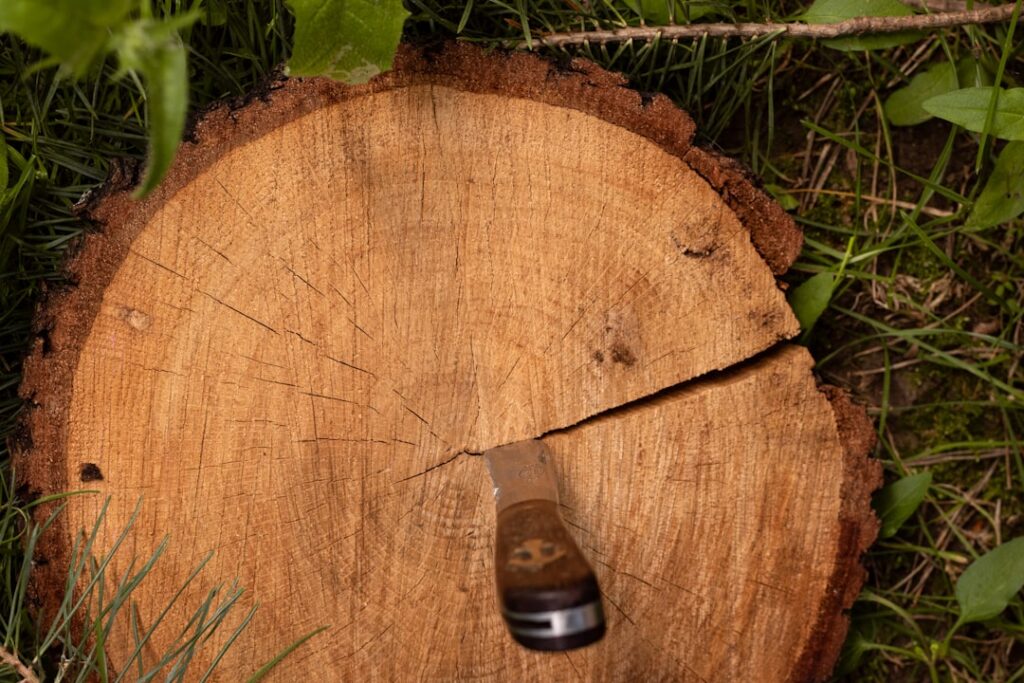
A pin moisture meter for wood pushes two metal pins into a board and estimates its moisture content as a percentage of the wood’s dry weight. It is the traditional tool for woodworkers, flooring installers, firewood buyers and home inspectors who need a number they can compare against a target, not just a “wetter here, drier there” impression. This guide explains how resistance readings become a moisture content (MC%) figure, why species and temperature settings matter, what typical targets look like for trim, flooring, framing and firewood, and how the drier air of the Colorado Front Range changes what “normal” means. It also covers insulated pins for depth readings, the small holes pins leave behind, and how to check framing and subfloors after a leak. It summarizes EPA and ASHI material current as of 2026 alongside general field practice, and it is general education rather than a substitute for a qualified professional looking at a specific house.
Part of our Moisture Meters & Water Damage Detection guide — start there for the full picture →
How a Pin Moisture Meter Reads Wood
A pin meter measures electrical resistance. When the two pins are driven into wood, the meter sends a small current between them. Dry wood is a poor conductor, so resistance is high. As moisture content rises, the wood conducts more easily and resistance falls. The meter converts that resistance into an estimated moisture content using a calibration curve built into its firmware, and it shows the result as a percentage.
That percentage is moisture content on an oven-dry basis: the weight of water in the wood divided by the weight of the wood with all water removed. A board reading 10 percent holds water equal to about a tenth of its dry weight. Because the figure is anchored to the wood itself, a pin meter on wood produces something closer to a real measurement than most readings on drywall or masonry, which are usually relative. The guide to moisture meter readings explains how wood percentages differ from the reference scales used on other materials.
EPA’s mold course describes moisture meters in general terms. In Chapter 3, on investigating mold and moisture problems, EPA says many investigators use moisture meters to find wet areas where mold may be growing, that the meters measure moisture in many types of building materials, and that they can also be used to monitor the drying process. EPA notes that a meter typically has a thin probe that can be inserted into the material or pressed against its surface, and it lists wood among the materials meters can be used on. A pin meter is the “inserted” version of that description.
What the pins actually measure
Resistance is measured along the path between the two pin tips, so the reading mainly reflects the wood at the depth the pins reach. With ordinary uninsulated pins, the whole length of each pin is in contact with the wood, and the meter tends to report the wettest layer along that path. That is useful for finding moisture, but it means a damp surface film or a wet outer shell can push the number up even if the core is drier. Most pin meters also work best with the pins oriented along the grain, as the manufacturer directs, because resistance differs with grain direction.
Readable range
Pin meters are generally most reliable in the middle of their range, roughly from the high single digits to the mid twenties on many models. At the very dry end, resistance becomes so high that small differences are hard to resolve. At the wet end, as wood approaches the fiber saturation point (often cited around the high twenties to thirty percent for many species), the relationship between resistance and moisture flattens, so numbers above that zone mostly mean “very wet” rather than a precise figure. The manufacturer’s manual states the usable range for a specific meter.
Species and Temperature Correction
A resistance reading only becomes a moisture content figure through a calibration curve, and that curve differs by wood species. Two boards at the same true moisture content but of different species can produce different resistance readings because of differences in density, chemistry and extractives. Meter makers handle this in a few ways:
- Species settings. Many meters let the user select a species or a species group, and the meter applies the matching curve.
- Correction tables. Simpler meters read on one reference scale, often calibrated for a common softwood, and the manual provides a table to convert readings for other species.
- Group codes. Some meters assign numbered groups that cover many species with similar electrical behavior.
Using the wrong species setting does not usually make a reading useless, but it can shift the number by a few points in either direction. For comparing one spot with another on the same piece of wood, that offset matters less. For deciding whether flooring is ready to install against a manufacturer’s limit, the species setting matters more, and the flooring instructions should be followed.
Temperature also affects resistance. Warm wood conducts more readily than cold wood at the same moisture content, so a meter calibrated at room temperature may read high on warm lumber and low on cold lumber. Some meters accept a temperature input or have a built-in sensor and correct automatically; others include a correction chart. The effect is modest near room temperature and becomes more significant for lumber stored in an unheated garage in winter or a hot attic in summer. When in doubt, letting a sample come to room temperature or applying the manual’s correction is a reasonable step.
Other factors can affect pin readings too. Chemical treatments in pressure-treated lumber, fire retardants, salt contamination and some adhesives can change conductivity. Readings on treated wood are best compared against the same material rather than against a general target. The broader moisture meter for wood guide covers species groups and meter types in more depth.
Typical Moisture Targets and the Colorado Factor
Wood constantly exchanges moisture with the surrounding air until it reaches equilibrium moisture content (EMC), the level at which it neither gains nor loses water. EMC depends mainly on relative humidity and, to a lesser degree, temperature. That is why there is no single “correct” moisture reading for wood. The right number depends on where the wood will live.
As broad, general guidance:
- Interior trim, cabinetry and furniture in a heated home commonly settle somewhere in the high single digits to low teens, depending on the regional climate and season.
- Hardwood flooring is usually expected to be within a few points of the subfloor and close to the expected indoor EMC before installation. The flooring manufacturer’s instructions set the actual limits.
- Framing lumber can arrive wetter than finished interior wood and is expected to dry down after the house is enclosed and conditioned.
- Firewood is often considered seasoned somewhere around twenty percent or below, though burn guidance and stove makers vary.
The Colorado Front Range is a dry climate for much of the year, especially in winter when heated indoor air can have low relative humidity. Lower humidity tends to mean lower EMC, so interior wood in a Denver-area home may settle toward the lower end of the typical range. That has two practical effects. First, wood shipped from a more humid region can arrive at a moisture content above what it will eventually reach indoors, and it may shrink after installation if not acclimated. Second, a reading that would look normal in a humid coastal home may stand out as elevated in a dry Front Range interior. Comparing a suspect area with a dry area of the same wood in the same house is often more meaningful than comparing against a national number.
Measuring the room’s humidity alongside the wood helps make sense of readings. A hygrometer shows indoor relative humidity, and EPA’s Brief Guide to Mold, Moisture and Your Home recommends keeping indoor humidity below 60 percent, ideally between 30 and 50 percent. A Front Range home in winter may sit below that ideal band, which affects how far trim and floors dry.
Common Uses: Lumber, Flooring, Framing and Firewood
The same meter serves very different jobs. The table below summarizes the most common uses, what to look for, and practical notes for each.
| Use | What to look for | Notes |
|---|---|---|
| Furniture and trim lumber | Readings close to the expected indoor EMC and consistent across boards | Test several boards and several spots; check the end and the middle, since ends dry faster |
| Hardwood flooring before install | Flooring and subfloor readings within the range the flooring maker specifies | Use the correct species setting; let the material acclimate; record readings for warranty purposes |
| Subfloors after a leak | Readings that remain higher than a dry reference area, or that do not fall over several days | Map the wet zone in a grid; recheck the same marked spots while drying |
| Framing (studs, joists, sill plates) | Elevated readings near plumbing, windows, roof penetrations and foundations | Insulated pins help tell a damp surface from a wet core; look for staining, softness and growth |
| Firewood | Readings on a freshly split face, not just the weathered outside | Split a piece and test the center; test several pieces from the stack |
| Exterior wood (decks, fascia, sills) | Areas that read much wetter than nearby wood, especially at joints and end grain | Pair readings with a probe test for softness; treated lumber may read differently |
Firewood
Firewood is one of the most common reasons homeowners buy a pin meter. The useful test is on a freshly split face from the middle of a piece, because the outside of a split log dries first and can read much drier than the core. Pushing the pins into the bark or the weathered end mostly measures the outer shell. Testing several pieces from different parts of the stack gives a better picture than a single reading. A note from EPA’s Brief Guide is relevant here: it shows mold growing outdoors on firewood, a reminder that wood stored wet and covered can grow mold, and that a stack should be kept off the ground with airflow.
Subfloors and framing after leaks
After a plumbing leak, an appliance overflow or a roof leak, a pin meter is one of the more direct ways to confirm whether framing and subfloor panels are drying. A practical method is to mark a grid of test spots with tape or a pencil, record the readings, and recheck the same spots each day. Readings that steadily fall toward the level of a dry reference area suggest drying is on track. Readings that stay high suggest trapped moisture or an ongoing source.
EPA’s Brief Guide states that if wet or damp materials are dried within 24 to 48 hours after a leak or spill, in most cases mold will not grow. That window is why speed matters. Plywood and oriented strand board that stay wet beyond it are common places for growth, and the guide to black mold on plywood covers what that looks like and when panels need to be replaced rather than cleaned. Wood that stays wet for long periods can also decay; persistent high readings combined with softness, crumbling or a probe that sinks in easily point toward rot, which the guide to wood rot repair explains. Surface growth on lumber and furniture is covered separately in the guide to mold on wood.
Insulated Pins, Hammer Probes and Depth Readings
Standard short pins measure the outer part of a board. For thicker material, many meters accept a separate electrode, often called a hammer probe or slide-hammer electrode, that drives longer pins deeper into the wood. These are common in lumber yards, flooring work and inspections of framing and subfloors.
The key upgrade is insulation. Insulated pins are coated along their shafts so only the bare tips conduct. That means the meter reads the wood at the tip depth only, rather than the wettest point anywhere along the shaft. Insulated pins make it possible to take readings at different depths:
- Surface wet, core dry. A board that reads high with shallow pins but lower at depth may have surface wetting from a spill, condensation or recent rain.
- Surface dry, core wet. A board that reads lower near the surface but higher at depth may be drying from the outside in, or holding moisture from an older event.
- Gradient across a board. Lumber with a large moisture gradient may warp or check as it equalizes.
Depth readings matter most for thick framing members, subfloors after a flood, and stacked lumber that has been stored outdoors. For most furniture and trim checks, the standard pins are adequate.
Pin holes and where to test
Pins leave small holes. On rough framing, firewood and subfloors, that rarely matters. On finished flooring, trim and furniture, it can. Practical ways to limit the damage include testing in an inconspicuous spot such as the back of a board, inside a closet or under a threshold; using the same holes for repeat readings; and using a pinless meter for initial scanning and switching to pins only where confirmation is needed. The comparison guide on pinless vs pin moisture meters covers that workflow, and the guide to the pinless moisture meter explains how scanning without holes works.
Taking Accurate Readings
A pin meter is simple to use, but small habits make readings more consistent:
- Check the meter. Many meters include a calibration check, either a built-in test or a reference block. Running it before a job confirms the meter is behaving normally.
- Set the species and temperature. Select the correct species or group, and apply temperature correction if the wood is notably warm or cold.
- Orient the pins as directed. Most meters expect pins aligned with or across the grain in a specific way. Follow the manual consistently.
- Take several readings. A single reading can catch a knot, a pitch pocket or a surface wet spot. Several readings per board give a fairer picture.
- Avoid surface water. Wipe or let surface water evaporate before testing, or use insulated pins, so a wet film does not dominate the number.
- Use a reference. Compare suspect areas with a known-dry area of the same species in the same environment.
- Record and repeat. Date, location and reading make drying progress visible over time.
Some meters combine pin and pinless modes, or add humidity and temperature sensors. Those features can be convenient, but the reading principles do not change. Infrared thermometers and thermal cameras are sometimes marketed alongside moisture meters; they show surface temperature rather than moisture, and the guide to infrared moisture meters explains how that technology relates. Brick, block and concrete call for different scales altogether, covered in the masonry moisture meter guide.
Pin Meters in Home Inspections
Home inspectors often carry a moisture meter to confirm what they see: a stain on a ceiling below a bathroom, a soft spot in a subfloor, darkened framing in a crawl space or a water mark around a window. Under the ASHI Standard of Practice, a home inspection is a visual examination of readily accessible systems and components, and inspections performed under the standard are not technically exhaustive. The standard also excludes concealed conditions and the identification of molds and mold-like substances from what an inspector is required to report. In practice, a meter reading during an inspection usually supports an observation and a recommendation for further evaluation by a qualified contractor, rather than a full moisture survey.
A pin meter is especially useful in crawl spaces and attics, where framing and sheathing are exposed. Elevated readings in sill plates, rim joists or roof sheathing can point toward a leak, poor drainage or condensation that deserves a closer look. For homeowners, the meter fills in the gap between inspections: checking a repair, confirming a dried leak, or deciding whether lumber is ready to use. More moisture tools are collected in the moisture meters hub, and the wider home inspection tools section covers the rest of a typical kit.
Putting It Together
A pin moisture meter for wood is most useful when its readings are treated as part of a pattern rather than as isolated numbers. The species setting and temperature correction make the percentage more meaningful. A dry reference in the same house accounts for local climate, which matters on the dry Front Range. Insulated pins separate surface dampness from a wet core, and repeated readings at marked spots show whether a leak is drying within EPA’s 24 to 48 hour window or lingering long enough to invite mold and decay. Used that way, a simple two-pin meter turns guesswork about wood into decisions about acclimation, drying and repair.
References
- U.S. EPA. Mold Course Chapter 3: Investigating Mold and Moisture Problems
- U.S. EPA. A Brief Guide to Mold, Moisture and Your Home
- American Society of Home Inspectors. ASHI Standard of Practice for Home Inspection
Frequently asked questions
What should a pin moisture meter read on dry interior wood?
It depends on the local climate and season. Interior trim and flooring often settle somewhere from the high single digits to the low teens. In a dry Colorado home the readings may sit toward the lower end, so comparing against a dry reference board in the same house is often more useful than a national number.
Does the species setting really matter?
Yes, for absolute numbers. Species differ in density and chemistry, so the same resistance can mean different moisture content. A wrong setting can shift readings by a few points. For comparing spots on the same board it matters less.
How should firewood be tested with a pin meter?
Split a piece and push the pins into the freshly exposed center, not the bark or weathered end. Test several pieces from different parts of the stack, since the outer shell dries faster than the core.
What are insulated pins for?
Insulated pins conduct only at their tips, so the meter reads the wood at a specific depth instead of the wettest spot along the shaft. That helps separate a damp surface from a wet core in framing, subfloors and thick lumber.
Can a pin meter find mold?
No. It finds moisture. EPA notes that moisture meters help locate wet areas where mold may be growing, but confirming mold takes a visual inspection and, when needed, a qualified professional.
Checking framing or a subfloor after a leak and not sure the numbers add up? Send us your readings and where they were taken, and we can help sort out whether the wood is drying or needs a closer look.
Moisture meters for home inspection
Pin meters read deep but leave marks; pinless meters scan surfaces non-destructively. Many inspectors carry both.
| Product | Why | Buy |
|---|---|---|
 Klein Tools ET140 Pinless Klein Tools ET140 Pinless | Non-destructive scanning; affordable. | Amazon — $49.14 |
 General Tools MMD4E General Tools MMD4E | Best-selling pin meter for drywall/wood. | Amazon — $39.98 |
 Lignomat Mini-Ligno Lignomat Mini-Ligno | Trusted by woodworkers; species-calibrated. | Amazon — $99.00 |