Black Mold on Plywood: What Homeowners Need to Know
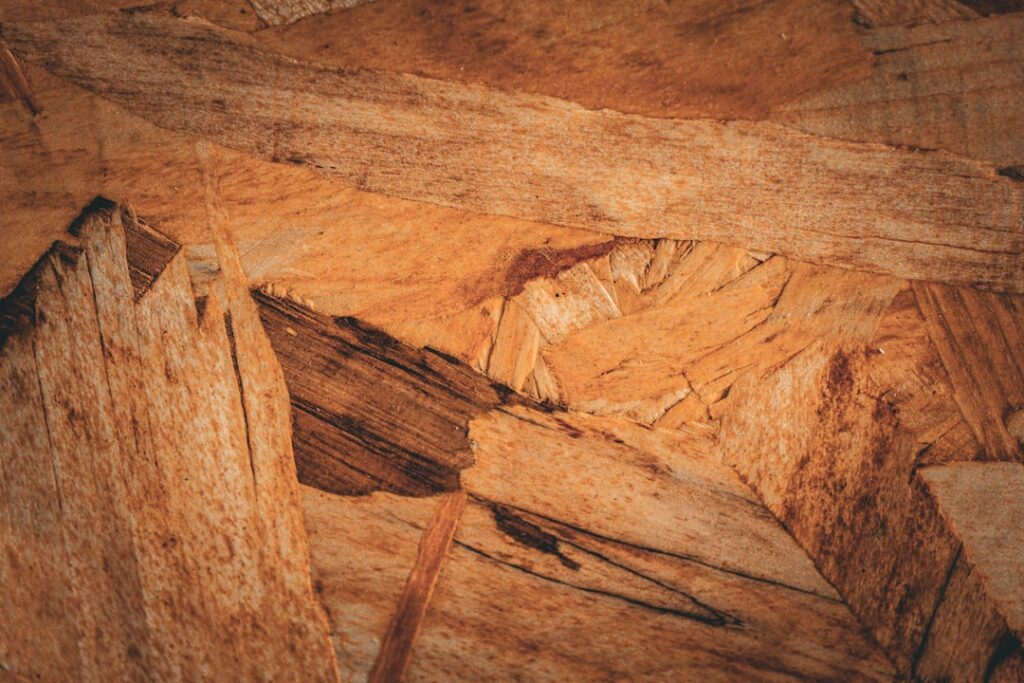
Plywood shows up everywhere a home can get wet: subfloors, roof sheathing, wall sheathing, and crawl-space decking, so it is one of the most common materials to develop mold. Black mold on plywood raises a practical question, namely whether the wood can be cleaned and kept or whether it has to be torn out. The answer depends on how deep the growth has gone and whether the plywood is still structurally sound, because plywood is semi-porous and mold can either sit on the surface or root into the layers. This guide summarizes EPA and CDC guidance current as of 2026; consult your physician about any symptoms and a certified professional for testing decisions.
Is this mold, asbestos, or water damage? Get a free instant screen
Upload a clear photo of the suspect area. You'll get an instant AI screening opinion and what to do next. This is screening guidance, not a professional determination.
Screening guidance only. AI can be wrong. Confirm asbestos, mold type, or lead with lab testing or a licensed professional before acting.
Can black mold on plywood be cleaned or must it be replaced?
Plywood sits between the easy non-porous surfaces you can wipe clean and the porous materials like drywall and insulation that must be discarded. When mold is confined to the surface and the plywood is still firm and structurally sound, it can often be cleaned and salvaged. The EPA notes that hard surfaces can be cleaned of mold, and structural wood with surface-only growth frequently qualifies, especially framing and sheathing that will not be exposed in finished living space.
The plywood must be replaced when the growth has penetrated deep into the layers, when the wood has softened, delaminated, warped, or shows signs of rot, or when it is a finished surface where appearance matters and staining will not fully clean out. Soft, spongy, or crumbling plywood indicates wood-decay fungi rather than just surface mold, and that compromised material has to come out. The deciding factors are depth of growth and structural integrity, not the color of the stain. The same porous-versus-semi-porous reasoning that guides plywood decisions also governs mold on insulation nearby, which by contrast almost always must be discarded.
Why plywood grows mold
Plywood is wood, and wood feeds mold when it gets wet. The glue layers between veneers and the wood fibers themselves provide organic material, so all plywood needs is moisture and time. The common moisture sources track the locations where plywood is used. Roof sheathing grows mold from roof leaks and, very often, from attic condensation when warm humid air meets the cold underside of the deck in winter. Subfloors grow mold from plumbing leaks, spills that soak through finished flooring, and crawl-space humidity rising from below.
Crawl-space and basement plywood decking is especially prone to growth because those spaces trap ground moisture and stay humid. The EPA’s guiding principle holds throughout: control the moisture and you control the mold. Because plywood often sits in hidden spaces, growth can advance for a long time before anyone notices, which is why crawl-space and attic plywood frequently shows the most extensive colonies. Our guide to black mold in a crawl space covers the humidity dynamics that drive sheathing growth in those areas.
Is black mold on plywood dangerous?
The “black mold” on plywood is commonly a species such as Cladosporium or Aspergillus rather than the Stachybotrys the phrase suggests, and color cannot identify it. The health concern is consistent across species: the CDC notes that mold exposure can cause nasal congestion, throat and eye irritation, coughing, and wheezing, with stronger reactions in people who have asthma, allergies, or weakened immune systems. Plywood mold in an attic or crawl space may seem out of the way, but air from those spaces often circulates into living areas, carrying spores with it.
The structural dimension is just as important. Mold that is merely cosmetic does not weaken the wood, but the wood-decay fungi that sometimes accompany prolonged wetting do, and they can compromise roof sheathing, subfloors, and joists. Soft or delaminated plywood is a structural concern, not just an air-quality one. Disturbing moldy plywood during cleaning or removal releases spores, so the work requires respiratory protection, and the right mask matters, which our guide to choosing a respirator for mold explains.
How to clean black mold off plywood
When the plywood is sound and the growth is on the surface, cleaning can salvage it. Ventilate the area, wear an N95 respirator, eye protection, and gloves, and contain the space if it is large.
Cleaning sound plywood
Dampen the surface lightly to limit airborne spores, then scrub with a brush and a solution of detergent and water; the CDC notes soap and water remove mold from hard surfaces effectively. For stubborn staining, white vinegar or a diluted bleach solution can lift the discoloration, though on bare wood bleach mainly bleaches the surface and may not penetrate as deeply as the growth. A HEPA vacuum after scrubbing captures loosened spores. The key step is drying the plywood completely afterward, because residual moisture restarts growth; fans and a dehumidifier speed this.
Some surface staining may remain even after the live mold is removed, which is cosmetic on hidden structural wood and usually acceptable. Never mix bleach with vinegar or ammonia. After cleaning, the critical follow-through is fixing the moisture source so the plywood does not get wet again, since cleaning without that fix guarantees regrowth. For broader hard-surface technique, our walkthrough on how to clean mold on walls uses the same principles.
Surface mold versus wood rot: telling them apart
The most consequential judgment with moldy plywood is whether you are looking at surface mold, which is cosmetic and cleanable, or wood rot, which is structural and means replacement. The two can look similar at a glance but behave very differently, and a few tests distinguish them. Surface mold sits on top of sound wood; the plywood underneath remains firm, holds its shape, and does not give when pressed. The growth may stain the surface, but scraping or cleaning reveals solid wood beneath.
Wood rot, caused by wood-decay fungi rather than the surface molds that cause discoloration, attacks the structure of the wood itself. Rotted plywood feels soft, spongy, or crumbly; it may have darkened and shrunk, developed a cracked or cubical pattern, or delaminated as the glue layers separate. A simple field check is to press a screwdriver or an awl into the wood: sound plywood resists, while rotted wood lets the tool sink in easily and pulls away in soft fibers. Rot also often comes with a stronger earthy smell than surface mold alone. The distinction matters because surface mold on sound plywood can be cleaned and the wood kept, while rotted plywood has lost structural strength and must be removed and replaced regardless of how the surface looks after cleaning. When in doubt, especially on load-bearing sheathing or subfloor, treating soft or compromised wood as rot and replacing it is the safe call.
Plywood mold by location: subfloor, sheathing, and crawl space
Where the plywood sits shapes both why it grew mold and how seriously to take it. Subfloor plywood, under finished flooring, grows mold from plumbing leaks, spills that soak through, and dishwasher or appliance failures, as well as from crawl-space humidity rising from below. Because the subfloor carries the floor’s load, soft or rotted subfloor is a structural concern, and growth there often hides under flooring until a soft spot or a smell reveals it. Removing the finished floor to expose and assess the subfloor is frequently necessary.
Roof sheathing, the plywood deck under the shingles, grows mold mostly from two sources: roof leaks and attic condensation. In cold weather, warm humid air that leaks into the attic condenses on the cold underside of the sheathing and feeds growth across large areas, a problem driven by attic ventilation and air-sealing rather than a single leak. Sheathing mold can therefore be widespread even without an obvious leak. Crawl-space plywood, whether subfloor decking or any sheathing in the space, sits in the most consistently humid environment in many homes, where ground moisture rising from bare soil keeps everything damp. Crawl-space plywood often shows the heaviest growth precisely because the humidity never lets up. In each location the cleaning-versus-replacement decision still turns on whether the wood is sound, but the moisture fix differs: a subfloor needs the leak or crawl-space humidity addressed, sheathing needs attic ventilation and air-sealing corrected, and crawl-space wood needs a vapor barrier and moisture control before any cleaning will hold.
When to call a professional and how to prevent regrowth
Call a professional when the moldy plywood is structural and may be compromised, when growth covers more than about 10 square feet, when the wood is soft or delaminated, or when the moisture source is a hidden roof or plumbing leak you cannot trace. An assessor can evaluate structural integrity, find the moisture origin, and scope a remediation plan; a contractor can replace decking or sheathing safely.
Prevention is moisture control at the source. Maintain the roof and flashing, and ensure attics are ventilated and insulated so the sheathing does not collect condensation in winter. Keep crawl spaces dry with a ground vapor barrier and adequate ventilation or conditioning, and address plumbing leaks promptly before they reach the subfloor. Keep indoor and crawl-space humidity below the roughly 50 percent the EPA recommends. When water does intrude, dry the plywood within 24 to 48 hours to keep mold from establishing. Plywood that stays dry does not grow mold, so durable protection always comes back to keeping the wood dry.
Should you sand, encapsulate, or replace moldy plywood?
Once plywood is confirmed sound and cleaned, homeowners often encounter three further options, sanding, encapsulation, and replacement, and knowing when each applies prevents both overkill and shortcuts. Sanding can remove surface staining and the outermost layer of growth from sound structural wood, and it is sometimes used after cleaning when a cleaner appearance is wanted on exposed framing or sheathing. It generates a heavy burst of spores and dust, so it requires a respirator, eye protection, and ideally HEPA dust capture, and it is only appropriate on wood that is structurally sound, not on rotted material.
Encapsulation means applying a sealant or specialized coating over cleaned, dry structural wood to lock down any residual surface staining and create a barrier. It is commonly used in crawl spaces and attics on sheathing and framing after remediation, and many products are tinted so coverage is visible. Encapsulation is a finishing step, not a substitute for cleaning or for fixing moisture; coating over active growth or wet wood simply traps the problem. Replacement is the answer whenever the plywood is structurally compromised, soft, delaminated, or rotted, regardless of how the surface might be made to look. The honest hierarchy is that the moisture fix comes first and is non-negotiable, cleaning sound wood is the baseline, sanding is an optional cosmetic step on sound wood, encapsulation is an optional protective finish on cleaned dry wood, and replacement is mandatory for compromised wood. Choosing among them comes down to one question answered honestly: is the wood still strong? If yes, clean and optionally sand or encapsulate; if no, replace it. Skipping replacement on rotted load-bearing plywood to save money is the one shortcut that genuinely matters, because compromised structural wood is a safety issue, not a cosmetic one.
Whichever path the wood calls for, the moisture fix remains the foundation under all of it. Cleaned plywood that gets wet again grows mold again; encapsulated wood in a still-humid crawl space eventually fails as moisture works behind the coating; new replacement plywood installed over an unresolved leak rots just like the wood it replaced. This is why professionals treat the source repair as step one and the wood treatment as a downstream decision. For a homeowner deciding how far to take a plywood mold project, the most useful mindset is to fix the water first, confirm the wood’s structural condition honestly, and then choose the lightest appropriate treatment for sound wood or full replacement for compromised wood, knowing that none of those choices holds without the moisture controlled.
References
- Mold Cleanup in Your Home — U.S. Environmental Protection Agency
- About Mold and Health Effects — Centers for Disease Control and Prevention
- Mold and Indoor Air Quality — National Institute of Environmental Health Sciences
If moldy plywood in an attic, crawl space, or subfloor leaves you unsure whether the wood is still sound, our mold inspection hub explains how an assessment evaluates the structure and the moisture source, and Front Range homeowners can reach a vetted local inspector through our contact page.