Protimeter Surveymaster: A Homeowner’s Guide
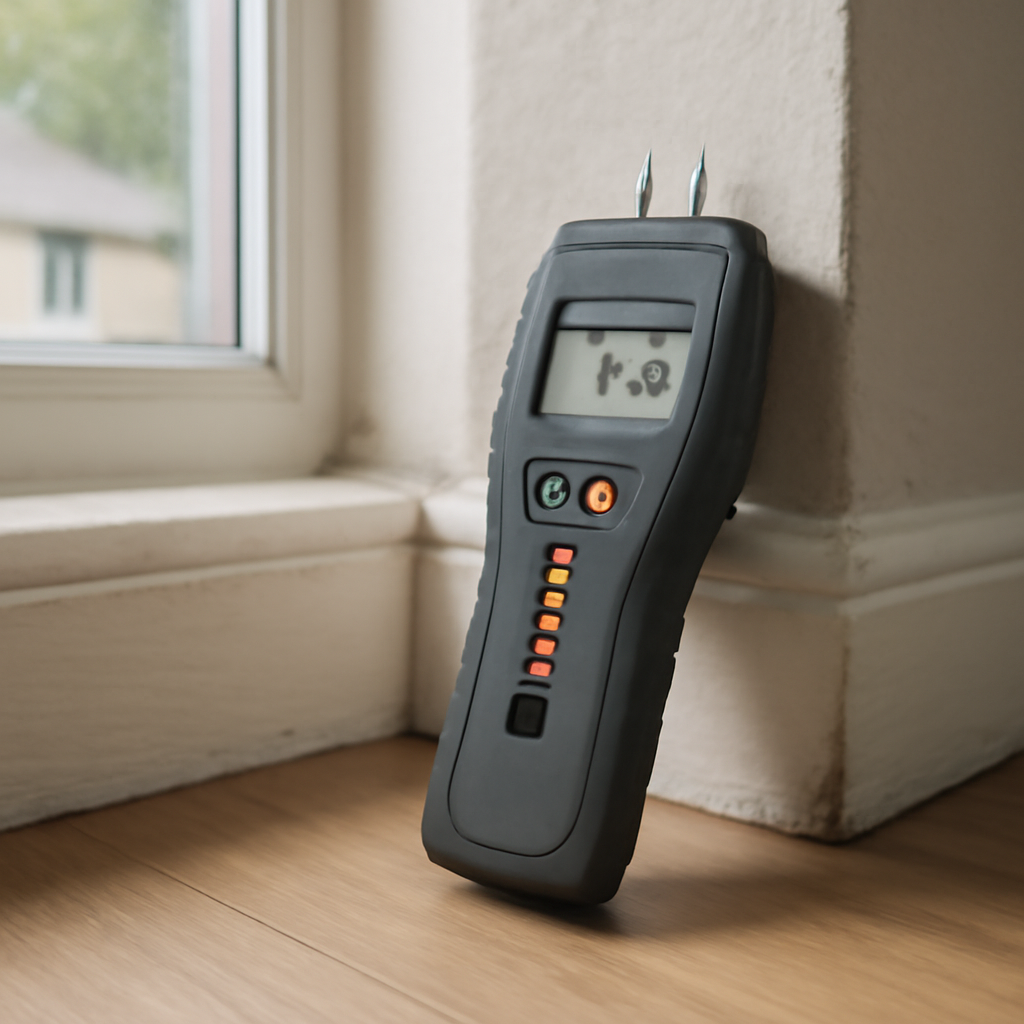
The Protimeter Surveymaster is a brand-name moisture meter that has become shorthand for a particular kind of diagnostic tool: a dual-mode meter that can both measure surface moisture with pins and scan beneath the surface without leaving a mark. Home inspectors and surveyors reach for instruments like it when a wall feels damp, a ceiling shows a stain, or a thermal scan flags a cool patch that needs confirming. This guide describes the technology generically, without endorsing any product, so homeowners understand what a dual-mode moisture meter measures and where it helps.
Part of our Home Inspection Tools guide — start there for the full picture →
What the Protimeter Surveymaster Does
At its core, this is a moisture meter, an instrument that estimates how much water is in a building material. What sets the dual-mode design apart is that it offers two ways to do that: a pin mode that measures moisture by electrical resistance between two probes, and a search mode that detects moisture below the surface without penetrating the material. Having both in one device lets an inspector move from a quick non-invasive sweep to a precise pinpoint reading without switching tools.
The meter does not tell you what caused the moisture or whether mold is present. It tells you where material is wetter than it should be, which is the starting point for diagnosing a leak, condensation, or rising damp. Its readings are most useful as comparisons, wet area against a known-dry reference area, rather than as absolute numbers. Our broader pinless moisture meter guide covers the non-invasive side of the technology in more detail.
How the Two Modes Work
The value of a dual-mode meter is the way its two methods complement each other. Each has strengths the other lacks.
Pin Mode (Resistance)
In pin mode, two metal probes press into the material and a small current passes between them. Water conducts electricity, so the wetter the material, the lower the resistance and the higher the moisture reading. Pin mode gives a localized, surface-level reading at the exact point of the probes, which is ideal for confirming a specific spot. The drawback is that it leaves two tiny holes, so inspectors use it sparingly on finished surfaces.
Search Mode (Non-Invasive)
Search mode, sometimes called scan or capacitance mode, emits a signal that penetrates a short distance into the material and senses moisture without any probes. It detects dampness up to roughly an inch or so beneath the surface, which can reveal water hidden behind paint or under a finish that pins would miss. Because it leaves no marks, it is the preferred mode for scanning large areas quickly. The tradeoff is that it is more easily influenced by dense materials, foil-backed insulation, and embedded metal, which can produce misleading readings.
Reading the Results Correctly
Moisture meters report on a scale, and interpreting that scale is where experience matters. Materials have different normal moisture levels, so a number that signals trouble in drywall might be ordinary in framing lumber. Many meters use a simple color band, green for dry, yellow for borderline, red for wet, to make field reading faster.
The most reliable approach is comparative. An inspector takes a reading in an area known to be dry and uses it as a baseline, then compares suspect areas against it. A reading several points higher than the dry reference is meaningful even if the absolute number means little. This comparative method also sidesteps the calibration differences between materials, which is why a single high number on its own should never be treated as proof of a problem.
Understanding the Reading Scales
Dual-mode meters present results in a way that can confuse first-time users, and understanding the scales prevents misreadings. In pin mode on wood, the meter typically reports moisture content as a percentage, the actual proportion of water in the material, which is a true, calibrated value for wood within the meter’s range. This number can be compared against known thresholds for dry versus damp wood.
In search mode and on non-wood materials, many meters report a relative reference scale rather than a true percentage, because the relationship between the signal and actual moisture is not as cleanly calibrated for those materials and methods. A relative scale still tells you whether one area is wetter than another, which is often all you need, but it should not be mistaken for a precise moisture-content percentage.
This distinction matters in practice. A homeowner who treats a relative search-mode number as a true percentage, or who compares a drywall reading against a wood threshold, can draw the wrong conclusion. The reliable habit is to understand which scale you are reading, use the appropriate mode for the material, and lean on comparison against a dry reference rather than absolute numbers. Color-banded displays, green to red, help by translating the scale into a quick visual judgment, but the underlying principle is the same: context turns a number into meaning. Our broader moisture meter overview walks through these scales across different instruments.
Where Dual-Mode Meters Fit in an Inspection
Moisture meters rarely work alone. In a typical inspection, a thermal camera scans broadly and flags a cool anomaly that might be wet. The inspector then brings a moisture meter to that exact spot to confirm whether it is actually damp or just cool from a draft or shadow. This pairing is fundamental, because a thermal camera cannot measure moisture and a meter cannot scan an entire room quickly.
The search and pin modes extend that workflow. A non-invasive sweep maps the rough extent of a damp area, then a few pin readings confirm the wettest points and the boundary of the problem. The home inspection tools hub shows how moisture meters sit alongside thermal cameras and borescopes, each covering the others’ blind spots. For moisture work specifically, the meter is the instrument that turns a suspicion into a measurement.
Calibration, Care, and Reliability
A moisture meter is only as trustworthy as its calibration and condition. Many dual-mode meters include a built-in calibration check, a reference point the user can verify before relying on readings, and checking it at the start of a session catches a drifting instrument before it produces bad data. A meter that reads wildly off the reference needs servicing rather than field use.
Pin condition matters too. Bent, corroded, or dirty pins make poor electrical contact and skew resistance readings, so inspecting and occasionally replacing the probes keeps pin-mode results honest. Battery level affects accuracy in some meters, and a weak battery can quietly degrade readings. These small maintenance habits separate reliable measurement from numbers that look authoritative but mislead.
Environmental factors influence readings as well. Surface contaminants, salts, conductive treatments, and even heavy dust can alter conductivity, and very cold or hot materials read differently than the same material at room temperature. Quality meters account for some of this, but an aware operator interprets readings against conditions rather than treating any single number as absolute truth. This habit of reading in context is central to using moisture meters well, and it carries over to the other meter types a homeowner might encounter.
Common Uses Around the Home
The situations where a dual-mode meter earns its keep are the everyday moisture mysteries of homeownership. A stain on a ceiling that may or may not be active. A musty basement wall. A bathroom where condensation and a possible leak are hard to tell apart. A floor near a dishwasher or water heater that feels cool underfoot.
In each case the meter answers the first question: is this actually wet right now? That matters because old, dried stains look identical to active leaks. A high reading points to an ongoing moisture source worth tracing; a dry reading suggests a historical problem already resolved. The meter also helps verify that a repaired area has actually dried, an important check before closing up a wall or laying new flooring. Our guide on moisture meters in general covers more of these scenarios.
Mapping the Extent of a Moisture Problem
Finding that one spot is wet is rarely the end of the question; the more useful task is mapping how far the dampness extends. A dual-mode meter is well suited to this because the non-invasive search mode lets an inspector sweep a large area quickly, tracing the boundary where readings rise from dry to wet. That boundary defines the footprint of the problem and often hints at its source, since moisture tends to spread outward and downward from where it enters.
The mapping process usually starts dry and works inward. The inspector establishes a baseline in an unaffected area, then moves toward the suspected wet zone, noting where readings climb. Marking those transition points, sometimes literally with tape on the wall, produces a moisture map that shows the affected area’s shape. A teardrop or fan shape pointing upward can indicate water entering high and running down; a pool-shaped reading near the floor can point to rising damp or a leak at floor level.
This mapping matters for remediation. Knowing the true extent prevents the common error of repairing only the visible stain while leaving wet material hidden just beyond it, which invites mold and recurrence. It also helps scope a drying plan, since the whole wet area, not just the obvious patch, must dry before a wall is closed up. Combined with a thermal camera that flags the rough zone first, the meter turns a vague damp feeling into a defined boundary, a workflow our pinless moisture meter guide explores from the non-invasive side.
Limits and When to Call a Professional
A moisture meter is a diagnostic aid, not a complete answer. It cannot identify the source of water, only its presence, so finding a high reading still leaves the detective work of tracing where the water comes from. Non-invasive readings can be thrown off by embedded metal, wire mesh, and dense materials, producing false positives that an inexperienced user might misread. And no meter detects mold; it only reveals the moisture conditions mold needs.
Consumer-grade meters have made basic moisture checking accessible, and they handle obvious questions like whether a damp-feeling wall is genuinely wet. For complex or recurring problems, a hidden leak inside a wall cavity, moisture that returns after repair, or readings that do not match what you see, a professional with a calibrated dual-mode meter and a thermal camera can map the problem properly and trace it to its source. Persistent moisture is a structural risk, and a meter reading is the beginning of that investigation, not the end of it. A homeowner who treats a high reading as a prompt to find and fix the water source, rather than as a problem solved by the measurement itself, gets the real value from the tool. The meter answers whether something is wet right now; the harder work of locating and ending the moisture is what protects the home, and that is where a professional’s combination of tools and experience earns its place. For a homeowner, owning a basic meter is genuinely useful for everyday questions, confirming a dried-out repair, checking a suspect stain, monitoring a damp-prone spot, but the limits are worth respecting. A dual-mode meter is a measurement tool, not a diagnostic system, and its readings are most valuable when treated as one input among several rather than as a final verdict on a home’s moisture health. Paired with a thermal camera that flags where to check and the judgment to interpret what the numbers mean against the building’s materials and history, the meter becomes part of a reliable approach to moisture, the kind of layered method that finds problems early and confirms repairs before they are sealed away behind a finished wall.
References
- A Brief Guide to Mold, Moisture and Your Home — U.S. Environmental Protection Agency
- ENERGY STAR: Seal and Insulate — U.S. Environmental Protection Agency (ENERGY STAR)
- Moisture Intrusion in Buildings — International Association of Certified Home Inspectors
- Mold Cleanup and Drying Guidance — U.S. Environmental Protection Agency
Frequently asked questions
What is the difference between pin and search mode on a moisture meter?
Pin mode measures surface moisture by passing current between two probes, giving a precise localized reading but leaving small holes. Search mode senses moisture up to about an inch below the surface without penetrating, ideal for scanning large areas non-invasively.
Does a moisture meter detect mold?
No. It detects moisture, the condition mold needs to grow, but it cannot identify mold itself. A high reading flags a damp area worth investigating, but confirming mold requires visual inspection or laboratory sampling.
How should I interpret moisture meter readings?
Use them comparatively. Take a reading in a known-dry area as a baseline, then compare suspect spots against it. A reading several points higher than the dry reference is meaningful, even though absolute numbers vary by material.
Can a moisture meter find the source of a leak?
It reveals where material is wet, not where the water comes from. Tracing the source still requires following the moisture pattern, often combined with a thermal camera, to find the leak, condensation, or intrusion behind it.