Wood Moisture Meter Home Depot: Buyer Guide for Retail
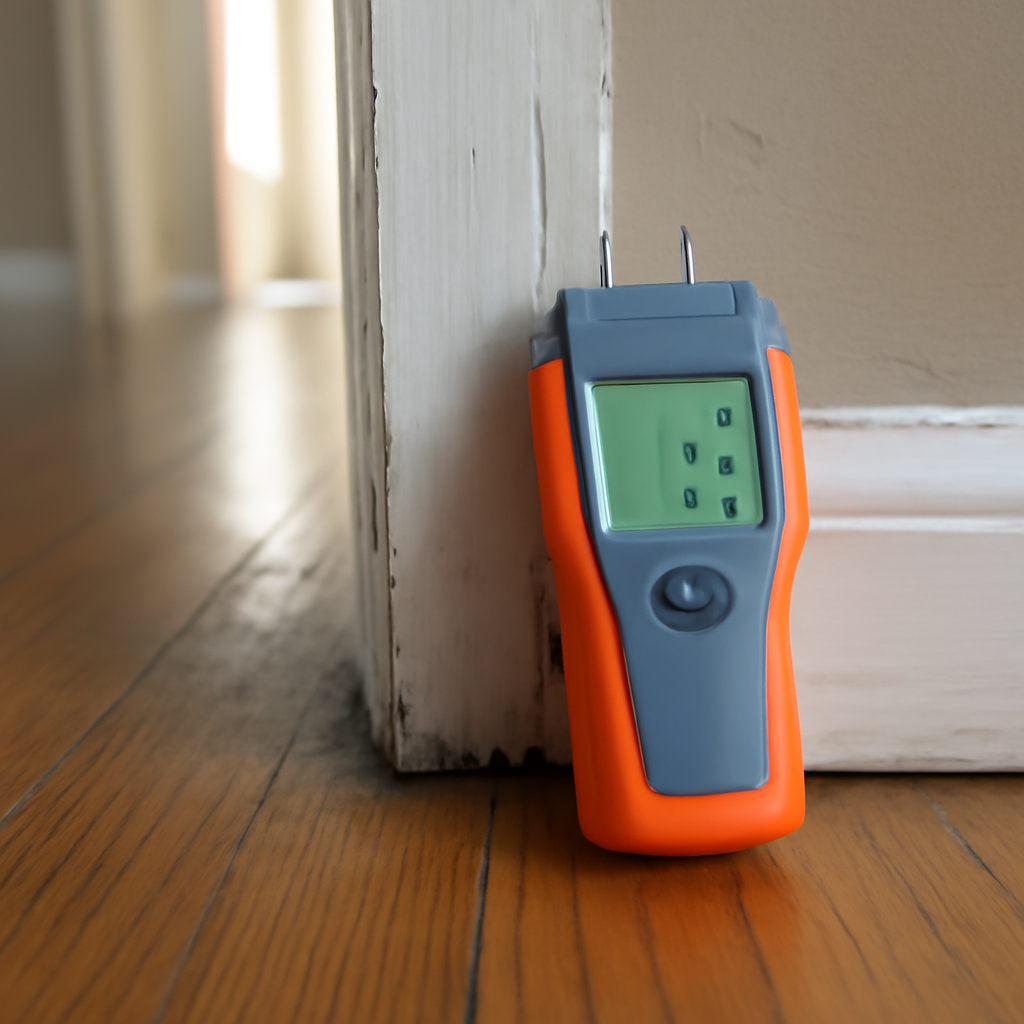
Searching for a wood moisture meter at a major home improvement retailer brings up a familiar product mix: handheld pin meters in the $15 to $50 price range, occasional pinless and dual-mode units at $60 to $120, and a few mid-tier brands that creep above $150. The category sits in the test-equipment aisle near the studs, electrical testers, and laser levels. For a homeowner checking firewood, framing lumber before installation, deck condition before staining, or hardwood flooring acclimation, the big-box tier handles many use cases adequately. This guide walks through what to expect from the typical inventory, the specifications to verify before purchase, and the threshold at which stepping up to specialty retailer inventory makes sense.
Part of our Moisture Meters & Water Damage Detection guide — start there for the full picture →
What home improvement retailers actually stock
Big-box home improvement chains stock moisture meters from a rotating set of established consumer-tool brands. Inventory leans heavily toward $20 to $50 pin meters, with smaller selections of pinless and dual-mode units at higher price points. The exact brands vary by retailer and region, and seasonal selection shifts toward firewood-checking units in autumn and hardwood-flooring units in spring. The store associate in the tool aisle generally cannot answer specification questions in depth; the meter packaging carries the marketing summary, and the spec sheet on the manufacturer’s website carries the detail.
Online listings from the same retailers expand the selection considerably. Online-exclusive inventory often includes mid-tier brands at $80 to $200 that the physical store does not carry, plus accessories like hammer probes and replacement pin sets. For shoppers willing to wait a day for shipping, the online catalog covers a meaningful step up from the physical aisle.
Entry-tier specifications at $20 to $50
The entry-tier wood moisture meter at big-box retailers shares a predictable specification profile.
Pin meter only. Two exposed metal pins, no pinless mode, fixed pin geometry.
Measurement range. Wood scale typically 5 to 35 percent or 5 to 40 percent. Drywall and concrete reference scales on some units, absent on others.
Display resolution. Some units offer 0.1 percent resolution; others round to whole percentages. The cheaper units in this tier carry only a five-LED bargraph in place of a numeric display.
Species correction. Generally absent on units below $35. Above $35, two to four broad categories like “softwood,” “hardwood,” “drywall,” and “concrete.” Specific species correction tables of 50 or more entries are not part of this tier.
Build quality. ABS plastic body, single 9-volt or two-AAA battery, audio beeper, basic backlight on some units. The pins are usually field-replaceable on better units in this tier and permanently fixed on the cheapest ones.
Warranty. Most products in this tier carry one-year manufacturer warranties.
For checking whether firewood reads below 20 percent before burning, for verifying deck moisture before applying stain, and for confirming visibly suspected wet drywall is in fact wet, the entry tier performs adequately. For inspection-grade work feeding into documentation or insurance claims, the entry tier reaches its limits.
Pin-meter electrical resistance and what the displayed reading means
Pin meters measure electrical resistance between two metal pins driven into the material. Dry wood has very high electrical resistance; wet wood has much lower resistance. The meter applies a known voltage across the pins, measures the resulting current, and calculates resistance. The internal calibration curve converts resistance to a displayed moisture content percentage for the assumed species.
The “assumed species” caveat matters. Different wood species have different electrical conductivity at the same actual moisture content. Without species correction, a meter calibrated to Douglas fir reads several percentage points off when used on red oak. The displayed number is a precise reading of an approximate value. For comparative work, scanning the same board over days to track drying, the offset stays consistent and the trend information remains useful. For absolute compliance documentation, where a code or contract specifies “wood shall read 19 percent or lower,” species correction is necessary.
Species correction in plain language
Hardwood and softwood species vary in their electrical conductivity due to extractives, density, and grain structure. A meter without species correction applies a single curve, usually calibrated to a common softwood like Douglas fir or southern yellow pine. When used on a high-extractive species like white oak or a dense hardwood like hickory, the same actual moisture content reads several points different than the displayed value.
For firewood and rough deck checks, this drift does not matter much; both are looking for relative moisture status, not absolute calibration. For hardwood flooring acclimation, where the wood must reach equilibrium moisture content within a tight range matched to subfloor and ambient conditions, species correction matters significantly. Hardwood flooring industry guidelines call for installation only when subfloor and flooring moisture content match within 2 to 4 percentage points, and that comparison only works when both readings are calibrated for the actual species in question.
What to look for at the home improvement retailer
Walking the aisle with a checklist gets the shopper to the best available option at the budget.
Numeric display, not just bargraph. The package should clearly show a digital readout in moisture content percentage. Five-LED bargraphs limit diagnostic usefulness.
Wood scale to 40 percent or higher. Lower caps miss badly wet readings encountered in damaged structures.
At least two material categories. “Softwood/hardwood” toggles, drywall reference scale, and concrete reference scale add diagnostic flexibility.
Field-replaceable pins. Look for a pin assembly that visibly unscrews or unclips. Pins wear during normal use and replacement availability extends service life.
Backlit display. Useful in basements, crawl spaces, and any other moisture-prone area without strong lighting.
Hold function. Lets the user freeze a reading after pulling the pins out of the material, helpful when working overhead or in awkward positions.
Why retailer sites are not the only option
Specialty pro-tool retailers, industrial supply houses, and dedicated test-equipment dealers carry the $150 to $700 mid-tier and pro-tier that big-box retailers do not stock in physical stores. For inspectors, restoration contractors, and serious hobbyists, the specialty channel offers brands with depth in species correction, hammer probe compatibility, and calibration documentation that consumer-tier products lack. Specialty retailer pricing tends to run slightly higher than online specialty marketplaces, but the in-person availability and parts support justify the premium for daily-use tools.
For homeowner context on where the moisture meter fits in the broader diagnostic stack, the home inspection tools 2026 pillar covers moisture meters alongside thermal cameras and air-sampling pumps in the residential diagnostic toolkit. The lumber moisture meter guide covers species correction and framing-specific use cases in depth.
Common home improvement retailer mistakes
Three buying mistakes surface repeatedly among homeowners shopping the big-box aisle.
Buying the cheapest pen-style unit. Pen-style moisture meters with small fixed pins on the tip have inconsistent contact, narrow measurement range, and short service life. The $15 saving disappears when the meter fails or reads inconsistently across a single board.
Buying a meter without checking species options. A meter that reads only “wood” without species or category differentiation produces readings that may be several points off the actual value depending on what the wood is. For homeowners unsure what to check, a unit with at least softwood/hardwood differentiation is a meaningful step up.
Skipping the spec sheet. Package marketing emphasizes user-facing features; the spec sheet on the manufacturer’s website covers measurement range, accuracy, and calibration that determine real diagnostic value. Read the spec sheet before the trip.
When to step up to specialty inventory
Homeowners doing one-time checks should stick with the big-box tier. Step up to specialty pro-tool inventory when one of three conditions applies.
Repeated inspection use. Multiple rental properties, ongoing remodeling, or any pattern that brings moisture checks across many surfaces throughout the year benefits from a mid-tier dual-mode meter with species correction.
Hardwood flooring installation. Acclimation work and subfloor compatibility documentation require species correction and matched flooring-and-subfloor readings that the entry tier cannot deliver reliably.
Documentation requirements. Insurance claims, real-estate documentation, and contractor-handover scenarios require meters with calibration certificates and traceable accuracy. Big-box entry units do not carry calibration documentation.
Brand-agnostic selection criteria
Rather than recommending specific brands, this guide focuses on specifications because brand selection at the entry tier shifts rapidly with retailer sourcing. A meter with the specifications described above, from any manufacturer carried at a reputable home improvement retailer, performs adequately for the use cases the tier targets. For the mid-tier and above, brand reputation, replacement-part availability, and calibration documentation become more important and the specialty channel handles those criteria better than the big-box aisle.
Common shopper questions answered at the aisle
Several questions surface repeatedly at the home improvement retailer’s tool aisle, and the answers are not always intuitive from the package marketing.
“Is this meter accurate for both wood and drywall?”
Most meters that include both scales perform reasonably for both, but the underlying physics differ. Wood readings use direct electrical resistance with species correction; drywall readings use a comparative reference scale where the meter signals “high” or “low” against a calibration zero point. Both work, but the wood reading is more quantitative and the drywall reading is more diagnostic.
“Can I check my hardwood floor with this?”
Yes for screening, no for compliance documentation. Hardwood flooring acclimation requires species correction matched to the actual flooring stock; the typical home improvement meter with limited species correction reads several percentage points off the true value. For installation decisions, step up to a mid-tier meter with full species correction.
“Do these need calibration?”
Professional meters do; entry-tier meters do not have meaningful calibration verification procedures. The entry-tier reading is taken on the manufacturer’s specification rather than verified against traceable reference standards. For most home applications this is acceptable; for documentation-grade work it is not.
“How long will this last?”
Entry-tier meters typically deliver two to five years of intermittent home use before pin wear, battery contact degradation, or sensor drift reaches the point where the meter is no longer reliable. Replacement at this tier is cheaper than repair. Professional meters with replaceable parts and factory calibration support extend useful life to five to ten years with appropriate maintenance.
The home improvement retailer’s online catalog
The physical store aisle is only a fraction of what the major home improvement retailers actually sell. The online catalog from the same retailers typically includes:
Mid-tier brands not stocked in stores. Inspection-grade brands at $80 to $200 that compete with specialty pro-tool inventory. These products often ship same-day or next-day from regional warehouses.
Accessories the store does not carry. Hammer probes, replacement pin sets, carrying cases, and calibration verification standards.
Bundle pricing. Some online listings include hammer probe accessories or calibration kits at modest discount versus separate purchase.
Shoppers willing to wait twenty-four to forty-eight hours for delivery access a meaningfully wider product selection at the same retailer brand.
Why “specialty pro-tier” is worth knowing about
For shoppers whose use case will likely escalate, hardwood flooring installation, ongoing property management, or any work that touches mold or water damage, the specialty professional tool retailer carries products that the home improvement chain does not. Understanding that the specialty channel exists prevents the mistake of repeatedly upgrading entry-tier meters when a single specialty-channel purchase would have served the application from the start.
The specialty channel includes industrial supply houses, electrical wholesalers, dedicated test-equipment dealers, and online retailers focused on building diagnostics. Pricing typically runs 10 to 30 percent higher than online specialty discount retailers but supports parts availability, technical support, and warranty service that the home improvement aisle cannot match for the mid-tier and pro-tier categories.
References
- A Brief Guide to Mold, Moisture and Your Home — U.S. Environmental Protection Agency
- Moisture Intrusion in the Home — InterNACHI
- Mold and Moisture Management — U.S. EPA
- Consumer Guidance for Buying Tools — FTC Consumer Information
Frequently asked questions
Are home improvement store moisture meters accurate enough for firewood?
Yes. Firewood checking is well within the entry-tier capability. Any pin meter that reads below 20 percent on the wood scale indicates wood is dry enough to burn efficiently. Higher readings signal the wood needs more seasoning.
Will a $30 moisture meter work for hardwood flooring installation?
For rough screening it works. For installation-decision documentation it does not, because species correction matters significantly for flooring acclimation. Hardwood flooring work warrants a mid-tier dual-mode meter with at least 50 species correction options.
How do I verify a cheap moisture meter is reading correctly?
Test on known-dry wood, well-seasoned framing from a heated indoor space should read 7 to 12 percent. Test on visibly wet material, freshly cut firewood should read 25 to 45 percent. If the meter responds in the expected direction with reasonable values, it is functional. Without a reference standard, absolute accuracy cannot be confirmed.
Can I check drywall with a wood moisture meter?
Many home improvement store meters include a drywall reference scale, but the reading is comparative rather than absolute. Use the meter to compare suspected wet areas against known-dry sections of the same wall. The relative difference between readings is more diagnostic than the absolute number.
Moisture meters for home inspection
Pin meters read deep but leave marks; pinless meters scan surfaces non-destructively. Many inspectors carry both.
| Product | Why | Buy |
|---|---|---|
 Klein Tools ET140 Pinless Klein Tools ET140 Pinless | Non-destructive scanning; affordable. | Amazon — $49.14 |
 General Tools MMD4E General Tools MMD4E | Best-selling pin meter for drywall/wood. | Amazon — $39.98 |
 Lignomat Mini-Ligno Lignomat Mini-Ligno | Trusted by woodworkers; species-calibrated. | Amazon — $99.00 |