Electrical Voltage Tester: What Homeowners Need to Know
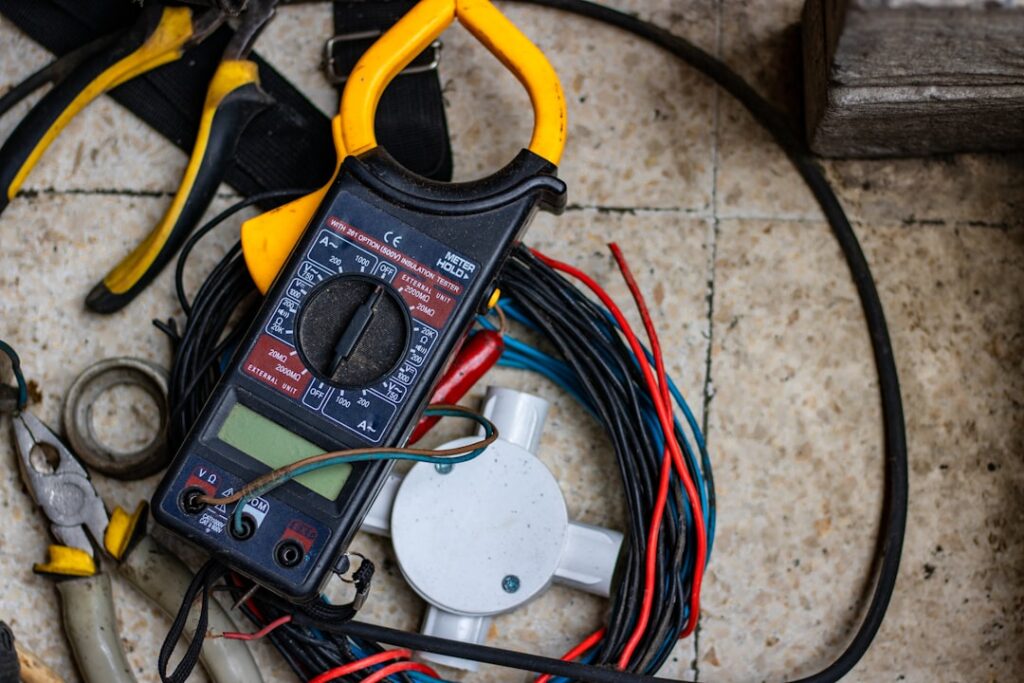
Before anyone touches a wire, swaps an outlet, or pokes around a junction box, one question has to be answered first: is it live? An electrical voltage tester answers that question, and answering it correctly is the difference between a routine repair and a shock that can stop a heart. These tools range from a five-dollar pen that beeps near hot wires to a multi-function meter that reads exact voltage on a digital screen. For Front Range homeowners tackling small electrical jobs, or simply trying to understand what an inspector’s report means, knowing how each type works and what its limits are is the foundation of safe DIY electrical work. The guidance below covers the main tester types, how to use one without fooling yourself, and how to pick a reliable model.
What an Electrical Voltage Tester Does
A voltage tester detects or measures the presence of electrical potential, the force that pushes current through a circuit. At its simplest, the tool tells you whether a conductor is energized. At its most capable, it tells you the exact voltage, whether the circuit is alternating or direct current, and whether the wiring is correct. The reason any of this matters is straightforward: household wiring in the United States typically runs at 120 or 240 volts, more than enough to injure or kill, and you cannot see, hear, or smell voltage until it is too late.
The core safety rule is to test before you touch, and to test the tester itself. A working tester verified on a known live circuit, then used on the circuit you intend to work on, then verified again on the known live source, confirms that a dead reading really means dead and not a flat battery. Skipping that verification is how people get hurt with a tool that was supposed to protect them.
For homeowners assembling a basic kit, a voltage tester sits alongside other diagnostic tools covered in our broader home inspection tools buyer’s guide, which puts the device in context with moisture meters, gas detectors, and outlet testers.
Types of Voltage Testers
There are four common types, and each trades convenience for accuracy in a different way. Choosing the right one for the task is half the safety equation.
Non-Contact Voltage Tester
The non-contact tester, often a pen-shaped device, senses the electric field around an energized conductor without touching bare metal. Bring the tip near a wire or outlet slot, and it lights and beeps if voltage is present. It is the safest tool for a quick is-it-hot check because nothing conductive ever contacts the circuit. The trade-off is that it only tells you hot or not, gives no voltage number, and can be fooled by induced or phantom voltage on a nearby wire. It can also miss a hot wire shielded inside grounded conduit. A popular example is profiled in our guide to the Klein non-contact voltage tester.
Two-Lead Voltage Tester (Solenoid and Digital)
A two-lead tester touches both probes to the circuit and reads the voltage between them. The old solenoid type, sometimes called a wiggy, vibrates and shows voltage on a scale; it draws enough current to burn through phantom voltage, which makes it reliable but a little crude. Digital two-lead testers show a precise number and often detect AC versus DC. These contact testers give a real measurement, which the non-contact pen cannot, but they require touching the conductors, so technique and insulation matter.
Multimeter
A multimeter measures voltage, resistance, and current, making it the most informative tool and the most demanding to use correctly. For voltage work it shines: set it to AC volts, touch the probes across the circuit, and read the exact value. It is overkill for a simple live-or-dead check but indispensable for diagnosing a low-voltage problem or confirming a 240-volt circuit.
Outlet Tester
The plug-in outlet tester checks wiring at a receptacle rather than at bare wires. Its pattern of lights reveals open grounds, reversed polarity, and other miswiring, and GFCI models test the trip function. It does not measure voltage precisely, but it diagnoses common outlet faults fast. Readers seeing one of its warnings can decode the result in our explainer on what open ground means on an outlet tester.
How to Use a Voltage Tester Safely
Good technique is what turns a tester into protection rather than a false sense of security. Start by turning off the circuit at the breaker, then verify at the work point with the tester before touching anything. Use the three-step verification: confirm the tester reads voltage on a circuit you know is live, test the target circuit, then re-confirm on the known live source. Only a dead reading bracketed by two good live readings means the circuit is truly de-energized.
Keep one hand in a pocket when probing live circuits, a habit that keeps current from crossing the chest if something goes wrong. Wear safety glasses, stand on a dry surface, and never let the metal probe tips bridge two conductors carelessly. Inspect the tester’s leads for cracked insulation before each use, and respect the tool’s category rating, which describes the circuits it is built to handle safely.
Understand each tool’s blind spots. A non-contact pen can read phantom voltage and falsely indicate a hot wire, or miss a live conductor inside grounded conduit. A dead battery in any tester reads as no voltage, which is the most dangerous failure mode of all. When a reading does not match expectations, stop and investigate rather than assume the wire is safe. Jobs beyond a simple device swap, anything involving the panel, service entrance, or unfamiliar wiring, belong to a licensed electrician.
Choosing a Reliable Tester
Pick the tool to match the work. For a homeowner who mostly wants to confirm a circuit is dead before changing a fixture, a quality non-contact pen plus a plug-in outlet tester covers the majority of needs at low cost. Someone diagnosing intermittent problems or working on 240-volt circuits benefits from a digital multimeter or a two-lead tester that gives a real number.
Look for a safety listing from a recognized testing laboratory such as UL, and confirm the category rating suits residential circuits. A tester with auto-ranging, a clear display or bright indicator, an audible alert, and a self-test feature is easier to trust. Avoid the cheapest unbranded pens, which can fail silently; a tester that gives no warning when its battery dies offers a dangerous illusion of safety.
Budget for batteries and an occasional replacement. Non-contact pens are inexpensive enough to replace at the first sign of erratic behavior, and a multimeter’s leads wear out and should be swapped when the insulation cracks. The cost of any tester is trivial next to the cost of trusting a faulty one.
Reading Common Results and What They Mean
A tester is only useful if its output is interpreted correctly, and a few results come up again and again in household work. When a non-contact pen lights on the hot side of an outlet but not the neutral, that is normal and expected; the hot conductor carries voltage and the neutral does not. If the pen lights on both slots, something is miswired or a fault is energizing the neutral, and that warrants a closer look with a contact tester before any work proceeds.
A reading near 120 volts on a standard receptacle confirms a normal residential circuit, while roughly 240 volts indicates a high-voltage circuit feeding an appliance like a dryer, range, or water heater. A reading that drifts well below 120, say 90 or 100 volts, can point to a loose connection, an overloaded circuit, or a failing device, and it deserves investigation rather than dismissal. A reading of zero where voltage is expected means either the circuit is genuinely dead or the tester has failed, which is exactly why the three-step verification matters.
Outlet testers speak in patterns of light rather than numbers. Most decode their own light combinations on a printed legend: correct wiring, open ground, open neutral, open hot, reversed polarity, and reversed hot-and-ground. Two of these, the open ground and reversed polarity, are the faults homeowners encounter most often in older homes, and both are worth correcting because they undermine the safety the wiring was designed to provide. A tester that flags a fault is doing its job; the next step is understanding which fault and whether it needs an electrician.
Limitations Every User Should Respect
No voltage tester is infallible, and the most dangerous failures are the quiet ones. A non-contact pen can be defeated by a hot wire shielded inside metal conduit or buried behind thick material, reading no voltage on a conductor that is very much live. It can also fire on phantom voltage induced from an adjacent energized wire, suggesting a dead wire is hot. Neither error is a malfunction; both are inherent to how the field-sensing technology works, which is why a contact tester or multimeter should confirm anything that will actually be touched.
Battery dependence is the single most important limitation. Every electronic tester relies on a power source, and a dead or weak battery produces the most hazardous reading of all: no indication of voltage on a live circuit. This is the entire reason the test-on-known-live, test-target, retest-on-known-live sequence exists. A tester verified immediately before and after the measurement cannot have died silently in between.
Category ratings are a limitation worth understanding rather than ignoring. A tester carries a CAT rating describing the maximum transient energy it can safely handle, and using a low-rated tool on a high-energy circuit, such as the service entrance or main panel, risks a dangerous arc-flash event. For ordinary branch-circuit work a common rating is sufficient, but panel-level work demands both a properly rated instrument and, in most cases, a licensed electrician.
Building a Basic Homeowner Testing Kit
For a homeowner who wants to handle small electrical tasks confidently, a modest kit covers the vast majority of situations without overbuying. The foundation is a quality non-contact voltage tester, the pen-style tool that confirms whether a wire or device is live before anything is touched. Choosing one with an adjustable sensitivity and a clear visual and audible indicator reduces the phantom-voltage confusion that trips up the cheapest models. This single tool answers the most common and most safety-critical question in household electrical work.
The second piece is a plug-in outlet tester, which diagnoses receptacle wiring faults in seconds and, in GFCI models, confirms the trip function on protected outlets. It costs little and catches the open grounds and reversed-polarity faults that are common in older homes. Together, the non-contact pen and the outlet tester handle the majority of what a homeowner encounters: verifying a circuit is dead before swapping a switch or fixture, and checking that an outlet is wired correctly.
A homeowner who graduates to diagnosing intermittent problems or working on higher-voltage circuits can add a digital multimeter for precise readings, but it is not a starter necessity. Whatever the kit, fresh batteries and a habit of the test-on-known-live verification matter more than the price of the tools. The most expensive tester in the world offers no protection if its battery has died silently, and the cheapest pen, used with proper verification, can keep a careful homeowner safe.
When to Call a Professional
A voltage tester makes plenty of small jobs safe for a careful homeowner: confirming a switch is dead before replacing it, checking an outlet for correct wiring, verifying a fixture circuit. It does not make panel work, service upgrades, or troubleshooting of recurring faults a DIY project. If a circuit behaves unpredictably, if you find scorched wiring or warm devices, or if you are unsure what a reading means, the right move is a licensed electrician. The tester’s job is to tell you what is live; a professional’s job is to make the system safe when something is wrong. Used within those limits, a good voltage tester is one of the most valuable safety tools a homeowner can own.
References
- Electrical Safety Standards — Occupational Safety and Health Administration
- Electrical Safety for Workers — Centers for Disease Control and Prevention
- Electrical Safety in the Home — National Fire Protection Association