Digital Voltage Tester: What Homeowners Need to Know
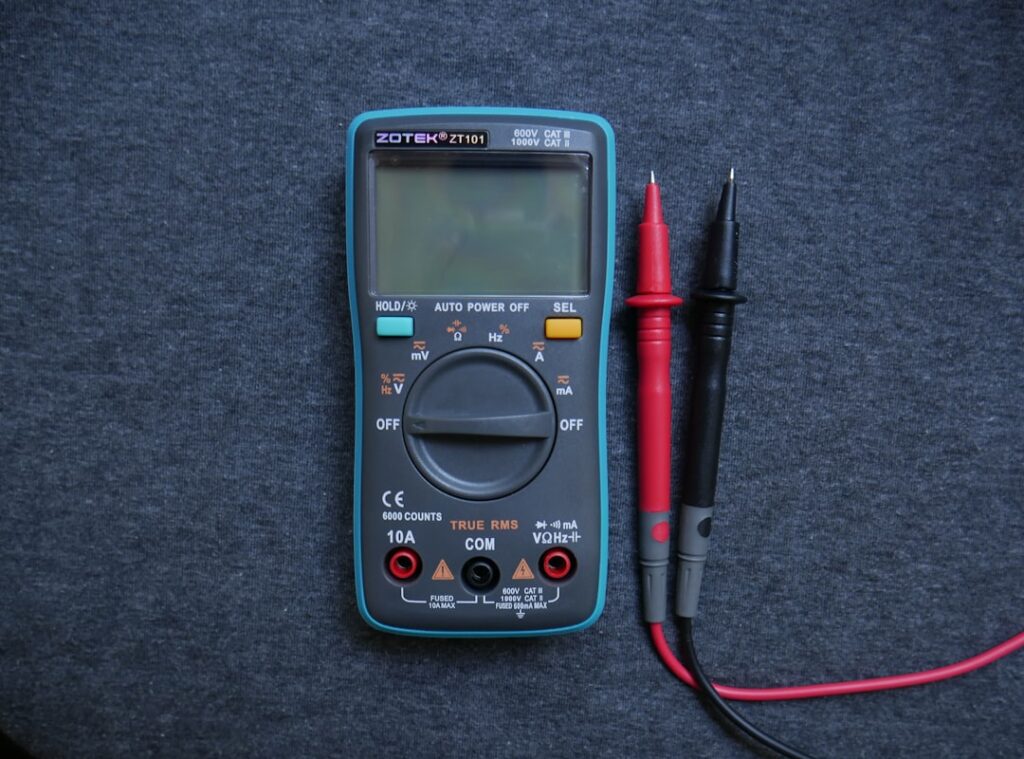
Before touching any wire, outlet, or fixture, the first question is always the same: is it live? A digital voltage tester answers that question quickly, and in electrical work the answer can be the difference between a safe repair and a serious shock. Home inspectors and electricians rely on these instruments to verify power, find dead circuits, and confirm that outlets are wired correctly. Understanding the two main types and their limits helps homeowners use them safely and know when a reading can be trusted.
What is a digital voltage tester and what does it do?
A digital voltage tester detects and, in many models, displays the presence and level of electrical voltage. Its core job is simple but vital: confirm whether a conductor or device is energized. Some testers only indicate the presence of voltage with a light or beep, while others show a numeric value on a digital display so the user can read the actual voltage.
This function underpins safe electrical work. Verifying that a circuit is truly de-energized before touching it is a fundamental safety step echoed in electrical safety guidance from organizations such as OSHA and the NFPA, which publishes the National Electrical Code. The tester is part of the broader diagnostic kit described in the home inspection tools guide.
Non-contact versus contact voltage testers
The two main categories work very differently and serve different purposes.
Non-contact voltage testers
A non-contact tester, often pen-shaped, senses the electric field around an energized conductor without touching bare metal. Bring the tip near an outlet slot, a wire, or a fixture, and it lights or beeps if voltage is present. Its great advantage is speed and safety: there is no need to touch live parts. Inspectors use them for a fast first pass, checking that outlets are hot, finding which wires are energized, and confirming a switched circuit. The tradeoff is that they indicate only presence, not exact voltage, and can occasionally give false readings from induced fields or miss voltage behind shielding.
Contact voltage testers
A contact tester uses two probes that touch the conductors directly to measure voltage between them. A digital model displays the actual value, such as 120 or 240 volts, which a non-contact pen cannot. Contact testers are more definitive for confirming a circuit is dead and for reading specific voltages, but they require touching conductors, so proper technique and rated equipment matter.
Why confirming a circuit is dead matters so much
The single most important use of a voltage tester is verification before contact, and the reason is straightforward: electricity gives no visible warning. A wire that looks identical to its neighbors may be carrying lethal current, and a switch in the off position does not guarantee a fixture box is de-energized, because of wiring that backfeeds, shares a circuit, or was installed incorrectly. Relying on assumptions instead of measurement is how serious shocks and arc-flash injuries happen.
A voltage tester removes the assumption. Before touching a conductor, the user confirms whether it is live, and after switching off a breaker, confirms the circuit actually went dead rather than trusting the breaker label, which is often wrong in older panels. This habit underlies the electrical-safety practices promoted by OSHA and reflected in the NFPA’s standards, which treat verifying an electrically safe condition as a fundamental step before work begins. For an inspector, the tester makes it safe to examine devices and panels; for a homeowner, it makes a simple task like swapping a light fixture safe to attempt. The tester is inexpensive, but the protection it provides, certainty about whether something is energized, is the foundation of every safe interaction with household wiring.
How inspectors use a voltage tester
During an inspection, a voltage tester supports several routine checks.
- Confirming that outlets are energized and that switches control the intended circuits.
- Verifying that a circuit is de-energized before any closer examination.
- Helping identify reversed polarity or open grounds when combined with a receptacle tester.
- Locating which breaker controls a given outlet.
- Checking junction boxes and fixtures for unexpected live wires.
General home inspectors operate within defined limits; InterNACHI and ASHI standards call for a representative check of accessible outlets and devices rather than dismantling the electrical system. A voltage tester lets an inspector flag concerns safely and recommend a licensed electrician for repairs. These electrical checks pair naturally with thermal scanning, since an overloaded connection often shows up as heat. The way an inspector reads a panel under load resembles the use of thermal imaging to spot electrical hot spots.
How to use a digital voltage tester safely
A tester is a safety device, so using it correctly is essential.
- Test the tester first. Verify it on a known live source before and after checking a circuit, so a dead battery does not give a false “no voltage” reading.
- Use equipment rated for the voltage and environment, and inspect leads for damage.
- Keep fingers behind the probe guards on contact testers.
- Treat every conductor as live until confirmed dead.
- For non-contact pens, understand that a non-indication is not absolute proof of a dead circuit; confirm with a contact tester for critical work.
The “live-dead-live” verification, checking a known source before and after, is a standard practice reflected in NFPA electrical-safety guidance and is the single most important habit for trusting a reading. A tester with a dead battery or a damaged lead can silently report no voltage on a live circuit, which is the most dangerous failure mode possible, so confirming the instrument works on a known source each time closes that gap. Storing the tester where its battery stays fresh, and replacing it at the first sign of weak indication, keeps it dependable when it matters most.
Reading common results and what they mean
Interpreting a voltage tester correctly turns a beep or a number into useful information. On a standard North American outlet, a contact tester reads about 120 volts between the hot slot and either the neutral or the ground when the circuit is energized and wired correctly. A 240-volt circuit, such as one serving a dryer or range, reads roughly 240 volts across its two hot legs. A reading near zero where voltage is expected indicates a dead circuit, a tripped breaker, or an open connection upstream.
A non-contact pen gives presence rather than a value, lighting or beeping near an energized conductor. Used to check an outlet before changing a fixture, a non-indication suggests the circuit is off, but it should be confirmed with a contact reading for any work where a mistake is dangerous. Unexpected results carry meaning too: voltage present on a supposedly switched-off circuit may indicate a wiring error or a shared neutral, while no voltage on a circuit that should be live points to a tripped breaker or a fault. These readings let an inspector flag a concern and recommend a licensed electrician, which is where corrective work belongs.
Voltage tester versus multimeter
Homeowners often wonder whether they need a multimeter instead. A voltage tester is purpose-built for one job, detecting voltage, and is fast and simple. A multimeter measures voltage plus current, resistance, and continuity, offering far more diagnostic depth at the cost of complexity and a steeper learning curve. For confirming whether something is live, a digital voltage tester is the faster, more intuitive tool. For deeper troubleshooting, a multimeter earns its place. The principle of matching the instrument to the task runs through the whole inspection toolkit, much like choosing the right meter in the guide to moisture meters for inspectors.
Common limitations and false readings
No tester is infallible. Non-contact pens can trigger from a neighboring live wire, from static, or from induced voltage, producing a reading even when the target conductor is dead, a phenomenon sometimes called a ghost or phantom voltage. They can also fail to detect voltage through thick insulation or inside shielded conduit. Contact testers are more definitive but only as reliable as their leads, battery, and the user’s technique. Understanding these limits is why critical de-energization work relies on confirmed contact readings and verified test instruments rather than a single pen check.
Understanding CAT safety ratings
One specification on a voltage tester matters more than most homeowners realize: the measurement category, or CAT, rating. This rating describes the transient voltage spikes an instrument is built to survive, which depends on where in the electrical system it is used. The categories run from CAT I, for low-energy electronics, up to CAT IV, for the service entrance and the point where power enters a building.
For typical household work at outlets and branch circuits, an instrument rated CAT III for the relevant voltage is the common recommendation, because it is built to withstand the higher transient energy found closer to the source. Using an underrated tester in a higher-energy location is a genuine safety hazard, since a transient spike can cause the instrument to fail destructively. Reputable instruments carry their CAT rating and voltage limit printed on the housing, and electrical-safety guidance from organizations such as the NFPA emphasizes matching the tool to the environment. Checking the rating before buying is a small step that protects the user.
Pairing a voltage tester with a receptacle tester
A voltage tester confirms whether power is present, but it does not, on its own, reveal wiring faults. That is where a receptacle tester complements it. Plugged into an outlet, a receptacle tester displays a pattern of lights that indicates common wiring conditions: correct wiring, reversed hot and neutral, an open ground, an open neutral, or reversed polarity. Many models also include a button to test ground-fault circuit interrupter protection.
Together the two tools give a fuller picture. The voltage tester verifies that a circuit is live or safely dead, while the receptacle tester checks that the outlet is wired correctly and protected where required. Inspectors commonly carry both, using the receptacle tester for a representative sample of outlets and the voltage tester to confirm energization and to investigate anything the receptacle tester flags. Neither replaces a licensed electrician for repairs, but together they let an inspector identify and document concerns safely.
Where voltage testing fits in a home inspection
Electrical evaluation is one of the more safety-critical parts of a home inspection, and the voltage tester supports it without crossing into work reserved for electricians. InterNACHI and ASHI standards call for inspecting accessible, representative components and reporting deficiencies, not dismantling panels or performing repairs. Within that scope, an inspector uses a voltage tester to confirm outlets are energized, verify that a circuit is dead before a closer look, and trace which breaker serves an outlet.
Electrical problems frequently overlap with heat, since a loose or overloaded connection runs hot. An inspector who notices a warm cover plate or a tripping breaker can combine a voltage check with thermal observation to build a case for an electrician’s attention. The voltage tester’s role is to make these checks safe and to flag concerns clearly, leaving the corrective work to a licensed professional.
Do homeowners need a digital voltage tester?
A basic non-contact voltage tester is one of the most worthwhile inexpensive safety tools a homeowner can own. It lets you confirm an outlet or switch is dead before changing a fixture, and it costs little. For anything beyond simple verification, or any uncertainty about a circuit, a licensed electrician is the right call. The tester’s value is not in replacing professional work but in providing a quick, reliable safety check that should precede any contact with household wiring.
References
- Electrical Safety Standards — Occupational Safety and Health Administration
- National Electrical Code and Electrical Safety — National Fire Protection Association
- Electrical Inspection Standards of Practice — InterNACHI