Digital Borescope: What Homeowners Need to Know
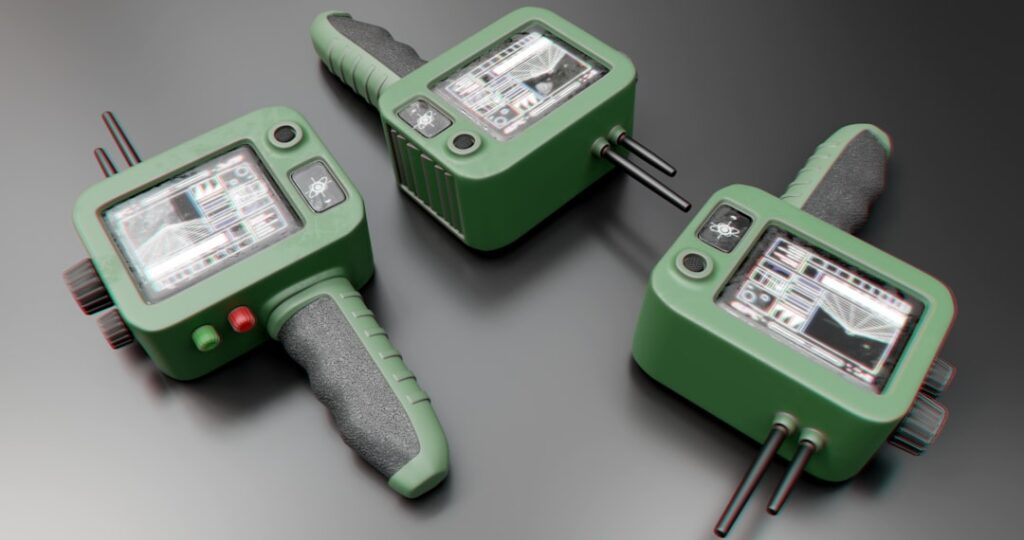
A digital borescope bundles an inspection camera, an integrated LCD screen, internal image storage, and rechargeable power into a single handheld tool. The word “digital” distinguishes the category from analog or lens-only borescopes that require an external monitor or eyepiece to view the image. For homeowners performing in-wall plumbing checks, sewer drain inspections, attic crawl-space surveys, or automotive engine diagnostics, the digital borescope has become the default purchase pattern over the last decade — and the consumer market now spans $30 budget USB-only units to $300 prosumer models with articulating heads and 1080p video capture.
Part of our Home Inspection Tools guide — start there for the full picture →
What “digital” means in the borescope category
Digital borescopes contain everything needed for image capture and review inside a single device. A typical layout includes a camera head (the imaging end) connected via a flexible cable to a handle that houses an LCD screen (usually 3 to 5 inches), a rechargeable battery, control buttons, and a microSD card slot for image and video storage. The user inserts the camera head into the inspection space (a wall cavity, a drain pipe, an engine cylinder), watches the live image on the LCD, and captures stills or video as needed.
Analog borescopes, by contrast, are lens-only optical systems where the user looks through an eyepiece directly — common in industrial NDT and medical applications, but rare in consumer use today. USB borescopes are an intermediate category: a camera head and cable that plugs into a phone or laptop, using the phone’s screen and storage rather than an integrated LCD. The current consumer market is dominated by digital integrated-LCD units because they avoid the phone dependency and produce a more focused inspection workflow.
Common consumer brands: Teslong, Depstech, AutoLeader
Three brand names dominate the homeowner digital borescope market in 2026. Teslong builds the broadest range, from budget USB models near $30 to prosumer articulating-head units near $300. Depstech competes in the $50 to $150 mid-tier with a focus on dual-camera designs and built-in LED lighting. AutoLeader sits on the budget end with simple single-camera units optimized for automotive engine inspection. Several smaller brands (Bjykes, NTKACE, Goodan) ship near-identical hardware sourced from common OEM factories and badge it with different brand names.
For most homeowners, the brand choice matters less than the spec match. The key specs are camera diameter (5.5mm fits most in-wall and pipe applications; 8mm is easier to handle but blocks tight openings), cable length (3 feet for general use, 16 feet for deeper plumbing reach), LCD size, image resolution, and whether the camera head articulates (steerable up-down or all-direction). The home inspection tools pillar covers borescopes alongside thermal imagers and moisture meters as part of the broader homeowner toolkit.
Use cases for the digital borescope
The most common homeowner uses fall into four buckets. In-wall plumbing inspection lets a user look behind drywall to confirm a suspected leak before opening up the wall — feeding the borescope through a small drilled hole and watching the camera image confirms or rules out a wet pipe. Drain and pipe inspection traces clogs and root intrusion in residential sewer laterals, though sewer-scope work usually requires longer industrial-grade equipment than a consumer borescope can provide.
Attic and crawl-space surveys let the user reach into tight cavities without crawling in personally — particularly useful for older Front Range homes where attic transitions are awkward and crawl spaces are tight. Automotive engine inspection lets the user look inside a cylinder through the spark plug hole to check for piston damage, carbon buildup, or scoring without engine teardown. Most consumer borescopes handle all four use cases adequately at the $80 to $150 price tier.
Camera diameter and probe selection
Camera head diameter is the most consequential spec for fit. A 5.5mm head fits through a 7mm drilled hole, slips into most in-wall cavities, and passes through residential plumbing access points. An 8mm head is easier to manipulate (the larger surface gives the cable more rigidity) but cannot pass through tight openings. A 3.9mm head fits the tightest spaces but at the cost of much smaller image resolution per inch of inspection area.
For a homeowner buying one borescope to cover multiple uses, 5.5mm is the standard recommendation. Buyers with specific applications — automotive engine inspection through spark plug holes (8mm), or precision plumbing inside a finished wall (3.9mm or 5.5mm) — should match the diameter to the dominant use case. Two-camera designs (one straight-ahead, one side-facing) appear in some Depstech and Teslong models and add inspection flexibility for plumbing applications where the user wants to see both ahead and to the side of the cable tip.
LCD screen, image capture, and storage
Integrated LCD screens on digital borescopes range from 3 inches to 5 inches diagonal, with resolution typically 480p to 720p on the screen itself. The image sensor at the camera head usually captures 720p or 1080p video. Higher-end units (Teslong NTS500, NTS300) capture 1080p stills and HD video stored to a microSD card. Most consumer units include an 8GB or 16GB card; users who plan to capture extensive video should buy a larger card up front.
Some units offer USB transfer to a PC for image management — plug the borescope into a computer via USB-C and the device mounts as a removable drive. Cloud sync features are rare in the consumer borescope category, unlike the thermal imaging category. Most users transfer images by removing the microSD card and reading it on a PC. The captured stills and videos work as inspection-report attachments when the user produces a written report.
Battery life and field workflow
Most consumer digital borescopes deliver three to six hours of runtime per charge on the integrated battery. Heavy LED use (most borescopes include adjustable-brightness LEDs on the camera head for dark-cavity illumination) shortens runtime; running the LEDs at minimum stretches the battery to the upper end of the range. Charging is via USB-C on current models, with full-charge times typically 90 to 120 minutes.
For long inspection sessions — multi-hour drain investigations, extensive attic surveys — the battery limitation may push the user to either carry a USB power bank for in-field recharge or stagger work into multiple sessions. Working tradespeople sometimes carry two borescopes and rotate them. Homeowners doing occasional inspections rarely hit the battery wall in a single sitting.
Pricing tiers and what each buys
The consumer digital borescope market segments cleanly by price. At $30 to $60, buyers get a basic single-camera unit with a small LCD, fixed-focus optics, and 480p capture. These units work for one-off jobs but feel cheap after a few uses. At $80 to $150, buyers get dual-camera designs, 720p or 1080p capture, larger LCDs (4 to 5 inches), and articulating heads on some models. This is the sweet-spot homeowner tier.
At $200 to $300, buyers get steerable articulating heads (often 360-degree direction control), 1080p capture with full HD video, larger storage, and more durable cables rated for industrial use. The Teslong NTS500 articulating unit sits near the top of this tier. Beyond $300, buyers cross into prosumer and light-industrial territory with Olympus, Hawkeye Pro, and Snap-on branded units that the sibling borescope cameras guide covers in more depth.
How to use a digital borescope safely
Several precautions apply to in-wall and engine borescope use. Before drilling an access hole into drywall, locate studs and any electrical or plumbing runs behind the wall — a stud finder with electrical detection covers this. Drill a hole just large enough for the camera diameter plus 1-2mm clearance. After inspection, patch the hole with spackle and paint. For engine cylinder inspection, remove the spark plug fully and let the engine cool completely before insertion — hot cylinder walls can damage the camera head’s seals.
For drain inspection, the borescope cable is not rated for long-distance sewer use (typical 3 to 16 feet of cable). Pushing further than the cable length is not possible, and forcing the cable into tight drain bends risks cable damage. NFPA standards and InterNACHI Standards of Practice describe broader inspection methodology that applies to borescope-augmented work as part of a larger home assessment.
Articulating heads: when steerable matters
Higher-end digital borescopes (Teslong NTS500 and similar) feature articulating camera heads — the user controls a small joystick or thumb wheel on the handle to bend the camera tip up, down, or in some models all four directions. Articulation matters when the inspection target requires looking sideways from the cable path, such as examining the bottom of a horizontal pipe section or scanning the walls of a cylinder rather than just the head face.
For straight-line inspections (looking down a pipe, into an attic cavity, through a drilled wall hole at a perpendicular target), articulation is unnecessary. For complex inspections where the user needs to see around obstacles or examine surface features off-axis, articulation is the difference between a useful tool and a frustrating one. Buyers should match the articulation choice to the expected inspection complexity rather than buying the feature speculatively.
LED lighting and image quality in dark spaces
Most inspection cavities — inside walls, drain pipes, engine cylinders, attic transitions — are dark. The digital borescope’s camera head includes adjustable-brightness LEDs ringed around the lens to illuminate the immediate inspection area. The LED count varies by model (typically 4 to 8 LEDs), and the brightness is controlled by a button on the handle. For close-range work, low LED brightness produces a cleaner image; for distant features inside a long pipe or wall cavity, full brightness is necessary.
LED color temperature also affects image quality. Most consumer borescopes use cool-white LEDs around 6000K, which renders surfaces with high contrast but slightly bluish color. Higher-end units sometimes offer adjustable color temperature for color-accurate inspection of materials where color matters (paint flaws, oxidation patterns in copper plumbing). For most homeowner uses, color accuracy is secondary to image sharpness and brightness.
What a digital borescope cannot do
Several limitations apply to consumer digital borescopes. The cables typically range 3 to 16 feet, which limits reach into long pipes or deep wall cavities. The camera optics are fixed focus, so users cannot zoom in or refocus on distant features mid-inspection. Image resolution is sufficient for documentation but does not match the detail of medical or industrial-grade borescopes that cost $2,000 and up.
The cables themselves are semi-rigid (they bend but tend to spring back to a relaxed shape), which makes navigation through complex pipe geometry harder than a fully flexible industrial borescope. For homeowners attempting to navigate through a P-trap or down a sewer cleanout with multiple bends, the consumer cable’s resistance becomes a real obstacle. The sibling high-resolution borescope guide covers the upgrade path when consumer specs hit their limits.
References
- ENERGY STAR: Seal and Insulate — U.S. Environmental Protection Agency (ENERGY STAR)
- ASHRAE Standards and Guidelines — ASHRAE
- InterNACHI Standards of Practice — InterNACHI
- NFPA Codes and Standards Index — National Fire Protection Association
Frequently asked questions
What is the difference between a digital borescope and a USB borescope?
A digital borescope has an integrated LCD screen, battery, and storage — it works as a standalone tool. A USB borescope is a camera-and-cable assembly that plugs into a phone or laptop and uses the host device's screen. Digital integrated units are more common in the consumer market because they avoid the phone dependency.
What camera diameter should I buy for home use?
5.5mm is the standard recommendation for homeowners. It fits through a 7mm drilled access hole, passes most in-wall plumbing routes, and works for general drain and attic inspection. 8mm units are easier to handle but cannot pass tight openings. 3.9mm units fit tighter spaces but capture smaller image area.
Can a digital borescope inspect a residential sewer lateral?
A consumer digital borescope can inspect the first few feet of a sewer line through a cleanout, but full sewer-lateral inspection requires longer industrial-grade equipment with 50 to 100 feet of cable. Homeowners suspecting full-line problems should hire a professional sewer-scope service rather than buy consumer equipment.
How long does a digital borescope battery last?
Most consumer digital borescopes run three to six hours per charge. Heavy LED illumination shortens the runtime; minimum LED brightness extends it. Full recharge via USB-C typically takes 90 to 120 minutes. Long inspection sessions sometimes require a power bank for in-field recharge.
Borescopes & inspection cameras
A borescope lets you see inside walls, ducts, drains, and crawlspaces without opening anything up.
| Product | Why | Buy |
|---|---|---|
 DEPSTECH Wireless Borescope | Wi-Fi to your phone; semi-rigid cable. | Amazon — $34.99 |
 Teslong Dual-Lens Borescope | Side + front view; good for ducts. | Amazon — $149.99 |
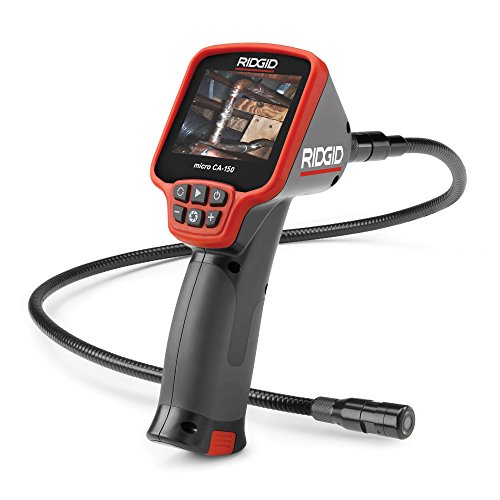 Ridgid micro CA-150 | Rugged handheld with screen. | Amazon — $281.00 |