Deck Paint vs Stain: Coatings, Peeling and Prep

Painting a deck looks like the fastest way to make tired, gray boards look new, and for a season or two it often works. Then the first strips start lifting where foot traffic is heaviest, water sits in the cracks and the next refinish turns into a scraping project. Deck paint is not a bad product, but it behaves very differently on a horizontal surface that bakes in sun, collects snow and gets walked on than it does on a vertical wall. This guide compares paint with solid and semi-transparent stains, explains why deck coatings peel, covers surface prep and moisture content, flags lead paint on older decks and railings, looks at sun exposure at Front Range elevations and hidden rot under coatings, and closes with VOCs, disposal and typical costs. It summarizes EPA guidance current as of 2026; for lead testing decisions, consult a certified lead inspector or risk assessor.
Part of our Structure & Exterior guide — start there for the full picture →
Building or repairing a deck? Talk to a local deck builder.
📞 Call (888) 268-1507Deck Paint, Solid Stain and Semi-Transparent Stain Compared
Deck coatings sit on a spectrum from film-forming to penetrating. Where a product lands on that spectrum largely determines how it looks, how long it lasts and how it fails.
Deck paint and porch-and-floor enamels
Paint forms a continuous film on top of the wood. Products sold for decks and porches are formulated to be tougher and more abrasion-resistant than wall paint, and many include texture additives for grip. Paint hides wood grain completely, covers mismatched boards and stains and offers the widest color choice. Its weakness is that it is a film: once water gets under it or the surface wears through, it peels and flakes rather than fading gradually.
Solid stain
Solid-color stains sit between paint and stain. They hide grain much like paint but are typically thinner, so they show some wood texture. They still form a film on the surface, and on horizontal boards they can peel in much the same way as paint, though thinner coats sometimes wear rather than flake.
Semi-transparent and transparent stains
Penetrating stains soak into the wood instead of building a film on top. They let grain show, add pigment for UV protection and usually contain water repellents. They do not peel in sheets; instead they fade and weather away. That means more frequent recoating, often every one to three years on sunny exposures, but recoating is usually a clean-and-reapply job rather than a stripping project.
Quick comparison
- Appearance: paint and solid stain hide the wood; semi-transparent stain shows it.
- Failure mode: paint and solid stain tend to peel; penetrating stain tends to fade.
- Recoat effort: film coatings often need scraping and sanding once they fail; penetrating stains usually need cleaning and a fresh coat.
- Best use: paint suits railings, trim, skirting and vertical parts; penetrating stain tends to suit walking surfaces.
Many owners split the difference: penetrating stain on the deck boards, paint or solid stain on railings and fascia. Our deck staining guide covers stain types, application and how often to recoat.
Why Deck Paint Peels on Horizontal Surfaces
Painted siding can last many years. Painted deck boards often fail much sooner, and the reasons are mostly physical rather than a matter of brand.
- Standing water and snow. Horizontal boards hold rain, puddles and snowmelt. Water finds every hairline crack in the film, works its way under it and lifts it.
- Moisture from below. Deck boards absorb moisture through their undersides, ends and fastener holes, which are rarely coated. As that moisture tries to escape upward through a film coating, it pushes the paint off from behind.
- Wood movement. Boards swell when wet and shrink when dry. A rigid film cracks along the grain and at board ends as the wood moves, opening new paths for water.
- Foot traffic and furniture. Abrasion wears through the film on stairs, doorways and grill areas, exposing bare wood that then weathers and undercuts the surrounding paint.
- Sun. UV breaks down coatings and the wood fibers just beneath them, weakening the bond.
- Painting over a failing coat. New paint is only as well attached as the layer below. Coating over loose stain, mildew or graying wood is one of the most common causes of early failure.
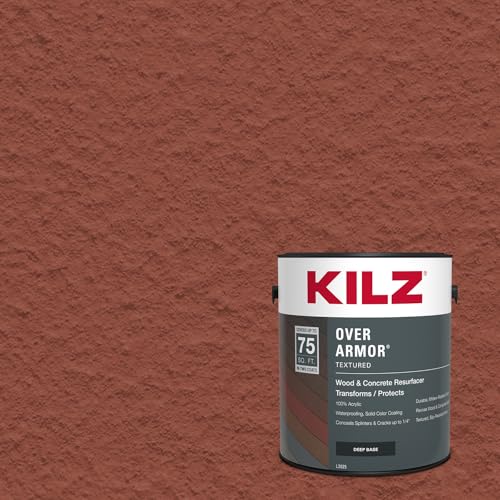
Some newer thick, resurfacing-style deck coatings promise to fill cracks and cover worn boards. Results vary, and if they fail, removing a heavy film from textured wood can be difficult. Reading the warranty and reviews closely before committing is worth the time.
Best Deck Paint: our top 3 picks
| Product | Best for | Key features | Price | Buy |
|---|---|---|---|---|
| KILZ Porch and Patio Floor Paint | Best for sound, smooth boards |
| $37.94as of Oct 28, 2026 8:44 am GMT+0000 | Buy now →Check current price |
| KILZ Over Armor Resurfacer | Best for weathered, cracked decks |
| $44.97as of Oct 28, 2026 8:44 am GMT+0000 | Buy now →Check current price |
| Liquid Rubber Deck Coating | Best waterproof membrane |
| $99.95as of Oct 28, 2026 8:44 am GMT+0000 | Buy now →Check current price |


Prices are Amazon’s listed prices as of the time shown and change often; check Amazon for today’s price. As an Amazon Associate we earn from qualifying purchases.
Prep and Moisture Content
Prep determines how long any deck coating lasts. The basics apply whether the plan is paint or stain.
Clean and repair first
- Remove loose coating. Scrape and sand peeling paint back to a firm edge. If stripping, follow the product label closely.
- Clean the wood. Remove dirt, mildew and gray weathered fibers using a deck cleaner or brightener. Pressure washing at excessive pressure can gouge soft wood and raise fibers, so a lower setting and a wide tip are safer.
- Fix the structure. Reset popped nails or replace them with screws, replace split or soft boards and check railings before coating. Paint does not hold a deck together.
- Sand where needed. Light sanding removes raised grain and mill glaze on new boards.
Let the wood dry
Coatings bond poorly to wet wood. Many coating manufacturers specify a maximum moisture content, often somewhere around 15 percent or lower, and an inexpensive pin-type moisture meter takes the guesswork out. A simple field test is sprinkling water on the boards: if it beads, the surface may still hold an old water repellent or mill glaze; if it soaks in quickly, the wood is generally ready to accept a penetrating finish once dry.
New pressure-treated lumber is often very wet when installed and may need weeks or months to dry before coating, depending on weather and the lumber. Along the Front Range, low humidity speeds drying, but cold nights, afternoon thunderstorms and snow cycles narrow the windows when temperatures and dew points match label requirements. Coating late in the day can trap evening dew under a fresh film, so morning starts on a forecast of several dry days are a safer plan.
Application basics
Once the wood is clean and dry, technique matters nearly as much as the product:
- Check compatibility. Oil-based products over water-based coatings, or the reverse, can fail to bond. If the existing finish is unknown, test a small, inconspicuous area first.
- Work a few boards at a time. Coating the full length of two or three boards before moving on avoids lap marks where wet and dry edges meet.
- Back-brush. Even when using a roller or sprayer, brushing the coating into the grain improves penetration and adhesion.
- Coat the ends and edges. End grain absorbs and releases moisture fastest, so it needs attention on every board that can be reached.
- Respect the label limits. Most products list minimum temperatures, maximum surface temperatures and recoat windows. Painting a sun-baked deck at midday can make coatings dry too fast to bond.
- Avoid heavy films. Thicker is not better on a deck. Extra coats of a penetrating stain that cannot soak in leave a sticky surface film that can peel.
Give the coating its full cure time before replacing furniture and planters, and use felt pads or lifts under heavy items so they do not trap water against the new finish.
Lead Paint on Older Decks and Railings
Decks themselves are often newer than the house, but many older homes have original painted porches, railings, columns, steps and trim attached to or near the deck. In those cases, scraping and sanding can disturb old lead-based paint.
EPA explains that the federal government banned the sale of lead-based paint for use in homes in 1978, and that approximately three-quarters of U.S. homes built before 1978 still contain some lead-based paint. It notes that paint that is not maintained can deteriorate, peel, chip or crack and become a hazard, and that renovation, repair or painting in a pre-1978 home with lead-based paint can easily create dangerous lead dust.
Under EPA’s Renovation, Repair and Painting (RRP) Rule, anyone paid to perform work that disturbs painted surfaces in homes built before 1978 must be certified and use lead-safe work practices. EPA states that the rule generally does not apply to homeowners working on their own homes, but it does apply if the owner rents all or part of the home, operates a child care center there or buys, renovates and sells homes for profit.
For do-it-yourselfers, EPA recommends hiring a certified lead inspector or risk assessor to test surfaces before work begins. If the age of the home cannot be determined, EPA advises assuming the area being worked on contains lead-based paint and using lead-safe practices, which include containing the work area, protecting yourself, minimizing dust, cleaning up thoroughly and controlling waste. Dry scraping and power sanding are the steps that create the most dust, so they deserve the most care. Outdoors, that means covering soil and plants below the work area with plastic sheeting so chips do not end up in garden beds or play areas.
Sun, Altitude and Rot Under Coatings
UV at Front Range elevations
UV intensity generally increases with elevation, and the Front Range combines elevation with abundant sunny days. South- and west-facing decks in Denver, Colorado Springs, Fort Collins and the foothills commonly show coating wear faster than the same products might in lower, cloudier climates, though actual lifespans depend on the product, color, exposure and prep. Lighter colors typically run cooler underfoot and may show less fading than very dark colors, which absorb more heat. Product warranties for horizontal surfaces are often shorter than for vertical ones for exactly these reasons.
Rot hiding under paint
Film coatings can hide decay. Paint bridges over cracks and soft spots, and moisture trapped under a film keeps the wood beneath it damp, which is the condition rot fungi need. Areas to probe gently with an awl or screwdriver before coating include:
- Board ends and the areas around fasteners.
- Boards over joists, where water collects between the two.
- Stair treads and stringers, especially near the ground.
- Railing posts at their bases and the tops of posts and caps.
- The ledger and rim joists where the deck meets the house.
Wood that is soft, punky or crumbles under light pressure needs repair or replacement before any coating goes on. Our guides to wood rot repair and deck board replacement cover how to judge the extent of damage and when replacing boards beats patching. Railings are a safety component, and soft posts or loose balusters should be addressed before cosmetic work; see our deck railing guide.
When to stop coating
If a deck needs stripping every couple of years, has widespread checked and splintered boards or shows rot in multiple areas, recoating may only delay a bigger repair. Some owners choose to replace surface boards with materials that do not need paint at all. Our composite decking guide covers the trade-offs.
VOCs, Ventilation and Disposal
Deck work happens outdoors, but stripping, staining and cleanup often move into garages and basements. EPA notes that paints, varnishes and wax contain organic solvents, and lists paints, paint strippers and wood preservatives among household sources of volatile organic compounds (VOCs). It reports that during and for several hours after certain activities such as paint stripping, VOC levels may be 1,000 times background outdoor levels. Reported health effects range from eye, nose and throat irritation and headaches to more serious effects at higher exposures.
EPA’s suggestions include increasing ventilation, following label precautions, buying only as much product as needed and not storing opened containers of unused paint indoors where possible. Water-based and low-VOC deck coatings are widely available and reduce odor and solvent exposure, though label directions on temperature and dry time still apply.
Leftover paint and rags
EPA identifies paints among household products that can contain hazardous ingredients and require special care in disposal. It warns against pouring such products down drains, onto the ground or into storm sewers, and notes that even empty containers can hold residual chemicals. Many communities run permanent or periodic household hazardous waste collections; check your city or county program before discarding leftover cans. Rags soaked with oil-based stains and finishes can self-heat as they dry, so follow the product label’s instructions, which commonly call for drying them flat outdoors or storing them in a sealed, water-filled metal container.
Costs and When to Call a Pro
Costs vary with deck size, condition, product and how much prep is needed. As rough 2026 ranges:
- Materials: deck paints and stains commonly run from roughly $30 to $80 or more per gallon, with coverage depending heavily on how porous and weathered the wood is.
- Professional cleaning and recoating with a penetrating stain: often a few dollars per square foot for a deck in reasonable shape.
- Stripping failed paint and refinishing: typically noticeably more, because removal is labor-intensive.
- Lead-safe work on pre-1978 painted components: adds containment, cleanup and certified labor.
- Repairs found during prep: rotted boards, stair parts or railing posts can add significantly to the total.
Hiring makes sense when stripping is extensive, when lead paint is likely, when railings or stairs show rot or when the deck is high off the ground. Ask contractors to specify the product, number of coats, prep method and what happens if rot is discovered. Buyers looking at a freshly painted deck should ask when it was coated and why, since new paint can cover soft or patched boards. Home inspectors evaluate attached decks, stairs and railings for structural and safety issues, and can point out peeling coatings and visible rot. The structure and exterior inspection section explains what that evaluation covers, and the main guide to hiring a home inspector explains how to choose one.
References
- Lead Renovation, Repair and Painting Program — U.S. Environmental Protection Agency
- Lead-Safe Renovations for DIYers — U.S. Environmental Protection Agency
- Volatile Organic Compounds’ Impact on Indoor Air Quality — U.S. Environmental Protection Agency
- Household Hazardous Waste (HHW) — U.S. Environmental Protection Agency
Frequently asked questions
Is it better to paint or stain a deck?
For walking surfaces, penetrating stain usually holds up better because it fades rather than peels and recoats more easily. Paint and solid stain hide wood completely but tend to peel on horizontal boards. Many owners stain the boards and paint the railings.
Why does my deck paint keep peeling?
Horizontal boards hold water and snow, absorb moisture from below and move with the weather, which breaks the bond of a film coating. Foot traffic, strong sun and painting over a failing coat speed it up.
How dry should wood be before painting a deck?
Many coating manufacturers call for moisture content somewhere around 15 percent or lower. A pin-type moisture meter gives a reading, and new pressure-treated lumber may need weeks or months to dry. Follow the product label.
Could old deck railings have lead paint?
Painted porches, railings and trim on homes built before 1978 may contain lead-based paint. EPA recommends testing by a certified inspector or risk assessor before scraping or sanding, and requires paid contractors to be RRP certified.
How much does it cost to repaint or restain a deck?
Materials often run about $30 to $80 or more per gallon. Professional cleaning and staining commonly costs a few dollars per square foot, while stripping failed paint costs more. These are general 2026 estimates.
Peeling paint can hide soft boards and loose railings. Contact us to book a Front Range inspector who checks deck framing, stairs and railings before you commit.