Black Mold Long Term Effects: Respiratory and Sensitization
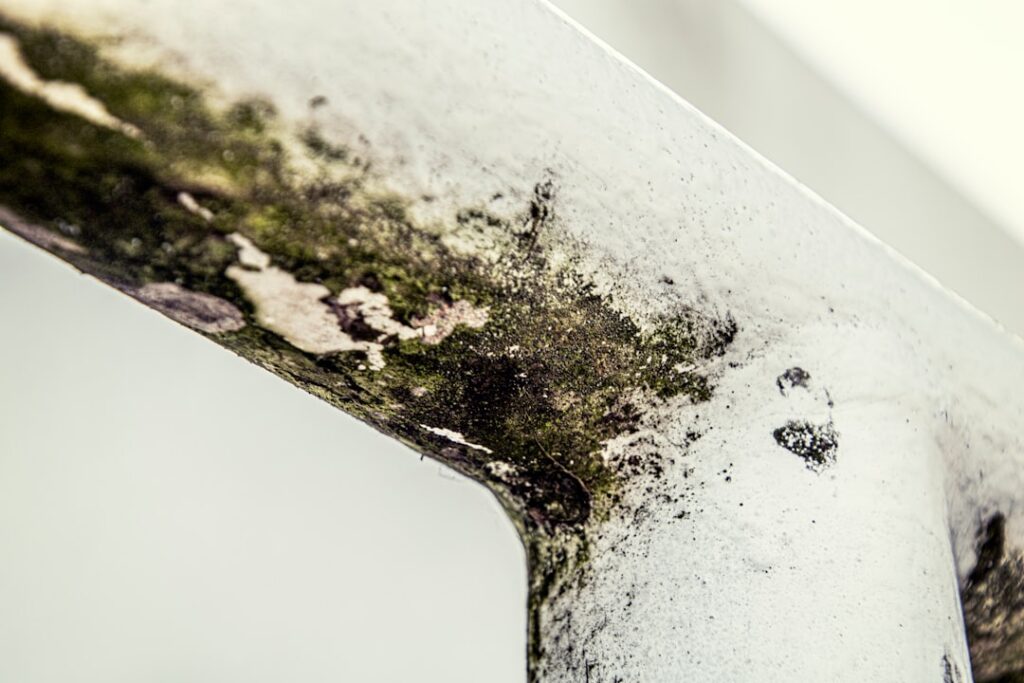
Black mold long term effects on occupants are predominantly respiratory and immunological rather than systemic or fatal. The pattern across EPA, CDC, and NIEHS literature is consistent: months-to-years of indoor exposure to a damp, mold-burdened building produces measurable increases in upper- and lower-airway symptoms, allergic sensitization, and asthma incidence, with a smaller subset of people developing hypersensitivity pneumonitis or other more serious conditions. This guide summarizes that body of guidance from a homeowner’s perspective. It is not medical advice. If anyone in the household has persistent respiratory symptoms they believe may be related to mold exposure, consult a physician — diagnosis and treatment of mold-related illness require professional medical evaluation. Our focus here is what the long-term occupant pattern looks like and how the home-side response interacts with it.
Is this mold, asbestos, or water damage? Get a free instant screen
Upload a clear photo of the suspect area. You'll get an instant AI screening opinion and what to do next. This is screening guidance, not a professional determination.
Screening guidance only. AI can be wrong. Confirm asbestos, mold type, or lead with lab testing or a licensed professional before acting.
What occupants typically experience over months and years
The earliest occupant signal in a chronically damp, mold-burdened home is non-specific upper-respiratory complaints that families often misattribute to a “lingering cold” or seasonal allergy. Sinus congestion, post-nasal drip, scratchy throat in the morning, watery or itchy eyes when sitting in the affected room, and a tickling cough are typical. The signature feature, which differentiates a building-related pattern from common cold viruses, is symptom reduction when occupants are away from the property — at work, on vacation, visiting family — followed by symptom return on re-entry. EPA and CDC building-related-illness materials both highlight this temporal pattern as a useful diagnostic anchor for occupants and clinicians.
Over a longer arc, sustained exposure produces allergic sensitization in a meaningful fraction of occupants. Sensitization means the immune system has produced specific IgE antibodies to mold antigens and now mounts an allergic response on each subsequent exposure. Once sensitized, an occupant continues to react in any environment with similar mold burden, not only the original property. This is one reason public-health guidance treats indoor mold as worth remediating even when current occupants feel fine — the next family in the same home, especially children, may sensitize during their tenancy.
Respiratory outcomes documented in the literature
New-onset asthma and asthma exacerbation
The Institute of Medicine’s 2004 report Damp Indoor Spaces and Health, and subsequent NIEHS-funded reviews, found sufficient evidence to associate damp indoor environments with asthma exacerbation in people with existing asthma. Evidence for new asthma onset in previously healthy children exposed to damp homes is also well documented, though the causal pathway involves the broader damp-building environment rather than Stachybotrys specifically. The CDC’s mold-and-asthma materials translate this for homeowner audiences.
Allergic rhinitis and chronic rhinosinusitis
Chronic exposure produces persistent upper-airway inflammation. Occupants describe a “head-cold that won’t end” pattern. Imaging in chronic cases sometimes shows sinus mucosal thickening that resolves slowly after exposure ends. This pattern is common and rarely permanent if remediation removes the source.
Hypersensitivity pneumonitis
A smaller subset of sensitized individuals develops hypersensitivity pneumonitis (HP), an inflammatory lung response to inhaled antigens. HP can present as recurrent flu-like illness with chest tightness and, if exposure continues, can progress to pulmonary fibrosis. HP from residential mold is uncommon but documented; it is more often associated with occupational exposures (farmer’s lung, hot tub lung) but appears in case reports tied to severely water-damaged homes.
Allergic bronchopulmonary aspergillosis
ABPA is a complex allergic reaction to Aspergillus colonization in the airway, typically in patients with asthma or cystic fibrosis. It is technically not a Stachybotrys condition, but it is part of the broader long-term picture in a high-mold-burden home where Aspergillus is also present.
How sensitization develops and why it matters for resale
Sensitization is dose- and duration-dependent. A child growing up in a damp basement apartment with chronic Stachybotrys and Aspergillus burden has higher probability of developing mold allergy than a child in a dry, well-ventilated home. Once developed, sensitization persists for years and often for life. The implication for homeowners and buyers: the long-term cost of leaving a known mold problem unremediated is borne not only by current occupants but by future occupants of the same property, and that future-occupant impact is part of what disclosure laws are designed to address.
Front Range buyers in Denver, Boulder, and Colorado Springs increasingly include mold-history questions during due diligence. A house with documented, professionally remediated mold, post-clearance testing on file, and a clear moisture-source resolution narrative carries less perceived risk than one with the same physical condition but no paperwork. The mold inspection hub describes what that paperwork should contain.
What the NIEHS and CDC say about long-term low-level exposure
NIEHS-funded research and CDC reviews consistently describe a graded relationship between exposure intensity-duration and outcome severity. The agencies do not generally support claims of distant systemic illness — chronic fatigue, cognitive symptoms, autoimmune effects — caused directly by residential mold spore inhalation, because the evidence base is thin and the mechanisms are not well established at typical residential exposure levels. The agencies do support the respiratory and allergic findings outlined above, which is where most peer-reviewed evidence sits.
This calibration matters for homeowners reading non-medical material online. The dominant evidence-based long-term home concerns are airway and sensitization. Broader “toxic mold illness” syndromes circulate in popular media but do not currently have the same level of agency support. Patients with systemic symptoms deserve workup and care from a physician — the home-side response is the same regardless: find the moisture source, remove it, remove affected materials, verify dryness.
How home-side conditions amplify or reduce occupant impact
Air-handler contamination
An HVAC system with mold growth on the cooling coil, in condensate-pan ductwork, or in return-air boots distributes spores to every room every time the blower runs. Long-term occupant impact in this scenario typically exceeds the impact of a comparable surface-area colony confined to one room. EPA’s tiered framework specifically escalates HVAC-involved cases.
Negative-pressure dynamics
Older homes with leaky building envelopes and oversized bathroom or kitchen exhaust fans can pull air from crawlspaces, basements, and attics — exactly the spaces most likely to contain mold reservoirs — into the conditioned living space. Long-term occupant exposure is shaped by these airflow dynamics as much as by colony location.
Floor-level versus ceiling-level distribution
Spores are heavier than air on average and settle, so floor-level disturbance (vacuuming, foot traffic on contaminated carpet) generates higher inhalation exposures than ceiling-level disturbance. Crawling infants and toddlers are exposed at exactly the height of greatest particulate concentration. This is part of why guidance is more conservative for households with young children.
Long-term home actions that reduce occupant exposure
The same home-side action list reduces both the colony itself and the long-term occupant impact:
- Identify and eliminate the water source (this is non-negotiable; without it, remediation fails).
- Physically remove affected porous materials rather than treating surfaces with biocide.
- Run HEPA-filtered air scrubbers during and after remediation; portable HEPA units in occupied spaces during cleanup.
- Replace HVAC filters at MERV 11 or higher and inspect coil and condensate pan annually.
- Maintain indoor relative humidity below 50% — dehumidifier in basement during summer, exhaust-fan use in bathrooms.
- Re-test air or surface only after remediation to verify clearance, not to “see if it’s bad.”
For homeowners building the response playbook, the overview of health issues from black mold connects the symptom pattern to the home-side workflow.
When persistent symptoms warrant physician evaluation
Home actions cannot substitute for clinical care. A physician should be consulted when symptoms include any of the following: persistent cough beyond a few weeks, recurrent wheezing or shortness of breath, fever, weight loss, night sweats, blood-tinged sputum, severe headaches that don’t respond to typical interventions, or any pattern that worsens despite clear home-side remediation. Allergists and pulmonologists are the typical specialists involved. Skin-prick testing or specific-IgE blood testing can confirm mold sensitization. The clinician decides what testing is indicated based on history and exam, not based on home spore-trap counts.
What about children specifically
Children’s developing airways are more vulnerable to environmental insults, and exposure during early life is more likely to produce lifelong sensitization than equivalent exposure in an adult. Pediatric guidance from the CDC and AAP both flag damp indoor environments as a modifiable asthma risk factor. The long-term effect of a child growing up in a chronically damp, mold-burdened home is, on average, higher lifetime risk of allergic and respiratory disease — the kind of public-health risk that justifies remediation even when the present-moment symptom load is mild.
How occupants describe the experience over time
Occupant accounts of long-term damp-home exposure tend to follow a recognizable arc. Early months: occasional headaches, a “lingering cold” that doesn’t fully resolve, slight cough on waking. Middle period (3 to 12 months): the symptoms persist, occupants attribute them to seasonal allergies or air quality generally, and some begin to notice symptom-free periods during vacations. Later period (year-plus): a pattern crystallizes, sometimes with new allergy diagnoses, sometimes with worsened sleep due to chronic congestion, sometimes with reduced exercise tolerance from subtle airway changes. The clinical literature describes the same arc in epidemiological terms; occupants describe it as a slow worsening that becomes obvious only in retrospect. This is part of why early-intervention guidance emphasizes responding to the moisture condition before the occupant signature becomes complex.
Differentiating respiratory symptoms from other indoor air problems
Mold is one of several indoor air-quality factors that produce overlapping symptom patterns. Dust mites, pet dander, cockroach allergen, volatile organic compounds from off-gassing materials, and combustion byproducts from gas appliances all produce similar respiratory complaints in sensitive occupants. A long-term-effects investigation that focuses only on mold sometimes misses the broader indoor-air picture. Comprehensive evaluation includes the building’s ventilation, combustion-appliance venting, dust and allergen burden, and chemical exposures alongside mold-specific findings. The EPA’s Indoor Air Quality resources cover the full picture.
Sleep, mood, and quality-of-life dimensions
Chronic upper-airway congestion impairs sleep quality through nasal-airflow restriction and disrupted sleep architecture. Sleep impact then cascades into mood, energy, and cognitive performance over months and years. These quality-of-life dimensions are real consequences of long-term mold-burdened-home exposure even when they don’t appear in classic respiratory-disease tabulations. Occupants who relocate from chronically damp homes frequently describe improved sleep and energy within weeks, which is consistent with the airway-inflammation pathway resolving when the antigen load drops.
References
- EPA Mold and Health — U.S. Environmental Protection Agency
- CDC Mold Health Effects — Centers for Disease Control and Prevention
- NIEHS Mold Health Topic — National Institute of Environmental Health Sciences
- American Lung Association Mold and Dampness — American Lung Association
Front Range homeowners who want to address a long-standing damp-home problem before it produces further occupant impact can connect with a vetted local inspector through our contact page.